
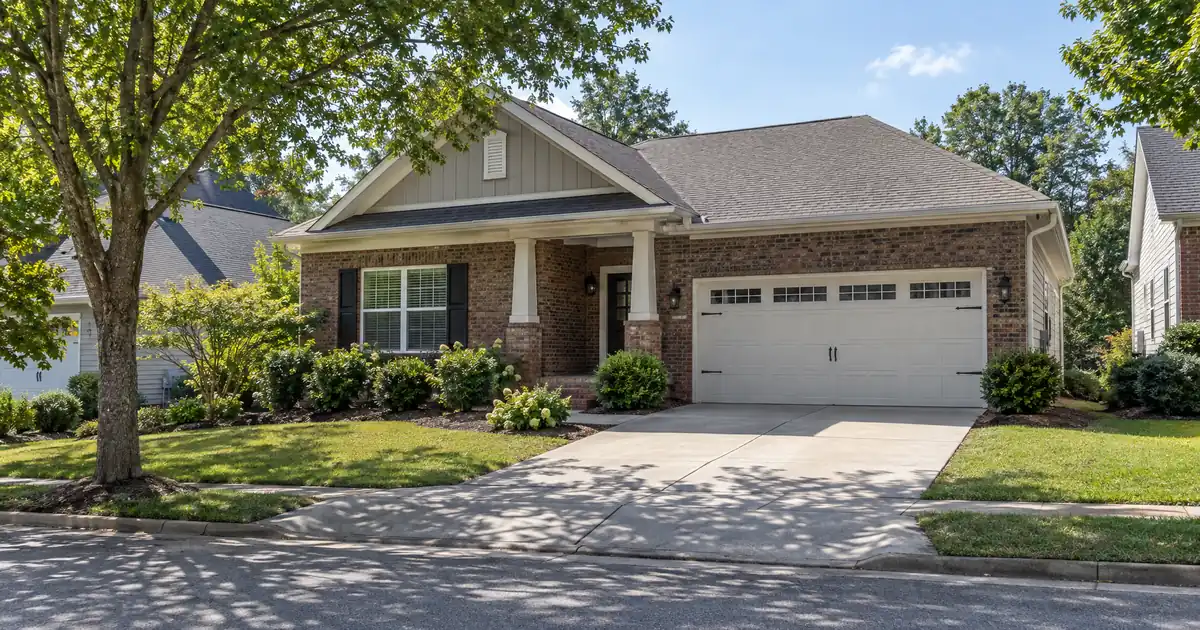
Three things are moving in Apex at once, and none of them is price appreciation. Zillow puts the average home value at $601,962, down 2.0 percent over the past year, and Redfin’s market page shows listing time stretching well past where it was a year earlier. Meanwhile the apartment supply wave that pressed rents is easing: Northmarq counts about 1,300 units delivered in the most recent quarter, after more than 26,000 across the two prior years. The largest local demand story, NC Children’s, has not broken ground. For an owner planning a cash-out over the next 6 to 18 months, that points one way. Pull equity against today’s comps, and size the draw to the coverage ratio rather than the leverage ceiling.
At a Glance: A DSCR cash-out refinance in Apex, North Carolina is underwritten primarily on the property’s rental income measured against its full monthly obligation, so the deal works from seasoning proof and appraisal, to a rent schedule by ZIP code, to reserves documentation, and only then to the proceeds that the leverage ceiling and coverage ratio actually allow.
DSCR Cash-Out Calculator
Run the cash-out numbers in Apex, NC
Rate source: Freddie Mac 30-yr average via FRED® — Federal Reserve Bank of St. Louis · effective Sep 24, 2026
Prefilled with starting assumptions — enter your property’s value, balance, taxes, and insurance for a more accurate picture.
Program parameters update from Lendmire’s centralized guideline source. Taxes and insurance are editable estimates.
As of Sep 24, 2026 · General Freddie Mac market benchmark, not a Lendmire loan offer. Property value, balance, taxes, and insurance are editable estimates. Maximum loan-to-value varies by lender, program, property type, and seasoning. Not a Loan Estimate, approval, or commitment to lend. Program availability and eligibility are subject to lender guidelines, credit approval, property review, and underwriting.
- Asking rents run $1,779 to $2,135 by ZIP code, per RentalCalcs, an aggregator of Zillow and HUD data.
- Zillow shows values down 2.0 percent, so underwrite today’s comps, not a rising market.
- Cash-out leverage tops out at 75 percent, with about six months of seasoning from title recording.
- On most Apex files, coverage caps the proceeds well before the 75 percent ceiling does.
- NC Children’s jobs are a long-dated pipeline, not current rent support.
Apex Market Snapshot
A quick read on the Apex investor landscape — figures come from the cited sources below. Confirm current property-level numbers before underwriting.
| Metric | Detail |
|---|---|
| University enrollment | ~140,000 students (Town of Apex, K-12 Public) |
| Employment | ~8,000 jobs (Duke Health, NC Children’s) |
| Vacancy | Mid-5% (apex-cary submarket) (Institutional Property) |
Friendship and the US-1 Corridor Come First
The Friendship subdivisions near US-1 and NC-540 are the most common cash-out candidates in Apex. They hold the newest rental stock in town, owners there bought recently enough that seasoning is the first question, and the product is mostly townhome and newer single-family. Homes.com describes Friendship, Friendship Station, and Retreat at Friendship as newer subdivisions that appeal to families and professionals. Raleigh Realty puts the median list price in Friendship Station at $460,869, which is townhome-heavy and sits near the citywide attached-unit mean of $462,065 that City-Data reports.
That price point is why this corridor is the best fit in Apex for a DSCR cash-out. The attached product has the lowest entry price among ownership types, so rent sits closest to the payment there. It is also where the file picks up its documentation friction. Townhomes mean an HOA questionnaire, and an incomplete questionnaire stalls a file for reasons that have nothing to do with the borrower. Request it before the appraisal is ordered, not after.
Newer subdivisions also mean thin recent-sale history inside the exact community. The appraiser will reach to adjacent subdivisions, and that is where a reconsideration packet earns its keep. It should show in-community sales, condition notes, and the same builder’s floor plans.
The Math: Where Coverage Breaks Before Leverage Does
Apex’s rent-to-value is thin, so coverage, not the 75 percent ceiling, sets the proceeds on most files. Modeled with full taxes and insurance included, a typical Apex single-family or townhome refinance falls below 1.00x at high leverage and only reaches the benchmark at noticeably lower leverage.
Run the numbers on a few modeled cases. All figures below are illustrative assumptions, not market data. They use a 30-year amortization and include taxes and insurance at statewide-average levels.
- Citywide average home near $600,000, at 75 percent LTV. Using the $2,250 average rent from Zillow Rental Manager, coverage lands around 0.6x. Dropping to 50 percent LTV only gets it to roughly 0.85x. Reaching 1.00x takes leverage near 40 percent.
- Attached unit near $462,065, at 75 percent LTV, with $2,250 modeled rent. Coverage comes out around 0.8x. At 60 percent LTV it improves to right around 0.95x, and leverage in the mid-50s percent range gets it to about 1.0x.
- Detached home near the $672,479 mean, at 75 percent LTV, with the $2,395 median rent from Homes.com. Coverage sits near 0.6x.
Now apply that to an owner. Say an investor holds an attached unit with a payoff balance around 30 percent of value. A cash-out to roughly 55 percent LTV releases about 25 points of value and holds coverage near 1.0x. Pushing to the full 75 percent ceiling releases 20 more points but drops coverage to roughly 0.8x. The ceiling is a cap, not a target. How DSCR coverage is calculated is rent divided by the full monthly obligation, and in Apex that denominator is heavy.
For Apex, North Carolina rental property financing, Lendmire helps arrange DSCR loans through lenders operating in 41 markets, including Washington, D.C. (NMLS# 2371349). When a file lands below 1.00x, a lender may review a sub-1.00 program, an interest-only structure, or lower leverage with more cash left in the property. Which of those apply depends on lender guidelines, credit profile, reserves, and property review.
DSCR files in markets like this one typically look like a clean borrower with a good property and a coverage number that is the whole conversation. The cash-out amount gets sized backward from the coverage ratio, and the borrower’s first ask usually exceeds what coverage supports. The files that go smoothly settle on the leverage level before the appraisal is ordered. Rent evidence and the insurance binder go in at the same time, so the denominator stops moving mid-review.
Beaver Creek, Carriage Downs, and the West Side
West Apex around Beaver Creek is the retail hub at US-64 and NC-55, with access to Cary and Research Triangle Park along Highway 55. Homes.com’s neighborhood page describes it as a blend of established and newer neighborhoods. Carriage Downs, a small community across from Beaver Creek Commons, starts in the mid-$400s.
Neither area has a reliable neighborhood-level rent source. Treat any figure you see as an asking rent, not a rent schedule. For cash-out files in these neighborhoods, the better habit is to pull the current lease and run it against the ZIP-level range. ZIP 27539 has the lowest typical asking rent at $1,779, and the top of the three-ZIP range is $2,135, per the RentalCalcs aggregator. That is a gap of roughly $350 a month. It shows up directly in coverage, and lender rent schedules will reflect it. Underwrite by ZIP, not by the citywide average.
Downtown Salem Street Is a Trap for Value Assumptions
Historic downtown Apex is a walkable rail-based main street that the Town of Apex calls one of the finest examples of its kind. It has real character, and older bungalows near Salem Street trade in a different band than the suburban subdivisions.
Here’s the catch. Redfin’s downtown median has jumped sharply on a small sample, and the mix of sales drives it, not a citywide re-rating. Do not use that figure as a value basis for a cash-out. Appraisers will look at paired sales, and one outlier closing will not carry the refinance.
Appreciation Won’t Do the Refinance Work
Apex is a plateau market after strong growth, and a cash-out thesis should assume a value near today’s comps. The trackers disagree on direction by a small margin, and they agree on the picture. Zillow has values down 2.0 percent, and Redfin shows a $622K median sale price over three months, down 2.1 percent year over year. Houzeo is flatter, at a $641,840 median up 0.2 percent. Blue Orchid Realty reports a median up 5.7 percent to $609,995, but cautions that this does not mean every Apex home gained 5.7 percent, and its median price per square foot actually declined 2.4 percent to $240.
Price per square foot is the better gauge. The median swings with what happens to sell in a given month.
The upside for appraisal is comp depth. Resideline tracked a large volume of closed sales over a multi-month window, and the middle half of sales spread across a wide price band. Redfin also showed a steady flow of homes sold month to month. An appraiser will have plenty of comparables. The wide spread is the risk: a value that lands at the low end of the band cuts the cash-out directly. If an appraisal comes in light, a reconsideration request backed by recent in-neighborhood sales and condition adjustments is a routine step, not an emergency one.
Supply Pressure and a Small Renter Pool
The oversupply risk in Apex looks like it is peaking, which supports an underwriting case built on flat rents rather than falling ones. RentCafe shows average apartment rent down 2.13 percent over the year, from $1,661 to $1,625. Institutional Property Advisors flags the Apex-Cary submarket for record completions that could weigh on rents even with vacancy near the mid-5 percent range. Northmarq says vacancy appears to have leveled off after rising for four years.
Concessions at new Class A apartments compete with small landlords’ units, and they can show up in appraiser rent comps. Use in-place or conservative rents.
The renter pool is also small. RentCafe puts about 25 percent of households (5,886) as renter-occupied, and Data USA shows a 76.5 percent homeownership rate. A small pool makes a long vacancy costly, so lease evidence and pricing accuracy matter more here than in a larger rental market.
Demand Anchors That Support Rent, Slowly
Apex’s demand drivers are real but long-dated, and the file should not lean on them for current coverage. The nearest cluster is Holly Springs, about four miles away. The North Carolina Biotechnology Center lists Amgen, CSL Seqirus, FUJIFILM Biotechnologies, and Genentech within four miles of the planned Apex Wake Tech site. ABC11 reports a $1.2 billion FUJIFILM commitment and 680 new Wake County jobs, and WRAL puts total investment at the Holly Springs site above $3.2 billion.
The Wake Tech Apex campus is being designed primarily for workforce development and transfer education, and its first building, FUJIFILM Biotechnologies Hall, is roughly 125,000 square feet. Apex has no university of its own, so don’t pitch it as a student market. Resident employment skews professional: Data USA shows 8,945 residents in professional, scientific, and technical services, 3,863 in health care, and 3,740 in manufacturing. Unemployment sits at 2.7 percent.
Then there is the pipeline. Duke Health says NC Children’s will bring approximately 8,000 jobs, a 500-bed children’s hospital, and an outpatient center to Veridea, a mixed-use community of more than 1,000 acres planned for 8,000 new homes. WPTF reports groundbreaking still ahead and construction expected to take six years. That’s a pipeline, not in-place demand. Think of it as long-term support under values, not a reason to stretch coverage today.
What Holds Up a Cash-Out File in Apex
Most Apex cash-out delays come from documentation, not from the borrower or the property. The checklist is short.
1. Seasoning proof. Lenders look for about six months of ownership measured from title recording. Newer-build owners should have the recorded deed and settlement statement ready, because a file that assumes seasoning away gets kicked back.
2. Entity documents. If the property sits in an LLC, the operating agreement and good-standing paperwork need to match the title, subject to lender program eligibility.
3. Lease evidence. A current lease, rent history, and ZIP-appropriate rent support go in together, because the appraiser’s rent schedule is the number that counts.
4. Insurance binder. Get a current quote in before submission so the denominator does not move mid-review.
5. HOA questionnaire. Townhome and subdivision files need a complete questionnaire. Blank fields are the usual cause of delays.
6. Reserves. Documented reserves of about six months of PITIA are typical, and the statements need to show source and seasoning of the funds.
Credit tiers on typical programs step at 620, 660, 680, and 700, with 620 as the floor, and loan amounts run up to $3,000,000 on standard programs, all subject to lender guidelines. Equity available is never a guaranteed cash figure. It depends on rent used for lender review, PITIA, reserves, and the 75 percent ceiling. Verify current local rental rules, taxes, and insurance with qualified local professionals.
Where the proceeds go matters too. Apex’s flat prices mean cash pulled out should fund a purchase in a market with better rent-to-value, not a bet on another Apex appreciation leg. Compare investor refinance options and DSCR cash-out refi mechanics before choosing a structure, and weigh conventional against DSCR financing on investor loans if W-2 documentation is an alternative. Lendmire’s North Carolina DSCR loan programs cover the state-level overlays.
Frequently Asked Questions
How do you qualify for a DSCR cash-out refinance in Apex, North Carolina?
Qualification centers on the property’s rent against its full monthly obligation. The standard benchmark is 1.00x, with cash-out leverage capped at 75 percent and about six months of seasoning from title recording. Reserves of about six months of PITIA and a credit score in the 620-and-up tiers are typical. In Apex, coverage usually binds before the leverage cap does, so lower leverage is common. All of this is subject to lender guidelines.
DSCR vs. conventional financing
There are two common ways to finance an investment property in Apex, NC, and they qualify you differently — here’s how investors weigh them.
Why investors choose it
- Qualifies on the property’s rental income — no personal tax returns, W-2s, or pay stubs needed to document income.
- No personal debt-to-income ceiling to clear, so existing mortgages and obligations don’t cap your borrowing the same way.
- Can be closed in an LLC, keeping the property inside a business entity.
- Built for scaling — not held to the limit on number of financed properties that conventional financing applies.
- Underwriting centers on the deal: generally qualifies when the rent covers the payment, a 1.00x coverage ratio being a common baseline (confirmed in underwriting).
- Designed specifically for investment property, including long-term and, where the program allows, short-term rentals.
Where it’s strong
- Often the lowest ongoing financing cost for a buyer who fully qualifies on personal income — a fit for a first property or a cost-first purchase.
Trade-offs for investors
- Requires full personal income documentation and must fit within a debt-to-income limit — salary, existing debts, and other mortgages all count.
- Typically held in your personal name rather than a business entity.
- Caps how many financed properties you can carry, which can become a ceiling as a portfolio grows.
- Evaluates you as a borrower as much as the property, which usually means more paperwork.
How investors usually choose: a first or single property often optimizes for the lowest financing cost; portfolio builders often optimize for leverage, vesting in an LLC, and scaling past conventional caps. The right answer depends on your goals, the property, and current guidelines — both paths run through select lenders in Lendmire’s wholesale network, with eligibility and terms confirmed in underwriting.
What are the requirements for an investment property refinance in Apex, North Carolina?
Expect entity documents if the property is in an LLC, a current lease, a rent schedule, an insurance binder, title information, and reserves documentation. Townhomes and subdivision properties add an HOA questionnaire. Requirements vary by lender program, borrower, and property.
Will Apex’s flat prices limit how much cash comes out?
Yes, in two ways. With values roughly flat to down on Zillow and Redfin, the appraisal will not add a cushion, so the cash-out is sized to today’s comps. Coverage also limits it: at 75 percent leverage, modeled coverage falls well below 1.00x on typical Apex rents. Owners with a low payoff balance have the most room.
Does the NC Children’s hospital change cash-out math today?
Not for current coverage. Groundbreaking is still ahead and construction is expected to run six years, so the roughly 8,000 projected jobs are a long-dated pipeline. It may support values over time, but a lender will look at in-place rent and current comps.
What credit score ranges may DSCR lenders review for an Apex rental property?
Lenders commonly review tiers at 620, 660, 680, and 700, with 620 as the floor, and higher tiers generally allow better leverage terms. Lendmire arranges DSCR investor loans and reviews the credit tier alongside rent, reserves, and property. Final eligibility rests with the lender.
Before You Order the Appraisal
Most Apex owners already know their property’s value is flat. The better question is what coverage ratio the file shows at 55 percent, 60 percent, and 75 percent leverage, and which of those numbers you would actually be comfortable carrying. See what the numbers look like or call 828-256-2183 to run it against your own rent. If your rent holds up only at the lowest leverage, is that the cash-out you want, or the next purchase in a different market?
About Lendmire
As a non-QM mortgage broker (NMLS# 2371349), Lendmire facilitates DSCR investor loans across 41 markets, including Washington, D.C. DSCR eligibility is generally reviewed around property-level rental income instead of personal income documentation, subject to lender guidelines, serving LLC-structured portfolios and self-employed borrowers who don’t fit conventional boxes. Lendmire has been recognized as a 2026 Scotsman Guide Top Mortgage Workplace and as a top-ranked workplace in 2025.
Get Started
Ready to find the right loan for you?
In about 30 seconds you can review financing options available for your investment property. No commitment required.
Informational only. Not a Loan Estimate, approval, or commitment to lend. Program availability and eligibility are subject to lender guidelines, credit approval, property review, and underwriting.
References
2. Redfin, Apex Housing Market
3. Northmarq, Raleigh-Durham Multifamily Construction Activity
4. RentalCalcs
6. Duke Health, NC Children’s Announcement
7. Institutional Property Advisors
8. Homes.com
10. City-Data
12. Homes.com
13. Town of Apex
15. Resideline
16. RentCafe
17. Data USA, Apex
18. North Carolina Biotechnology Center, Wake Tech Apex Campus
19. ABC11
20. WRAL
23. WPTF
24. a 2026 Scotsman Guide Top Mortgage Workplace
25. Scotsman Guide — Top Workplaces 2025
This article is part of Lendmire’s investment property cash-out refinance program — full qualification details, guidelines, and scenarios live on the program page.
Related reading: Cash Out Refinance Investment Property Apex North Carolina · Cash Out Refinance Investment Property Winston-Salem North Carolina · DSCR Cash Out Refinance in Goldsboro, North Carolina: The 2026 DSCR Guide to Berkeley Blvd
Guides: Investment Property Cash-Out Refinance in Apex, NC · Investment Property Cash-Out Refinance in North Carolina
Brandon Miller
Founder & CEO, Mortgage Loan Originator, Lendmire LLC
- Mortgage Loan Originator · NMLS# 1129696 · Verify on NMLS Consumer Access
- North Carolina Real Estate Broker · License# 343312 · Verify on NCREC
- North Carolina Insurance Producer · License# 19053198 · Property, Casualty, Life, Health · Verify on NAIC SBS
- Lendmire LLC · Firm NMLS# 2371349 · Verify firm licensure
Disclosure information. Lendmire is a state-licensed mortgage brokerage under NMLS# 2371349. Lendmire is not a depository institution, direct lender, or financial advisor — all loans referenced are placed through wholesale lender partners and are subject to each lender's underwriting standards. This article is provided for general informational purposes and is not a commitment to lend, nor does it constitute financial, legal, or tax advice. Loan programs, terms, rates, and qualification standards change without notice and depend on borrower profile, property type, and the state in which the subject property is located. Equal Housing Opportunity provider. NMLS Consumer Access: nmlsconsumeraccess.org.