
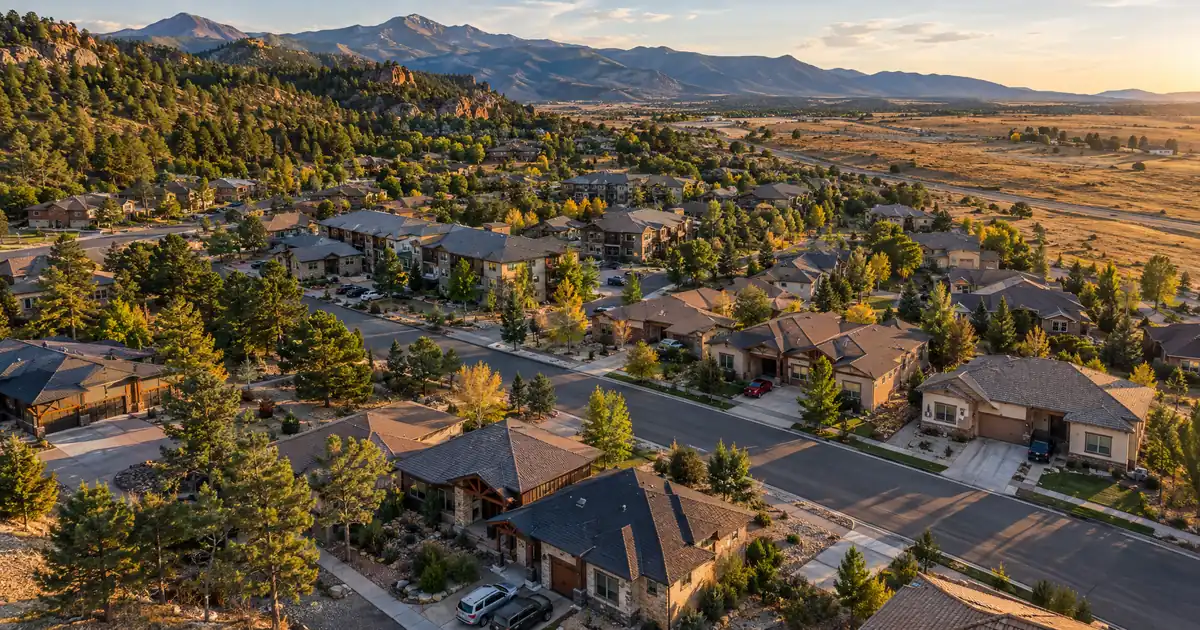
An out-of-state investor scrolling Castle Rock listings sees the obvious things first. A town of 81,415 people per the U.S. Census Bureau, up from a 2020 base of 73,160. Mountain views, a big outlet center, a short drive to Denver. Then the less obvious thing shows up when you divide rent by value. The typical home is worth $661,670 per Zillow, down 4.8 percent over the past year, and rents don’t scale to match. That gap decides how much equity a DSCR cash-out can pull here, and which properties can carry it.
The Short Version: A DSCR cash-out refinance in Castle Rock, Colorado is underwritten primarily on the property’s rental income measured against its full monthly obligation. That fits investors holding duplexes, townhomes, or detached homes with a second income stream, and fits median-priced single-family owners much less comfortably.
DSCR Cash-Out Calculator
Run the cash-out numbers in Castle Rock, CO
Rate source: Freddie Mac 30-yr average via FRED® — Federal Reserve Bank of St. Louis · effective Sep 24, 2026
Prefilled with starting assumptions — enter your property’s value, balance, taxes, and insurance for a more accurate picture.
Program parameters update from Lendmire’s centralized guideline source. Taxes and insurance are editable estimates.
As of Sep 24, 2026 · General Freddie Mac market benchmark, not a Lendmire loan offer. Property value, balance, taxes, and insurance are editable estimates. Maximum loan-to-value varies by lender, program, property type, and seasoning. Not a Loan Estimate, approval, or commitment to lend. Program availability and eligibility are subject to lender guidelines, credit approval, property review, and underwriting.
- Single-family rent-to-value runs in the low 0.4 percent range per Redfin and Homes.com neighborhood data.
- Cash-out tops out at 75 percent of appraised value, after about six months of ownership.
- Townhomes and entry-priced detached homes carry less balance to cover.
- Rents are flat to slightly negative across sources, so underwrite in-place leases.
Lendmire (NMLS# 2371349) is a DSCR-focused mortgage broker with investor loan programs across 41 markets, Washington, D.C. included. It arranges these loans through wholesale lending channels, and lenders do the underwriting and approval. For the broader mechanics, the DSCR cash-out refi mechanics page covers the process. This article stays on what’s specific to Castle Rock.
The Equity Question Comes Before the Loan Question
Castle Rock equity is real but unevenly useful. The 75 percent cap applies to appraised value, and appreciation has stalled. Redfin shows days on market rising to 26 from 22, and the typical home value is slipping. An investor who bought recently, near the top, may find little to extract. An investor who bought years ago has the cushion.
Zillow’s typical value and the $775,000 median sold price reported by Movoto differ because of methodology (typical value versus sold median), so neither is a promise about your appraisal. Your appraiser will use comps, and comps in this town can be thin. Redfin’s Downtown Castle Rock median swung to $550,000 on a 34.9 percent year-over-year drop, and its Southwest Castle Rock figure of $1.4 million rested on two sales. Neither should anchor your equity estimate.
Think of it as three gates:
1. Value. Appraised value times the 75 percent cap, less your existing balance.
2. Coverage. The lender compares the rent used for review against full PITIA, and a 1.00 ratio is the standard floor.
3. Reserves. About six months of PITIA, subject to lender guidelines.
Most Castle Rock cash-outs on detached homes will be limited by the second gate, not the first.
Where the Coverage Math Breaks (and Where It Doesn’t)
Median-priced single-family homes are the weak spot. Redfin lists a median rent of $2,800 in The Meadows, while Homes.com puts the neighborhood’s median single-family price at $660,000. That’s roughly 0.42 percent gross monthly rent-to-value (my arithmetic from those two sources). Crystal Valley Ranch lands near 0.43 percent on the same pairing of a $3,650 median rent and an $841,000 price, though Redfin’s own lower sale median for that neighborhood would imply a higher ratio. The sources conflict, so use these as directional.
Run the numbers on a modeled Meadows rental: assume $2,800 in rent against a $660,000 value, with PITIA modeled including taxes and insurance. At 75 percent leverage, coverage lands well below 1.00, in the low 0.7s. Pull leverage down to about half the value and the number gets close to 1.00. That’s a very different cash-out than the cap suggests.
When a deal sits below 1.00 on long-term rent, there are structures a lender may review: a sub-1.00 program, interest-only payments, or simply a smaller cash-out. Each involves tradeoffs, usually reduced leverage, stronger credit, or different pricing, and eligibility review depends on lender guidelines, credit approval, and property review. If the only way your Meadows rental works is a sub-1.00 structure, that’s worth treating as a signal about the asset, not a problem for the loan type to solve.
Now compare attached product. Redfin shows a townhouse median of $554,000, and Homes.com shows $476,500. A 2023-built four-bedroom Skyline townhome in adjacent Castle Pines is listed at $2,700 on Redfin, a single listing and so anecdotal. Assume $2,700 rent against a $554,000 value: coverage lands in the low-to-mid 0.8s at 75 percent leverage, and near 1.00 at around 60 percent, including taxes and insurance. Better than the detached case. Still not a free ride.
The strongest structure is a second income stream. Model a duplex at $700,000 with combined rent in the mid-$5,000s (modeled assumptions, not sourced figures), and 75 percent leverage produces coverage around 1.25 including taxes and insurance. That’s the whole thesis in one comparison. RentCast figures via Prop-Metrics show 2-bedrooms at $2,650 and 3-bedrooms at $2,880, so an extra bedroom adds little. An extra door adds a full rent.
Duplexes, Townhomes, and the Inventory Problem
True multi-unit inventory is scarce. Zillow showed only about seven duplex and triplex listings for sale and Trulia about eight multi-family listings at the time of research. No reliable Castle Rock source covers triplex or fourplex rents or per-door prices, so don’t plan around them.
Rental stock is small and mostly owner-occupied. Point2Homes counts 5,579 renter-occupied units (22 percent) against 20,367 owner-occupied, with two-bedrooms the largest rental share at 37 percent and the biggest rent band at $1,500 to $2,000. Prop-Metrics, citing HUD data, says only 1.0 percent of local mortgage originations were investor loans. RentCafe puts 22 percent of rentals in single-family homes and 58 percent in complexes under 50 units, with 72 percent of buildings built since 2000. A small owner competes against newer product, so condition drives achievable rent.
Seasoning is the quiet gatekeeper. If you’ve owned the property about six months from title recording, the cash-out lane opens. If you bought a half-duplex last quarter, you wait. Most owners miss this one.
An accessory suite deserves a cautious note. A legal basement or ADU suite could stack income on a detached home, but a separate entrance doesn’t make a space a legal rental. Confirm the status with the Town and with qualified local professionals before counting that rent. The same goes for current local rental rules, taxes, and insurance.
The Pockets Worth Knowing
The Meadows and Crystal Valley. These are the best-known submarkets and the thinnest on coverage, as shown above. AdventHealth Castle Rock, a Level III trauma center with about 90 beds per the Adventist Yearbook, sits beside The Meadows and supports steady tenant demand from healthcare staff. A new AdventHealth ER and urgent care at Crystal Valley Parkway and Plum Creek Boulevard is slated to add 30-plus jobs. That’s small, so don’t overstate it.
Founders Village and entry-priced detached. Homes.com’s Founders Village median of $544,600 is the lowest-priced detached submarket in the research. Lower balance to cover, same rent-to-value tension. Probably a better cash-out candidate than a $700,000-plus Meadows home, with less rent upside in absolute terms.
North Castle Rock and Southeast. Rent.com shows the lowest one-bedroom apartment rents here ($1,725 in North Castle Rock, $1,550 in Southeast). Those are apartment figures, so they tell you about workforce pricing, not house rents. Workforce 3- and 4-bedroom homes could pencil better on entry price, though no sourced neighborhood-level house rents exist for these pockets.
Downtown. Downtown Castle Rock is the historic core, home to government workers and walkable events. Because the area is small and distinctive, comparable sales can be thin, which makes it a valuation risk for cash-out sizing.
Resident employment grew from 41.8k to 43.6k, per Data USA, with professional and technical work (5,617), health care (5,332), and retail (4,290) leading. Many residents commute along I-25, a link the Metro Denver EDC profile notes for Douglas County. The Town of Castle Rock also reports it is still growing. Demand is durable, but it supports lease stability, not rent growth.
What These Files Typically Look Like
DSCR files in markets like this one typically look like a high-value, moderate-rent profile: strong borrower credit, solid equity, and coverage that sits right at the margin. The files that move cleanly usually pair a lease at or near market rent with a realistic appraisal, and the cash-out gets sized to the coverage number instead of the 75 percent cap. Borrowers who reverse that order often end up re-cutting leverage after the appraisal.
Cash-Out Proceeds: Stay Local or Go Elsewhere?
Cash-out proceeds only add up if the next deal clears the same coverage math. Pulling equity to buy a duplex in Castle Rock, where the income-stacking logic holds, is straightforward. Pulling it to chase a deal in a market where the number doesn’t pencil is a different decision. Stress-test that one before committing.
There’s also a fork on the existing loan. If your current balance is small and the property covers comfortably, a cash-out is clean. If the property barely covers, adding balance makes it worse. In that case, a rate-and-term refinance or simply holding may be the better call. The rate-and-term and cash-out refi details page lays out that comparison. For a W-2 investor with one rental and strong personal income, a conventional route may carry a lower cost; the comparison breaks down where that flips. DSCR becomes the practical path for entity-held or multi-property portfolios, subject to lender program eligibility.
DSCR vs. conventional financing
There are two common ways to finance an investment property in Castle Rock, CO, and they qualify you differently — here’s how investors weigh them.
Why investors choose it
- Qualifies on the property’s rental income — no personal tax returns, W-2s, or pay stubs needed to document income.
- No personal debt-to-income ceiling to clear, so existing mortgages and obligations don’t cap your borrowing the same way.
- Can be closed in an LLC, keeping the property inside a business entity.
- Built for scaling — not held to the limit on number of financed properties that conventional financing applies.
- Underwriting centers on the deal: generally qualifies when the rent covers the payment, a 1.00x coverage ratio being a common baseline (confirmed in underwriting).
- Designed specifically for investment property, including long-term and, where the program allows, short-term rentals.
Where it’s strong
- Often the lowest ongoing financing cost for a buyer who fully qualifies on personal income — a fit for a first property or a cost-first purchase.
Trade-offs for investors
- Requires full personal income documentation and must fit within a debt-to-income limit — salary, existing debts, and other mortgages all count.
- Typically held in your personal name rather than a business entity.
- Caps how many financed properties you can carry, which can become a ceiling as a portfolio grows.
- Evaluates you as a borrower as much as the property, which usually means more paperwork.
How investors usually choose: a first or single property often optimizes for the lowest financing cost; portfolio builders often optimize for leverage, vesting in an LLC, and scaling past conventional caps. The right answer depends on your goals, the property, and current guidelines — both paths run through select lenders in Lendmire’s wholesale network, with eligibility and terms confirmed in underwriting.
While other non-QM platforms add state-specific overlays that shrink usable LTV, Lendmire works through a network built around the 75 percent cash-out ceiling, though exact eligibility still depends on the lender, property, and credit profile. Colorado investors can find more on DSCR loans in Colorado. For a first look at your own numbers, see how the math pencils.
Frequently Asked Questions
How do you qualify for a DSCR cash-out refinance in Castle Rock?
Three things: about six months of ownership from title recording, rent used for lender review that covers full PITIA at roughly 1.00 or better, and about six months of reserves. Credit tiers start at a 620 floor, with better options at higher scores. The cash-out cap is 75 percent of appraised value, and all of it is subject to lender guidelines.
What are the requirements for an investment property loan in Castle Rock, Colorado?
On the DSCR side, the property’s rent against its monthly obligation drives the file, not personal income paperwork. Programs typically ask for a 620 minimum credit score, reserves of about six months, and loan sizes up to $3,000,000 on standard programs. Manufactured homes, log homes, and barndominiums fall outside these programs.
How does rental income affect DSCR refinance eligibility in Castle Rock?
Rent is the numerator. Lendmire arranges DSCR investor loans, and the central test is whether rent used for lender review covers PITIA at the 1.00 baseline. With Castle Rock’s thin rent-to-value on single-family homes, the lease and the appraisal usually set the cash-out size.
Can a duplex or ADU suite help a Castle Rock cash-out?
Often, yes, because a second rent stream raises coverage far more than an added bedroom does. Verify any second unit’s legal status with the Town before counting its income. And remember inventory is scarce, with only a handful of duplex listings in the research.
Is Castle Rock a good place to pull equity if prices are softening?
It depends on when you bought. With the typical value down 4.8 percent, a recent purchase may leave little to extract, while a longer-held property likely still has room. Appraisal at current value, not purchase price, sets your proceeds.
For current guidelines and terms, see Lendmire’s DSCR loan programs page.
About Lendmire
Lendmire (NMLS# 2371349) is a mortgage brokerage built around DSCR investor lending, with programs available in 41 markets, including Washington, D.C. DSCR lenders commonly evaluate rental-income coverage instead of personal income paperwork, a practical fit for LLC-owned and multi-property investors. Terms vary by lender, property, leverage, and program. Lendmire has been recognized by Scotsman Guide as a 2026 Top Workplace and named a 2025 Scotsman Guide Top Mortgage Workplace. Investors can reach the team at 828-256-2183.
Get Started
Ready to find the right loan for you?
In about 30 seconds you can review financing options available for your investment property. No commitment required.
Informational only. Not a Loan Estimate, approval, or commitment to lend. Program availability and eligibility are subject to lender guidelines, credit approval, property review, and underwriting.
References
1. U.S. Census Bureau QuickFacts, Castle Rock
2. Zillow Home Values, Castle Rock
3. Redfin, Castle Rock Rental Market
4. Homes.com, Castle Rock Multi-Family
5. Movoto
6. Prop-Metrics
7. Point2Homes, Castle Rock Rent
10. Rent.com
12. Metro Denver EDC
13. crgov.com — Growth in Castle Rock
14. recognized by Scotsman Guide as a 2026 Top Workplace
15. a 2025 Scotsman Guide Top Mortgage Workplace
This article is part of Lendmire’s investment property cash-out refinance program — full qualification details, guidelines, and scenarios live on the program page.
Related reading: Luxury Rental DSCR Loans In New Jersey · Jersey Shore Vacation Rental Loans: DSCR Financing In Ocean City, Cape May And Long Beach Island · DSCR Cash-out Refinance In New Jersey: Pulling Equity From A Rental
Guides: Investment Property Cash-Out Refinance in Castle Rock, CO · Investment Property Cash-Out Refinance in Colorado
Brandon Miller
Founder & CEO, Mortgage Loan Originator, Lendmire LLC
- Mortgage Loan Originator · NMLS# 1129696 · Verify on NMLS Consumer Access
- North Carolina Real Estate Broker · License# 343312 · Verify on NCREC
- North Carolina Insurance Producer · License# 19053198 · Property, Casualty, Life, Health · Verify on NAIC SBS
- Lendmire LLC · Firm NMLS# 2371349 · Verify firm licensure
Disclosure information. Lendmire is a state-licensed mortgage brokerage under NMLS# 2371349. Lendmire is not a depository institution, direct lender, or financial advisor — all loans referenced are placed through wholesale lender partners and are subject to each lender's underwriting standards. This article is provided for general informational purposes and is not a commitment to lend, nor does it constitute financial, legal, or tax advice. Loan programs, terms, rates, and qualification standards change without notice and depend on borrower profile, property type, and the state in which the subject property is located. Equal Housing Opportunity provider. NMLS Consumer Access: nmlsconsumeraccess.org.