
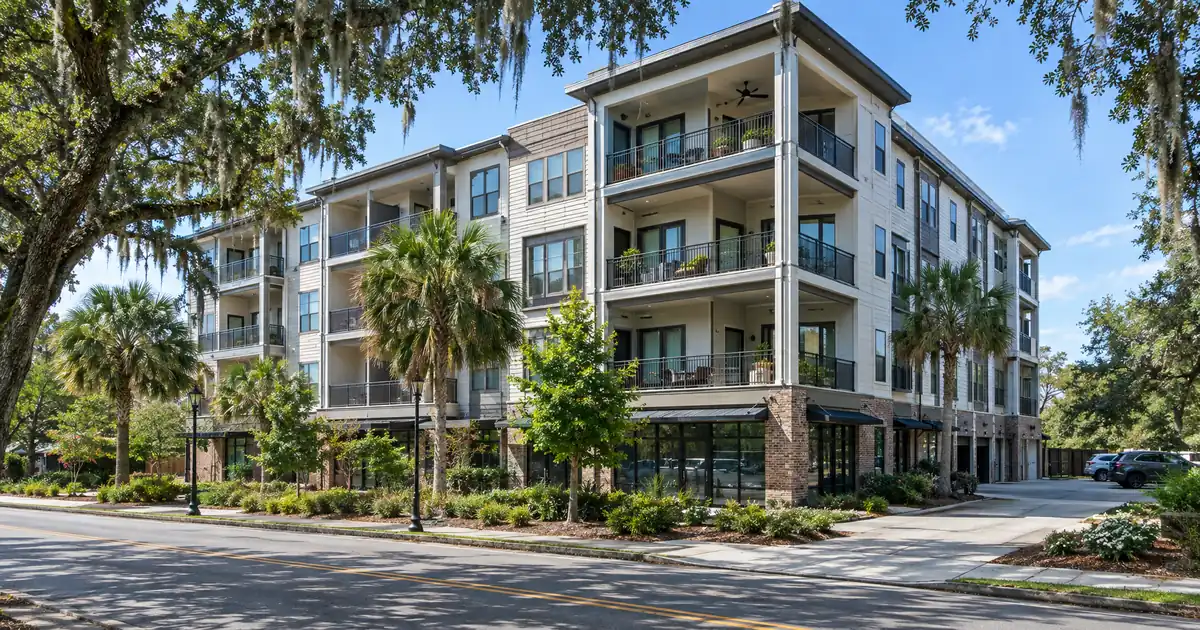
If you own a rental in Columbia and expect appreciation to hand you the equity, here’s what most brokers skip: the city’s median home value sits at $231,363, up just 1.4 percent year over year. Equity here comes from how you bought, what you fixed, and how many rent checks the building produces. Not from market lift.
TL;DR: A Columbia, South Carolina cash-out refinance suits investors who already own seasoned rentals near USC, Forest Acres, or the Fort Jackson corridor and want capital for the next deal. The loan is underwritten primarily on the property’s rental income measured against its full monthly obligation, capped at 75 percent loan-to-value, subject to lender guidelines.
DSCR Cash-Out Calculator
Run the cash-out numbers in Columbia, SC
Rate source: Freddie Mac 30-yr average via FRED® — Federal Reserve Bank of St. Louis · effective Sep 24, 2026
Prefilled with starting assumptions — enter your property’s value, balance, taxes, and insurance for a more accurate picture.
Program parameters update from Lendmire’s centralized guideline source. Taxes and insurance are editable estimates.
As of Sep 24, 2026 · General Freddie Mac market benchmark, not a Lendmire loan offer. Property value, balance, taxes, and insurance are editable estimates. Maximum loan-to-value varies by lender, program, property type, and seasoning. Not a Loan Estimate, approval, or commitment to lend. Program availability and eligibility are subject to lender guidelines, credit approval, property review, and underwriting.
- Equity depends on purchase basis and improvements, since citywide price growth is low single digits.
- Duplexes with two rent checks clear coverage more easily than single-family homes at similar prices.
- New apartment supply is concentrated downtown and near campus, not in older workforce rentals.
- Cash-out requires about 6 months of ownership from title recording, plus reserves.
Columbia Market Snapshot
A quick read on the Columbia investor landscape — figures come from the cited sources below. Confirm current property-level numbers before underwriting.
| Metric | Detail |
|---|---|
| Typical rents | $1,249 (City-data.com, Columbia SC) |
| University enrollment | 40,000+ students (preliminary) (University of South Carolina) |
| Population | 144,281 population (Census Reporter, Columbia city) |
| Employment | 4,000+ jobs (SC Dept. of Commerce, Scout) |
Appreciation Won’t Do This For You
Columbia is a cash-flow market, and cash-out proceeds follow from that. The gap between ZIP codes makes the point. Zillow shows ZIP 29206 averaging $396,584, up 5.7 percent, while northeast Columbia’s ZIP 29223 averages $222,920, up 1.0 percent. Confirm which neighborhoods each ZIP covers before leaning on either figure.
The higher-priced ZIP is appreciation-led. The lower-priced one is flat. Equity in the flat ZIP has to be manufactured through a discounted purchase or value-add work.
The broader tape agrees. Redfin reports a median near $276K, up 1.9 percent, with homes averaging 40 days on market against 36 a year earlier. Prices are firm, but the market is softening slightly. Underwrite a cash-out on purchase price plus documented renovation value. Assume nothing from the market.
Where the Cash-Out Math Holds
Older, non-luxury small rentals outside the new-construction pipeline hold up best. Four submarkets stand out.
Rosewood and the Five Points edge. Rosewood is mostly 1950s and 60s ranch homes of roughly 1,200 to 1,600 square feet, on a corridor that connects to Williams-Brice Stadium, Fort Jackson, Midlands Tech, and USC. A local property manager lists a 3BR/1BA Rosewood house at $1,475 a month, a sample listing, not a market series. Tenant demand tracks enrollment: USC’s Columbia campus is above 40,000 students, with a record 7,829 freshmen. Lender pages still quoting 35,000 are stale.
Forest Acres. Values run higher here than in entry-level Cayce and West Columbia, and duplexes exist. One listed 2BR/1BA duplex unit asks $1,275 a month. This is the multi-unit stacking corridor, and it sits near the Fort Jackson employment base.
Cayce and West Columbia. The entry point is lower, and a 3BR/1BA Cayce house lists at $1,495 a month. These are workforce rentals serving commuters to the Vista and downtown. Revitalization talk is common. Documented rent is what a lender appraises.
South Kilbourne and Colonial Park. This is the value tier, with early-1900s housing stock. Rent.com’s 1BR average of $895 in South Kilbourne is the lowest of the neighborhoods surveyed, and RentCafe lists Colonial Park at $1,076. Condition varies street by street. Skip it if the plan depends on a lender’s appraised rent supporting a big cash-out.
Downtown, the Vista, and BullStreet carry the highest rents, with RentCafe showing Downtown at $2,693 against a $1,502 citywide average. That figure is likely skewed by new-build product, and this review has no reliable price data for the district. Treat the rents as unproven for cash-out purposes.
The Duplex Arithmetic
A duplex can clear 1.00x where a single-family rental at a similar price cannot. Two rent checks sit against one loan and one set of carrying costs. Consider a modeled scenario, not sourced market data.
Say an investor owns a duplex in Forest Acres worth roughly the $335,214 mean for two-unit structures, a rough all-quality average. Assume $1,275 per side. Refinancing at 75 percent LTV, coverage including taxes and insurance lands around 1.25x, comfortably above the standard 1.00x benchmark.
Now use current duplex listings: one Columbia duplex rents a 2BR/1BA and a 1BR/1BA at $950 each, $1,900 combined. Against the same modeled price and the same 75 percent leverage, coverage including taxes and insurance drifts just under 1.00x. Same building type, materially different answer.
When coverage lands below 1.00x, several structures may be worth reviewing: a sub-1.00 program, an interest-only structure, or lower leverage with more cash left in the deal. Each carries added conditions, and qualification stays subject to lender guidelines, credit approval, and property review. Asking rents are also not appraised rents. The appraiser’s market-rent opinion decides the number.
Single-family works too, at thinner margins. Assume a house valued near the citywide figure, with rent set at a typical level for the market. Coverage including taxes and insurance runs around 1.05x at 75 percent LTV, which can be workable but leaves little room for error.
DSCR files in markets like this one typically look like a spread between asking rents and appraised rents. The investor’s spreadsheet uses the listing figure, the lender’s appraisal uses a comp set, and the ratio moves a few hundredths. Files that clear cleanly usually carry a lease in place, a reserve balance already documented, and a fresh insurance quote in hand before submission. The 1.00x baseline is common because rent covers the payment at that level. Some lenders review lower ratios, though usually with stronger compensating factors, lower leverage, or different pricing.
Vacancy Risk: Who’s Competing With Whom?
Columbia’s multifamily demand is stable, but supply has pushed vacancy above the historic average. Columbia Metropolitan Magazine reports about 1,800 units under construction and inventory up 7 percent since 2020, against 2 percent in Charleston and Greenville. Metro rents average $1,350, with high-end downtown near $1,600. Colliers describes a 20-year construction peak, focused on downtown.
The implication is narrow. Properties competing directly with new-build apartments or purpose-built student housing near USC should model concessions and slower rent growth. Older small rentals outside that pipeline face less direct pressure. No submarket-level vacancy figure surfaced in the research, so this is a directional read, not a measurement.
Rent data itself is scattered. Zumper puts the average rent at $1,549, up about 3 percent, with 3BR near $1,795. Rentometer shows 3BR near $1,968. A lender’s appraisal will land somewhere inside that band. Modeling at the low end is cheap insurance.
The Demand Base Behind the Rent Checks
Columbia stacks three anchors in one metro: the state capital, the flagship university, and the Army’s largest basic training center at Fort Jackson. Per Census Bureau QuickFacts, the city has 144,281 residents with a median age of 28.4, and the metro holds 871,176. RentCafe puts renter-occupied households at 54 percent.
Employment leans on education, health care, and retail. Data USA counts 9,348 residents in educational services, 8,634 in health care and social assistance, and 7,720 in retail. BlueCross BlueShield of South Carolina employs about 10,998, and Prisma Health and Lexington Medical Center together employ over 21,000. Prisma Health Richland is a 641-bed Level I trauma center near BullStreet, where USC’s $300M Health Sciences Campus is under development.
Then there’s the northeast. Scout Motors’ $2 billion Blythewood plant is planned to create 4,000-plus permanent jobs on about 1,100 acres off I-77. Assembly wages are reported at $30 to $37.50 an hour. Scout isn’t the only story: Colliers reports speculative industrial projects planned in Blythewood, and recent leases include Lularose at 325,000 square feet, Winland Foods at 200,000, and DSV at 186,000. That lowers single-employer concentration risk for a long-term rental thesis in the northeast corridor. No verified Blythewood rent or price figures turned up, so treat that submarket as a demand story, not a proven cash-flow one.
Seasoning Clock and the 75 Percent Ceiling (What Actually Limits the Check)
- Maximum loan-to-value of 75 percent, a hard ceiling for cash-out, lower than the purchase cap.
- About 6 months of ownership, measured from title recording.
- Coverage of at least 1.00x on rent used for lender review against full PITIA.
- Reserves of about 6 months PITIA, rising to about 9 months above $1,500,000.
- Credit tiers commonly at 620, 660, 680, and 700, with a floor near 620.
Equity available is not a guaranteed figure. It depends on appraised value, rent used for lender review, reserves, and the ceiling, and the tightest constraint wins. In a flat-price ZIP like 29223, the ceiling binds on value while coverage binds on rent. Parameters reflect select wholesale-network guidelines and vary by borrower, property, and scenario.
A short primer on “The Refi Options” covers the mechanics, and the investor refinance options page covers the rate-and-term alternative. For the underlying loan basics, see Lendmire’s DSCR guide. Investors weighing this against a bank product can read Lendmire’s DSCR-versus-conventional breakdown. Statewide context lives on the South Carolina DSCR investor loans page.
Where do the proceeds go? Usually the next down payment. Given the duplex math, a second duplex in Forest Acres or Cayce is a logical recycle, though the honest tradeoff is that pulling equity from a seasoned rental raises leverage on the first property while adding a second building’s carrying costs. Verify current local rental rules, taxes, and insurance with qualified local professionals before sizing either.
Frequently Asked Questions
How do you qualify for a DSCR cash-out refinance in Columbia, South Carolina?
Qualification centers on the property’s rent against its full monthly obligation, with a common baseline of 1.00x, plus credit, reserves, and about 6 months of ownership. An appraiser’s market-rent opinion drives the rent input, so a duplex with leases in place is easier to document. Approval remains subject to lender guidelines and property review.
DSCR vs. conventional financing
Two common ways to finance an investment property in Columbia, SC. They qualify you differently — here’s how investors weigh them.
Why investors choose it
- Qualifies on the property’s rental income — no personal tax returns, W-2s, or pay stubs needed to document income.
- No personal debt-to-income ceiling to clear, so existing mortgages and obligations don’t cap your borrowing the same way.
- Can be closed in an LLC, keeping the property inside a business entity.
- Built for scaling — not held to the limit on number of financed properties that conventional financing applies.
- Underwriting centers on the deal: generally qualifies when the rent covers the payment, a 1.00x coverage ratio being a common baseline (confirmed in underwriting).
- Designed specifically for investment property, including long-term and, where the program allows, short-term rentals.
Where it’s strong
- Often the lowest ongoing financing cost for a buyer who fully qualifies on personal income — a fit for a first property or a cost-first purchase.
Trade-offs for investors
- Requires full personal income documentation and must fit within a debt-to-income limit — salary, existing debts, and other mortgages all count.
- Typically held in your personal name rather than a business entity.
- Caps how many financed properties you can carry, which can become a ceiling as a portfolio grows.
- Evaluates you as a borrower as much as the property, which usually means more paperwork.
How investors usually choose: a first or single property often optimizes for the lowest financing cost; portfolio builders often optimize for leverage, vesting in an LLC, and scaling past conventional caps. The right answer depends on your goals, the property, and current guidelines — both paths run through select lenders in Lendmire’s wholesale network, with eligibility and terms confirmed in underwriting.
What are the requirements for an investment property cash-out loan in Columbia, South Carolina?
Typical guidance includes a 75 percent LTV ceiling, reserves near 6 months PITIA, and credit tiers starting around 620. Loan sizes run up to $3,000,000 on standard programs, with smaller balances routed through select lenders in the network. LLC-titled properties may be eligible, subject to lender program eligibility.
Does a duplex in Forest Acres make cash-out easier than a Rosewood house?
Often, yes. Two rent checks against one set of carrying costs gave the modeled duplex meaningfully more cushion than a single-family house near the citywide value. The catch is that asking rents run modest, so appraised rent decides the outcome.
With prices up only 1.4 percent, is there enough equity to refinance?
Only for owners who bought well or added value. Low appreciation means equity has to come from purchase discount or renovation, and a lender will value the property on appraisal, not asking prices or market sentiment.
What credit score ranges may DSCR lenders review for a Columbia rental property?
Lenders commonly review tiers at 620, 660, 680, and 700, with a floor near 620, and higher scores generally support better leverage and pricing. Investors can reach the team at 828-256-2183.
The Real Choice
Columbia owners with seasoned rentals face a binary. Refinance now against a flat market, accepting that proceeds are capped by a 75 percent ceiling and an appraiser’s rent view, and put that capital into a second duplex before new downtown supply finishes lease-up. Or hold and let rent growth near 3 percent build coverage and equity slowly, keeping leverage low but leaving capital idle in a market where the northeast corridor’s demand story is still being written.
For current guidelines and terms, see Lendmire’s DSCR loan programs page.
About Lendmire
Lendmire — NMLS# 2371349 — is a mortgage brokerage specializing in DSCR investor loans, helping arrange financing across 41 markets, including Washington, D.C., through wholesale and investor-lending channels. The model centers on property-level rental income reviewed by the lender rather than W-2 documentation, subject to lender guidelines, suiting entity-owned and multi-property investors. Lendmire holds Scotsman Guide Top Mortgage Workplace recognition for 2025 and 2026.
Get Started
Ready to find the right loan for you?
In about 30 seconds you can review financing options available for your investment property. No commitment required.
Informational only. Not a Loan Estimate, approval, or commitment to lend. Program availability and eligibility are subject to lender guidelines, credit approval, property review, and underwriting.
References
1. Zillow, Columbia home values
2. City-Data — Columbia South Carolina
3. University of South Carolina, fall enrollment announcement
4. Census Reporter, Columbia city
5. SC Department of Commerce, Scout Motors announcement
6. Zillow — Home Values Columbia SC
7. Zillow — Home Values Columbia SC
8. Redfin, Columbia housing market
9. huntllc.com — Subdivisions Rosewood Columbia SC
10. RentCafe showing Downtown at $2,693
11. Colliers
12. Zumper — Rent Research Columbia SC
13. Census Reporter, Columbia city profile
14. metro
15. Data USA
16. a 2026 Scotsman Guide Top Mortgage Workplace
17. recognized by Scotsman Guide in 2025
This article is part of Lendmire’s investment property cash-out refinance program — full qualification details, guidelines, and scenarios live on the program page.
Related reading: Cash Out Refinance Investment Property in West Columbia, South Carolina: How the Rent Math Clears at 75% LTV · DSCR Loans Columbia SC: Investor Financing for Fort Jackson, USC, Vista District, Lake Murray & Real Estate Investors · DSCR Cash Out Refinance in Sumter, South Carolina: Will Sumter Rents Cover the New Payment?
Guides: Investment Property Cash-Out Refinance in Columbia, SC · Investment Property Cash-Out Refinance in South Carolina
Brandon Miller
Founder & CEO, Mortgage Loan Originator, Lendmire LLC
- Mortgage Loan Originator · NMLS# 1129696 · Verify on NMLS Consumer Access
- North Carolina Real Estate Broker · License# 343312 · Verify on NCREC
- North Carolina Insurance Producer · License# 19053198 · Property, Casualty, Life, Health · Verify on NAIC SBS
- Lendmire LLC · Firm NMLS# 2371349 · Verify firm licensure
Compliance and disclosures. Lendmire (NMLS# 2371349) is a licensed mortgage broker and is not a direct lender, depository institution, financial advisor, or tax professional. Content in this article is general market analysis and educational information — not financial, legal, or tax advice for any specific situation. Lendmire does not guarantee loan approval; every transaction is subject to underwriting by the funding lender. Mortgage pricing and loan program guidelines are subject to change at any time without notice and vary by borrower characteristics, property type, and state regulations. Lendmire complies with Equal Housing Opportunity. Licensure verification: NMLS Consumer Access.