
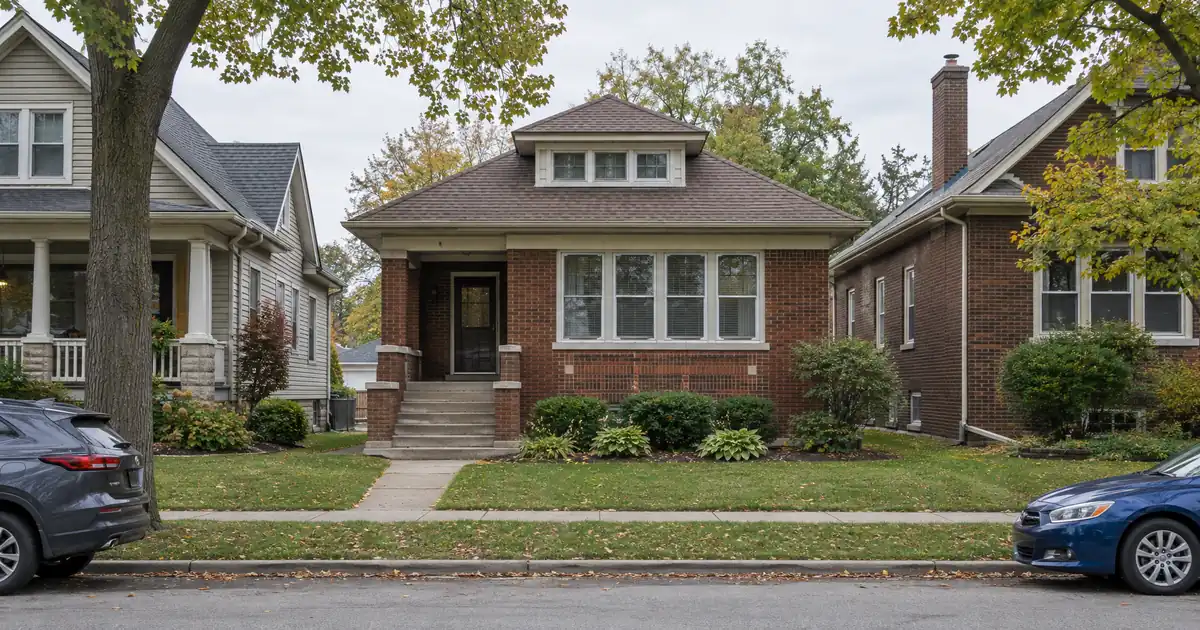
If you own a rental in Crystal Lake worth around $369,500, here’s what most brokers won’t tell you: the equity is real, but the cash-out amount hinges on what the rent covers, not on what the house appraises for. Houzeo puts the median home price at $369,500, with homes moving in 42 days and just 0.62 months of supply. Appreciation has built the equity. Whether it converts into capital depends on a coverage ratio that single-family rentals here often struggle to clear by much.
DSCR Cash-Out Calculator
Run the cash-out numbers in Crystal Lake, IL
Rate source: Freddie Mac 30-yr average via FRED® — Federal Reserve Bank of St. Louis · effective Sep 24, 2026
Prefilled with starting assumptions — enter your property’s value, balance, taxes, and insurance for a more accurate picture.
Program parameters update from Lendmire’s centralized guideline source. Taxes and insurance are editable estimates.
As of Sep 24, 2026 · General Freddie Mac market benchmark, not a Lendmire loan offer. Property value, balance, taxes, and insurance are editable estimates. Maximum loan-to-value varies by lender, program, property type, and seasoning. Not a Loan Estimate, approval, or commitment to lend. Program availability and eligibility are subject to lender guidelines, credit approval, property review, and underwriting.
The Quick Read:
A DSCR cash-out refinance on a Crystal Lake, Illinois rental is underwritten primarily on the property’s rental income measured against its full monthly obligation, with lenders typically reviewing seasoning, a 75% LTV ceiling, reserves, and appraised value to size any proceeds.
- Renters occupy only 22% of households, so rent comps run thin (RentCafe).
- Downtown’s $353K median sale price sits below citywide medians (Redfin).
- Two-to-four-unit buildings are scarce, so duplex appraisals may rely on sparse comps.
- Hundreds of new downtown apartment units argue for a conservative rent cushion.
- Single-family coverage at 75% LTV runs near 1.00x, while duplexes can run meaningfully higher.
Crystal Lake Market Snapshot
A quick read on the Crystal Lake investor landscape — figures come from the cited sources below. Confirm current property-level numbers before underwriting.
| Metric | Detail |
|---|---|
| Home prices | $420,886 median value (NeighborhoodScout) |
| Typical rents | $1,475 and $1,375 rents (Realmo Crystal Lake multifamily) |
| University enrollment | +670 students spring 2025 (Shaw Local / Northwest Herald) |
| Employment | 4,000+ employees (2013) (Centegra Health System) |
What Has the Equity Actually Done?
Crystal Lake equity has grown steadily rather than explosively, and the downtown core has outpaced the city. Citywide appreciation runs between roughly 2.6% and 4.3% depending on the source, while downtown posted nearly 10%. Seasoning, about 6 months of ownership measured from title recording, is rarely the constraint here.
Start with the spread. Houzeo reports the median up 2.64% year over year. Zillow shows an average home value of $388,566, up 4.3%. The two figures use different methodologies, since one is a median of sales and the other a modeled average of all values, so treat the gap as measurement, not disagreement. Downtown is the outlier: Redfin shows a $353K median sale price there, up 9.9% year over year, at $228 per square foot, with an average of two offers and about 44 days on market.
Houzeo also shows a 99.55% sale-to-list ratio. That tells an owner two things. Appraisers are likely to see comps that support value. And the market doesn’t offer much discount inventory, so the next purchase will cost real money. That’s the entire case for pulling equity out: the capital is worth more deployed than parked.
The equity-extraction math is simple in structure. A DSCR cash-out refinance caps at 75% LTV, which is a different ceiling than a purchase. The lender takes the appraised value, applies that ceiling, subtracts the existing payoff, and then tests whether rent covers the new full obligation. The proceeds are the smaller of what LTV allows and what coverage supports. For the mechanics in detail, see DSCR cash-out refi mechanics. Terms vary by lender guidelines, property type, leverage, credit profile, and full file review.
Why Rent Holds Up in a 78% Owner-Occupied City
Crystal Lake’s rental demand rests on commuters, healthcare workers, and a county seat’s worth of public-sector jobs, and it is concentrated in a small renter pool. RentCafe counts 3,315 renter-occupied households against 11,491 owner-occupied ones.
That thin base cuts both ways. NeighborhoodScout reports that single-family detached homes make up 66.47% of housing units, and RentCafe’s tracking of larger buildings finds only 50-plus-unit garden-style communities. Competing small rentals are scarce. Comp depth is also scarce. Both facts matter to a refinance.
The commuter angle is the differentiator. According to the City of Crystal Lake, the city sits about an hour northwest of Chicago and has two Metra stations on the Union Pacific Northwest Line. Per Wikipedia’s line profile, most trains on that line terminate in Crystal Lake, making it the practical outer-edge one-seat ride to the city. Tenants who want that ride pay for proximity. Data USA puts average commute time at 29.3 minutes, which hints that many residents work locally, too.
Local demand anchors back it up:
- Data USA reports 22.2K employed residents, led by manufacturing (2,880), health care and social assistance (2,742), and retail trade (2,369). Those count residents by industry, not jobs inside city limits. – Northwestern Medicine McHenry Hospital, nearby, is a 143-bed teaching hospital with 600-plus physicians. Northwestern Medicine absorbed Centegra, the former largest independent employer in McHenry County, and operates an outpatient site in Crystal Lake itself. – McHenry County College sits on U.S. 14 on the northwest side. Per U.S. News, enrollment is 7,814. It’s a commuter campus, so it adds modest student-and-staff rental demand, not a dorm market.
- A local employer guide lists McHenry County government at an estimated 2,000-plus employees. Treat that as approximate.
The pattern is durable mid-income tenants, nurses and technicians among them, drawn to 2-3 bedroom units near downtown and the train. Durable beats exciting. Don’t expect rent growth to outrun that.
The Coverage Math at 75% (Where Single-Family Gets Tight)
At a 75% LTV cash-out, a typical Crystal Lake single-family rental produces coverage near 1.00x once taxes and insurance are in the denominator, so single-family owners should expect thin proceeds. Duplexes do better. The cushion comes from stacked rent, not from lower price. Exact terms depend on the lender’s guidelines, property type, leverage, and a full review of the borrower’s file.
Here’s how DSCR is calculated: monthly rent used for lender review divided by the full monthly obligation, meaning principal, interest, taxes, insurance, and any HOA dues. The baseline for most standard programs is 1.00x, though some lenders review lower ratios with compensating factors, and eligibility always depends on credit, reserves, and property review. For the underlying mechanics, the DSCR qualification mechanics cover it.
Run the numbers on a modeled single-family case. Take a three-bedroom valued near the citywide median, with rent anchored to Apartment Finder’s three-bedroom average of $2,713. Those are modeled inputs, not a specific property. At 75% LTV and including taxes and insurance, coverage lands around 1.0x to 1.05x. Drop the rent assumption to $2,400, closer to the lower sources, and the number slides to roughly 0.9x. (Source spreads matter: Apartments.com shows an average of $1,820 citywide, and RentCafe shows $2,038.) Every figure here varies by lender and program — guidelines, property type, leverage, and credit profile all apply.
Downtown helps a little. A downtown-priced property near the $353K median, with a $2,400 to $2,700 rent assumption, models at roughly 1.0x to 1.10x, rounded down and inclusive of taxes and insurance. Apartments.com puts the average condo rent at $2,057, so condos and townhomes need a lower-priced entry to clear the same line.
Below 1.00x, the paths are structural. A lender may review a sub-1.00 program, an interest-only structure, or a lower LTV that trims the proceeds. All of that is subject to lender guidelines, credit approval, reserves, and property review. None of it is a promise.
Here’s what DSCR files in markets like this one typically look like: owner-occupied suburbs with a thin rental stack produce files where the appraisal rarely fails but the coverage ratio does the limiting. Borrowers often arrive expecting the full 75% of appraised value and leave with a smaller number because rent, not value, set the ceiling. The better files show up with a signed lease at market rent and a clear picture of reserves before submission. Reserves of about 6 months of the full obligation are the typical expectation.
One more point on credit. Lender tiers commonly run from 620 up through 700, and pricing and leverage tighten at the bottom of that ladder. Details vary by program and borrower.
Duplexes: The Scarce Product Worth Hunting
Two-to-four-unit buildings are the best income-stacking structure in Crystal Lake, and they barely exist. Redfin’s multi-family page showed 2 listings at a $320K median list price. Homes.com showed 4 listings between $299,000 and $340,000, though that snapshot is dated.
A price band of $299K to $340K sits below the citywide medians. One listing aggregator, Realmo, showed a two-unit building with units rented at $1,475 and $1,375, under a mile from the train station. That’s $2,850 combined, which exceeds what one house typically rents for. It’s a single listing, not a market average, and no price was attached, so use it as an illustration.
Modeled at a $320K value, 75% LTV, and that combined rent, coverage runs around 1.2x including taxes and insurance, rounded down. That’s a materially stronger ratio than the single-family case. Local unit mixes near downtown, 1BR/2BR or 2BR/2BR within walking distance of Metra, are what stacked income looks like here. Final terms depend on lender guidelines, property type, leverage, and the borrower’s complete credit picture.
Now the catch. Per Redfin, most homes for sale in Crystal Lake sit for 81 days, 34 homes sold in the past month, and only about 6 multi-family units were for sale. Appraisers of small multifamily may lean on sparse or older comps, which can pull value, and therefore the cash-out amount, below an owner’s expectation. Plan for appraisal risk on any multi-unit refinance. Don’t assume single-family comp depth.
The duplex-versus-single-family comparison is a genuine toss-up on liquidity. Duplexes win on coverage; single-family wins on how easily the asset sells later. An owner planning a long hold and a second purchase from the proceeds probably favors the duplex. An owner who may sell within a few years might not.
Don’t Underwrite Downtown Rents Climbing Forever
New downtown supply is the main vacancy risk, and an owner of older small rentals should underwrite a cushion. No sourced vacancy rate or absorption figure exists for Crystal Lake, so this is inference, not measurement.
The pipeline is visible. Bisnow, in a sponsored piece, describes The Enclave downtown with 99 apartment and townhouse units a short walk from Metra, and Water’s Edge with 240 apartments and 20 townhomes. A Northwest Herald report adds a developer’s 93-unit apartment proposal on Exchange Drive. Some of these may not be built or delivered on schedule.
Measure that against the base. RentCafe counts about 3,300 renter households citywide. Hundreds of new amenity-rich units are large relative to that. They compete directly with the 1BR/2BR duplex product near the train. The visible effect would be concessions or slower rent growth, not collapse.
The practical response is simple. Underwrite on rents with room to spare, size the refinance so coverage clears with a cushion, and don’t count on the 4.01% year-over-year rent gain RentCafe reports continuing at that pace near downtown. Rent growth is a bonus. Coverage is the requirement.
Where the Proceeds Go
Cash-out proceeds are acquisition capital, and in Crystal Lake that mostly means a down payment on the next small rental. The constraint is the product: scarce duplexes, a seller-leaning single-family market, and few discounts.
Picture an investor holding a downtown-adjacent rental with years of appreciation behind it. The refinance converts that paper gain into capital. The next purchase then has to clear coverage on its own, because a second property financed against rent at a thin ratio only compounds the problem. That’s the discipline: pull equity only when the next target models at or above 1.0x on its own.
DSCR vs. conventional financing
There are two common ways to finance an investment property in Crystal Lake, IL, and they qualify you differently — here’s how investors weigh them.
Why investors choose it
- Qualifies on the property’s rental income — no personal tax returns, W-2s, or pay stubs needed to document income.
- No personal debt-to-income ceiling to clear, so existing mortgages and obligations don’t cap your borrowing the same way.
- Can be closed in an LLC, keeping the property inside a business entity.
- Built for scaling — not held to the limit on number of financed properties that conventional financing applies.
- Underwriting centers on the deal: generally qualifies when the rent covers the payment, a 1.00x coverage ratio being a common baseline (confirmed in underwriting).
- Designed specifically for investment property, including long-term and, where the program allows, short-term rentals.
Where it’s strong
- Often the lowest ongoing financing cost for a buyer who fully qualifies on personal income — a fit for a first property or a cost-first purchase.
Trade-offs for investors
- Requires full personal income documentation and must fit within a debt-to-income limit — salary, existing debts, and other mortgages all count.
- Typically held in your personal name rather than a business entity.
- Caps how many financed properties you can carry, which can become a ceiling as a portfolio grows.
- Evaluates you as a borrower as much as the property, which usually means more paperwork.
How investors usually choose: a first or single property often optimizes for the lowest financing cost; portfolio builders often optimize for leverage, vesting in an LLC, and scaling past conventional caps. The right answer depends on your goals, the property, and current guidelines — both paths run through select lenders in Lendmire’s wholesale network, with eligibility and terms confirmed in underwriting.
Some owners instead weigh a rate-and-term refinance against a cash-out. Lendmire’s investor refinance guide walks through that choice. Others compare the whole structure to a bank loan; Lendmire’s comparison of conventional and DSCR investor loans covers where income documentation differs. For Illinois-wide program context, see Lendmire’s Illinois DSCR loan programs.
Loan sizes run up to $3,000,000 on standard programs, with smaller balances routed through select lenders in the network. Almost no Crystal Lake rental approaches that ceiling. The binding constraint is coverage. Investors weighing a refinance can reach Lendmire at 828-256-2183 or request a quote to see how a specific file models, subject to lender guidelines and program terms.
Frequently Asked Questions
How do you qualify for a DSCR loan in Crystal Lake?
Qualification centers on the property, not the owner’s traditional personal-income documentation. Lenders divide expected monthly rent by the full monthly obligation and look for a ratio at or above roughly 1.00x on most standard programs. They also review credit tiers (commonly 620 through 700), reserves of about 6 months, and the appraisal. Eligibility varies by borrower, property, and lender.
What are the requirements for an investment property cash-out refinance in Crystal Lake, Illinois?
Expect a 75% LTV ceiling, about 6 months of ownership measured from title recording, a minimum coverage ratio near 1.00x, and reserves. Appraisal and rent support set the final proceeds, so equity is never a guaranteed cash figure. Details depend on the program and borrower profile. These specifics are subject to lender guidelines and a full review of property, leverage, and credit.
How long before a Crystal Lake rental can be cashed out?
About 6 months of ownership, measured from the date the title was recorded. Appreciation during that window helps, but the seasoning clock doesn’t care about market gains. A recently renovated property may be reviewed differently, so the full file matters.
Why do Crystal Lake duplexes appraise differently than single-family homes?
Comp depth is the issue. Redfin shows only about 6 multi-family units for sale in a month, so appraisers may rely on older or distant sales. That can pull the appraised value below what the rent suggests. Single-family homes, with 34 sales in the past month, offer a deeper comp set.
For current guidelines and terms, see Lendmire’s DSCR loan programs page.
Where the Asymmetry Sits
The mispriced piece of Crystal Lake is the two-to-four-unit building near the downtown Metra station: priced between roughly $299K and $340K, below the citywide medians, yet stacking rent that single-family homes can’t match. Owners of those buildings, or investors who build equity in one, hold the strongest coverage in a city where most rentals barely clear 1.00x. Per the U.S. Census Bureau and Data Commons, the city’s population of 41,513 keeps feeding demand for a product that the market barely builds.
About Lendmire
A non-QM mortgage broker (NMLS# 2371349), Lendmire arranges DSCR financing for real estate investors in 41 markets, spanning 40 states plus Washington, D.C. Because deals are underwritten primarily on property cash flow rather than personal income documentation, the structure suits self-employed buyers and entity-owned portfolios, depending on lender program eligibility. Lendmire places loans through wholesale investor lenders and is not a direct lender. The firm is recognized as a 2026 Scotsman Guide Top Workplace and a 2025 Scotsman Guide Top Mortgage Workplace.
Get Started
Ready to find the right loan for you?
In about 30 seconds you can review financing options available for your investment property. No commitment required.
Informational only. Not a Loan Estimate, approval, or commitment to lend. Program availability and eligibility are subject to lender guidelines, credit approval, property review, and underwriting.
References
1. Houzeo
2. RentCafe
3. Redfin
5. Realmo
6. Shaw Local / Northwest Herald
8. Zillow
10. Data USA
11. Northwestern Medicine McHenry Hospital
13. Apartments.com
14. Bisnow
16. a 2026 Scotsman Guide Top Workplace
17. a 2025 Scotsman Guide Top Mortgage Workplace
19. Data Commons
This article is part of Lendmire’s investment property cash-out refinance program — full qualification details, guidelines, and scenarios live on the program page.
Related reading: Luxury Rental DSCR Loans In New Jersey · Jersey Shore Vacation Rental Loans: DSCR Financing In Ocean City, Cape May And Long Beach Island · DSCR Cash-out Refinance In New Jersey: Pulling Equity From A Rental
Guides: Investment Property Cash-Out Refinance in Illinois
Brandon Miller
Founder & CEO, Mortgage Loan Originator, Lendmire LLC
- Mortgage Loan Originator · NMLS# 1129696 · Verify on NMLS Consumer Access
- North Carolina Real Estate Broker · License# 343312 · Verify on NCREC
- North Carolina Insurance Producer · License# 19053198 · Property, Casualty, Life, Health · Verify on NAIC SBS
- Lendmire LLC · Firm NMLS# 2371349 · Verify firm licensure
Disclosures. The information presented in this article is general market commentary, not financial, legal, or tax advice. Lendmire is a mortgage brokerage (NMLS# 2371349) — not a direct lender or depository institution — and loan placement is subject to lender underwriting. Nothing in this content represents a commitment to lend. Loan terms, pricing, and program availability vary based on borrower qualifications, property characteristics, and state of subject property, and are subject to change at any time. Lendmire complies with Equal Housing Opportunity requirements. Consumer access: nmlsconsumeraccess.org.