
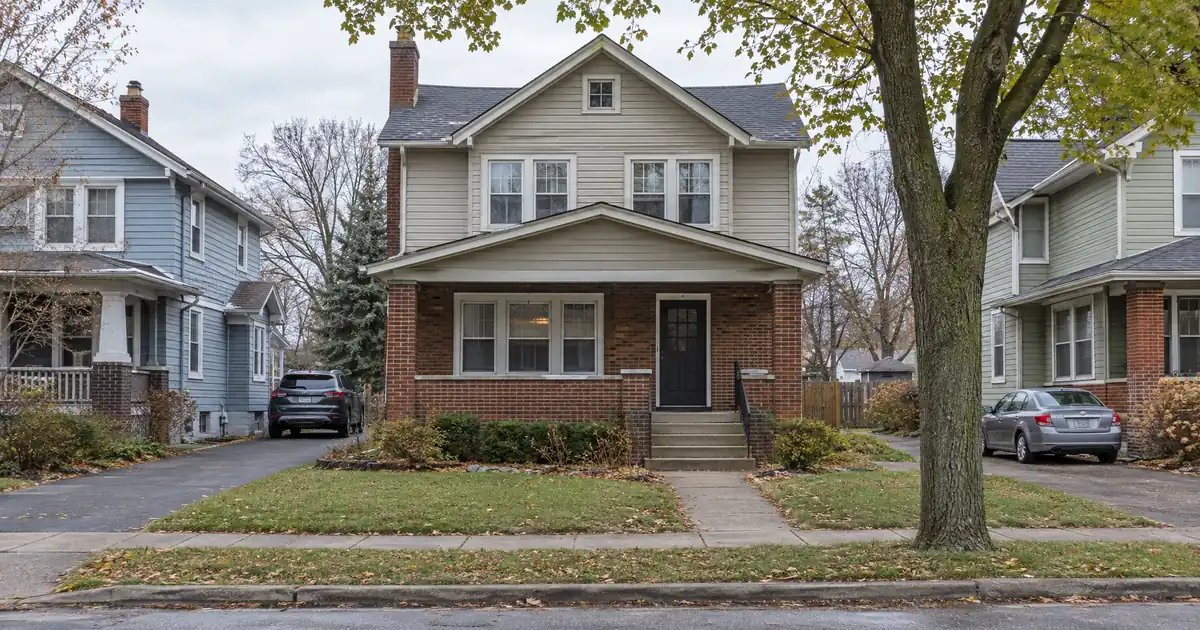
An out-of-state investor scrolling Cuyahoga Falls listings sees a $230,000 median sale price per local MLS data from The Realize Team and assumes a plain single-family market. The better story is in the older two-family stock a few blocks from Front Street, where the price per door sits well below the median house. For real estate investors in Cuyahoga Falls, Ohio, Lendmire (NMLS# 2371349) helps structure and place DSCR financing through wholesale lenders operating in 41 markets, including D.C. This article covers pulling equity out of a rental you already own here, and the paperwork that decides whether the file stays clean.
DSCR Cash-Out Calculator
Run the cash-out numbers in Cuyahoga Falls, OH
Rate source: Freddie Mac 30-yr average via FRED® — Federal Reserve Bank of St. Louis · effective Sep 24, 2026
Prefilled with starting assumptions — enter your property’s value, balance, taxes, and insurance for a more accurate picture.
Program parameters update from Lendmire’s centralized guideline source. Taxes and insurance are editable estimates.
As of Sep 24, 2026 · General Freddie Mac market benchmark, not a Lendmire loan offer. Property value, balance, taxes, and insurance are editable estimates. Maximum loan-to-value varies by lender, program, property type, and seasoning. Not a Loan Estimate, approval, or commitment to lend. Program availability and eligibility are subject to lender guidelines, credit approval, property review, and underwriting.
The Quick Read:
A cash-out refinance in Cuyahoga Falls, Ohio, is underwritten primarily on the property’s rental income measured against its full monthly obligation, and the local twist is that older two-family buildings with documented leases often carry the coverage, while single-family rentals at the median price lean on lower leverage to clear the 1.00 benchmark.
- Median sale price sits near $230,000 per The Realize Team’s MLS data, essentially flat year over year.
- Cash-out is capped at 75 percent LTV, with about 6 months of ownership measured from title recording.
- Summit County multifamily listings carry a median ask near $185K per Redfin.
- Month-to-month duplex tenancy is the most common documentation gap on local small-building files.
- Reserves typically run about 6 months of PITIA, subject to lender guidelines.
The Two-Family Core Near Sackett Avenue and Front Street
The inner grid around Sackett Avenue, Front Street, and the 44221 core is the strongest cash-out candidate pool in the city. It holds the older two-family stock where several rent streams sit against one loan. Coverage on these buildings can clear 1.00 with room to spare, where a single-family rental at the same rent-to-price ratio cannot.
The price gap is the reason. City-Data’s Census-derived figures put the mean value of 2-unit structures near $181,399 and 3–4 unit structures near $180,096, against an estimated median house value of $201,393. A whole building costs about what a house costs. The rent is stacked across doors.
Run the numbers on a modeled duplex valued around $180,000, with two units each renting at $850 (a figure drawn from an anecdotal Summit County listing of a month-to-month duplex). At 75 percent LTV, coverage lands around 1.4x including taxes and insurance. Those are modeled assumptions, not sourced market data.
Front Street adds a second signal. The Ohio Auditor’s report on the city notes the former pedestrian mall reopened to vehicles after a long construction project, and the corridor is now a riverfront restaurant district. A downtown Front Street building has also added 34 newly constructed apartments, per Apartments.com. That is a supply signal worth watching, not a sourced oversupply finding. New downtown units compete for the same renters as older duplexes nearby, so test rents on recent comps.
The older stock has a downside. Many of these buildings date to the 1900s through the 1970s, and listings show a mix of updated units and buildings priced to reflect needed work. Capex reserves belong in the plan before the file goes in.
Where the Rent Numbers Come From (and Where They Don’t)
Rent data for this city conflicts, and a cash-out file lives or dies on which number the lender accepts. RentCafe shows an average apartment rent of $1,197, up 4.4 percent. Zillow Rental Manager shows $1,295 across all bedroom counts and property types. Apartments.com shows an overall average of $965, but about $1,377 for a two-bedroom and $1,734 or more for a three-bedroom. The Census-derived median gross rent on City-Data is $1,055.
The spread is real. Averages that include small studios and one-bedrooms drag the overall number down. Two- and three-bedroom units, which is what most older duplexes contain, rent higher. Pick the figure that matches the unit mix on your file. Don’t borrow the citywide average.
One caution. RentCafe’s own bedroom breakdown shows three-bedrooms renting below two-bedrooms, which is a small-sample artifact. Skip that table.
On the Northampton and Bath Road employment district side (44223), a few asking-rent listings show a three-bedroom house near $1,725 and a two-bedroom near $1,295. Those are a handful of asking rents. Use them as anecdotes, not comps. Appraisers will want closed leases and a rent schedule, not listing prices.
For the northeast section (44221), NeighborhoodScout reports a 2.9 percent vacancy rate. That is a neighborhood-level datapoint with no citywide equivalent. Treat it as supportive, not conclusive.
Skip the North Side for Stacking
The north side, including Steels Corners, Brook Heights, and River Estates, leans owner-occupant and park-adjacent. It is poorly suited to rental stacking. Single-family rentals there can still work, but the price per door is high and the coverage math follows the single-family pattern below.
The Merriman Valley and Cuyahoga Valley National Park edge on the Akron border shows a median rent of $850 in Redfin’s table, but the sample is tiny. Don’t underwrite off it. Cuyahoga Falls spans 25.8 square miles per Census Reporter, and the dense inner grid and suburban north side behave like two different markets. The city’s land area traces partly to Ohio’s first successful township-city merger with Northampton Township, according to Akron Legal News.
The River Project at the Edge of Downtown
The city’s differentiator is the Cuyahoga River itself. Dam removals already opened the downtown river to Class II through Class V rapids and produced the annual kayak race that evolved into Cuyahoga Falls Fest. The multi-year Gorge Dam project, at $130 million-plus, targets the last dam on the river. The EPA says it returns a significant portion of the river to a free-flowing state for the first time in over 100 years.
Signal Akron reports that dredging comes first, with dam removal following. Summit Metro Parks says the project will create recreational opportunities and drive economic development.
Here is what the file can and can’t use. No data ties the project to rents or values. An appraiser works from closed sales, and a lender works from the rent schedule. Treat the river as a long-term demand backdrop, not a number that belongs in the coverage calculation.
What Does the Cash-Out Math Look Like?
Single-family at the median struggles to reach 1.00 at full leverage. Two-family stock clears it more comfortably. The table below uses modeled assumptions, with coverage computed on full PITIA including taxes and insurance, and rounded down.
| Factor | Single-family | Two-family |
|---|---|---|
| Modeled value | $230,000 | $180,000 |
| Modeled rent | $1,295 | $850 per unit |
| Leverage | 75 percent LTV | 75 percent LTV |
| Coverage, full PITIA | Low-to-mid 0.8x | About 1.4x |
The single-family figure is the story. Take the $230,000 median with Zillow’s $1,295 average rent, and coverage lands in the low-to-mid 0.8 range at 75 percent LTV. Drop leverage and it improves, but it stays under 1.00 at moderate cuts. A three-bedroom renting near Apartments.com’s three-bedroom average of $1,734 changes the picture, landing in the low 1.1 range. That is why bedroom count and in-place rent decide these files.
Most standard DSCR programs are built around a 1.00x benchmark because rent covers the payment at that level. When a property lands below it, a lender may review other paths: a sub-1.00 program, an interest-only structure, or lower leverage with stronger compensating factors. Each carries different leverage limits and pricing. Qualification stays subject to lender guidelines, credit approval, and property review.
Investors weighing the two property types face a genuine toss-up. The duplex has better coverage and more capex risk. The single-family has cleaner tenancy and thinner coverage. For a cash-out designed to fund the next purchase, coverage cushion usually wins.
Seasoning, Reserves, and the 75 Percent Ceiling
Cash-out on a DSCR refinance caps at 75 percent LTV, and the cap holds regardless of how strong the coverage is. Seasoning runs about 6 months of ownership, measured from title recording. The settlement statement or recorded deed documents it. Files that assume seasoning away are the ones that get kicked back.
The remaining parameters, all subject to lender guidelines:
- Credit: 620 is the floor, and the tiers at 660, 680, and 700 generally open better leverage options.
- Reserves: typically about 6 months of PITIA, documented with statements.
- Loan size: up to $3,000,000 on standard programs. Smaller balances, common on older Cuyahoga Falls duplexes, route through select lenders in the network.
- Coverage: a 1.00 benchmark on rent used for lender review against PITIA.
Available equity depends on rent used for lender review, PITIA, reserves, and the 75 percent ceiling. It is not a guaranteed cash figure. Some investors confuse the appraised value with the amount they can pull. The cap applies to value, and the payoff of the existing loan comes out first. For more on the mechanics, see the guide “The Refi Options” and Lendmire’s refi programs.
Where Cuyahoga Falls Files Stall
Documentation gaps, not coverage math, derail most small-building files here. The recurring ones:
Month-to-month tenancy. Listings across the city show duplexes and small portfolios, including a package of three 2-unit buildings, with mostly month-to-month tenants, per Realmo’s listing feed. Lenders typically want leases. Without them, expect the lender to lean on the appraiser’s rent schedule, and the lower of in-place or market rent typically governs. Confirm the treatment with the lender before ordering the appraisal. Converting tenants to written leases before the file goes in removes the issue.
In-place rent below market. A duplex rented at $850 a unit sits well below the $1,377 two-bedroom average. That is a value-add path. It is also a coverage constraint until leases reflect the higher rent.
Appraisal comps on older stock. Sales comps for 1950-era duplexes are thin, and appraisers can come in light. A reconsideration packet with recent in-neighborhood sales and condition adjustments is a routine step, not an emergency move.
Entity documents. If the property sits in an LLC, the operating agreement, articles, and good-standing certificate need to match the vesting on title, subject to lender program eligibility. A mismatch holds up clearing title.
Insurance completeness. The quote needs to cover every unit and reflect the actual building. A single-family quote on a duplex gets rejected.
Working DSCR brokers see a recurring pattern in older inner-ring two-family markets like this one: the coverage ratio clears easily, and the file stalls on lease evidence and rent-roll clarity. The cleanest files arrive with signed leases, a rent roll that matches the lease terms, a current insurance binder, and entity documents that match title. That package keeps the review focused on the property, not on gaps.
Tenant Demand Behind the Numbers
The renter base here is steady, not explosive. Census Reporter’s ACS data shows 50,909 residents and a median household income of $72,705. RentCafe counts 8,434 renter-occupied households against 14,776 owner-occupied, so roughly 36 percent of households rent. The Census Bureau’s QuickFacts page is the official reference for the headline population count.
Demand follows employment. Cuyahoga Falls is the second-largest city in Summit County and is closely tied to Akron’s job market, and Akron Legal News reports that the bulk of residents continue to work in Akron. Local employers named in sources include GOJO Industries, Associated Materials, and Americhem. In the Cuyahoga Falls, Stow, and Tallmadge area, Data USA lists hospitals (3,774 people), schools (3,478), and construction (2,780) as the largest industries. Western Reserve Hospital, a physician-owned hospital, sits inside the city. No employer headcounts were found, so none are stated here.
DSCR vs. conventional financing
There are two common ways to finance an investment property in Cuyahoga Falls, OH, and they qualify you differently — here’s how investors weigh them.
Why investors choose it
- Qualifies on the property’s rental income — no personal tax returns, W-2s, or pay stubs needed to document income.
- No personal debt-to-income ceiling to clear, so existing mortgages and obligations don’t cap your borrowing the same way.
- Can be closed in an LLC, keeping the property inside a business entity.
- Built for scaling — not held to the limit on number of financed properties that conventional financing applies.
- Underwriting centers on the deal: generally qualifies when the rent covers the payment, a 1.00x coverage ratio being a common baseline (confirmed in underwriting).
- Designed specifically for investment property, including long-term and, where the program allows, short-term rentals.
Where it’s strong
- Often the lowest ongoing financing cost for a buyer who fully qualifies on personal income — a fit for a first property or a cost-first purchase.
Trade-offs for investors
- Requires full personal income documentation and must fit within a debt-to-income limit — salary, existing debts, and other mortgages all count.
- Typically held in your personal name rather than a business entity.
- Caps how many financed properties you can carry, which can become a ceiling as a portfolio grows.
- Evaluates you as a borrower as much as the property, which usually means more paperwork.
How investors usually choose: a first or single property often optimizes for the lowest financing cost; portfolio builders often optimize for leverage, vesting in an LLC, and scaling past conventional caps. The right answer depends on your goals, the property, and current guidelines — both paths run through select lenders in Lendmire’s wholesale network, with eligibility and terms confirmed in underwriting.
Zillow labels the rental market “cool,” and rent growth runs from 2.8 percent on Apartments.com to 4.4 percent on RentCafe. Appreciation is modest, roughly flat to up 5 percent depending on the source. Zillow’s ZIP 44222 page shows an average home value of $223,635, up 4.8 percent. Supply is tight at 0.78 months.
That combination shapes the strategy. Modest appreciation means a cash-out here is rarely a bet on a value jump. It works on in-place equity and rent improvements, which is why value-add duplexes are the better fit. Verify current local rental rules, taxes, and insurance with qualified local professionals.
Putting the Proceeds to Work
The point of the cash-out is the next acquisition. A borrower holding a rehabbed duplex, seasoned past the 6-month mark and appraised above its purchase basis, can recover capital at up to 75 percent LTV and redeploy it into another small building. Because a whole 2–4 unit building costs about what a house costs, that capital buys a lot of doors. Reserves for the new property still need documentation, so the proceeds do not all go to the down payment.
Coverage on the refinanced property needs to hold up too. A cash-out that pushes coverage below the benchmark defeats the purpose, so run the new payment against the realistic rent before applying, not after. Lendmire’s DSCR walkthrough covers how the ratio is calculated, and the guide “Where DSCR and Conventional Diverge” page covers how this compares with conventional financing. Investors can also review DSCR loans in Ohio for state-level context, then get a rental-income loan quote or call 828-256-2183 with a rent roll in hand.
The investors who season their duplexes, paper their leases, and pull equity while the river downtown is still being reshaped will own the best doors in Cuyahoga Falls when the project finishes.
Frequently Asked Questions
How do you qualify for a DSCR cash-out refinance in Cuyahoga Falls?
Qualification centers on the property’s rent against its full monthly obligation, with a 1.00 benchmark on most programs. Typical guidelines include about 6 months of ownership from title recording, a credit floor of 620, and about 6 months of PITIA in reserves. Final eligibility depends on lender guidelines, credit approval, and property review.
What are the requirements for an investment property loan in Cuyahoga Falls, Ohio?
Files generally need a lease or appraiser rent schedule, a property insurance quote covering the actual unit count, entity documents if an LLC holds title, and reserves documentation. Cash-out is capped at 75 percent LTV. Smaller balances, common on older duplexes here, route through select lenders in the network.
Does a single-family rental at the city median work for a cash-out here?
It is difficult at full leverage. Modeled on the $230,000 median and a $1,295 average rent, coverage including taxes and insurance lands in the low-to-mid 0.8 range at 75 percent LTV. A larger three-bedroom with stronger rent, lower leverage, or a sub-1.00 program may change that, subject to lender review.
How do month-to-month tenants affect a duplex refinance in Cuyahoga Falls?
They create friction, not a disqualification. Lenders typically want leases, so month-to-month units may be underwritten on the appraiser’s rent schedule, and the lower of in-place or market rent typically governs. Written leases before the file goes in remove most of the issue.
How do DSCR lenders review rental income instead of traditional tax-return income in Ohio?
Lendmire arranges DSCR investor loans, and lenders in the network generally review the property’s rent against its monthly obligation instead of personal income documents. That structure suits LLC-held rentals and self-employed investors, subject to program terms.
For current guidelines and terms, see Lendmire’s DSCR loan programs page.
About Lendmire
Lendmire is a DSCR-focused mortgage brokerage, NMLS# 2371349, placing investor loans across 41 markets, including Washington, D.C. Lenders in the network generally review eligibility around a property’s rental income rather than personal income documentation, which fits LLC-held rentals, self-employed investors, and portfolios growing past conventional financed-property limits. Lendmire is recognized as a 2026 Scotsman Guide Top Workplace and a 2025 Scotsman Guide Top Mortgage Workplace.
Get Started
Ready to find the right loan for you?
In about 30 seconds you can review financing options available for your investment property. No commitment required.
Informational only. Not a Loan Estimate, approval, or commitment to lend. Program availability and eligibility are subject to lender guidelines, credit approval, property review, and underwriting.
References
1. The Realize Team, Cuyahoga Falls housing market update
2. Redfin
3. Census Bureau’s QuickFacts page
4. Ohio Auditor’s report on the city
6. RentCafe, Cuyahoga Falls rent trends
8. Apartments.com, Cuyahoga Falls rent trends
10. EPA, Cuyahoga Gorge Dam cleanup
11. Signal Akron, Gorge Dam removal
12. Summit Metro Parks, Free the Falls
14. Data USA
17. a 2026 Scotsman Guide Top Workplace
18. a 2025 Scotsman Guide Top Mortgage Workplace
This article is part of Lendmire’s investment property cash-out refinance program — full qualification details, guidelines, and scenarios live on the program page.
Related reading: Luxury Rental DSCR Loans In New Jersey · Jersey Shore Vacation Rental Loans: DSCR Financing In Ocean City, Cape May And Long Beach Island · DSCR Cash-out Refinance In New Jersey: Pulling Equity From A Rental
Guides: Investment Property Cash-Out Refinance in Cuyahoga Falls, OH · Investment Property Cash-Out Refinance in Ohio
Brandon Miller
Founder & CEO, Mortgage Loan Originator, Lendmire LLC
- Mortgage Loan Originator · NMLS# 1129696 · Verify on NMLS Consumer Access
- North Carolina Real Estate Broker · License# 343312 · Verify on NCREC
- North Carolina Insurance Producer · License# 19053198 · Property, Casualty, Life, Health · Verify on NAIC SBS
- Lendmire LLC · Firm NMLS# 2371349 · Verify firm licensure
Compliance and disclosures. Lendmire (NMLS# 2371349) is a licensed mortgage broker and is not a direct lender, depository institution, financial advisor, or tax professional. Content in this article is general market analysis and educational information — not financial, legal, or tax advice for any specific situation. Lendmire does not guarantee loan approval; every transaction is subject to underwriting by the funding lender. Mortgage pricing and loan program guidelines are subject to change at any time without notice and vary by borrower characteristics, property type, and state regulations. Lendmire complies with Equal Housing Opportunity. Licensure verification: NMLS Consumer Access.