
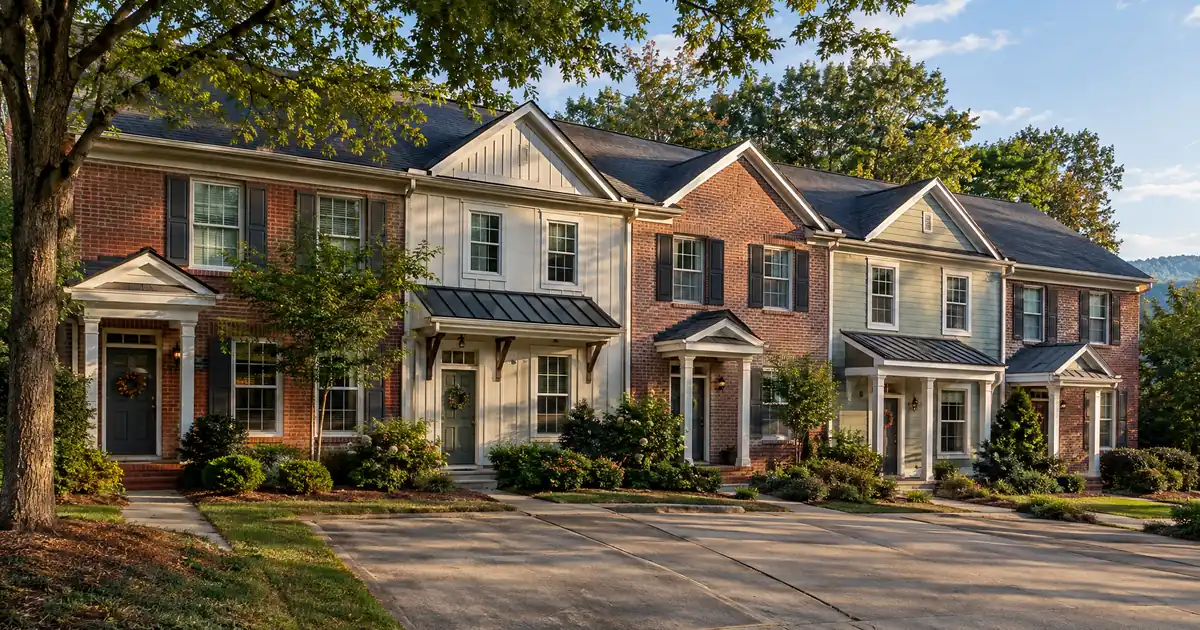
If you own a duplex or ranch near UNCG and expect Greensboro appreciation to hand you the cash-out, the market won’t. Zillow puts the typical Greensboro home value at $265,428, up just 0.3 percent over the year. A DSCR cash out refinance on an investment property here is a basis-and-rent play, not a drift play. The investors who pull equity cleanly are the ones who bought low, added value and hold units that rent.
TL;DR: A DSCR cash out refinance in Greensboro, North Carolina is underwritten primarily on the property’s rental income measured against its full monthly obligation. With typical home values up only 0.3 percent year over year per Zillow, equity comes from purchase basis and renovation rather than market drift, subject to lender guidelines.
DSCR Cash-Out Calculator
Run the cash-out numbers in Greensboro, NC
Rate source: Freddie Mac 30-yr average via FRED® — Federal Reserve Bank of St. Louis · effective Sep 24, 2026
Prefilled with starting assumptions — enter your property’s value, balance, taxes, and insurance for a more accurate picture.
Program parameters update from Lendmire’s centralized guideline source. Taxes and insurance are editable estimates.
As of Sep 24, 2026 · General Freddie Mac market benchmark, not a Lendmire loan offer. Property value, balance, taxes, and insurance are editable estimates. Maximum loan-to-value varies by lender, program, property type, and seasoning. Not a Loan Estimate, approval, or commitment to lend. Program availability and eligibility are subject to lender guidelines, credit approval, property review, and underwriting.
- Cash-out tops out at 75 percent LTV, with about six months of seasoning from title recording.
- Glenwood’s median near $153,674 gives the widest rent-to-value spread (Zillow via Homes in Triad NC).
- A third-party vacancy estimate near 10.3 percent (Ark7) argues for a haircut, not growth assumptions.
- Duplexes near UNCG and A&T stack two rent streams against one loan.
Greensboro Market Snapshot
A quick read on the Greensboro investor landscape — figures come from the cited sources below. Confirm current property-level numbers before underwriting.
| Metric | Detail |
|---|---|
| Home prices | $244,800 median value (Data USA, Greensboro) |
| Typical rents | $1,505 median (Doorstead Greensboro) |
| Employment | 14,560+ jobs by 2063 (NC Department of Commerce) |
| Vacancy | ~10.3% (third-party estimate) (Ark7 NC rental roundup) |
Glenwood Is Where the Equity Math Is Cleanest
Glenwood, next to UNCG and downtown, offers the widest gap between price and rent of any named submarket in the research. Zillow’s median there is $153,674 per the Homes in Triad NC neighborhood roundup. A second broker source puts it near $149,000 and suggests targeting single-family homes and duplexes under $175,000. Local blogs describe BRRRR renovators and cash buyers working the 1940s-to-60s ranch stock for its proximity to student rental demand.
That is the cash-out profile. Buy cheap, renovate, lease, then refinance on the stabilized value. Rent.com shows Glenwood 1-bedroom asking rents around $800. The market is also flat, so the refinance appraisal will rest on the work done to the house, not on neighborhood momentum.
Run the numbers on a modeled Glenwood renovation. Assume a stabilized value of $150,000 and a leased rent of $1,300. Those are modeling inputs, not sourced market data. At the 75 percent LTV ceiling and including taxes and insurance, coverage lands around 1.4x. That clears the 1.00 baseline most standard DSCR programs are built around, with room for a vacancy allowance. Compare that with a typical-value house elsewhere in the city (next section) and the spread is the point.
The catch is condition. One local source flags Glenwood as needing more upfront rehab and seeing higher turnover. A tired house with deferred work won’t appraise to the modeled number. Scott Park trades even lower, at a Zillow median near $110,591, but it is a speculative tier and not one this analysis promotes.
What Does 75 Percent LTV Actually Do to Coverage?
At the 75 percent cash-out ceiling, a typical Greensboro single-family rental covers its full obligation only barely, and often falls just short. Citywide rents and values produce a modeled coverage number in the 0.9x to 1.1x band, depending on bedroom count. That is why the property type matters more than the city average.
Start with the rent data. RentCafe reports an average apartment rent of $1,329, up 0.82 percent year over year, with 2-bedrooms at $1,314 and 3-bedrooms at $1,758. Zumper shows a median of $1,395, up 3 percent. Pair a $1,395 rent with the $265,428 typical value and, including taxes and insurance, a full 75 percent cash-out lands just under 1.00x, around 0.9x. A 3-bedroom at the RentCafe figure on the same value pencils closer to 1.1x. Same city, same value. Different answer.
Two things follow:
- Bedroom count is the lever. 2-bedrooms are the largest slice of rental stock at 44 percent per Point2Homes, and 3-bedrooms add a third more. Those layouts match the deepest renter pool and make a defensible appraisal rent schedule.
- Flat rents cap repricing. With rent growth running roughly 1 to 3 percent depending on source, the coverage ratio won’t improve by waiting.
DSCR files in markets like this one typically look like a stack of near-1.00 coverage numbers where the borrower’s choices decide the outcome: unit count, bedroom mix, and how much equity they leave in. Strong files tend to arrive with a lease in place, a clean rent schedule and reserves already documented. Thin files usually have a modeled rent that rests on a listing, not a lease.
When a scenario falls below 1.00 on long-term rent alone, a lender may review other paths. These include a sub-1.00 program, a lower requested LTV that leaves more equity in the property, or an interest-only structure. Each carries trade-offs in pricing and leverage, and eligibility depends on lender guidelines, credit profile, reserves and property review. Anyone testing a borderline file can review my scenario before ordering an appraisal.
College Hill and Westerwood: Two Rent Streams Against One Loan
The university corridor is where small multifamily gives a Greensboro cash-out its best structural advantage. Duplexes and triplexes cluster around College Hill and Westerwood, and a lender can count two or more rent streams against a single loan. That matters more here than in most Triad submarkets, where stock is mostly single-family.
College Hill’s Zillow median is $228,760 per Homes in Triad NC, with Queen Anne Victorians, Craftsman bungalows and early-1900s duplexes. It sits on the National Register of Historic Places, and architectural guidelines are tight, which constrains how aggressively a renovator can change a building. Rent.com lists 1-bedroom asking rents at $1,050 in College Hill and $1,190 in Westerwood.
Model a duplex worth $300,000 with two 1-bedroom units each at $1,050. Again, these are modeled assumptions. At 75 percent LTV and including taxes and insurance, coverage comes in near 1.1x. That is workable, though less cushion than the Glenwood renovation case. Two-unit stock earns its place on stability, not headline yield.
The demand side has depth. NC A&T State University reports 15,275 students, up 6.7 percent, and calls itself the nation’s largest public HBCU. UNC Greensboro enrolled 18,682, up 3.7 percent, its highest in four years. Combined, that is roughly 34,000 students across two separate rental pools. U.S. News reports that 62 percent of UNCG students live off campus. A&T’s homecoming alone drew more than 130,000 celebrants the prior fall, per the university.
One honest limitation. The research found no sourced per-unit fourplex rents or price-per-door figures, so none are quoted here.
Skip the Premium Tier (Fisher Park, Lindley Park)
Higher-priced historic neighborhoods are poor cash-out candidates on coverage grounds. They suit appraisal-stable holds, not extracting maximum equity at 75 percent LTV.
Lindley Park shows the problem. Zillow’s median is $296,013, while NeighborhoodScout reports an average rent of $1,560 and Apartments.com reports $1,438. Use a range of $1,438 to $1,560. At full 75 percent LTV and including taxes and insurance, that produces coverage of roughly 0.8x. Not a clean pass.
Fisher Park is murkier because the data conflicts. Redfin showed a January median of $549,000 with 4.5 percent appreciation, while an aggregator lists Zillow values near $383,839. Those figures cannot be reconciled from the research, so no number is recommended. The qualitative read holds either way. It is a lower-yield, lower-turnover neighborhood whose coverage will run tight at current rent levels.
Honestly, this one is a toss-up for investors who value appraisal stability over yield. A lower requested LTV can bring coverage back toward 1.00x, though it leaves more equity untouched.
Vacancy and the Two New-Supply Corridors
Greensboro carries real vacancy risk, and the underwriting should show it. Ark7 puts vacancy near 10.3 percent, the highest of the North Carolina markets it tracks, and suggests planning for a 10 to 11 percent allowance. That figure appears to be an all-housing, Census-style vacancy measure, not a professionally surveyed apartment vacancy rate, so treat it as a third-party estimate. Doorstead shows 42 days on market in one reading, slower than most of the metro.
A counterpoint exists. One broker says apartment supply grew just 7 percent over five years, against 25 to 29 percent in Charlotte and Raleigh. Greensboro is not overbuilt by Carolina standards. It is simply flat.
New construction concentrates in two places: downtown along the Elm Street and South Elm axis, and the northwest corridor near New Garden Road, where build-to-rent townhomes target family renters. Older single-family and duplex stock competing near those corridors faces new-build rent comps, so appraisal rent schedules there need careful support. Downtown and Aycock values sit in a similar range per Homes in Triad NC, and downtown one-bedroom rents run modestly above the broader local average.
Underwrite at market rent, apply the haircut and assume no growth. If the number still clears, the file holds.
JetZero Is a Long-Dated Tailwind (Not a Cash-Out Input)
The JetZero plant is the biggest demand story in Greensboro, and it should not appear in a coverage calculation. NC Commerce says a $4.7 billion investment will create more than 14,560 jobs in Guilford County over decades, the largest economic development project in state history by job commitment. The North State Journal reports hiring now starts a year later than first planned. JetZero’s own release says construction begins immediately, with hiring ramping in phases over the next decade.
Today’s demand rests on the existing base. WFMY News 2 lists Guilford County Schools at about 10,000 employees, Cone Health at 13,000 across several counties and the City of Greensboro at more than 3,500. Data USA shows health care as the top resident industry at 22,284 workers, followed by retail at 18,952 and manufacturing at 17,984. Homeownership sits at 50.5 percent, so the city skews renter-heavy. That is steady, diversified demand, not a boom.
Seasoning, Reserves and Where the Proceeds Go
A cash-out on a Greensboro rental follows a short list of program rules, all subject to lender guidelines and borrower profile. Equity available depends on rent used for lender review, full monthly obligation, reserves and the 75 percent LTV ceiling. It is never a guaranteed cash figure.
- Seasoning: about six months of ownership, measured from title recording.
- Coverage: a 1.00 baseline on rent used for lender review against full PITIA is the common standard, though some lenders review lower ratios with stronger compensating factors.
- Credit: tiers run from a 620 floor up through 660, 680 and 700.
- Reserves: about six months of PITIA, rising for larger balances.
- Loan size: up to $3,000,000 on standard programs, with smaller balances routed through select lenders in the network.
Investors holding title in an LLC may qualify depending on program guidelines. Manufactured homes, log homes and barndominiums fall outside these DSCR programs entirely.
For a Glenwood-style renovation that reaches stabilized value, the refinance recycles capital into the next acquisition. The proceeds become the down payment on a second duplex near the universities. The investor refinance breakdown walks through the mechanics, and pulling equity out covers the cash-out structure in detail. For readers new to the product, the guide “Where DSCR and Conventional Diverge” shows why rental income, not traditional personal-income documentation, drives the review. More on the state program sits at North Carolina DSCR financing. Investors who want a file reviewed can call Lendmire, a DSCR-focused mortgage broker, at 828-256-2183.
DSCR vs. conventional financing
There are two common ways to finance an investment property in Greensboro, NC, and they qualify you differently — here’s how investors weigh them.
Why investors choose it
- Qualifies on the property’s rental income — no personal tax returns, W-2s, or pay stubs needed to document income.
- No personal debt-to-income ceiling to clear, so existing mortgages and obligations don’t cap your borrowing the same way.
- Can be closed in an LLC, keeping the property inside a business entity.
- Built for scaling — not held to the limit on number of financed properties that conventional financing applies.
- Underwriting centers on the deal: generally qualifies when the rent covers the payment, a 1.00x coverage ratio being a common baseline (confirmed in underwriting).
- Designed specifically for investment property, including long-term and, where the program allows, short-term rentals.
Where it’s strong
- Often the lowest ongoing financing cost for a buyer who fully qualifies on personal income — a fit for a first property or a cost-first purchase.
Trade-offs for investors
- Requires full personal income documentation and must fit within a debt-to-income limit — salary, existing debts, and other mortgages all count.
- Typically held in your personal name rather than a business entity.
- Caps how many financed properties you can carry, which can become a ceiling as a portfolio grows.
- Evaluates you as a borrower as much as the property, which usually means more paperwork.
How investors usually choose: a first or single property often optimizes for the lowest financing cost; portfolio builders often optimize for leverage, vesting in an LLC, and scaling past conventional caps. The right answer depends on your goals, the property, and current guidelines — both paths run through select lenders in Lendmire’s wholesale network, with eligibility and terms confirmed in underwriting.
Frequently Asked Questions
How do you qualify for a DSCR cash-out refinance in Greensboro?
The property’s rent used for lender review must cover its full monthly obligation, with 1.00x the common baseline. Lenders also review credit (620 floor), about six months of reserves and roughly six months of seasoning from title recording. The cash-out LTV ceiling is 75 percent. Final eligibility depends on lender guidelines, credit approval and property review.
What are the requirements for an investment property loan in Greensboro, North Carolina?
Expect a rental property that is not a manufactured home, log home or barndominium, plus documented reserves and a qualifying lease or appraisal rent schedule. Loan size runs up to $3,000,000 on standard programs. In Greensboro, bedroom count and unit count often decide whether the coverage number clears.
Does Greensboro’s flat price trend make cash-out harder?
It shifts the source of equity. With typical values up 0.3 percent, the appraisal depends on purchase basis and renovation work. A Glenwood-style rehab can create value that market drift won’t. A purchase near market price gives the refinance little to work with.
Which Greensboro property type tends to cover best at 75 percent LTV?
Small multifamily near College Hill and Westerwood, and renovated Glenwood ranches, show the strongest modeled coverage. Two-bedroom and three-bedroom units match the deepest renter pool. Premium neighborhoods like Lindley Park and Fisher Park run tighter.
The Appraiser’s Read
Greensboro appraisals follow the comps within a few blocks, and in this market those comps reward finished product. A renovated ranch with a lease in place appraises like a rental. A cheap house with a promised renovation appraises like a project. Flat citywide prices make that gap wider, not narrower, so the investor who documents condition and rent before the appraiser walks through gets the number the math was built on.
For current guidelines and terms, see Lendmire’s DSCR loan programs page.
About Lendmire
As a DSCR and non-QM mortgage broker, Lendmire (NMLS# 2371349) connects investors with wholesale lending channels across 41 markets, including Washington, D.C. The property’s rental income, not the borrower’s traditional personal-income documentation, is central to program review, which works for self-employed operators and portfolios beyond four financed properties. The brokerage has been recognized as a 2026 Scotsman Guide Top Mortgage Workplace and a 2025 Scotsman Guide Top Mortgage Workplace.
Get Started
Ready to find the right loan for you?
In about 30 seconds you can review financing options available for your investment property. No commitment required.
Informational only. Not a Loan Estimate, approval, or commitment to lend. Program availability and eligibility are subject to lender guidelines, credit approval, property review, and underwriting.
References
1. Zillow via Homes in Triad NC
2. Ark7
4. Doorstead
5. NC Department of Commerce, JetZero announcement
7. Rent.com
8. RentCafe, Greensboro rent trends
9. Zumper
10. Point2Homes
11. NC A&T State University fall enrollment
14. Apartments.com
17. WFMY News 2
18. a 2026 Scotsman Guide Top Mortgage Workplace
19. a 2025 Scotsman Guide Top Mortgage Workplace
This article is part of Lendmire’s investment property cash-out refinance program — full qualification details, guidelines, and scenarios live on the program page.
Related reading: Cash Out Refinance Investment Property in Greensboro, Georgia: Will the Rent Cover the New Loan? · DSCR Loans in Greensboro / Winston-Salem, North Carolina: Investor Financing for Fisher Park, Ardmore, and College Hill — Piedmont Triad Cash Flow, University Rental Demand, and Affordable Southeast Growth · DSCR Cash Out Refinance in Chapel Hill, North Carolina: How the Rent Math Clears at 75% LTV
Guides: Investment Property Cash-Out Refinance in Greensboro, NC · Investment Property Cash-Out Refinance in North Carolina
Brandon Miller
Founder & CEO, Mortgage Loan Originator, Lendmire LLC
- Mortgage Loan Originator · NMLS# 1129696 · Verify on NMLS Consumer Access
- North Carolina Real Estate Broker · License# 343312 · Verify on NCREC
- North Carolina Insurance Producer · License# 19053198 · Property, Casualty, Life, Health · Verify on NAIC SBS
- Lendmire LLC · Firm NMLS# 2371349 · Verify firm licensure
Compliance and disclosures. Lendmire (NMLS# 2371349) is a licensed mortgage broker and is not a direct lender, depository institution, financial advisor, or tax professional. Content in this article is general market analysis and educational information — not financial, legal, or tax advice for any specific situation. Lendmire does not guarantee loan approval; every transaction is subject to underwriting by the funding lender. Mortgage pricing and loan program guidelines are subject to change at any time without notice and vary by borrower characteristics, property type, and state regulations. Lendmire complies with Equal Housing Opportunity. Licensure verification: NMLS Consumer Access.