
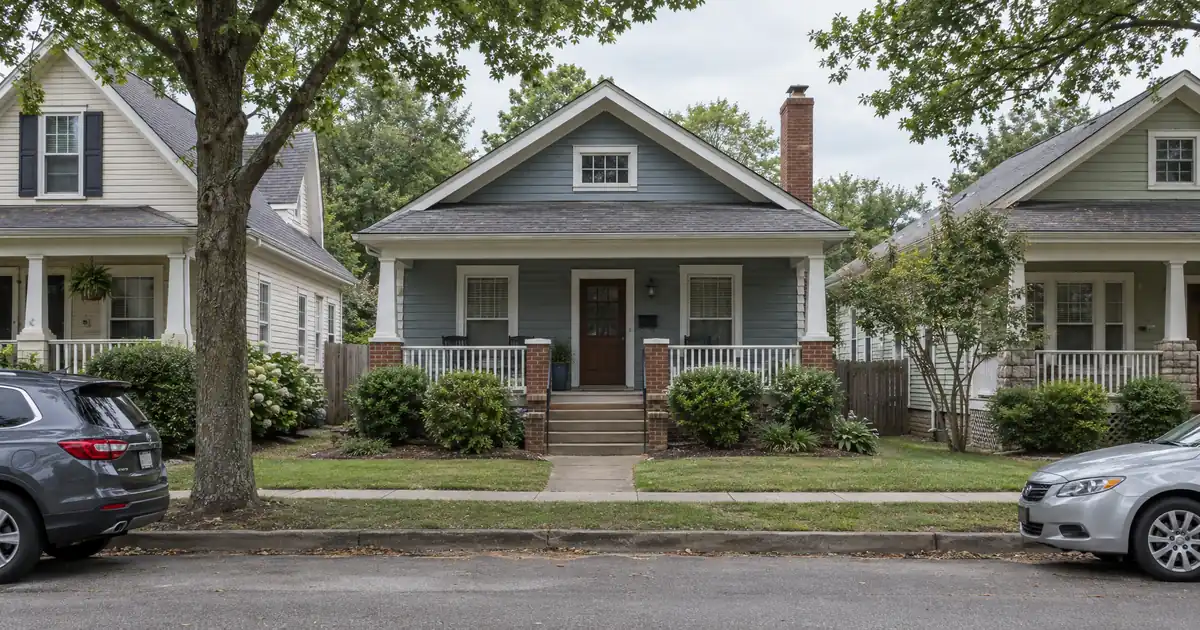
You bought a cottage on Hatteras Island, the paper value has climbed, and now you want that equity working on the next deal. Then the friction shows up. The appraisal has to be defended with thin island comps, the rent has to cover the full monthly obligation, and the seasoning clock has to be satisfied first. A DSCR cash out refinance in Hatteras, North Carolina is workable, but on this island coverage math and appraisal risk, not headline appreciation, decide how much cash you can pull.
TL;DR: A cash-out refinance on a Hatteras, North Carolina rental is underwritten primarily on the property’s rental income measured against its full monthly obligation, and the island’s low rent-to-price ratio means coverage and appraised value together set how much equity comes out.
DSCR Cash-Out Calculator
Run the cash-out numbers in Hatteras, NC
Rate source: Freddie Mac 30-yr average via FRED® — Federal Reserve Bank of St. Louis · effective Sep 24, 2026
Prefilled with starting assumptions — enter your property’s value, balance, taxes, and insurance for a more accurate picture.
Program parameters update from Lendmire’s centralized guideline source. Taxes and insurance are editable estimates.
As of Sep 24, 2026 · General Freddie Mac market benchmark, not a Lendmire loan offer. Property value, balance, taxes, and insurance are editable estimates. Maximum loan-to-value varies by lender, program, property type, and seasoning. Not a Loan Estimate, approval, or commitment to lend. Program availability and eligibility are subject to lender guidelines, credit approval, property review, and underwriting.
- Zillow’s rent index of $1,965 against a $487,500 median sale price implies roughly 0.40% monthly.
- Cash-out programs typically cap at 75% LTV. Thin coverage often pushes the workable structure lower.
- Seasoning runs about six months from title recording on typical program guidance. OBX Realty Group reports over 11 months of supply on Hatteras Island. Expect soft comps.
Lendmire (NMLS# 2371349), a DSCR-focused mortgage broker, works with Hatteras, North Carolina investors through a DSCR program footprint spanning 40 states plus Washington, D.C. The research below was built around one question: on which parts of this island does the refinance math survive contact with an appraiser?
Hatteras Market Snapshot
A quick read on the Hatteras investor landscape — figures come from the cited sources below. Confirm current property-level numbers before underwriting.
| Metric | Detail |
|---|---|
| Home prices | 65 sales (Redfin) |
| Employment | ~209 employees (Zip-Codes.com) |
Start at the Southern Tip: Hatteras Village and Frisco
Hatteras Village and neighboring Frisco offer the most plausible long-term rental fit on the island: modest workforce cottages serving marina, charter, ferry, and county-adjacent tenants. Coverage is still tight. But the tenant base here is year-round, not seasonal.
Hatteras Village (ZIP 27943) sits at the end of NC 12 and hosts the free state ferry to Ocracoke, according to Dare County. The Census Reporter ACS five-year profile counts 381 residents in the census-designated place, and Data USA puts median household income at $48,980. That is a small, working-income tenant pool. Zip-Codes.com cites 63 business establishments employing about 209 people. Charter fleets, marinas, and ferry operations dominate what’s there.
Frisco is quieter and lower-density, sitting between Buxton and the village. Island Free Press MLS-based reporting showed Frisco and Hatteras Village appreciating about 43% over a two-year run, well ahead of Buxton. Neither has a reliable village-level rent median. Anyone quoting one is guessing.
What supports the rental case is scarcity. Resort Realty describes Outer Banks long-term rental inventory as limited and lists leases of up to 24 months running from the northern beaches down to Hatteras Island. Dare County’s essential housing FAQ acknowledges a workforce housing need on the island. Thin year-round supply helps occupancy on a well-priced home. The same tenant pool caps how high the rent can go, and that ceiling matters for the next section.
Buxton, Avon, and the Northern Villages
Buxton is the institutional anchor, Avon is the retail hub, and the northern villages are the appreciation story. For a refinance, Buxton’s tenant base is the steadiest, while Avon’s price history is the most dramatic.
Buxton is the widest part of the island and, per the Dare County village materials, the site of government offices and the island’s school campuses. Tenant demand there leans on National Park Service staff at Cape Hatteras National Seashore, county and school employees, and lighthouse-driven visitor traffic. That employment mix is the closest thing Hatteras has to a stable anchor base. No source gave employer headcounts, so treat the description as qualitative.
Avon carries grocery, dining, and the Kinnakeet Shores subdivision. It also posted the strongest two-year appreciation in the Island Free Press village data, at 59.65%. Here is how the villages compare on that dated history:
| Village | Two-year appreciation | Role |
|---|---|---|
| Avon | 59.65% | Retail hub, service workers |
| Hatteras / Frisco | 43.3% | Marina, charter, ferry |
| Rodanthe | 39% | Pier, northern gateway |
| Salvo | 33.7% | Mid-island, bridge access |
| Buxton | 28.25% | Government, schools, NPS |
Source: Island Free Press, reporting Outer Banks Association of REALTORS® MLS data. Historical and dated, not a current forecast.
That run took the island-wide median from $523,000 to $585,500 in the year before that report. It also shows why old appreciation is a poor guide now. A later realtor column in Island Free Press said Hatteras Island prices dropped two years in a row, the only area in the county to see depreciation. That column is opinion plus data, so weigh it accordingly.
One more practical note. Waves and Salvo are small, and no village-level price or rent data surfaced for either. An investor holding a property there should expect the appraiser to pull comps from across the island.
Can a Hatteras Rental Actually Hit 1.0x?
Usually not at full leverage. The island’s rent-to-price ratio is low enough that a typical long-term-rental single-family home struggles to clear a 1.00 coverage number at the 75% LTV ceiling. Lower leverage is what makes the ratio work.
Start with the raw ratio. Zillow’s rent index for the Hatteras Island and Dare County page reads $1,965. Homes.com puts the Hatteras median sale price at $487,500, which works out to roughly 0.40% rent-to-price. Another figure on the same Homes.com page reads $624,500, and a local agent’s market write-up cites about $640,000 island-wide, which would push the ratio near 0.31%. The portals disagree, so treat that range as directional. The Zillow page is also titled for the broader county, so the geography of the rent index is fuzzy. These ratios are illustrative arithmetic from mismatched sources, not a market study.
Now run the numbers on a modeled workforce cottage. Assume a $375,000 appraised value and $1,965 monthly rent (modeled assumptions, not cited market data). Coverage below is rent divided by full PITIA, including taxes and insurance:
| Refinance LTV | Modeled coverage |
|---|---|
| 75% | mid-to-high 0.8s |
| 60% | around 1.0 |
| 50% | about 1.2 |
Read that table plainly. At the program ceiling, the modeled home lands under the 1.00x baseline. Cutting leverage to around 60% brings coverage near the benchmark, and half the value clears it with room. For a home priced closer to the $487,500 median, the picture is thinner still. Rent has to be much higher to hold the same ratio.
A 1.00x baseline is common because rent covers the payment at that level. Some lenders may review lower or no-ratio scenarios, but those usually require stronger compensating factors, lower leverage, different pricing, or more cash. If your Hatteras file lands under 1.00, the paths a lender might review include a sub-1.00 program, an interest-only structure, or simply a lower-LTV cash-out. Qualification stays subject to lender guidelines, credit approval, and property review. The DSCR qualification mechanics explain how the ratio is built.
Skip the assumption that appreciation fixes thin rent. It doesn’t.
Seasoning, Soft Comps, and the Appraisal Problem
Expect the appraisal to be a swing factor too, not only the rent. Hatteras Island carries deep inventory, long days on market, and a comp set that dipped and recovered within about eighteen months, so you should underwrite conservatively.
Typical program guidance asks for about six months of ownership, measured from title recording, before a cash-out refinance. That clock is short next to the local market’s own pace. OBX Realty Group’s summer report, a brokerage source and therefore directional, says Hatteras Island has over 11 months of supply, against nearly 6 months on the northern beaches. It describes slower absorption, longer days on market, and a widening gap between list and sold prices. Homes.com shows Hatteras homes averaging 96 days on market versus 58 nationally. At the county level, Redfin reports a median sale price near $600,000, down 14.3% year over year, with homes selling after an average of 90 days. County numbers aren’t island numbers, but the direction agrees.
The local agent’s write-up says island prices dropped in the year before last, then the following year’s median of about $640,000 sat roughly $50,000 above the earlier level. Values dipped and recovered inside about 18 months. That is why an appraisal can land on either side of your purchase price depending on which comps the appraiser pulls. Don’t assume appreciation during seasoning.
The Lendmire deal desk sees a familiar pattern in thin coastal markets like this one. The common friction point is not the rent but the value: appraisers stretch to find comparable sales, and files with a conservative LTV target, a documented lease, and an appraisal-ready property tend to move more cleanly than files built on a hoped-for number. Investors who plan for a lower value and treat a higher one as a bonus generally have fewer surprises.
Here’s the honest tension. Buyers hold leverage on Hatteras acquisition right now, which is good if you’re shopping. If you already own, the same softness limits your refinance. Investors who bought earlier at a lower basis are best positioned. Latecomers with little equity buffer are not.
The Land That Can’t Be Built On
Hatteras is an appreciation-led, supply-capped island, not a cash-flow-led one. Protected land limits new inventory and supports long-run collateral value, but it does little for month-one coverage.
A local realtor column in Island Free Press estimates that over 85% of the island is federally owned, state-owned, or protected wetlands. It counted just 69 vacant residential lot listings island-wide in early-period data, with median lot prices rising from $75,000 to $115,000 across three years. That’s one author’s estimate, so hold it loosely. Dare County also states that protected public land can’t host apartment complexes. No sourced data surfaced on duplex, triplex, or fourplex stock, so anything said about small multifamily here stays qualitative.
For a refinance, this cuts both ways. Constrained supply helps hold collateral value over long periods, and it explains why cottage values recovered after the dip. But a supply cap does nothing for the rent-to-price ratio. So the deal depends on structure: modest leverage, realistic rent, and enough reserves (typically around six months of PITIA on most files) to absorb a slow month.
Who Actually Rents Here (and Why Rent Tops Out)
Long-term demand on Hatteras comes from a small pool of local workers, and their wages cap rent. HUD’s Fair Market Rent for a two-bedroom in Dare County is $1,430 a month, per the North Carolina Housing Coalition, with a housing wage of $27.50 an hour.
Island Free Press reported that the same measure stood at $1,280 two years earlier, an 11% rise over two years and 34% across five years. It also found 4,977 of 16,445 Dare County households cost-burdened, rising to 48% among renters. Childcare workers average about $27,160 and construction workers about $38,050. Rents can rise, but tenants are already stretched.
So what does that mean for you? Rent growth helps coverage, but the ceiling is low. The stronger play might be a well-kept 2- or 3-bedroom cottage priced for a year-round worker, not a stretch at premium rent. That’s a genuine toss-up against holding a larger home. The larger home carries more equity, while the smaller one fits the tenant pool better.
One more logistics point: NC 12 is the island’s single road link, and Dare County’s village page has carried closure notices. Tenants and property managers price in that access risk. Check current conditions before you commit.
DSCR vs. conventional financing
Two common ways to finance an investment property in Hatteras, NC. They qualify you differently — here’s how investors weigh them.
Why investors choose it
- Qualifies on the property’s rental income — no personal tax returns, W-2s, or pay stubs needed to document income.
- No personal debt-to-income ceiling to clear, so existing mortgages and obligations don’t cap your borrowing the same way.
- Can be closed in an LLC, keeping the property inside a business entity.
- Built for scaling — not held to the limit on number of financed properties that conventional financing applies.
- Underwriting centers on the deal: generally qualifies when the rent covers the payment, a 1.00x coverage ratio being a common baseline (confirmed in underwriting).
- Designed specifically for investment property, including long-term and, where the program allows, short-term rentals.
Where it’s strong
- Often the lowest ongoing financing cost for a buyer who fully qualifies on personal income — a fit for a first property or a cost-first purchase.
Trade-offs for investors
- Requires full personal income documentation and must fit within a debt-to-income limit — salary, existing debts, and other mortgages all count.
- Typically held in your personal name rather than a business entity.
- Caps how many financed properties you can carry, which can become a ceiling as a portfolio grows.
- Evaluates you as a borrower as much as the property, which usually means more paperwork.
How investors usually choose: a first or single property often optimizes for the lowest financing cost; portfolio builders often optimize for leverage, vesting in an LLC, and scaling past conventional caps. The right answer depends on your goals, the property, and current guidelines — both paths run through select lenders in Lendmire’s wholesale network, with eligibility and terms confirmed in underwriting.
Where the Cash Goes Next
Refinance proceeds are capital for the next deal, so structure matters. The program parameters are simple: about 75% maximum LTV on a cash-out, a 620 credit floor with better tiers at 660, 680, and 700, and loan sizes up to $3,000,000 on standard programs, with smaller balances routing through select lenders. Equity available depends on rent used for lender review, PITIA, reserves, and the LTV ceiling. It is never a guaranteed figure. LLC vesting is available, subject to lender program eligibility. Manufactured homes, log homes, and barndominiums fall outside these programs entirely, which is worth remembering if you’ve eyed a nonstandard structure on the island. These specifics are subject to lender guidelines and a full review of property, leverage, and credit.
Because Hatteras coverage is tight, the sensible sequence is to size the refinance to the coverage number first and treat the LTV cap as a ceiling. Then work out what the proceeds must accomplish elsewhere. If the next purchase sits in a stronger rent-to-price market, the arithmetic can favor extracting a modest amount at safe coverage over squeezing every dollar of value. The refi options lay out the paths, and the comparison shows why rent-based underwriting suits owners whose personal income doesn’t tell the story. For state-level context, see the brokerage’s page on North Carolina DSCR investor loans.
Investors weighing a specific Hatteras file can request a scenario quote or call 828-256-2183. Verify current local rental rules, taxes, and insurance with qualified local professionals before you commit.
Hatteras Versus the Northern Beaches: Where the Math Leans
Right now, the numbers favor the northern beaches for a cash-out and Hatteras for a patient holder. OBX Realty Group’s brokerage report shows nearly 6 months of supply on the northern beaches against over 11 on Hatteras Island. Fewer months of supply usually means easier comps and a friendlier appraisal.
Hatteras has lower prices than the northern Outer Banks, a hard land cap, and thin year-round rental supply. That’s a good collateral story for someone who bought low and can hold, and a poor one for someone counting on the island to rescue thin coverage. If you own a paid-down cottage near the southern tip, a conservative-leverage refinance can work. If you’re chasing a high-leverage cash-out on a fresh purchase, the northern beaches are easier ground.
Frequently Asked Questions
How do you qualify for a DSCR cash-out refinance in Hatteras, North Carolina?
Qualification centers on the property’s rent versus its full monthly obligation, with a typical 1.00x baseline, roughly six months of seasoning, and a credit floor around 620. Reserves of about six months PITIA are common. On Hatteras, expect the appraisal and coverage to drive how much you can pull. Final eligibility is subject to lender guidelines and property review.
What are the requirements for an investment property loan in Hatteras, North Carolina?
Most programs look at credit tier, the DSCR ratio, LTV, reserves, and property type. Cash-out tops out near 75% LTV, and single-family homes and small condos are the typical fits. Manufactured homes, log homes, and barndominiums are excluded. Each file is reviewed on its own borrower, property, and lender terms.
How much equity can you pull from a Hatteras rental?
Less than appreciation alone suggests. On a modeled $375,000 cottage renting near $1,965, full PITIA coverage at 75% LTV lands roughly in the mid-to-high 0.8s across a range of rate environments, using North Carolina property-tax and insurance assumptions. That sits below the 1.00x floor some select programs use. Borrowing closer to half the value brings coverage up to about 1.2x, so the coverage number often sets the ceiling before the LTV cap does. The final figure depends on appraisal, rent, and reserves.
Does the thin comp set on Hatteras Island hurt a refinance appraisal?
Yes, it can. Over 11 months of supply, long days on market, and a recent dip-and-recovery mean appraisers may land on either side of your purchase price. Plan for a conservative value and treat a higher one as a bonus.
Can Lendmire help structure DSCR financing for small multifamily investment properties in Hatteras?
Yes, in principle. Lendmire arranges DSCR investor loans and qualification rests primarily on the property’s rental income, subject to lender guidelines. Multifamily stock on the island is limited, so most Hatteras files will be single-family or small condo.
For current guidelines and terms, see Lendmire’s DSCR loan programs page.
About Lendmire
Lendmire (NMLS# 2371349) is a mortgage brokerage focused on DSCR investor financing, helping arrange programs through wholesale and investor-lending channels in 41 markets, including Washington, D.C. DSCR loans are evaluated by the lender on property cash flow rather than personal income, subject to lender guidelines, supporting LLC closings and accommodating investors with four or more financed properties. Scotsman Guide named Lendmire a Top Mortgage Workplace in both 2025 and 2026.
Get Started
Ready to find the right loan for you?
In about 30 seconds you can review financing options available for your investment property. No commitment required.
Informational only. Not a Loan Estimate, approval, or commitment to lend. Program availability and eligibility are subject to lender guidelines, credit approval, property review, and underwriting.
References
1. Zillow — Home Values Hatteras Island Buxton NC
3. OBX Realty Group – Market Report
6. Dare County – Hatteras Village
9. Dare County – Essential Housing FAQ
11. stephensmithobxrealtor.substack.com — Obx Stats and Random Thoughts
13. NC Housing Coalition – Dare County Profile
14. Island Free Press – Dare and Currituck housing costs
15. 2025
16. 2026
This article is part of Lendmire’s investment property cash-out refinance program — full qualification details, guidelines, and scenarios live on the program page.
Related reading: Cash Out Refinance Investment Property Hatteras North Carolina · DSCR Cash Out Refinance Duck North Carolina · Cash Out Refinance Investment Property in Mooresville NC
Guides: Investment Property Cash-Out Refinance in North Carolina
Brandon Miller
Founder & CEO, Mortgage Loan Originator, Lendmire LLC
- Mortgage Loan Originator · NMLS# 1129696 · Verify on NMLS Consumer Access
- North Carolina Real Estate Broker · License# 343312 · Verify on NCREC
- North Carolina Insurance Producer · License# 19053198 · Property, Casualty, Life, Health · Verify on NAIC SBS
- Lendmire LLC · Firm NMLS# 2371349 · Verify firm licensure
Disclosures. The information presented in this article is general market commentary, not financial, legal, or tax advice. Lendmire is a mortgage brokerage (NMLS# 2371349) — not a direct lender or depository institution — and loan placement is subject to lender underwriting. Nothing in this content represents a commitment to lend. Loan terms, pricing, and program availability vary based on borrower qualifications, property characteristics, and state of subject property, and are subject to change at any time. Lendmire complies with Equal Housing Opportunity requirements. Consumer access: nmlsconsumeraccess.org.