
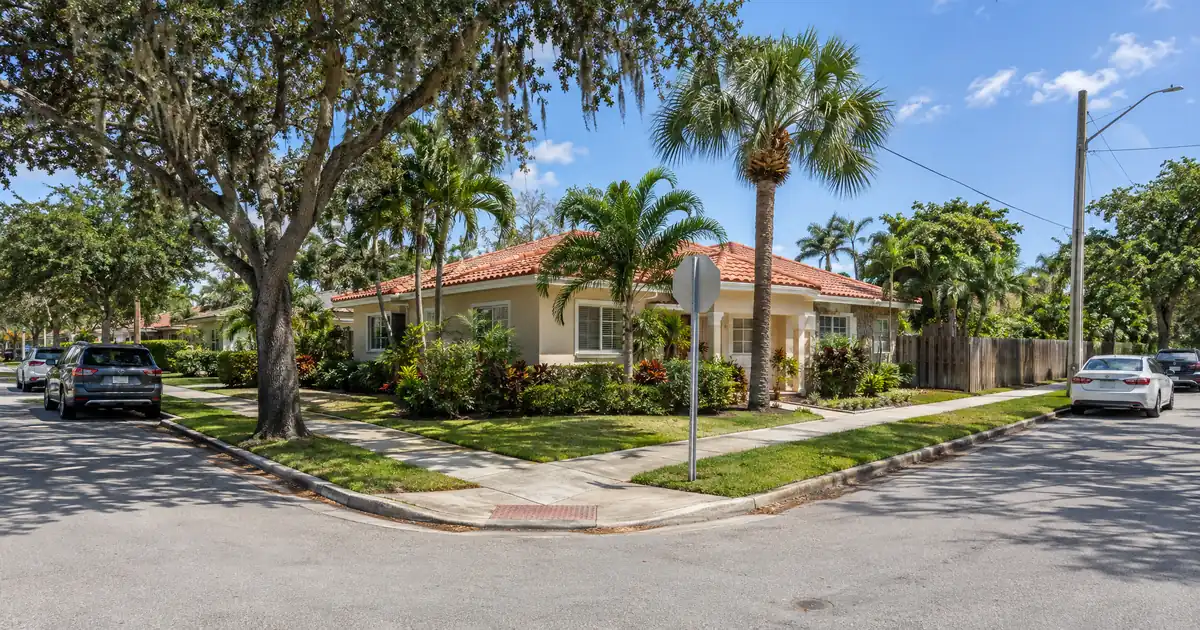
The decennial Census counted 23,068 residents in Hialeah Gardens, up from 21,744 a decade earlier, per the Census figures summarized on Wikipedia. The city covers about 3.67 square miles and is essentially full. Newer estimates show the population flat to slightly lower. Nobody is going to wait here for a growth wave to lift their basis. For a DSCR cash-out refinance, that shapes the whole question: the equity an investor can pull depends on what they paid, how long ago, and what the rent can carry.
DSCR Cash-Out Calculator
Run the cash-out numbers in Hialeah Gardens, FL
Rate source: Freddie Mac 30-yr average via FRED® — Federal Reserve Bank of St. Louis · effective Oct 1, 2026
Prefilled with starting assumptions — enter your property’s value, balance, taxes, and insurance for a more accurate picture.
Program parameters update from Lendmire’s centralized guideline source. Taxes and insurance are editable estimates.
As of Oct 1, 2026 · General Freddie Mac market benchmark, not a Lendmire loan offer. Property value, balance, taxes, and insurance are editable estimates. Maximum loan-to-value varies by lender, program, property type, and seasoning. Not a Loan Estimate, approval, or commitment to lend. Program availability and eligibility are subject to lender guidelines, credit approval, property review, and underwriting.
The Quick Read:
A DSCR cash-out refinance on a Hialeah Gardens, Florida rental is underwritten primarily on the property’s rental income measured against its full monthly obligation, with proceeds limited by a 75 percent loan-to-value ceiling and a seasoning window of roughly six months from title recording, subject to lender guidelines.
- Central Hialeah Gardens posted a median sale price near $430,000 on only three sales.
- Rentometer puts three-bedroom houses at roughly $3,200 to $3,300 a month, well above the city median.
- Cash-out leverage tops out at 75 percent, so existing debt decides the proceeds.
- Multi-unit inventory inside city limits is thin; appraisers may borrow comps from neighboring Hialeah.
Hialeah Gardens Market Snapshot
A quick read on the Hialeah Gardens investor landscape — figures come from the cited sources below. Confirm current property-level numbers before underwriting.
| Metric | Detail |
|---|---|
| Home prices | $484,990 median (Homes.com Hialeah multifamily) |
| University enrollment | 3,046 students (Wikipedia) |
| Employment | ~10,000 jobs (Marcus & Millichap Miami-Dade) |
| Vacancy | 6.6% (MIAMI REALTORS) |
Why Basis Matters More Than Momentum
Equity in Hialeah Gardens comes mostly from when and what an owner paid, not from recent appreciation. Prices are flat to soft and marketing times have stretched, so a refinance here rests on today’s appraised value rather than a run-up still to come.
Data USA puts the median property value at $342,000, with a homeownership rate of 61.2 percent. Redfin’s city-level page shows a $488,000 median sale price from a stretch with only eight sales, with days on market lengthening sharply from a year earlier. That is a sample too small to trust. Movoto lists a median asking price near $429,000, though the same page also shows $385,000 for 35 listings, so a range of roughly $385,000 to $430,000 is the honest read.
Next door, Homes.com shows the Hialeah twelve-month median sale price at $484,990, up 3 percent, with homes taking 79 days to sell against a national average of 54. Modest growth. Slow sales. That’s the picture.
So the investor most likely to benefit is the one who bought years ago, at a lower basis, and still holds a modest balance. The investor who bought recently at today’s prices will find the 75 percent ceiling leaves little room. Neither is a verdict on the market. It’s arithmetic.
The Seasoning Clock and the 75 Percent Ceiling
Most DSCR cash-out programs ask for roughly six months of ownership measured from title recording, and cap leverage at 75 percent of appraised value. The proceeds are whatever remains after the existing payoff, reserves, and the coverage test.
Two limits work together. The ceiling caps total debt as a percentage of value. The coverage test, the property’s rent divided by its full monthly obligation (principal, interest, taxes, insurance, and any association dues), caps how much debt the rent can carry. Whichever binds first sets the answer. Most standard programs are built around a 1.00 benchmark, though some lenders will review lower ratios with offsets such as reduced leverage or stronger credit.
Other parameters, typically: a credit floor around 620, with pricing and leverage improving at higher tiers (660, 680, 700), and reserves of about six months of the full obligation. Loan sizes run up to $3,000,000 on standard programs, with smaller balances routed through select lenders. All of it is subject to lender guidelines, and none of it is a promise. Lendmire’s DSCR walkthrough covers the mechanics of how the ratio is built.
Say you own a house appraised near $420,000 with an existing balance at 50 percent of value. The 75 percent ceiling leaves a 25-point gap, and that gap is a maximum, not a cash figure. Reserves come out of it in practice, and so do closing costs. Whether rent supports even that much debt is the next question.
Three Sub-Areas, One Market
Hialeah Gardens is better read as a single small submarket with three sub-areas than as distinct districts. Redfin’s sub-area data is directional only, built on two to six sales a month.
Central Hialeah Gardens is the steadiest reference point: a median sale price near $430,000, up 3.0 percent year over year, at about $303 per square foot. Three sales. Treat it as a pulse, not a benchmark.
North Hialeah Gardens shows a median near $793,000, down 12.9 percent, on two sales. That likely reflects a skew toward newer or larger product, and nobody should generalize from it. Yet Redfin’s rental page lists the north area’s median rent at $3,062, the highest of any sub-area. The page’s dating is ambiguous, and sample sizes aren’t stated, so test that rent against local comps before building a refinance on it.
Elsewhere, the same page shows Lago Grande at $2,350, South Hialeah Gardens at $2,400, Royal Oaks at $2,400, and the Palmetto I-75 Industrial Center area at $2,200. A tight band of $2,200 to $2,400 across most of the city. South Hialeah Gardens sale data is thin and stale, and its low median likely reflects condos or small units, so it stays qualitative here.
The takeaway for a refinance: appraised value and rent sit in different places. North carries the rent premium but a volatile value signal. Central carries the steadier value signal. The rest of the city rents in a narrow band, and that narrowness is useful, because it makes the coverage math predictable.
Rent Decides the Number
A well-kept three-bedroom house in Hialeah Gardens clears coverage far more comfortably than the all-property median suggests. Underwrite the house-specific rent, not the blended figure.
Run the numbers on a modeled house valued near $420,000, close to the Zillow average home value of $419,897 for the city. These are modeled assumptions, not sourced market facts. At 75 percent leverage and including taxes and insurance, a rent in the Rentometer three-bedroom band lands in roughly the 1.15 to 1.2 range. That is a ratio that typically clears a 1.00 benchmark with some room.
Now swap in Zumper’s all-property median rent of $2,500, which Zumper shows down 1 percent over the last year. The same modeled loan lands in the low 0.9s. Below 1.00. Same house, different rent assumption, opposite result.
Where the coverage sits below 1.00 on long-term rent, a few structures may be reviewed: a sub-1.00 program at reduced leverage, an interest-only structure that lowers the monthly obligation, or a smaller cash-out amount. Each comes with tradeoffs in leverage, credit requirements, or pricing, and qualification stays subject to lender guidelines and property review. The question worth asking first is whether the property can rent at the higher band at all. A dated kitchen and a median-rent lease on a house modeled at three-bedroom rent is a mismatch an appraiser or underwriter will notice.
Honestly, this is a toss-up for owners sitting at the median. The cash-out thesis can work, but only if it’s sized to the rent actually in place, not the rent the investor hopes for. A lease already signed at the higher band is the strongest evidence a file can carry.
What About the Fourplex?
Small multifamily can lift coverage where a single house falls short, but inventory inside city limits is thin, and comps will likely come from Hialeah.
LoopNet showed one apartment building for sale in Hialeah Gardens, at about $260 per square foot, which makes up the whole local multi-unit shelf. Owners of existing duplexes or fourplexes may find appraisers stretch the search radius into Hialeah, which affects value and, in turn, the cash-out amount.
For a sense of unit-level math, one Hialeah fourplex listing shows in-place rents of $1,350, $1,350, $1,300, and $1,400, totaling $5,400. That is an asking-side listing claim, not a verified rent roll. A pro forma on another listing, near $8,400, is marketing and shouldn’t anchor anything.
Model a hypothetical fourplex at a $600,000 value, with the listing’s $5,400 in rent, 75 percent leverage, and full taxes and insurance. Coverage lands around 1.4. Stretch the value to $800,000 and it drops to just over 1.0. The per-door price is the whole story. Four modest rents stack into more gross income per parcel than one house, but only if the price per door stays reasonable. Separately metered units, which some Hialeah listings advertise, make the rent roll cleaner.
Multi-unit coverage can look better than single-family coverage on paper. Whether it’s the better refinance depends on appraisal comps, and those are the weak link here.
Demand Comes From the Warehouse Belt
Tenant demand in Hialeah Gardens leans on logistics and distribution work in neighboring Medley and Hialeah, plus retail and healthcare, rather than a university or a military base.
No principal-employer table for Hialeah Gardens surfaced in the research, so this stays qualitative. Indeed lists 1,551 warehouse and fulfillment postings for the area, a snapshot of postings rather than a count of local jobs. Employers named in postings include Medline Industries, Lineage Logistics, All Florida Paper, BJ’s Wholesale Club, Cintas, and UPS. Healthcare anchors sit just across the line in Hialeah, including Palmetto General Hospital, which U.S. News rates high performing in several procedures. The city also has no four-year university, so student demand isn’t the draw.
Rental demand next door looks deep, and Hialeah’s renter base appears substantial. Rent data there comes mostly from larger buildings, so it shouldn’t be used as a benchmark for small-building rents.
Metro vacancy tells a mixed story. MIAMI REALTORS reports Miami-area multifamily vacancy at 6.6 percent with asking-rent growth of 0.7 percent, and notes weakening occupancy in Class B and C rentals. Marcus & Millichap puts Miami-Dade Class C vacancy near 3 percent. Those two readings conflict, so both belong on the table. Workforce housing appears tight by one measure and loosening by another.
DSCR vs. conventional financing
There are two common ways to finance an investment property in Hialeah Gardens, FL, and they qualify you differently — here’s how investors weigh them.
Why investors choose it
- Qualifies on the property’s rental income — no personal tax returns, W-2s, or pay stubs needed to document income.
- No personal debt-to-income ceiling to clear, so existing mortgages and obligations don’t cap your borrowing the same way.
- Can be closed in an LLC, keeping the property inside a business entity.
- Built for scaling — not held to the limit on number of financed properties that conventional financing applies.
- Underwriting centers on the deal: generally qualifies when the rent covers the payment, a 1.00x coverage ratio being a common baseline (confirmed in underwriting).
- Designed specifically for investment property, including long-term and, where the program allows, short-term rentals.
Where it’s strong
- Often the lowest ongoing financing cost for a buyer who fully qualifies on personal income — a fit for a first property or a cost-first purchase.
Trade-offs for investors
- Requires full personal income documentation and must fit within a debt-to-income limit — salary, existing debts, and other mortgages all count.
- Typically held in your personal name rather than a business entity.
- Caps how many financed properties you can carry, which can become a ceiling as a portfolio grows.
- Evaluates you as a borrower as much as the property, which usually means more paperwork.
How investors usually choose: a first or single property often optimizes for the lowest financing cost; portfolio builders often optimize for leverage, vesting in an LLC, and scaling past conventional caps. The right answer depends on your goals, the property, and current guidelines — both paths run through select lenders in Lendmire’s wholesale network, with eligibility and terms confirmed in underwriting.
Working DSCR brokers see a recurring pattern in thin, built-out workforce markets like this one: the file lives or dies on the rent evidence. Owners who bring a signed lease at the upper rent band for their property type tend to land comfortably; owners who bring a broker’s opinion of what the house “should” rent for tend to see the coverage number come back lower than hoped. Appraisers and underwriters weigh in-place rent, so having it documented before the file goes out matters more than almost any other prep item.
Where Should the Proceeds Go?
Cash-out proceeds work best when they land in a deal where coverage still clears at today’s pricing, and worst when they chase a market where it doesn’t.
Pulling equity to buy another rental in the same corridor, where the ratio math has been tested, makes the thesis straightforward. Pulling equity to fund a deal in a market where the numbers only work on a pro forma is a different decision, and worth stress-testing before committing.
Appreciation isn’t the backstop here. Flat prices and slow marketing times mean the next property needs to justify itself on rent from day one. That is the real argument for the equity recycle pathway: each cycle should add coverage and diversification, not just leverage.
Owners holding in a personal name with strong traditional employment income and one or two financed properties may find conventional financing cheaper, though how DSCR compares to conventional turns on income documentation and property count. DSCR becomes the practical path for entity-held portfolios, self-employed borrowers, or files where rent is the cleaner underwriting basis. Loans to an LLC are subject to lender program eligibility. For anyone comparing structures, refi programs are worth reviewing alongside this one, and a call to 828-256-2183 can help sort which fits. Before any of it, verify current local rental rules, taxes, and insurance with qualified local professionals.
Frequently Asked Questions
How do you qualify for a DSCR cash-out refinance in Hialeah Gardens?
The file is reviewed mainly on rent against the full monthly obligation, a credit score typically at or above 620, about six months of ownership, and reserves of roughly six months. In this city, the in-place rent matters most, because the gap between a house-specific rent and the all-property median can flip the ratio above or below 1.00. Approval stays subject to lender guidelines and property review.
What are the requirements for an investment property loan in Hialeah Gardens, Florida?
Requirements vary by program, but the common elements are a rent-supported coverage ratio, a minimum credit score, down payment or equity, and reserves. Most standard programs use a 1.00 benchmark, with exceptions that usually need more equity or stronger credit. Manufactured homes, log homes, and barndominiums fall outside these programs. Local lenders in the network may differ, so eligibility is reviewed file by file.
Will an appraiser use Hialeah comps for a duplex or fourplex in Hialeah Gardens?
Often, yes. Multi-unit inventory inside the city is thin, with one apartment building showing on LoopNet, so appraisers may widen the search into Hialeah. That can move value in either direction, and since the 75 percent ceiling applies to appraised value, it directly affects the cash-out amount. Owners of small multifamily should expect the comp set to be a negotiating point.
How does the six-month seasoning rule work for a Hialeah Gardens rental?
Seasoning is generally measured from title recording, so the clock starts when the deed is recorded, not when the contract was signed. A property held fewer than about six months may be limited to a rate-and-term structure or a smaller cash-out, depending on the lender. Owners near the line should confirm the recording date before ordering an appraisal.
The Real Choice
Hialeah Gardens owners tend to face two options. One is pulling equity now, at the 75 percent ceiling, while the rent supports the coverage and the seasoning clock has run. The tradeoff is more debt in a market where prices are flat and rents are drifting. The other is waiting, holding the lower balance, and letting a thin-margin property carry less risk. The tradeoff is idle equity in a city whose population isn’t growing and whose value story won’t change on its own. Either way, the deciding variable is the number in the signed lease, in a city of roughly 23,000 that is already built out.
For current guidelines and terms, see Lendmire’s DSCR loan programs page.
About Lendmire
As a non-QM mortgage broker (NMLS# 2371349), Lendmire facilitates DSCR investor loans across 41 markets, including Washington, D.C. Eligibility is generally reviewed around property-level rental income rather than personal income documentation, subject to lender guidelines, which suits LLC-structured portfolios and self-employed borrowers outside conventional boxes. The firm was recognized by Scotsman Guide as a 2026 Top Workplace and was a top-ranked workplace in 2025. Investors can also ask Lendmire to review the file or read about Lendmire’s Florida DSCR loan programs.
Get Started
Ready to find the right loan for you?
In about 30 seconds you can review financing options available for your investment property. No commitment required.
Informational only. Not a Loan Estimate, approval, or commitment to lend. Program availability and eligibility are subject to lender guidelines, credit approval, property review, and underwriting.
References
1. Hialeah Gardens, Florida (Wikipedia, citing Census data)
2. Redfin: Central Hialeah Gardens
3. Rentometer: Hialeah Gardens
4. Homes.com
5. Wikipedia
6. Marcus & Millichap: Miami-Dade multifamily
9. Redfin: Hialeah Gardens rental market
12. LoopNet
13. Indeed
14. recognized by Scotsman Guide as a 2026 Top Workplace
15. Scotsman Guide — Top Workplaces 2025
This article is part of Lendmire’s investment property cash-out refinance program — full qualification details, guidelines, and scenarios live on the program page.
Related reading: Cash Out Refinance Investment Property in Hialeah Gardens, Florida: Equity Recycling for Workforce Rentals · DSCR Cash Out Refinance in Hialeah, Florida: Duplex Equity Along the Metrorail Line · Cash Out Refinance Investment Property in Hialeah FL
Guides: Investment Property Cash-Out Refinance in Hialeah, FL · Investment Property Cash-Out Refinance in Florida
Brandon Miller
Founder & CEO, Mortgage Loan Originator, Lendmire LLC
- Mortgage Loan Originator · NMLS# 1129696 · Verify on NMLS Consumer Access
- North Carolina Real Estate Broker · License# 343312 · Verify on NCREC
- North Carolina Insurance Producer · License# 19053198 · Property, Casualty, Life, Health · Verify on NAIC SBS
- Lendmire LLC · Firm NMLS# 2371349 · Verify firm licensure
Required disclosures. Lendmire (NMLS# 2371349) operates as a licensed mortgage broker, not a direct lender or depository. The discussion in this article is general in nature and should not be relied upon as financial, legal, or tax advice — every investment scenario is unique and should be reviewed by a qualified professional. Any loan inquiry is subject to lender underwriting, and this article is not a commitment to lend or a guarantee of approval. Mortgage rates, loan terms, and program guidelines vary by borrower, property, and state, and may change without notice. Equal Housing Opportunity. Verify licensure at NMLS Consumer Access.