
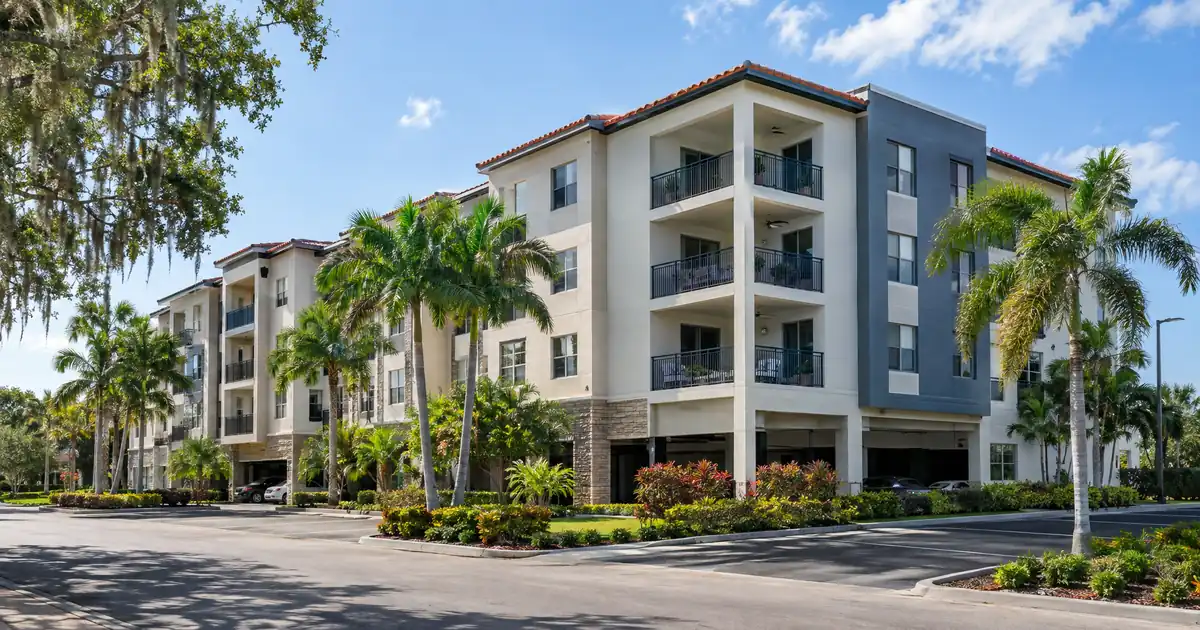
Data USA puts the median property value in Hialeah Gardens at $342,000, with homeownership at 61.2 percent. That is a modest number for South Florida. It is also the ceiling on what a cash out refinance on an investment property here can be built on: a value that has not moved much, a rent roll that has not moved much, and a 75 percent loan-to-value cap that does the rest of the arithmetic. This city of about 3.67 square miles is built out. Equity here is earned through holding, not through a boom.
DSCR Cash-Out Calculator
Run the cash-out numbers in Hialeah Gardens, FL
Rate source: Freddie Mac 30-yr average via FRED® — Federal Reserve Bank of St. Louis · effective Sep 24, 2026
Prefilled with starting assumptions — enter your property’s value, balance, taxes, and insurance for a more accurate picture.
Program parameters update from Lendmire’s centralized guideline source. Taxes and insurance are editable estimates.
As of Sep 24, 2026 · General Freddie Mac market benchmark, not a Lendmire loan offer. Property value, balance, taxes, and insurance are editable estimates. Maximum loan-to-value varies by lender, program, property type, and seasoning. Not a Loan Estimate, approval, or commitment to lend. Program availability and eligibility are subject to lender guidelines, credit approval, property review, and underwriting.
The Quick Read:
A DSCR cash-out refinance on an investment property in Hialeah Gardens, Florida is underwritten primarily on the property’s rental income measured against its full monthly obligation, then sized by a loan-to-value ceiling rather than the owner’s personal income, with proceeds limited by seasoning, reserves, and appraised value.
- Central Hialeah Gardens median sale price: $430K, up 3.0 percent, per Redfin, on only three sales.
- Three-bedroom houses rent near $3,200 to $3,300, per Rentometer.
- Cash-out typically caps at 75 percent LTV after about six months of ownership.
- Miami-Dade Class C vacancy held near 3 percent, per Marcus & Millichap.
- Multi-unit inventory inside city limits is thin, so appraisal comps often come from neighboring Hialeah.
Hialeah Gardens Market Snapshot
A quick read on the Hialeah Gardens investor landscape — figures come from the cited sources below. Confirm current property-level numbers before underwriting.
| Metric | Detail |
|---|---|
| Home prices | $484,990 median (Homes.com Hialeah multifamily) |
| University enrollment | 3,046 students (Wikipedia) |
| Employment | ~10,000 jobs (Marcus & Millichap Miami-Dade) |
| Vacancy | 6.6% (MIAMI REALTORS) |
The Equity Story Is Flat
Appreciation will not do the heavy lifting in Hialeah Gardens. The best-supported sub-area signal is modest: Central Hialeah Gardens posted a median sale price of $430K, up 3.0 percent year over year at $303 per square foot, per Redfin’s neighborhood data. Three sales produced that figure. Treat it as a direction, not a measurement.
The other sub-areas do not help much. North Hialeah Gardens showed a $793K median, down 12.9 percent, but on two sales, likely skewed by newer or larger product. South Hialeah Gardens printed a $230K median in older data, probably reflecting smaller units. Neither is a number to underwrite against. The city-level Redfin figure of $488K, up 48.9 percent, rests on eight sales and means nothing statistically. Skip it.
Listing data tells a calmer story. Movoto shows a median listing price of $429K, down 3 percent year over year, though the same page also shows a $385,000 median across 35 listings. Call the working range roughly $385K to $430K. Flat to soft.
What does that mean for a cash-out? An owner who bought years ago at a lower basis has real equity. An owner who bought recently has very little, and the six-month seasoning clock (measured from title recording) is the smaller constraint. The larger one is that a 75 percent LTV ceiling on a flat value leaves little room for a thin purchase down payment to have grown into anything.
This is a genuine split. If the goal is maximum proceeds, a flat market argues for waiting until equity accumulates through amortization or value. If the goal is to redeploy capital now into a better-yielding asset, flat values are not a reason to wait, because the thing you are buying is not running away from you either. The decision turns on what the next deal yields, not on what this one might appreciate.
What Rent Actually Does to the Coverage Number
The rent basis matters more here than the price basis. A well-kept three-bedroom house clears coverage comfortably, while the blended city median does not.
Rentometer puts three-bedroom houses in Hialeah Gardens at roughly $3,200 to $3,300 a month. Zillow’s Hialeah Gardens figures list an average home value of $419,897. Put those together and gross monthly rent runs around three-quarters of one percent of value. Zumper’s all-property median rent is lower at $2,500, down 1 percent over the last year, which is closer to six-tenths of one percent of the same value.
Coverage is monthly rent divided by the full monthly obligation: principal, interest, taxes, insurance, and any HOA dues. Here is how the modeled inputs play out. These are assumptions for illustration, not market facts, and the ratios include taxes and insurance at typical Florida levels:
| Modeled scenario (75% LTV) | Modeled rent | Coverage, incl. Taxes and insurance |
|---|---|---|
| House valued near $430,000 | $3,250 | about 1.2x |
| Same house, blended median rent | $2,500 | about 0.9x |
| Fourplex near $650,000 (assumed) | $5,400 | roughly 1.2x to 1.3x |
The middle row is the warning. Same house, same loan percentage, a rent $750 lower, and the number drops below the 1.00x benchmark that most standard DSCR programs are built around. That benchmark is common because rent covers the obligation at that level. Some lenders will review lower ratios, but usually with lower leverage, stronger credit, or more reserves, and eligibility always depends on lender guidelines.
Sub-area rents add texture. Redfin’s rental data lists median rents of $3,062 in North Hialeah Gardens, $2,400 in South Hialeah Gardens and Royal Oaks, $2,350 in Lago Grande, and $2,200 around the Palmetto I-75 Industrial Center. The page’s dating is ambiguous and sample sizes are not stated. The pattern is useful anyway: North sits well above the pack, and the rest of the city clusters in a narrow band. Test any North premium against local comps before building a refinance on it.
What If the Number Lands Under 1.00?
A property that covers at about 0.9x on long-term rent is not dead on arrival, but the path has a cost. A lender may review a sub-1.00 program, which typically means lower leverage, stronger credit, and more reserves. An interest-only structure can also change the coverage math, since it lowers the monthly obligation being measured. Either route is subject to lender guidelines, credit approval, and property review, and neither is a promise.
The better question is whether the investor should use it. If a house rents for $2,500 against a $430,000 value, a sub-1.00 structure is paying for a yield problem that may be structural. If the property is underrented against the house-specific figure, say a renovated three-bedroom still on a legacy lease, the smarter move is often to reset the rent first and refinance after. A sub-1.00 structure is defensible when there is a clear reason the current rent is temporarily low. It is a signal to re-examine the asset when there is not.
Fourplexes Stack, Thin Inventory Doesn’t
Small multifamily is where the coverage math improves, but Hialeah Gardens barely has any.
A sample Hialeah fourplex listing on Redfin shows in-place unit rents of $1,350, $1,350, $1,300, and $1,400, totaling $5,400. That is a listing claim, not a verified rent roll. Per-unit rents sit well below a three-bedroom house, but four doors stack to more gross income per parcel, which is what can lift coverage where a single house falls short. The table above models that at roughly 1.2x to 1.3x on an assumed price. Multi-unit insurance runs heavier than single-family, which pulls the real number down.
Inside city limits, the supply is scarce. LoopNet showed a single apartment building for sale in Hialeah Gardens, averaging $260 per square foot at 3,862 square feet. Duplex and fourplex comps for a refinance here will likely come from neighboring Hialeah, which affects how an appraiser sets value. Homes.com shows a 12-month Hialeah median sale price near $484,990, up 3 percent, with homes selling after 79 days on market versus a national average of 54. Separately metered units on listings there help clean up a rent roll, which a lender will want to see.
Thinking out loud: an owner with a single-family house and a choice of where to recycle proceeds might favor a small multifamily in Hialeah over another house in Hialeah Gardens, because the coverage cushion is wider. The counterargument is liquidity. A fourplex can sit, and the 79-day figure suggests buyers are not lining up. Higher coverage, slower exit. That tradeoff does not resolve itself.
Who Rents Here? Jobs, Not Campuses
Tenant demand in Hialeah Gardens comes from work, and the work is mostly logistics. There is no four-year university in the city. Data USA lists only a vocational beauty academy as its largest degree-granting institution, and Miami Dade College operates a Hialeah campus nearby without a city-specific enrollment figure to cite.
What the city has is proximity. Indeed lists 1,551 warehouse and fulfillment postings for the Hialeah Gardens area. That is a snapshot of postings, not a count of local jobs, and most sit in adjacent Hialeah and Medley. Employers named in those postings include Medline Industries, Lineage Logistics, All Florida Paper, BJ’s Wholesale Club, Cintas, and UPS. The Palmetto Expressway and Florida Turnpike give tenants wide reach, and Data USA reports an average commute of 30.5 minutes. Residents work across the metro, not in one place.
Healthcare adds a second anchor, all in adjacent Hialeah. Hialeah Hospital is a 378-bed acute-care facility with a medical staff over 900, and U.S. News rates Palmetto General Hospital high performing in several procedures. None of it is inside city limits. It supports employment depth, not a specific rent premium.
Working DSCR brokers see a recurring pattern in dense, built-out workforce-rental markets like this one: the rent assumption drives the file more than the price does. Files that underwrite a specific, leased house at its actual rent tend to clear coverage, while files that lean on a blended area median tend to land under 1.00. Bringing the lease and a recent comparable in early usually saves more time than negotiating leverage later.
Population is flat. The most recent decennial count was 23,068, up from 21,744 in the prior decade, per the Wikipedia summary of Census data, while Census Bureau QuickFacts shows 22,915, and Florida-Demographics cites a 3.3 percent decline over a five-year span with a median household income of $65,439. No growth story. A refinance here rests on a stable tenant pool, not an expanding one.
On vacancy, the sources disagree, and both deserve mention. MIAMI REALTORS reported Miami metro multifamily vacancy at 6.6 percent with asking rent growth of 0.7 percent, and noted occupancy softening in Class B and C rentals. Marcus & Millichap reports Class C vacancy holding near 3 percent in Miami-Dade, and MIAMI REALTORS’ South Florida rental report shows Class C+ and C occupancy at 96.3 percent. Different definitions, different samples. Workforce rentals look tighter than the metro average, but the gap is not a guarantee for any one house.
What the Program Will and Won’t Do
Most of this comes down to a few numbers, all presented as typical guidance rather than commitments. On a cash-out refinance, the ceiling is 75 percent LTV, not the 80 percent that can apply on purchases. Lenders generally look for about six months of ownership, measured from title recording. The standard benchmark is 1.00x coverage. Credit tiers run 620, 660, 680, and 700, with 620 as the floor, and reserves of about six months of full housing payment are common. Loan amounts run up to $3,000,000 on standard programs, with smaller balances routed through select lenders. Equity available is not a fixed figure: it depends on rent used for lender review, the full monthly obligation, reserves, and the appraisal.
Title can often sit in an LLC, subject to lender program eligibility. Borrowers with several financed properties or self-employed income that does not document cleanly through traditional personal-income documentation are usually the ones for whom this route is the practical one. The guide “Where DSCR and Conventional Diverge” is worth a look for a single-rental W-2 borrower, where conventional financing may carry a lower cost and work without the non-QM friction. For DSCR basics, Lendmire’s DSCR walkthrough covers the mechanics, and Lendmire’s Florida DSCR loan programs page outlines state-level specifics. Details change; confirm current guidelines before planning around any figure here.
Investors should verify current local rental rules, taxes, and insurance with qualified local professionals. Nothing here replaces that.
Where the Proceeds Go
The cash-out thesis depends on what the proceeds do next. Pulling equity to buy another rental where coverage still works, meaning a leased three-bedroom or a small multifamily in the same corridor, makes the case straightforward. Each step has a known rent basis and a known comp set. That is the equity recycle pathway in practice, and the broader refi programs page sets out the structures.
Pulling equity to fund a deal in a market where the coverage does not pencil is a different decision. A flat-value, flat-rent city does not generate surprise equity, so the next deal has to stand on its own math. Stress-test it before committing.
One more consideration: state the proceeds as a percentage of a number you can defend, not as a target. A cash-out sized to the maximum 75 percent on an optimistic appraisal leaves no cushion if the appraiser pulls comps from a wider radius and lands lower. Conservative sizing costs little. Overreaching costs a file.
Frequently Asked Questions
How do you qualify for a DSCR loan in Hialeah Gardens?
The property’s rent is measured against its full monthly obligation, including principal, interest, taxes, and insurance, and a standard benchmark is 1.00x. Credit is reviewed as well, with 620 typically the floor. Reserves of about six months are common. A house-specific rent, such as the three-bedroom range near $3,200 to $3,300, usually clears more easily than the blended median. Eligibility remains subject to lender guidelines.
DSCR vs. conventional financing
Two common ways to finance an investment property in Hialeah Gardens, FL. They qualify you differently — here’s how investors weigh them.
Why investors choose it
- Qualifies on the property’s rental income — no personal tax returns, W-2s, or pay stubs needed to document income.
- No personal debt-to-income ceiling to clear, so existing mortgages and obligations don’t cap your borrowing the same way.
- Can be closed in an LLC, keeping the property inside a business entity.
- Built for scaling — not held to the limit on number of financed properties that conventional financing applies.
- Underwriting centers on the deal: generally qualifies when the rent covers the payment, a 1.00x coverage ratio being a common baseline (confirmed in underwriting).
- Designed specifically for investment property, including long-term and, where the program allows, short-term rentals.
Where it’s strong
- Often the lowest ongoing financing cost for a buyer who fully qualifies on personal income — a fit for a first property or a cost-first purchase.
Trade-offs for investors
- Requires full personal income documentation and must fit within a debt-to-income limit — salary, existing debts, and other mortgages all count.
- Typically held in your personal name rather than a business entity.
- Caps how many financed properties you can carry, which can become a ceiling as a portfolio grows.
- Evaluates you as a borrower as much as the property, which usually means more paperwork.
How investors usually choose: a first or single property often optimizes for the lowest financing cost; portfolio builders often optimize for leverage, vesting in an LLC, and scaling past conventional caps. The right answer depends on your goals, the property, and current guidelines — both paths run through select lenders in Lendmire’s wholesale network, with eligibility and terms confirmed in underwriting.
What are the requirements for an investment property loan in Hialeah Gardens, Florida?
A cash-out refinance typically requires about six months of ownership from title recording and stays at or under a 75 percent LTV ceiling. Lenders review credit, reserves, the property’s rent, and an appraisal. Loan amounts run up to $3,000,000 on standard programs. Borrowers can often hold title in an LLC, subject to lender program eligibility.
Can appraisal comps come from outside Hialeah Gardens?
Often, yes, particularly for duplexes and fourplexes. Multi-unit inventory inside city limits is thin, with a single apartment building listed on LoopNet in the snapshot reviewed. Appraisers may pull comps from neighboring Hialeah, which can shift value and therefore the equity available. Single-family houses have a deeper comp set, which helps.
Does a flat market make a cash-out refinance a bad idea?
Not automatically. Flat values mean the equity available depends on the original basis and amortization, not on a recent price run. Owners with a low basis may have meaningful equity. Owners who bought recently may find little, and waiting can make sense. The call depends on whether the next deal’s coverage justifies using the capital now.
Can Lendmire help structure a DSCR cash-out refinance scenario for a Hialeah Gardens rental property?
The Choice in Front of a Hialeah Gardens Owner
An owner here with equity and a leased house has two honest options. Pull the cash out now, redeploy it into another rental or a small multifamily in the adjacent Hialeah market, and accept slower exits and a wider comp radius in exchange for better coverage. Or hold, let the 3.0 percent drift in central values and steady amortization build equity, and accept that capital sits idle in a city whose population has stopped growing. Neither is wrong. One trades liquidity for yield, and the other trades yield for time.
For current guidelines and terms, see Lendmire’s DSCR loan programs page.
About Lendmire
As a non-QM mortgage broker (NMLS# 2371349), Lendmire facilitates DSCR investor loans across 41 markets, including Washington, D.C. Eligibility is generally reviewed around a property’s rental income instead of personal income documentation, subject to lender guidelines, which suits LLC-structured portfolios and self-employed borrowers who do not fit conventional boxes. Lendmire is a two-time Scotsman Guide Top Mortgage Workplace: a top-ranked workplace in 2025 and recognized by Scotsman Guide as a 2026 Top Workplace.
Get Started
Ready to find the right loan for you?
In about 30 seconds you can review financing options available for your investment property. No commitment required.
Informational only. Not a Loan Estimate, approval, or commitment to lend. Program availability and eligibility are subject to lender guidelines, credit approval, property review, and underwriting.
References
1. Data USA: Hialeah Gardens, FL
2. Redfin: Central Hialeah Gardens housing market
3. Rentometer
4. Marcus & Millichap: Miami-Dade multifamily report
5. Homes.com
6. Wikipedia
7. MIAMI REALTORS: multifamily market
8. Redfin — North Hialeah Gardens Housing Market
9. Movoto
10. Zillow’s Hialeah Gardens figures
11. Zumper’s
13. Redfin
14. LoopNet
16. Indeed
17. Hialeah Hospital
18. Census Reporter: Hialeah Gardens, FL
19. Florida-Demographics: Hialeah Gardens
20. South Florida rental report
21. Scotsman Guide — Top Workplaces 2025
22. recognized by Scotsman Guide as a 2026 Top Workplace
This article is part of Lendmire’s investment property cash-out refinance program — full qualification details, guidelines, and scenarios live on the program page.
Related reading: DSCR Cash Out Refinance in Hialeah Gardens, Florida: Pulling Equity From a Built-Out Market · DSCR Cash Out Refinance in Hialeah, Florida: Duplex Equity Along the Metrorail Line · Cash Out Refinance Investment Property in Hialeah FL
Guides: Investment Property Cash-Out Refinance in Hialeah, FL · Investment Property Cash-Out Refinance in Florida
Brandon Miller
Founder & CEO, Mortgage Loan Originator, Lendmire LLC
- Mortgage Loan Originator · NMLS# 1129696 · Verify on NMLS Consumer Access
- North Carolina Real Estate Broker · License# 343312 · Verify on NCREC
- North Carolina Insurance Producer · License# 19053198 · Property, Casualty, Life, Health · Verify on NAIC SBS
- Lendmire LLC · Firm NMLS# 2371349 · Verify firm licensure
Compliance and disclosures. Lendmire (NMLS# 2371349) is a licensed mortgage broker and is not a direct lender, depository institution, financial advisor, or tax professional. Content in this article is general market analysis and educational information — not financial, legal, or tax advice for any specific situation. Lendmire does not guarantee loan approval; every transaction is subject to underwriting by the funding lender. Mortgage pricing and loan program guidelines are subject to change at any time without notice and vary by borrower characteristics, property type, and state regulations. Lendmire complies with Equal Housing Opportunity. Licensure verification: NMLS Consumer Access.