
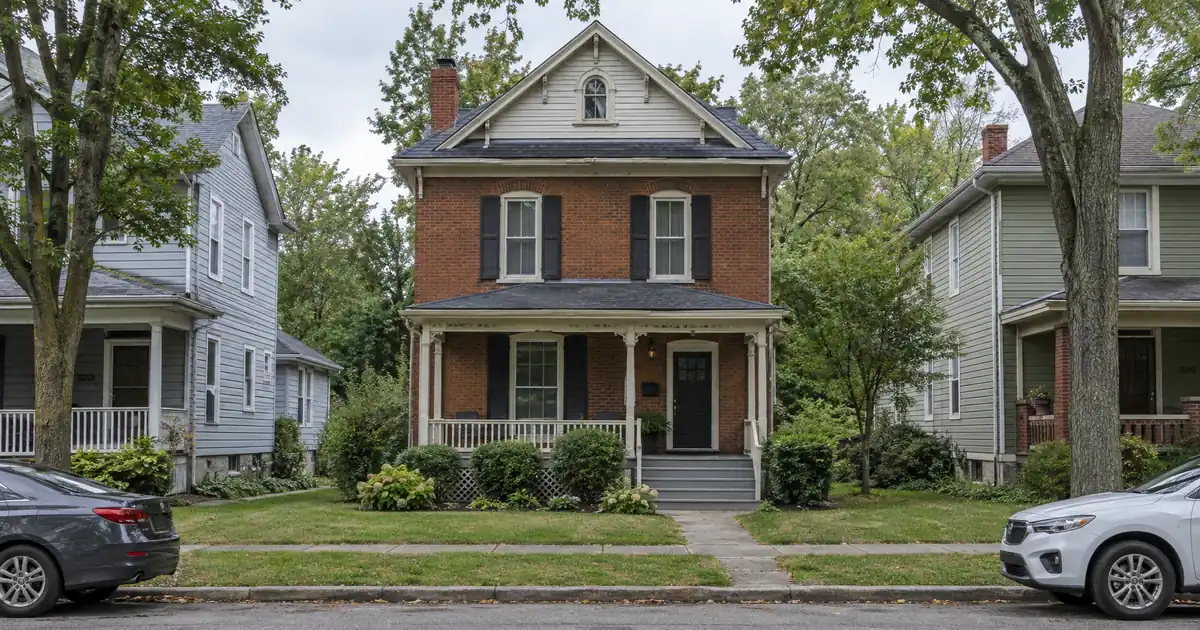
The friction point on a Highland cash-out file usually isn’t the borrower. It’s the appraisal. A mid-century brick ranch bought a few years ago has not ridden a steep appreciation curve, the appraiser’s rent schedule may land below the asking rents investors see on listing sites, and the six-month seasoning clock has to be satisfied before any of it matters. An investor who plans a cash-out around price growth in this town tends to get a smaller number than expected. One who plans around rent coverage and condition tends to get a workable one.
DSCR Cash-Out Calculator
Run the cash-out numbers in Highland, IN
Rate source: Freddie Mac 30-yr average via FRED® — Federal Reserve Bank of St. Louis · effective Sep 24, 2026
Prefilled with starting assumptions — enter your property’s value, balance, taxes, and insurance for a more accurate picture.
Program parameters update from Lendmire’s centralized guideline source. Taxes and insurance are editable estimates.
As of Sep 24, 2026 · General Freddie Mac market benchmark, not a Lendmire loan offer. Property value, balance, taxes, and insurance are editable estimates. Maximum loan-to-value varies by lender, program, property type, and seasoning. Not a Loan Estimate, approval, or commitment to lend. Program availability and eligibility are subject to lender guidelines, credit approval, property review, and underwriting.
The Quick Read:
A DSCR cash-out refinance in Highland, Indiana is underwritten primarily on the property’s rental income measured against its full monthly obligation, so the rent schedule, the appraisal, and the ownership seasoning clock carry more weight than personal income documents, subject to lender guidelines.
- Median sale price sits near $269K, up 2.7 percent year over year, per Redfin.
- Asking rent for a 3BR runs near $2,219 per Rentometer, against $1,202 Census median gross rent.
- Cash-out LTV tops out at 75 percent, with about six months of seasoning.
- Small multi-unit stock carries the strongest rent-to-value, but inventory is thin.
Highland Market Snapshot
A quick read on the Highland investor landscape — figures come from the cited sources below. Confirm current property-level numbers before underwriting.
| Metric | Detail |
|---|---|
| Typical rents | $1,202 median (city-stats.com — Indiana Highland) |
| Recent appreciation | +2.7% yoy (Redfin, Highland housing market) |
| Population | 2020 population 23,984 (Wikipedia, Highland) |
| Employment | Emcor, about 60 employees (Northwest Indiana Business) |
What Flat Pricing Does to a Cash-Out
In Highland, equity comes from rent and condition, not from momentum. Redfin reports a three-month median sale price of $269K, up 2.7 percent year over year, at $178 per square foot. Zillow puts the average home value lower, at $264,129, up 2.2 percent. The methodologies differ, but both describe a stable market, not a run-up. This article uses the Redfin figure as the working median.
That matters for anyone holding a property already. Picture an investor who bought a 3BR ranch a couple of years back, near the town median. The equity built since purchase is modest, so the cash-out proceeds depend on the appraised value times a 75 percent LTV ceiling, less the existing balance. That’s the arithmetic, and it doesn’t stretch. Equity available is never a guaranteed figure. It depends on rent used for lender review, the full monthly obligation, reserves of about six months, and the value the appraiser lands on.
Days on market tell the same story from the other side. Redfin shows homes selling in about 15 days versus 25 a year earlier, and rates the market “very market-rate.” Demand for the product is real. Price momentum is not dramatic. Tight supply supports the value floor, which a lender reads as durability, but it doesn’t manufacture equity.
Seasoning is simple and unforgiving: about six months of ownership, measured from title recording, before a cash-out file is reviewed on its equity. A recent buyer who finished rehab work inside that window still waits for the clock. The work can raise the appraisal. It can’t shorten the wait.
Why the Town Stays Tight (Landlocked and Built Out)
Highland is surrounded by other municipalities. Northwest Indiana Business Magazine describes a landlocked town where development is infill, with little room for large new residential projects. No permit data turned up in the research, so the point is structural, not statistical: new rental supply is constrained by geography.
Connectivity is the other half. The Town of Highland puts Chicago within 25 miles, with three I-80/94 exits: Cline, Kennedy, and Indianapolis Boulevard. Population is essentially flat, with the town profile at 23,622 and World Population Review estimating 23,289. This is a stable commuter suburb, not a growth story. For a cash-out lender that’s acceptable, since a stable tenant base and thin new supply are what rent durability looks like. Investors should just avoid underwriting appreciation that the demographics don’t promise.
Coverage Math by Property Type
Duplex-style stock carries the most coverage headroom in Highland, and large single-family homes carry the least. Single-family at the median sits in the middle, workable but not roomy. The table below shows modeled coverage with full taxes and insurance included, rounded down. Rents come from the research brief. The price and leverage inputs are modeled assumptions, not sourced market data.
| Property type | Modeled rent input | Modeled coverage read |
|---|---|---|
| 3BR ranch near median price | $2,219 asking | Low-1.3x |
| 2BR near median price | $1,759 asking | About 1.1x |
| Any median-priced home at Census rent | $1,202 | Below 1.00x |
| Half-duplex or duplex near $169,900 | Two 2BR units | Above 2x on paper |
| 4BR+ at the high end of prices | $2,533 asking | Weakest rent-to-value |
Each row assumes a 75 percent LTV cash-out and includes property taxes and insurance at Indiana-average loads. Run the numbers on a 3BR at $2,219 against a $269K price: that is roughly 0.83 percent monthly rent-to-value, and it lands in low-1.3 coverage territory at 75 percent leverage. The 2BR at $1,759 against the same price drops to about 1.1x. Workable, with less room for a condition adjustment or a soft appraisal rent.
The third row is the one to watch. The Census-derived median gross rent, per City-Stats, is $1,202. That is well under the listing-based figures, which suggests contract rents on existing leases run below current asking rents. A lender’s rent schedule can land anywhere in that gap. At Census-level rent, a median-priced home falls below 1.00x. Sub-1.00 files aren’t automatically dead. A sub-1.00 program, an interest-only structure, or lower leverage are paths a lender may review, each with its own pricing and cash-down tradeoffs, and eligibility depends on guidelines, credit, reserves, and property review. Most standard programs are built around a 1.00x baseline, and stronger files clear it with cushion. For the general mechanics, the guide “What Is a DSCR Loan” covers the calculation.
Now the multi-unit screen. Homes.com shows six active multi-family listings from $169,900 to $389,900, with an average of 30 days listed. At the bottom of that band, two 2BR units at $1,759 each gross about $3,518 a month, around 2.07 percent of price. That is a screening ratio built from two different sources, not Highland duplex data. Still, the direction is clear: stacked rents against a single price is the strongest route to coverage at a larger refinance balance. Six listings also means appraisers have few comps, so a duplex file needs tight lease and rent documentation.
Consider an investor with two 2BR units under one roof and executed leases near asking. That file could support a meaningful pull at 75 percent LTV while still clearing the benchmark, where a median single-family home at the same LTV may not leave much spare coverage after the loan is resized for the rent.
Where the Rentals Actually Sit
No source produced neighborhood-level rents or prices for Highland, so this section stays qualitative. The investor relevance still differs by pocket.
Downtown and Highway Avenue. The small downtown near Highway Avenue and Kennedy Avenue is walkable and anchored by local businesses. Older small-scale rentals here benefit from retail-worker and service-sector tenant demand.
Wicker Park and the surrounding subdivisions. Wicker Memorial Park offers trails, golf, a dog park, and a summer concert series. Subdivisions like Wicker Park Estates, Lakeside, and Golfmoor are named in the Wikipedia listing. Long-term 3BR rentals near the park compete on lifestyle, which supports lease renewals.
South Kennedy Avenue and the I-94 corridor. A hotel sits on the far south side, and the local business press floats townhomes and walkable retail near the Emcor Hyre site, which employs about 60 people. Interchange access is the draw. Whether the townhome idea materializes is unverified, so underwrite what exists.
The Munster border and Ridge Road. This is spillover demand from the larger neighbor, and the less expensive side of that border. Highland has no station of its own on the South Shore Line’s Monon Corridor extension, which serves Hammond, Munster, and Dyer. Highland sits between Munster and Dyer, so the nearest terminus is close. Ridership and rent effects are unproven. Treat it as a demand-durability point, not an appreciation forecast.
The Tenant Base (Healthcare, Retail, and Commuters)
Demand here is workforce-driven. The Town of Highland lists regional employers including Cleveland-Cliffs, U.S. Steel, Strack & Van Til, Blue Chip Casino, and several hospital systems. No headcounts were published, so scale is unknown. Hospitals provide the most useful read. The Indiana Department of Health hospital directory lists staffed beds of 224 at Franciscan Health Dyer, 207 at Franciscan Health Crown Point, and 536 at Methodist Hospitals in Gary. The Munster directory adds 451 at Community Hospital and 88 at Franciscan Health Munster. Beds aren’t headcount. But five hospitals within a short drive give rentals a steady base of clinical and support staff, and healthcare pay tends to be less cyclical than steel or casino work.
The rental stock itself is small-scale. Point2Homes counts 2,118 renter-occupied units against 7,945 owner-occupied, so renters are about 21 percent of households. Two-bedroom units are the largest share of rentals at 49 percent, and about 19 percent of rentals date from the 1960s and 17 percent from the 1970s. That vintage profile has a direct cash-out implication: expect condition adjustments. A lender’s appraiser will look hard at roofs, mechanicals, and updates, and deferred maintenance shows up in the value line.
Turning the Proceeds Into the Next Acquisition
The cash-out only works as a strategy if the proceeds buy something that coverage-tests better than what was refinanced. In Highland, that points toward small multi-unit, where rent stacks against one price. A typical sequence: season the current rental, refinance at up to 75 percent LTV, then use the proceeds as down payment and reserves on a duplex or a lower-priced older ranch. The reserves requirement (about six months of PITIA on the new file, about nine above $1.5 million) has to be funded too, so proceeds get divided between acquisition cash and reserve cushion.
Loan size is a practical point. Standard programs run up to $3,000,000, and Highland balances sit far below that. Smaller balances route through select lenders in the network, and credit tiers generally start from a 620 floor, with better positioning at 660, 680, and 700. Qualification is subject to lender guidelines.
The deal desk pattern in markets like Highland is consistent. The cleaner files from a documentation standpoint tend to have executed leases, entity documents, title, and property details ready before lender review begins. The common friction point in older-stock suburbs is the gap between asking rent and in-place rent, because the lender’s rent figure follows the lease or the appraiser’s schedule, not the listing. Files that show renewal leases at or near market clear that gap with less back-and-forth. Files with month-to-month tenants and no rent roll tend to get re-run at lower rent, and the cash-out shrinks with it.
Where Most Investors Get It Wrong in Highland
Two mistakes repeat. First: underwriting appreciation. Flat population, a nearly unchanged median, and low single-digit annual price growth mean equity comes from buying right and improving condition, not from waiting. Indiana context is better than the town’s: the Indiana Business Research Center reported 5.1 percent annual state price growth in the third quarter of a recent outlook. Highland has tracked well below that pace.
Second: treating asking rent as rent used for lender review. The $2,219 to $2,533 bedroom-count figures from Rentometer are listing-based. Point2Homes puts the average apartment rent at $1,725. The Census figure is $1,202. Model the file on the low end first, then see what the leases support.
One toss-up deserves honest framing. A median-priced 3BR ranch covers well on asking rent but thins out at lease-level rent. A cheaper duplex covers with more cushion but has a thinner comp set and a smaller exit buyer pool. Investors focused on cash flow probably favor the duplex. Investors who want easy resale may prefer the ranch. Both are defensible. Before any file is submitted, investors should verify current local rental rules, property taxes, and insurance with qualified local professionals.
DSCR vs. conventional financing
There are two common ways to finance an investment property in Highland, IN, and they qualify you differently — here’s how investors weigh them.
Why investors choose it
- Qualifies on the property’s rental income — no personal tax returns, W-2s, or pay stubs needed to document income.
- No personal debt-to-income ceiling to clear, so existing mortgages and obligations don’t cap your borrowing the same way.
- Can be closed in an LLC, keeping the property inside a business entity.
- Built for scaling — not held to the limit on number of financed properties that conventional financing applies.
- Underwriting centers on the deal: generally qualifies when the rent covers the payment, a 1.00x coverage ratio being a common baseline (confirmed in underwriting).
- Designed specifically for investment property, including long-term and, where the program allows, short-term rentals.
Where it’s strong
- Often the lowest ongoing financing cost for a buyer who fully qualifies on personal income — a fit for a first property or a cost-first purchase.
Trade-offs for investors
- Requires full personal income documentation and must fit within a debt-to-income limit — salary, existing debts, and other mortgages all count.
- Typically held in your personal name rather than a business entity.
- Caps how many financed properties you can carry, which can become a ceiling as a portfolio grows.
- Evaluates you as a borrower as much as the property, which usually means more paperwork.
How investors usually choose: a first or single property often optimizes for the lowest financing cost; portfolio builders often optimize for leverage, vesting in an LLC, and scaling past conventional caps. The right answer depends on your goals, the property, and current guidelines — both paths run through select lenders in Lendmire’s wholesale network, with eligibility and terms confirmed in underwriting.
Frequently Asked Questions
How do you qualify for a DSCR cash-out refinance in Highland, Indiana?
Qualification centers on the property’s rent against its full monthly obligation, with a benchmark of 1.00x on standard programs. Lenders also review ownership seasoning of about six months, credit (620 floor), reserves of about six months PITIA, and appraised value against the 75 percent LTV ceiling. Eligibility is subject to lender guidelines and property review.
What are the requirements for an investment property loan in Highland, Indiana?
Expect a rent schedule or lease, an appraisal, title and entity documents if the property is LLC-held (subject to lender program eligibility), and proof of reserves. Loan amounts run up to $3,000,000 on standard programs, with smaller balances routed through select lenders in the network. Manufactured homes, log homes, and barndominiums fall outside these programs.
Does a flat Highland market still support a cash-out?
Yes, when rent and the appraisal carry the file. Redfin shows a median near $269K and Zillow shows about $264K, so the proceeds depend on in-place rent and condition more than on price growth. Recent buyers should expect modest built-up equity, and multi-unit properties generally offer more coverage cushion than median single-family homes.
Do the new commuter rail service and nearby hospitals affect a Highland cash-out?
They do, but only indirectly. Hospitals in Munster, Dyer, and Crown Point supply steady tenant demand, which supports rent durability in a lender’s view. The Monon Corridor extension adds a Chicago commuter option nearby, but rent effects are unproven, so a file should not assume a premium.
What an Appraiser Would Tell You
Highland’s brick ranches and Cape Cods on modest lots price against each other, and the appraiser will care more about condition than about what the house down the street listed for. Keep the rent roll clean, fix what shows, and a cash-out here comes from coverage, not from waiting on a market that has mostly stayed flat.
For current guidelines and terms, see Lendmire’s DSCR loan programs page.
About Lendmire
Lendmire (NMLS# 2371349) is a DSCR-focused mortgage broker that helps arrange investor financing across 41 markets, including Washington, D.C., through wholesale and investor-lending channels. DSCR eligibility is generally reviewed by the lender on the property’s rental income rather than personal income documentation, subject to lender guidelines, which works for self-employed investors, LLC operators, and portfolios above four financed properties. Scotsman Guide named Lendmire a Top Mortgage Workplace in both 2025 and 2026.
For broader investor-financing rules and property-type coverage across the state, see Indiana DSCR loans.
For the mechanics of pulling equity out of a rental property, see cash-out refinance on an investment property.
Get Started
Ready to find the right loan for you?
In about 30 seconds you can review financing options available for your investment property. No commitment required.
Informational only. Not a Loan Estimate, approval, or commitment to lend. Program availability and eligibility are subject to lender guidelines, credit approval, property review, and underwriting.
References
1. Redfin, Highland housing market
2. Rentometer, Highland average rent
3. City-Stats
4. Wikipedia
5. Northwest Indiana Business Magazine
6. Zillow
7. Town of Highland, Town Profile
9. Homes.com, Highland multi-family listings
10. serves Hammond, Munster, and Dyer
11. Indiana Department of Health hospital directory, Lake County
13. Point2Homes, Highland average rent
14. Indiana Business Research Center
15. 2025
16. 2026
This article is part of Lendmire’s investment property cash-out refinance program — full qualification details, guidelines, and scenarios live on the program page.
Related reading: Luxury Rental DSCR Loans In New Jersey · Jersey Shore Vacation Rental Loans: DSCR Financing In Ocean City, Cape May And Long Beach Island · DSCR Cash-out Refinance In New Jersey: Pulling Equity From A Rental
Guides: Investment Property Cash-Out Refinance in Indiana
Brandon Miller
Founder & CEO, Mortgage Loan Originator, Lendmire LLC
- Mortgage Loan Originator · NMLS# 1129696 · Verify on NMLS Consumer Access
- North Carolina Real Estate Broker · License# 343312 · Verify on NCREC
- North Carolina Insurance Producer · License# 19053198 · Property, Casualty, Life, Health · Verify on NAIC SBS
- Lendmire LLC · Firm NMLS# 2371349 · Verify firm licensure
Disclosure information. Lendmire is a state-licensed mortgage brokerage under NMLS# 2371349. Lendmire is not a depository institution, direct lender, or financial advisor — all loans referenced are placed through wholesale lender partners and are subject to each lender's underwriting standards. This article is provided for general informational purposes and is not a commitment to lend, nor does it constitute financial, legal, or tax advice. Loan programs, terms, rates, and qualification standards change without notice and depend on borrower profile, property type, and the state in which the subject property is located. Equal Housing Opportunity provider. NMLS Consumer Access: nmlsconsumeraccess.org.