
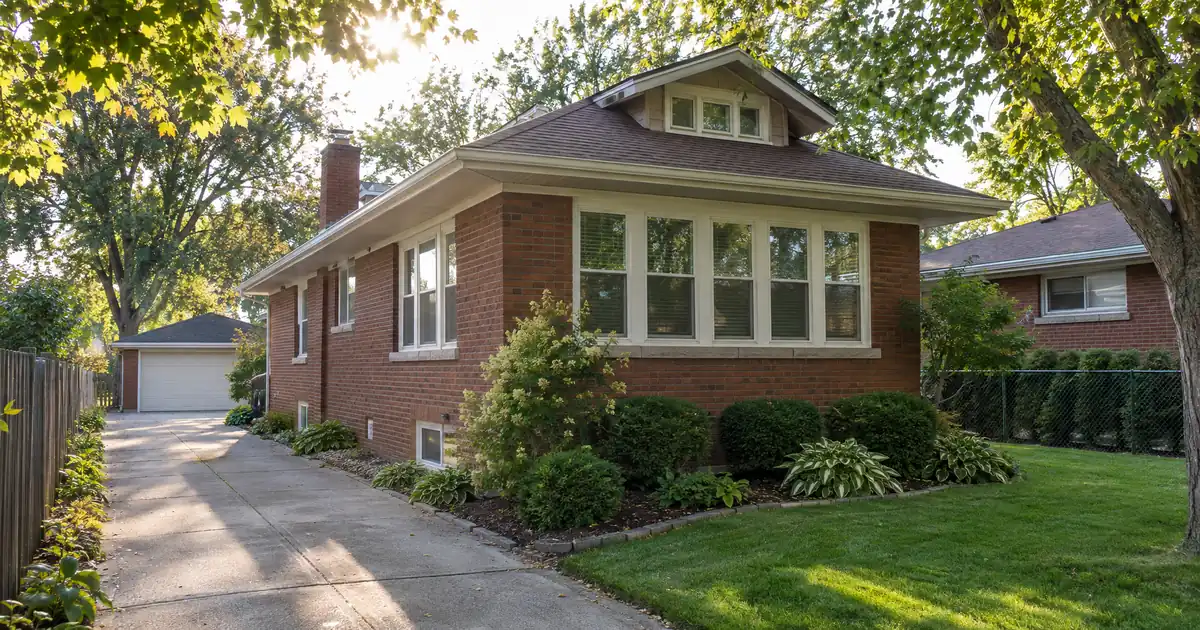
The neighborhoods where Hoffman Estates builds equity fastest are the ones where a rental struggles to cover its own debt. Redfin shows The Pie at a $480K median sale price, up 11.6 percent year over year. That is a strong number for an owner and a weak one for the coverage ratio. Most investors here chase the appreciation and then find the loan-to-value cap was never the binding constraint. Rent was.
The Short Version: A DSCR cash-out refinance in Hoffman Estates, Illinois is underwritten primarily on the property’s rental income measured against its full monthly obligation, with taxes, insurance, and any HOA dues included, and the file must also clear the lender’s seasoning, loan-to-value ceiling, and reserves review before any equity is released.
DSCR Cash-Out Calculator
Run the cash-out numbers in Hoffman Estates, IL
Rate source: Freddie Mac 30-yr average via FRED® — Federal Reserve Bank of St. Louis · effective Oct 1, 2026
Prefilled with starting assumptions — enter your property’s value, balance, taxes, and insurance for a more accurate picture.
Program parameters update from Lendmire’s centralized guideline source. Taxes and insurance are editable estimates.
As of Oct 1, 2026 · General Freddie Mac market benchmark, not a Lendmire loan offer. Property value, balance, taxes, and insurance are editable estimates. Maximum loan-to-value varies by lender, program, property type, and seasoning. Not a Loan Estimate, approval, or commitment to lend. Program availability and eligibility are subject to lender guidelines, credit approval, property review, and underwriting.
- The $350K townhome list median models near 1.05 coverage at the 75 percent cap.
- The Pie’s higher prices push modeled coverage below 1.00 at the same cap.
- Condos list near $180K and show the best rent-to-value, but HOA dues decide the file.
- Two-to-four unit stock is close to absent, so proceeds usually go to the next deal elsewhere.
- Cash-out generally needs about six months of ownership, measured from title recording.
The Pie Builds Equity. It Doesn’t Build Coverage.
The Pie is the clearest example of the appreciation-versus-cash-flow tension in this village. The $480K median sits well above the citywide figure. Redfin puts the citywide median sale price at $409,729, up 4.2 percent year over year. Zillow’s average home value is $408,240, up 6.3 percent. The two use different methodologies, and both describe steady mid-single-digit growth, not a spike.
Now run the numbers on a single-family rental in The Pie. Assume the Homes.com median single-family rent of $2,950 and a $480K value. That is a modeled assumption, not a quoted deal. At the 75 percent LTV cap, with a 30-year term and taxes and insurance included in the obligation, coverage lands around 0.85. Below the 1.00 baseline.
Below 1.00 is not a dead end. Lenders may review sub-1.00 programs, a lower LTV, interest-only structures, or stronger reserves as compensating factors. Each comes with different pricing and leverage, and eligibility depends on lender guidelines, credit, and property review. But the cleaner move is to recognize that this pocket is a hold-for-equity play, not a coverage play.
Two other Redfin neighborhood readings carry caveats. Hoffman Hills shows $555K, up 32.1 percent, which looks like a small-sample swing and not a trend. Evergreen shows $664K, down 3.8 percent. On Evergreen files, expect the appraiser to be conservative, and plan the cash-out around the lower value, not the peak.
Where the Number Clears: Townhomes and Condos
Townhomes and attached units are the strongest documented fit. Homes.com lists townhouse rents at $2,598 and condo rents at $1,900. A May buyer guide cites Redfin list medians of about $350K for townhomes and $180K for condos. The table below uses those figures as modeled assumptions, at the 75 percent cap, including taxes and insurance.
| Property type | Modeled value / rent | Modeled coverage |
|---|---|---|
| Condo | ~$180K / $1,900 | ~1.4 before HOA dues |
| Townhome | ~$350K / $2,598 | ~1.05 |
| Single-family, citywide | $409,729 / $2,950 | ~1.0 |
| Single-family, The Pie | $480K / $2,950 | ~0.85 |
The condo ratio looks like the best in the city. It is also the easiest to overstate. HOA dues count in the obligation, and the lender will want the HOA questionnaire and condo certification complete, with the project’s owner-occupancy and litigation answers on file. An incomplete questionnaire stalls these files more often than the coverage math does. A Redfin page also showed 43 condos and 27 townhouses against zero multi-family units in the prior month. The condo market has comps, but the project-level review is where you earn the number.
Working DSCR brokers see a recurring pattern in suburban markets like this one: the appraisal supports the 75 percent cap, and the owner assumes the cash-out is sized by value. Then the coverage calculation, with taxes and insurance in the full obligation, caps the loan below the LTV ceiling. The binding constraint is usually rent, not equity. Running coverage first and LTV second avoids the surprise.
For directional rent checks, Redfin’s rental pages show median rents of $2,115 in the Golden Corridor, $2,400 in West Streamwood, and $2,000 in East Streamwood. The data mixes property types and is dated, so use it as a sanity check, not a rent opinion.
How the Equity Math Runs, Step by Step
Equity extraction here follows the same mechanics as anywhere, and the order matters. The steps below assume you already own the property.
1. Confirm seasoning. The network’s programs generally look for about six months of ownership, measured from title recording and documented by the settlement statement. A recent purchase that skips this step gets kicked back.
2. Estimate value, then cap it. Multiply the expected appraised value by the 75 percent ceiling. That cap applies to cash-out, not the higher purchase figure. Subtract your existing payoff and closing costs, and you have the ceiling on proceeds. It is a ceiling, not a promise.
3. Run coverage on full obligation. Divide rent used for lender review by principal, interest, taxes, insurance, and HOA dues. Most DSCR programs are built around a 1.00 baseline, though some lenders review lower ratios with compensating factors. If the number falls short, the loan amount shrinks until it clears, or you look at a different structure.
4. Document reserves. About six months of the full obligation is typical, with more above $1,500,000. Reserves documentation is a classic place for stale statements to delay a file. Credit tiers generally run from a 620 floor up through 660, 680, and 700, with better tiers improving options.
5. Prepare the lease and entity file. Gather the current lease and any rent evidence, and if the property is LLC-titled, pull together the entity documents as well, all subject to lender program eligibility.
Here is the appreciation piece, shown in ratios. Say you bought a townhome with 25 percent down, so the original loan was 75 percent of the old price. If the value has since risen 10 percent, that same loan is about 68 percent of today’s value. The remaining headroom to the 75 percent cap is roughly seven points of value, before costs and before the coverage test. At the citywide pace of 4.2 percent a year, that takes years of holding, not months. This is a hold-for-equity market. It is not a high-yield one.
Program terms shift, so confirm current parameters when the file starts. The cash-out refinance walkthrough and investor refinance options cover the program side in more detail. For the underlying mechanics, the guide “What Is a DSCR Loan” explains how the ratio is built, and the guide “Where DSCR and Conventional Diverge” explains why a bank would size the same property differently. Statewide context sits on the Illinois DSCR financing page.
The Rent Ceiling (and the Supply Coming)
Rents above what established apartment complexes achieve need a specific comp. Those complexes set the benchmark for the local rental market. Pricing and available terms vary by lender, borrower profile, property type, and full underwriting review. A three-bedroom house or townhome asking $2,600 to $2,950 competes with the top of that benchmark. These are asking rents, not achieved rents, so if the file needs a rent higher than the comps support, the coverage ratio is optimistic.
Supply is coming too. The village approved the 335-unit Grand Reserve apartment complex at Barrington Square Town Center, with a first building taking about 18 months to build. New Class A units near Higgins Road and Barrington Road will compete for the same renters. No source confirms actual oversupply, but underwrite rents near that corridor conservatively.
Demand Without a Dominant Employer
Rental demand here rests on a broad job base. The village reports a large workforce spread across hundreds of businesses, 45 minutes northwest of Downtown Chicago and 20 minutes from O’Hare. The population sits near 51,175 per ACS-based figures, with household incomes that run comfortably above many nearby markets. Prairie Stone still hosts Siemens, TRUMPF, DMG Mori, and Claire’s headquarters, per a local community page. St. Alexius Medical Center, an Ascension hospital with a Level II trauma center, adds healthcare demand.
The old boom-era story is over. The former Sears headquarters site, 197 acres, is becoming a $10B data center project with about 100 employees. Construction headlines are big. Payroll gains are small. A village study also notes that Prairie Stone’s streets were sized for a buildout that never fully happened. So do not underwrite rent growth off new office jobs. The honest read is moderate, diversified demand drawn from the wider northwest suburbs, including Schaumburg.
What Happens to the Proceeds
Since small multifamily is scarce here, proceeds often go outside the village. The brief found no meaningful inventory of two-to-four unit buildings, and Redfin’s count shows zero multi-family units. Investors chasing income stacking will likely compare Streamwood, Elgin, and Schaumburg. Schaumburg’s Class A pricing, like a 2-bed at $2,800 at Element at Veridian, is not typical, so don’t carry those rents back into a Hoffman Estates file.
The stronger play might be a second townhome here with the cash-out from the first. Or the other way: a bigger-ticket asset where appreciation does the work. This one is a genuine toss-up. The townhome route keeps coverage clean, while the higher-priced route trades coverage for growth and demands more reserves. Before committing, consider how each deal looks if rents flatten. One reminder: verify current local rental rules, taxes, and insurance with qualified local professionals, and check each parcel, since the village spans two counties.
Reach Lendmire at 828-256-2183 to talk through a specific property.
Frequently Asked Questions
How do you qualify for a DSCR cash-out refinance in Hoffman Estates?
The property’s rent has to cover its full obligation (principal, interest, taxes, insurance, and HOA dues) at around the 1.00 baseline. You also need about six months of ownership from title recording, a credit score at or above the 620 floor, and roughly six months of reserves. Final eligibility depends on lender guidelines, credit approval, and property review.
DSCR vs. conventional financing
There are two common ways to finance an investment property in Hoffman Estates, IL, and they qualify you differently — here’s how investors weigh them.
Why investors choose it
- Qualifies on the property’s rental income — no personal tax returns, W-2s, or pay stubs needed to document income.
- No personal debt-to-income ceiling to clear, so existing mortgages and obligations don’t cap your borrowing the same way.
- Can be closed in an LLC, keeping the property inside a business entity.
- Built for scaling — not held to the limit on number of financed properties that conventional financing applies.
- Underwriting centers on the deal: generally qualifies when the rent covers the payment, a 1.00x coverage ratio being a common baseline (confirmed in underwriting).
- Designed specifically for investment property, including long-term and, where the program allows, short-term rentals.
Where it’s strong
- Often the lowest ongoing financing cost for a buyer who fully qualifies on personal income — a fit for a first property or a cost-first purchase.
Trade-offs for investors
- Requires full personal income documentation and must fit within a debt-to-income limit — salary, existing debts, and other mortgages all count.
- Typically held in your personal name rather than a business entity.
- Caps how many financed properties you can carry, which can become a ceiling as a portfolio grows.
- Evaluates you as a borrower as much as the property, which usually means more paperwork.
How investors usually choose: a first or single property often optimizes for the lowest financing cost; portfolio builders often optimize for leverage, vesting in an LLC, and scaling past conventional caps. The right answer depends on your goals, the property, and current guidelines — both paths run through select lenders in Lendmire’s wholesale network, with eligibility and terms confirmed in underwriting.
What are the requirements for an investment property loan in Hoffman Estates, Illinois?
Expect a current lease or market rent evidence, an appraisal, reserves documentation, and entity documents if the property is LLC-titled, subject to program terms. Cash-out is capped at 75 percent LTV. Loan sizes generally run up to $3,000,000 on standard programs. Manufactured homes, log homes, and barndominiums fall outside these programs.
Which Hoffman Estates property types fit a cash-out best?
Townhomes and condos show the strongest modeled coverage. Workforce single-family can reach roughly 1.0, and The Pie-type price points often fall short. Small multifamily would fit best but is scarce locally.
Does the new apartment supply affect a cash-out file?
It affects the rent assumption, not the LTV cap. With 335 units approved near Barrington Square, rents near that corridor should be underwritten against real comps. Appraisers and lenders look at what comparable units actually achieve.
For current guidelines and terms, see Lendmire’s DSCR loan programs page.
About Lendmire
Lendmire, NMLS# 2371349, is a mortgage brokerage specializing in DSCR investor loans, helping arrange financing across 41 markets, including Washington, D.C., through wholesale and investor-lending channels. The model centers on property-level rental income reviewed by the lender rather than W-2 documentation, subject to lender guidelines, suiting entity-owned and multi-property investors. Lendmire holds recognition as a 2025 Scotsman Guide Top Mortgage Workplace and a top-ranked workplace in 2026.
The investors who pull equity from Hoffman Estates townhomes and condos now, while coverage clears and the data-center buildout leaves rents untouched, will come out ahead of those waiting on payroll growth that isn’t coming.
Get Started
Ready to find the right loan for you?
In about 30 seconds you can review financing options available for your investment property. No commitment required.
Informational only. Not a Loan Estimate, approval, or commitment to lend. Program availability and eligibility are subject to lender guidelines, credit approval, property review, and underwriting.
References
1. The Pie at a $480K median sale price, up 11.6 percent year over year
4. Zillow’s average home value
5. Homes.com median single-family rent of $2,950
6. Hoffman Hills shows $555K, up 32.1 percent
7. Evergreen shows $664K, down 3.8 percent
8. Redfin — Hoffman Estates Waterfront
10. 335-unit Grand Reserve apartment complex
11. 51,175 per ACS-based figures
12. drakeresidentialgroup.com — Hoffman Estates
13. $10B data center project with about 100 employees
14. hoffmanestates.org — Bid Prairie Stone Parkway Access Study
15. a 2025 Scotsman Guide Top Mortgage Workplace
16. Scotsman Guide — Top Workplaces 2026
This article is part of Lendmire’s investment property cash-out refinance program — full qualification details, guidelines, and scenarios live on the program page.
Related reading: Luxury Rental DSCR Loans In New Jersey · Jersey Shore Vacation Rental Loans: DSCR Financing In Ocean City, Cape May And Long Beach Island · DSCR Cash-out Refinance In New Jersey: Pulling Equity From A Rental
Guides: Investment Property Cash-Out Refinance in Hoffman Estates, IL · Investment Property Cash-Out Refinance in Illinois
Brandon Miller
Founder & CEO, Mortgage Loan Originator, Lendmire LLC
- Mortgage Loan Originator · NMLS# 1129696 · Verify on NMLS Consumer Access
- North Carolina Real Estate Broker · License# 343312 · Verify on NCREC
- North Carolina Insurance Producer · License# 19053198 · Property, Casualty, Life, Health · Verify on NAIC SBS
- Lendmire LLC · Firm NMLS# 2371349 · Verify firm licensure
Required disclosures. Lendmire (NMLS# 2371349) operates as a licensed mortgage broker, not a direct lender or depository. The discussion in this article is general in nature and should not be relied upon as financial, legal, or tax advice — every investment scenario is unique and should be reviewed by a qualified professional. Any loan inquiry is subject to lender underwriting, and this article is not a commitment to lend or a guarantee of approval. Mortgage rates, loan terms, and program guidelines vary by borrower, property, and state, and may change without notice. Equal Housing Opportunity. Verify licensure at NMLS Consumer Access.