
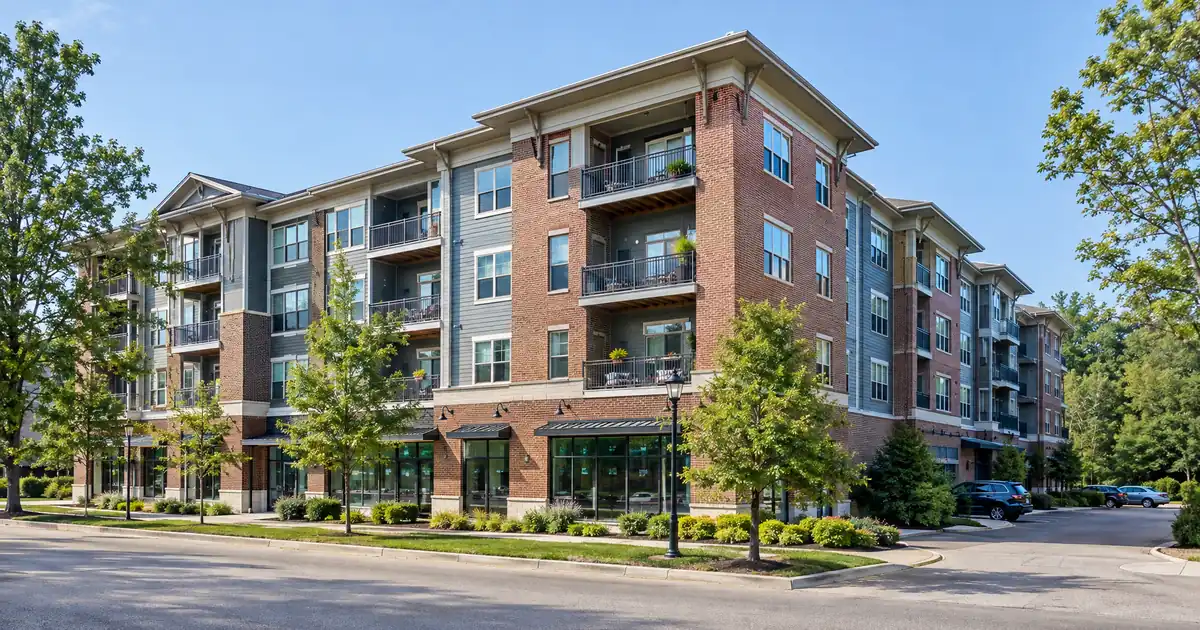
Jeffersonville homes sold after a median of 63 days on the market in the latest Redfin read, against 21 days the year before. Prices still rose 4.6% to a median near $264K over the same stretch. Prices are up and buyers are slower. That split matters to anyone planning to pull equity out of a rental, because the appraisal is the one moment the market’s mood gets converted into a number the loan depends on.
At a Glance: A DSCR cash-out refinance in Jeffersonville, Indiana is underwritten primarily on the property’s rental income measured against its full monthly obligation, so the file turns on appraised value, documented rent and ownership seasoning rather than personal income. Local appreciation is real but moderating, which makes the appraisal the file’s pressure point.
DSCR Cash-Out Calculator
Run the cash-out numbers in Jeffersonville, IN
Rate source: Freddie Mac 30-yr average via FRED® — Federal Reserve Bank of St. Louis · effective Sep 24, 2026
Prefilled with starting assumptions — enter your property’s value, balance, taxes, and insurance for a more accurate picture.
Program parameters update from Lendmire’s centralized guideline source. Taxes and insurance are editable estimates.
As of Sep 24, 2026 · General Freddie Mac market benchmark, not a Lendmire loan offer. Property value, balance, taxes, and insurance are editable estimates. Maximum loan-to-value varies by lender, program, property type, and seasoning. Not a Loan Estimate, approval, or commitment to lend. Program availability and eligibility are subject to lender guidelines, credit approval, property review, and underwriting.
- Zillow puts the average Jeffersonville home value near $253,784, up 1.5% year over year.
- Cash-out typically tops out at 75% LTV, with about 6 months of title seasoning.
- Single-family rent runs well ahead of apartment rent, which helps coverage on houses.
- Duplexes and small multifamily are scarce, so appraisal comps run thin.
Lendmire (NMLS# 2371349) is a multi-state mortgage brokerage that helps Jeffersonville, Indiana investors arrange DSCR financing across 41 markets, including Washington, D.C. The brokerage places these loans with wholesale and investor lenders, and the lender makes the final eligibility call. This piece skips the purchase side and stays on equity already sitting in a property you own. For the mechanics underneath, see the DSCR qualification mechanics.
Jeffersonville Market Snapshot
A quick read on the Jeffersonville investor landscape — figures come from the cited sources below. Confirm current property-level numbers before underwriting.
| Metric | Detail |
|---|---|
| Home prices | $264K median (Redfin Jeffersonville Housing) |
| University enrollment | 110,710 students fall 2024 (Ivy Tech Community College) |
| Employment | 25.6K→26.2K employees (Data USA Jeffersonville Profile) |
The Appreciation Is Real. The Cushion Is Smaller Than It Looks.
Cash-out math runs on appraised value, and Jeffersonville’s value story depends on whose number you read. Zillow shows an average home value of $253,784, up 1.5% over the past year. Redfin’s median sale price is higher at about $264K, up 4.6%, because a median of closed sales and a modeled average are different measurements. This article uses the Zillow figure for scenario math because it is the more conservative of the two.
The spread between those numbers is the honest lesson here. An owner who bought a couple of years ago at a price that looked soft may have less gain than the headline suggests, and the lengthening days on market says buyers are pushing back. Redfin’s neighborhood data shows price per square foot up 7.5%, which is encouraging, but price per square foot is a blunt tool on a specific house with a specific kitchen.
Is the tailwind fading or just pausing? Probably pausing, given the employment base. Still, underwriting a refinance on the assumption that value keeps climbing is how owners end up with an appraisal that lands under their number.
Why Demand Holds Up Anyway
Demand here has a concrete source. River Ridge Commerce Center spans roughly 6,000 acres, hosts more than 80 companies, and reported onsite employment above 12,675 in its most recent full-year count, with a later update pointing past 13,300. Amazon, Medline, CTDI, Collins Aerospace and DENSO sit alongside Meta’s $800 million data center campus, which the City of Jeffersonville says drew more than 1,200 construction jobs at peak.
The city’s own base adds to it. Data USA shows employment growing 2.25% to about 26.2k workers, led by manufacturing, health care and transportation and warehousing. Norton Clark Hospital adds shift-work tenants who tend to rent on longer horizons. Those are steady, long-lease tenants with no single-employer cliff, and that supports the rent line on a DSCR file.
There is also a supply gap. One regional developer estimate projects the area needs about 4,700 additional housing units over the next decade, per Denton Floyd. A local agent on a new 200-home subdivision near River Ridge told WDRB that builders can’t keep up with demand. Thin inventory tends to hold values up, though it also means fewer clean comps for an appraiser.
Where the Rent Actually Covers the Loan
Houses cover better than apartments in this market. Point2Homes puts the average single-family rent near $1,755 against about $1,161 for an apartment. Other aggregators disagree on the details. Rentometer shows three-bedroom rent around $1,756, RentCafe around $1,639, and RentHop closer to $1,240. A $500 spread on the same bedroom count is a reason to pull lease-backed comps instead of trusting any one site.
Run the numbers on a modeled case. Assume a rental house valued near $254,000 with rent at $1,755, refinanced at 75% LTV. Measured against full PITIA including taxes and insurance, coverage lands around 1.1x. Those are modeled inputs, not sourced market data, and the ratio is rounded down on purpose. The standard benchmark for DSCR programs is 1.00x, so that file clears with some room, subject to lender guidelines.
Now change one input. Use the $1,325 all-property median rent from Zumper instead, and the same house falls below 0.9x. Below 1.00, the paths a lender may review include a sub-1.00 program, an interest-only structure, or lower leverage with more cash left in the deal. Each carries different pricing and overlays, and none is a given. The takeaway is that a lease at market for a house supports the loan, while an under-rented house does not.
There is one more wrinkle. Redfin’s rental report shows a Jeffersonville median near $1,695, against about $1,097 in New Albany and $1,107 in Clarksville. Only 28% of households here rent, per RentCafe. A thin rental pool with wide price dispersion rewards hyper-local comps and punishes city-wide averages.
Duplexes Are Scarce (and That Cuts Both Ways)
About 70% of Jeffersonville’s housing units are single-family detached, per NeighborhoodScout, and duplexes or small converted buildings account for roughly 5.6%. Income-stacking on a legal two-to-four-unit property helps the coverage number, because several leases carry one loan. The same scarcity means the appraiser may reach for comps from outside the immediate neighborhood and adjust heavily.
Working DSCR brokers see a recurring pattern in small-multifamily-scarce markets like this one: the borrower assumes the rent roll drives value, and the appraiser values the building off sales of comparable buildings. When three duplex sales exist in the last year and two were rehabs, the gap between the borrower’s number and the appraised number is where the cash-out shrinks. Clean rent rolls and lease copies do not fix thin comps, but they keep the rental side of the file from adding a second problem.
New-construction four-unit product is also showing up on the market, typically four 2-bedroom, 1-bath units per building. That stock is warrantied and low on deferred maintenance, but it has a short sales history, which can complicate comps down the road.
Submarkets: Who Gets Squeezed and Who Doesn’t
River Ridge side and east Jeffersonville. This is the strongest tenant-demand story in the city. The commerce park’s onsite job base draws directly on nearby rentals. Houses here read like workforce rentals, which tend to appraise off a deeper single-family comp pool. The risk is concentration: a cluster of similar rentals appraised against each other.
Downtown and Old Jeffersonville. The Old Jeffersonville Historic District covers 203 acres of bungalows, shotguns and foursquares, many close to a century old. Older, denser stock is where duplex conversions sit. The caution is riverfront location. Redfin’s data flags that about 22% of Jeffersonville properties face severe flood risk over the next 30 years, so anything near the water needs flood-zone determination in the file early, because a late surprise there is a preventable delay in review. The adjacent NoCo Arts & Cultural District leans toward small mixed-use and loft-style stock, where income documentation is messier.
Claysburg. The city has a dated neighborhood revitalization plan on record, which points to infill and rehab activity near downtown. Lower per-door basis can help coverage, but appraisers may struggle to find comparable sales.
Mill Creek. Newer subdivision-style houses popular with family renters. Clean stock, predictable appraisals, less income-stacking potential.
Honestly, the stronger play for cash-out depends on the goal. East-side houses give cleaner appraisals and easier coverage. Downtown duplexes give more income per loan but more appraisal risk. Neither is wrong, and the mix depends on whether the next deal needs max proceeds or a clean file.
Seasoning, Appraisal and Reserves: The File Mechanics
Cash-out files usually stall on documentation, not on the ratio. Here is where the friction tends to land.
1. Seasoning. On most programs, cash-out requires about 6 months of ownership measured from title recording, evidenced by the settlement statement. Files that assume seasoning away get sent back.
2. Appraisal. The 75% LTV ceiling applies to the appraised value, not the contract price or the owner’s estimate. If the appraisal lands light, an appraisal reconsideration with recent in-neighborhood sales and condition adjustments is a routine step. These specifics are subject to lender guidelines and a full review of property, leverage, and credit.
3. Lease evidence. A current lease, or a rent schedule the appraiser supports, anchors the rent used for lender review. A vacant property or a lease far below comps drags coverage down.
4. Entity documents. If the property sits in an LLC, operating agreement and articles need to match the title holder, subject to lender program eligibility.
5. Reserves documentation. Expect roughly 6 months of PITIA in reserves on typical programs, with a higher requirement on larger balances. Statements need to show the cash is seasoned in the account.
Reserves trip more files than the ratio does. Investors assume the refinance proceeds will satisfy the reserve requirement and find the lender wants liquid funds documented separately. Whether proceeds count varies by program, so confirm before the file goes in. Credit matters too: programs commonly start at a 620 floor, with better terms at higher tiers such as 660, 680 and 700. Standard programs reach up to $3,000,000, and smaller balances route through select lenders in the network. Exact eligibility depends on lender guidelines, credit, reserves, property review and state overlays. For a broader look at how these refinance types differ, including rate-and-term and cash-out refinancing, see the guide “The Refi Options”.
DSCR vs. conventional financing
Two common ways to finance an investment property in Jeffersonville, IN. They qualify you differently — here’s how investors weigh them.
Why investors choose it
- Qualifies on the property’s rental income — no personal tax returns, W-2s, or pay stubs needed to document income.
- No personal debt-to-income ceiling to clear, so existing mortgages and obligations don’t cap your borrowing the same way.
- Can be closed in an LLC, keeping the property inside a business entity.
- Built for scaling — not held to the limit on number of financed properties that conventional financing applies.
- Underwriting centers on the deal: generally qualifies when the rent covers the payment, a 1.00x coverage ratio being a common baseline (confirmed in underwriting).
- Designed specifically for investment property, including long-term and, where the program allows, short-term rentals.
Where it’s strong
- Often the lowest ongoing financing cost for a buyer who fully qualifies on personal income — a fit for a first property or a cost-first purchase.
Trade-offs for investors
- Requires full personal income documentation and must fit within a debt-to-income limit — salary, existing debts, and other mortgages all count.
- Typically held in your personal name rather than a business entity.
- Caps how many financed properties you can carry, which can become a ceiling as a portfolio grows.
- Evaluates you as a borrower as much as the property, which usually means more paperwork.
How investors usually choose: a first or single property often optimizes for the lowest financing cost; portfolio builders often optimize for leverage, vesting in an LLC, and scaling past conventional caps. The right answer depends on your goals, the property, and current guidelines — both paths run through select lenders in Lendmire’s wholesale network, with eligibility and terms confirmed in underwriting.
Turning Proceeds Into the Next Move
Equity available depends on rent used for lender review, PITIA, reserves and the 75% LTV ceiling. It is not a fixed cash figure until the appraisal posts. So treat proceeds as a range when planning the next acquisition, and keep the next deal’s terms flexible until the value is in hand. Terms vary by lender guidelines, property type, leverage, credit profile, and full file review.
A sober way to use the money: hold the refinanced house, park the proceeds as the equity stack for a second property, and pressure-test that second purchase on rent alone. The appreciation tailwind has not disappeared, but with days on market stretching, betting on price gains to rescue a thin deal is the weak version of this strategy. If the second property only works at today’s appraisal plus future growth, it does not work. For a comparison of this structure against bank financing, see Lendmire’s DSCR-versus-conventional breakdown, and the state-level overview of Indiana DSCR investor loans covers how programs apply across the state. Program details change, so confirm current guidelines before you plan around a specific number, and verify local rules, taxes and insurance with qualified local professionals. When you are ready to size a file, you can get a DSCR quote or call 828-256-2183.
Frequently Asked Questions
How do you qualify for a DSCR cash-out refinance in Jeffersonville?
Lenders generally want about 6 months of ownership from title recording and reserves near 6 months of PITIA. Final eligibility is subject to lender guidelines, credit approval and property review.
What are the requirements for an investment property loan in Jeffersonville, Indiana?
Expect a rent-supported ratio, a minimum credit tier, LTV limits and documented reserves. On cash-out, the LTV ceiling is 75% of appraised value. The property, its lease and any LLC paperwork all get reviewed.
How much equity can I pull from a Jeffersonville rental?
No fixed figure exists until the appraisal posts. Proceeds depend on appraised value, the existing payoff, the 75% LTV ceiling and whether the rent covers the new obligation. Rising days on market locally means the appraisal, not your estimate, sets the ceiling. Exact terms depend on the lender’s guidelines, property type, leverage, and a full review of the borrower’s file.
Does the River Ridge job base guarantee a refinance works?
No. It supports tenant demand and rent stability, which helps the rental side of the file. It does not change appraisal results, seasoning or reserve requirements. Each property still is reviewed on its own numbers. Every figure here varies by lender and program — guidelines, property type, leverage, and credit profile all apply.
Can Lendmire help structure a DSCR cash-out refinance scenario for a Jeffersonville rental property?
Yes. Lendmire arranges DSCR investor loans through lending channels. A key program feature is that qualification leans on the property’s rental income rather than personal income documents, subject to lender guidelines.
For current guidelines and terms, see Lendmire’s DSCR loan programs page.
About Lendmire
Lendmire (NMLS# 2371349) is a mortgage brokerage focused on DSCR investor financing, helping arrange programs through wholesale and investor-lending channels in 41 markets, including Washington, D.C. DSCR loans are evaluated by the lender on property cash flow rather than personal income, subject to lender guidelines, supporting LLC closings and accommodating investors with four or more financed properties. Lendmire was named a Scotsman Guide Top Mortgage Workplace in both 2025 and 2026.
Get Started
Ready to find the right loan for you?
In about 30 seconds you can review financing options available for your investment property. No commitment required.
Informational only. Not a Loan Estimate, approval, or commitment to lend. Program availability and eligibility are subject to lender guidelines, credit approval, property review, and underwriting.
References
1. Redfin, Jeffersonville housing market
4. Zillow, Jeffersonville home values
6. River Ridge Commerce Center
7. City of Jeffersonville, Meta announcement
9. Denton Floyd
10. WDRB
11. Point2Homes
12. Zumper
13. RentCafe
15. Old Jeffersonville Historic District
16. 2025
17. 2026
This article is part of Lendmire’s investment property cash-out refinance program — full qualification details, guidelines, and scenarios live on the program page.
Related reading: Luxury Rental DSCR Loans In New Jersey · Jersey Shore Vacation Rental Loans: DSCR Financing In Ocean City, Cape May And Long Beach Island · DSCR Cash-out Refinance In New Jersey: Pulling Equity From A Rental
Guides: Investment Property Cash-Out Refinance in Jeffersonville, IN · Investment Property Cash-Out Refinance in Indiana
Brandon Miller
Founder & CEO, Mortgage Loan Originator, Lendmire LLC
- Mortgage Loan Originator · NMLS# 1129696 · Verify on NMLS Consumer Access
- North Carolina Real Estate Broker · License# 343312 · Verify on NCREC
- North Carolina Insurance Producer · License# 19053198 · Property, Casualty, Life, Health · Verify on NAIC SBS
- Lendmire LLC · Firm NMLS# 2371349 · Verify firm licensure
Disclosure information. Lendmire is a state-licensed mortgage brokerage under NMLS# 2371349. Lendmire is not a depository institution, direct lender, or financial advisor — all loans referenced are placed through wholesale lender partners and are subject to each lender's underwriting standards. This article is provided for general informational purposes and is not a commitment to lend, nor does it constitute financial, legal, or tax advice. Loan programs, terms, rates, and qualification standards change without notice and depend on borrower profile, property type, and the state in which the subject property is located. Equal Housing Opportunity provider. NMLS Consumer Access: nmlsconsumeraccess.org.