
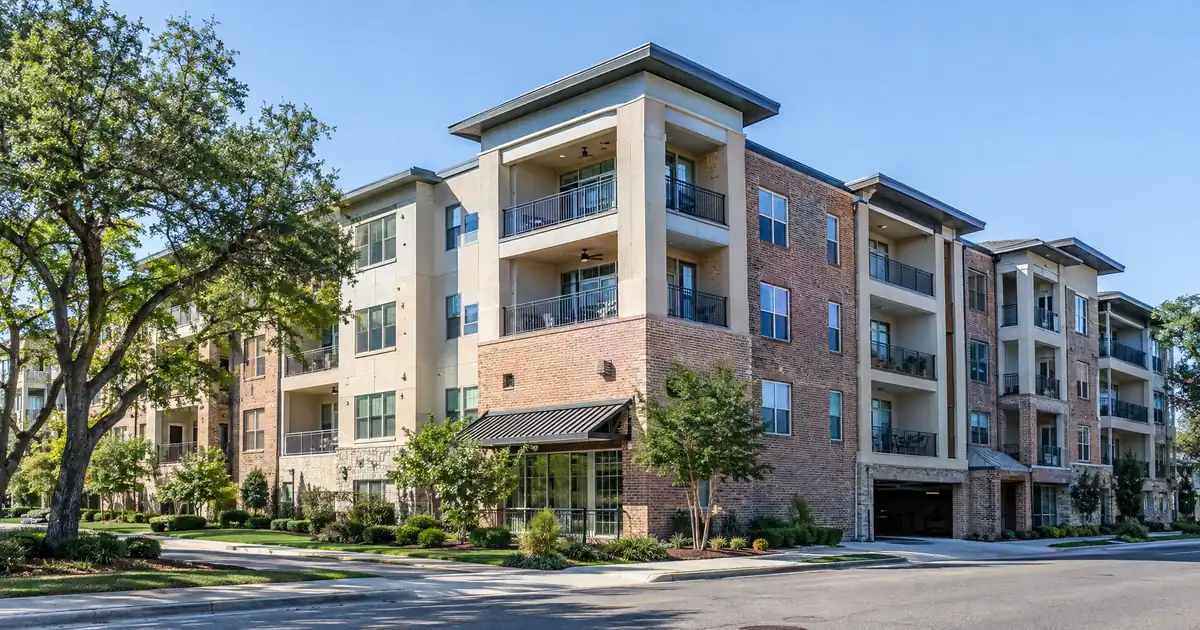
Twenty-two percent of properties in Jeffersonville carry meaningful flood risk over the next 30 years, per Redfin’s neighborhood data — 3,275 properties likely to be severely affected. That’s not a footnote. That’s a fact that changes which parts of this city make sense for a cash-out refinance and which don’t, no matter how good the appreciation numbers look on paper.
At a Glance: A cash-out refinance on a Jeffersonville, Indiana rental is underwritten primarily on the property’s in-place or market rent measured against its full monthly obligation, not on the borrower’s personal income, with proceeds capped by a 75% loan-to-value ceiling and a roughly six-month ownership seasoning clock that starts at title recording.
DSCR Cash-Out Calculator
Run the cash-out numbers in Jeffersonville, IN
Rate source: Freddie Mac 30-yr average via FRED® — Federal Reserve Bank of St. Louis · effective Sep 17, 2026
Prefilled with starting assumptions — enter your property’s value, balance, taxes, and insurance for a more accurate picture.
Program parameters update from Lendmire’s centralized guideline source. Taxes and insurance are editable estimates.
As of Sep 17, 2026 · General Freddie Mac market benchmark, not a Lendmire loan offer. Property value, balance, taxes, and insurance are editable estimates. Maximum loan-to-value varies by lender, program, property type, and seasoning. Not a Loan Estimate, approval, or commitment to lend. Program availability and eligibility are subject to lender guidelines, credit approval, property review, and underwriting.
- Median sale price sits near $264K with prices up 4.6% year over year, per Redfin
- Days on market stretched from 21 to 63 over the past year — a cooling velocity signal
- 70.39% of the city’s housing stock is single-family detached, per NeighborhoodScout
- Single-family rentals average around $1,755/month against apartment averages near $1,161
- Flood exposure affects roughly 22% of properties citywide — a factor in appraisal and underwriting on riverfront parcels
Jeffersonville Market Snapshot
A quick read on the Jeffersonville investor landscape — figures come from the cited sources below. Confirm current property-level numbers before underwriting.
| Metric | Detail |
|---|---|
| Home prices | $264K median (Redfin Jeffersonville Housing) |
| University enrollment | 110,710 students fall 2024 (Ivy Tech Community College) |
| Employment | 25.6K→26.2K employees (Data USA Jeffersonville Profile) |
The Appreciation Is Real. The Cash Flow Is Thinner Than the Headlines Suggest.
Jeffersonville has posted genuine price gains — the median sale price is up 4.6% over the past year to $264K, and one Redfin neighborhood cut shows price-per-square-foot up 7.5%. That’s the kind of appreciation that builds refinanceable equity. But rents haven’t kept pace at the same clip, and that mismatch matters for anyone running cash-out math today.
Here’s the tension: an investor who bought two years ago at a lower basis has real equity to pull. An investor buying today at $264K and hoping to refinance out meaningful cash inside the seasoning window is underwriting a much tighter deal. Rent aggregators disagree with each other by more than $100 a month on comparable units — RentCafe puts a 2-bedroom near $1,271, RentHop closer to $1,143, Zumper’s citywide median at $1,325. That spread isn’t noise investors should average away. It’s a signal that hyperlocal comps matter more than citywide averages in this market, and a lender’s appraisal-supported rent survey will land somewhere specific, not somewhere convenient.
Days on market lengthening from 21 to 63 is the other flag. Appreciation has been real, but the velocity that drove it may be moderating. A cash-out refinance that assumes last year’s price trajectory continues at the same pace is optimistic. A conservative underwrite assumes today’s appraised value holds, not that it keeps climbing at the same rate through the next hold period.
Where the Equity Actually Sits
Not every Jeffersonville neighborhood has the same refinance story, and treating the city as one market is the fastest way to misjudge a file.
Downtown / Old Jeffersonville Historic District. This is the Old Jeffersonville Historic District, a 203-acre NRHP-listed area anchored by Rose Hill’s bungalow and shotgun-house stock, much of it a century old. Population here runs around 4,212 residents. The appeal for a DSCR cash-out refi: older housing lots here were often built at higher density than newer subdivisions, which means some parcels already support duplex or triplex configurations — a real advantage in a city where only 5.58% of housing stock is duplex or small multifamily. Fewer comps to lean on for the appraiser, but also less competition for the investor who already owns one of these. The flood-risk conversation belongs here too — riverfront-adjacent parcels in this district should get flood-zone diligence before anyone assumes a clean appraisal.
NoCo Arts & Cultural District. North of Court Avenue, walkable, one of only 12 accredited arts districts in Indiana. Smaller-scale rehab candidates here — lofts, single-family-to-rental conversions — draw young professional tenants rather than the logistics workforce. Rent-to-value math skews softer than the River Ridge corridor because this tenant base isn’t tied to a single dominant employer. That’s a diversification argument, not necessarily a cash-flow argument.
Claysburg. The city’s own planning documents reference a Claysburg Neighborhood Revitalization Plan, which tells you this is an established target zone for infill and workforce-housing rehab, not a speculative bet. For an investor who already owns here and has held long enough to season, a cash-out refinance can fund the next rehab or the next acquisition in a corridor the city itself has flagged for reinvestment.
East Jeffersonville / River Ridge-adjacent. This is the strongest rent-to-price argument in the market, and it isn’t close. Single-family rentals here draw directly from River Ridge Commerce Center’s workforce — River Ridge reports more than 12,675 onsite jobs as of 2024, with newer figures putting onsite employment above 13,300 and regional economic impact near $3.6 billion. Tenants here include Amazon, Meta, CTDI, Medline, and Collins Aerospace employees — a mix of logistics shift workers and a smaller but growing high-wage tech cohort tied to Meta’s data center buildout. Single-family rents averaging around $1,755 against a sub-$280K purchase price put this corridor near the rent-to-price ratios DSCR underwriters like to see on a gross basis.
Mill Creek. Family-oriented, newer subdivision stock, appealing to River Ridge and Norton Clark Hospital commuters who want more square footage than the historic core offers. Less upside on appreciation-per-dollar than downtown’s older stock, but steadier tenant turnover.
The Seasoning Clock and Why It Matters More Here Than in a Faster Market
Lendmire’s DSCR programs generally require about six months of ownership, measured from title recording, before cash-out proceeds become available — subject to lender program eligibility and underwriting review. In a market where days-on-market just tripled from 21 to 63, that seasoning period is exactly when an investor should be watching comps closest, not assuming the appraisal will simply confirm the purchase price plus a market bump.
Consider an investor who bought a workforce single-family rental near River Ridge for $254,000 roughly seven months ago, financed on a purchase DSCR loan, and has since seen the property appraise higher on the strength of the corridor’s rent growth. At a 75% LTV ceiling on the cash-out refinance — the hard cap for this program type, never the 80% figure used on purchase transactions — the available proceeds depend on the new appraised value, the rent used for lender review, reserves on hand, and the DSCR ratio the file needs to clear. If market rent on that property runs near $1,755 monthly and the full PITIA obligation lands in a range that produces coverage in the mid-1.0x territory including taxes and insurance, the file has room to work. If the appraisal comes in flat because the appraiser leans on citywide comps instead of the River Ridge corridor’s tighter dataset, the proceeds shrink and the deal may not clear DSCR minimums at all. That’s not a hypothetical worth glossing over — it’s the actual mechanical risk in this specific market right now. Terms vary by lender guidelines, property type, leverage, credit profile, and full file review.
Working DSCR brokers see a recurring pattern in markets with a single dominant employment anchor like River Ridge: files that lean entirely on citywide rent averages tend to get flagged during underwriting because the appraiser’s rent survey pulls from the tighter, higher-demand submarket instead. The stronger files come in with hyperlocal comps already gathered — actual lease comps from the River Ridge-adjacent corridor, not a blended Jeffersonville-wide number — because that’s usually closer to what the appraisal ends up supporting.
The Multi-Unit Angle Nobody’s Talking About
Here’s something the market-rate DSCR content out there mostly ignores: Jeffersonville’s multi-unit housing stock is thin — just 5.58% of the market is duplex or small multifamily, per NeighborhoodScout — but new-construction four-unit “Multi-Unit House” product is actively being built in the Clark County market. These come as four separate 2-bedroom, 1-bath units, new construction, no deferred maintenance to underwrite around.
For an investor holding one of these and considering a cash-out refinance down the road, this matters: appraisal comps for new-build fourplex product in a market this thin on multifamily inventory will be scarcer than in a metro with deep small-multifamily stock. That’s a double-edged reality. Less competition for the investor who already owns one, but also a longer appraisal-reconsideration conversation if the comp set comes in light. Building a file with recent in-market fourplex sales data ready to hand the appraiser isn’t optional here — it’s the difference between a clean valuation and a stalled one.
The area is projected to need roughly 4,700 additional housing units over the next decade to keep pace with River Ridge’s job growth, according to a regional property management portfolio analysis. That’s a structural tenant-demand argument that should outlast any single employer’s hiring cycle — Amazon, Meta, or otherwise.
What Doesn’t Work Here
Not every deal in this market pencils, and the skeptical read matters as much as the bullish one.
An investor sitting on a newer Mill Creek subdivision home bought at retail price eight months ago, hoping to pull meaningful cash out before rents have had time to catch up to the purchase price, is likely to hit a wall. Appreciation here has outpaced rent growth — that’s the core tension in this market right now — and a file that assumes rent growth will bail out a thin DSCR ratio is the file that gets kicked back for a lower proceeds amount or a restructured request.
Riverfront parcels in the historic core carry real flood exposure. Twenty-two percent of citywide properties face severe flood risk over three decades. That doesn’t kill a cash-out refinance, but it does mean insurance and appraisal review take longer and the numbers on paper before that review are not the numbers a lender will land on. Investors should verify current flood-zone status and local insurance requirements directly with Clark County and the City of Jeffersonville before assuming a riverfront property carries the same equity story as one three blocks inland.
And manufactured homes, log homes, and barndominiums simply fall outside these DSCR programs. If any part of a Jeffersonville portfolio includes that property type, a cash-out refinance through this channel isn’t the mechanism — full stop.
The Norton Clark and Ivy Tech Layer
River Ridge gets the headlines, but Norton Clark Hospital — 236 beds, part of the Louisville-based Norton Healthcare system that employs more than 20,000 people regionally — anchors a second, steadier tenant base: hospital shift workers who need housing near downtown or along the commute corridor to Louisville. Combine that with Ivy Tech Community College’s Sellersburg campus, serving a six-county service area a few miles north, and Jeffersonville’s rental demand isn’t purely a logistics story. It’s blue-collar warehouse work, hospital shift work, and a small but real student/staff commuter base, layered into one compact geography a few minutes from downtown rental stock.
That diversification is one reason a cash-out refinance here can make sense even for an investor slightly outside the immediate River Ridge footprint — Claysburg or downtown tenants aren’t all commuting to the same employer.
DSCR vs. conventional financing
Two common ways to finance an investment property in Jeffersonville, IN. They qualify you differently — here’s how investors weigh them.
Why investors choose it
- Qualifies on the property’s rental income — no personal tax returns, W-2s, or pay stubs needed to document income.
- No personal debt-to-income ceiling to clear, so existing mortgages and obligations don’t cap your borrowing the same way.
- Can be closed in an LLC, keeping the property inside a business entity.
- Built for scaling — not held to the limit on number of financed properties that conventional financing applies.
- Underwriting centers on the deal: generally qualifies when the rent covers the payment, a 1.00x coverage ratio being a common baseline (confirmed in underwriting).
- Designed specifically for investment property, including long-term and, where the program allows, short-term rentals.
Where it’s strong
- Often the lowest ongoing financing cost for a buyer who fully qualifies on personal income — a fit for a first property or a cost-first purchase.
Trade-offs for investors
- Requires full personal income documentation and must fit within a debt-to-income limit — salary, existing debts, and other mortgages all count.
- Typically held in your personal name rather than a business entity.
- Caps how many financed properties you can carry, which can become a ceiling as a portfolio grows.
- Evaluates you as a borrower as much as the property, which usually means more paperwork.
How investors usually choose: a first or single property often optimizes for the lowest financing cost; portfolio builders often optimize for leverage, vesting in an LLC, and scaling past conventional caps. The right answer depends on your goals, the property, and current guidelines — both paths run through select lenders in Lendmire’s wholesale network, with eligibility and terms confirmed in underwriting.
Frequently Asked Questions
How do you qualify for a DSCR cash-out refinance in Jeffersonville, Indiana?
Qualification centers on the property’s rent measured against its full monthly obligation rather than the borrower’s traditional personal-income documentation or W-2s. Lendmire’s network generally looks for a minimum DSCR around 1.00, credit tiers starting near 620, and roughly six months of reserves — with the exact terms depending on the borrower, property, and program, subject to lender guidelines.
What are the requirements for a cash-out refinance on an investment property in Jeffersonville?
The core requirements are ownership seasoning of roughly six months from title recording, a loan-to-value ceiling of 75% on the cash-out portion, and rent that supports the property’s DSCR benchmark. Reserves of about six months’ PITIA are typical, rising to roughly nine months on loans above $1,500,000, per lender program requirements.
Why is the rent data so inconsistent across sources for Jeffersonville?
Rentometer, RentCafe, RentHop, and Zumper each report different 2- and 3-bedroom averages, with spreads of $100-150 a month between sources. This reflects genuinely thin, hyperlocal rental data rather than a single citywide average — investors should lean on comps from the specific submarket (River Ridge corridor versus Mill Creek versus downtown) rather than a blended city figure when estimating rent used for lender review.
Does the Meta data center at River Ridge actually affect residential rental demand?
Indirectly, yes. The Meta project itself creates around 100 high-wage jobs, which is modest on its own, but it sits inside a commerce park with more than 13,300 onsite jobs total across Amazon, Medline, CTDI, and others — that broader employment base is the real driver of workforce housing demand near River Ridge, not the data center in isolation.
Should flood risk change how an investor approaches a cash-out refinance in the historic downtown?
It should factor into the underwriting timeline, yes. With roughly 22% of citywide properties carrying meaningful 30-year flood risk, riverfront-adjacent parcels in Old Jeffersonville may face longer appraisal and insurance review. Investors should verify flood-zone status and current insurance requirements with Clark County officials before assuming a downtown property carries the same refinance timeline as one further inland.
Can Lendmire help structure a DSCR cash-out refinance scenario for a Jeffersonville rental property?
Yes. Lendmire arranges DSCR investor loans, and its network’s cash-out programs run up to a 75% LTV ceiling with roughly six-month seasoning, subject to lender program eligibility and underwriting review. Investors can request a DSCR quote to see how a specific Jeffersonville property might structure. Exact terms depend on the lender’s guidelines, property type, leverage, and a full review of the borrower’s file.
Jeffersonville’s story right now is appreciation outrunning rent growth, a housing stock structurally short by roughly 4,700 units over the next decade, and a rental data set thin enough that citywide averages will mislead anyone who doesn’t check the corridor first. Which side of that gap does a given property actually sit on — and has anyone pulled the River Ridge-specific comps to find out?
About Lendmire
Lendmire (NMLS# 2371349) is a multi-state mortgage brokerage that helps Jeffersonville, Indiana investors arrange DSCR financing across 41 markets, including Washington, D.C. For investors weighing a cash-out refinance on a rental near River Ridge or in the historic core, the guide “The Refi Options” walks through the mechanics in more depth, and rate-and-term and cash-out refi details covers the broader refinance landscape. Investors can also review Indiana DSCR investor loans for state-level program specifics, or call 828-256-2183 to talk through a specific file. Scotsman Guide named Lendmire a Top Mortgage Workplace in both 2025 and 2026.
Get Started
Ready to find the right loan for you?
In about 30 seconds you can review financing options available for your investment property. No commitment required.
Informational only. Not a Loan Estimate, approval, or commitment to lend. Program availability and eligibility are subject to lender guidelines, credit approval, property review, and underwriting.
References
2. Redfin
5. Data USA Jeffersonville Profile
6. Old Jeffersonville Historic District
7. River Ridge Development Authority
8. Denton Floyd Portfolio Analysis
10. Ivy Tech Community College – Sellersburg
11. 2025
12. 2026
This article is part of Lendmire’s investment property cash-out refinance program — full qualification details, guidelines, and scenarios live on the program page.
Related reading: DSCR Cash Out Refinance Jeffersonville Indiana · Cash Out Refinance Investment Property in Muncie, Indiana: The 2026 DSCR Cash-Out Guide for Muncie Investors · Cash Out Refinance Investment Property Lafayette Indiana
Guides: Investment Property Cash-Out Refinance in Jeffersonville, IN · Investment Property Cash-Out Refinance in Indiana
Brandon Miller
Founder & CEO, Mortgage Loan Originator, Lendmire LLC
- Mortgage Loan Originator · NMLS# 1129696 · Verify on NMLS Consumer Access
- North Carolina Real Estate Broker · License# 343312 · Verify on NCREC
- North Carolina Insurance Producer · License# 19053198 · Property, Casualty, Life, Health · Verify on NAIC SBS
- Lendmire LLC · Firm NMLS# 2371349 · Verify firm licensure
Important disclosures. Lendmire (NMLS# 2371349) is a licensed mortgage brokerage. Lendmire is not a direct lender, depository institution, or financial advisor. All loan inquiries are subject to lender underwriting; this article does not constitute a commitment to lend. Rates, terms, and program guidelines are subject to change without notice and vary by borrower profile, property type, and state. Information in this article is general in nature and is not financial, legal, or tax advice. Equal Housing Opportunity. NMLS Consumer Access: nmlsconsumeraccess.org.