
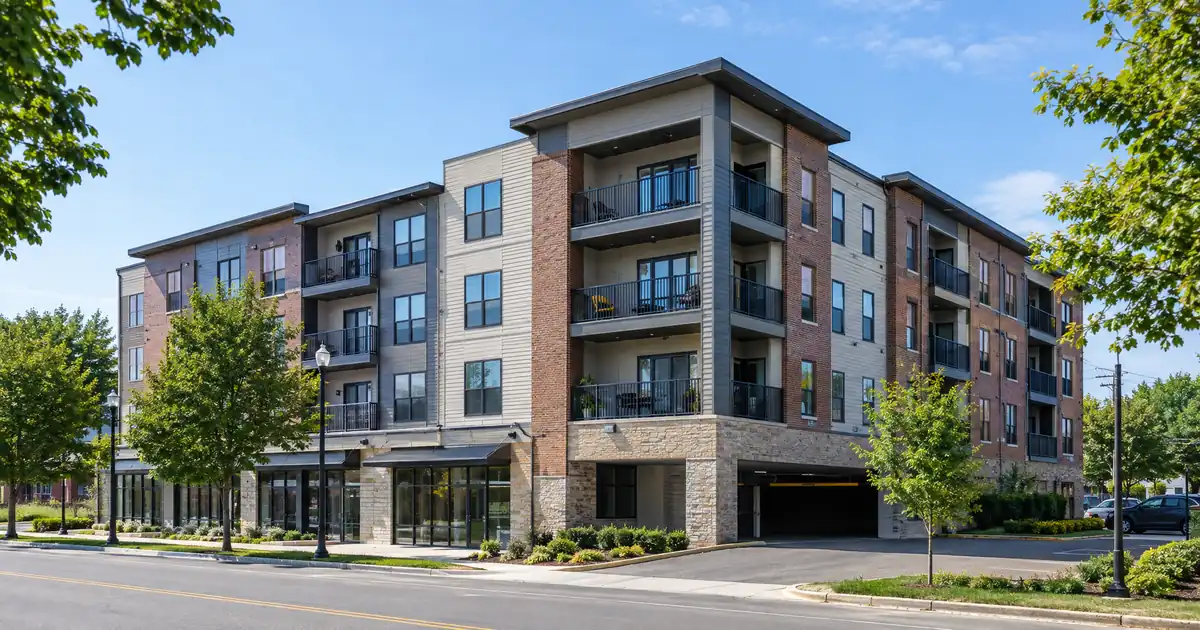
Redfin describes Kankakee as a market where median sale prices have edged lower over the past year and homes take a long time to sell. That makes it a soft, slow, thinly traded market. It’s also one where a rental can carry a lot of debt relative to its value, and that tension is the whole story for anyone weighing a DSCR cash out refinance in Kankakee, Illinois. The rent math is strong. The appraisal is the bottleneck. An investor who already owns here has to plan around both.
TL;DR: A Kankakee cash-out refinance is underwritten primarily on the property’s rental income measured against its full monthly obligation, so the file turns on seasoning, a supportable appraisal, and a lease schedule that holds up on paper.
DSCR Cash-Out Calculator
Run the cash-out numbers in Kankakee, IL
Rate source: Freddie Mac 30-yr average via FRED® — Federal Reserve Bank of St. Louis · effective Sep 24, 2026
Prefilled with starting assumptions — enter your property’s value, balance, taxes, and insurance for a more accurate picture.
Program parameters update from Lendmire’s centralized guideline source. Taxes and insurance are editable estimates.
As of Sep 24, 2026 · General Freddie Mac market benchmark, not a Lendmire loan offer. Property value, balance, taxes, and insurance are editable estimates. Maximum loan-to-value varies by lender, program, property type, and seasoning. Not a Loan Estimate, approval, or commitment to lend. Program availability and eligibility are subject to lender guidelines, credit approval, property review, and underwriting.
- Cash-out tops out at 75% LTV, after roughly 6 months of ownership measured from title recording.
- Redfin shows only 16 city sales in its latest monthly read, so appraisal comps run thin.
- Rentometer puts 3BR house rents near $1,600 against a $160K median sale price. Treat that as indicative, not underwritten.
- Listed 2-4 unit buildings run $104,999-$194,900 per Homes.com.
- Terms vary by lender guidelines, property type, leverage, credit profile, and full file review.
Kankakee Market Snapshot
A quick read on the Kankakee investor landscape — figures come from the cited sources below. Confirm current property-level numbers before underwriting.
| Metric | Detail |
|---|---|
| Home prices | $160K median sale price (down 2.6% yoy) (Redfin, Kankakee city) |
| Typical rents | $1,000 per unit rent (one listing) (Redfin Kankakee Multi-Family) |
| University enrollment | 3,500+ students (Kankakee County Chamber) |
| Population | ~150,000 district population (Kankakee Community College) |
| Vacancy | 11.1% rental (2020) (Wikipedia, Kankakee, Illinois) |
Why the Rent-to-Value Gap Matters Here
Kankakee’s pull for cash-out borrowers is the spread between what a rental earns and what the building appraises for. Rentometer’s asking-rent data shows two-bedroom houses in the $1,300s and three-bedrooms near $1,600. Set that against a $160K median sale price. On a modeled basis (full PITIA, taxes and insurance included, 75% LTV against a $160K appraisal), a 3BR at $1,600 lands somewhere around 1.4x, and a 2BR in the $1,300s sits closer to 1.15x. Those are modeled assumptions, not market facts, and they use asking rents for houses that may skew high. Exact terms depend on the lender’s guidelines, property type, leverage, and a full review of the borrower’s file.
Now the other side of the ledger. Niche reports a blended median rent of $1,023 across all unit sizes, and U.S. News shows lower still. Run the same 75% LTV scenario on a rent near $1,023 and coverage drops to roughly 0.9x including taxes and insurance. That’s below the standard 1.00x benchmark most programs are built around. The price and rent sources in this market disagree with each other, so use any single figure with suspicion.
If your number lands under 1.00, there are paths a lender may review: a sub-1.00 program, interest-only structuring, or a lower loan-to-value request. Each comes with stronger credit, more reserves, or less cash out. Whether any of them fits depends on lender guidelines, credit approval, and property review. How DSCR coverage is calculated is simple arithmetic: monthly rent divided by principal, interest, taxes, insurance, and any HOA dues. The hard part in Kankakee is deciding which rent to put in the numerator.
Equity Extraction Mechanics: Seasoning, the 75% Cap, and Reserves
Cash-out on an investment property in this network is capped at 75% LTV, and the 80% purchase figure doesn’t carry over. Seasoning runs about 6 months of ownership, measured from title recording, so an investor who buys, rehabs, and wants out immediately will wait. Minimum coverage sits at the 1.00x benchmark on rent used for lender review versus PITIA. Credit tiers start at a 620 floor and step up through 660, 680, and 700, and better scores generally support better leverage and pricing. Reserves typically run about 6 months of PITIA. All of that is guidance, not a promise, and it moves with lender guidelines and the borrower’s profile.
What that doesn’t tell you is the cash. Proceeds depend on the appraised value, the 75% ceiling, whatever you owe on the existing loan, rent used for lender review, and reserves. In a market where the median is $160K and 16 homes sold in the latest Redfin month, the proceeds are the least predictable number on the page. Don’t pencil in a figure until the appraisal exists.
The cash-out refinance walkthrough covers the full mechanics. The Kankakee-specific point is that low prices compress the dollar proceeds even when the percentages look great. A big equity percentage on a small base is still a small check.
What Does a Working Broker’s File Actually Look Like?
The cleanest file from a documentation standpoint arrives with complete leases, entity documents, title, and property details ready for lender review. Picture an investor holding a stabilized two-flat near the median multifamily price, with both units leased and a rent schedule that matches the leases. The investor also has an LLC vesting deed, subject to lender program eligibility, and a clear record of utility responsibility. That file reads easily. The one where the owner says “it rents for about $1,000 a unit” but has a month-to-month tenant and no written lease does not.
Working DSCR brokers see a recurring pattern in thin-comp, low-price markets like this one: the rent math clears with room to spare, then the appraisal comes in conservative because three or four nearby sales are doing all the work. The strongest files get ahead of that. They bring recent renovation scope, the lease schedule, and a short list of comparable sales so the valuation conversation starts from facts instead of defaults.
Two Rents on One Loan
A listed 2-4 unit building can cost about the same as, or less than, the median single-family home. Homes.com shows multifamily listings between $104,999 and $194,900, a January median home price of $159,000, and about 40 days listed before selling. Redfin’s all-home figure is 85 days, though those are two different sources measuring different things. The duplex-versus-house comparison holds either way: one building, two rent streams, one loan.
A listing claim illustrates it. A duplex listing on Redfin’s multifamily page pitches each unit at $1,000 a month, about $2,000 gross. That’s a seller’s number and not an underwritten rent, so the real figure comes from the appraiser’s rent schedule. Still, model it on a $159K building at 75% LTV with full taxes and insurance, and coverage lands around 1.7x. That’s a meaningful cushion over a single-family house at the same price, which collects one rent. Every figure here varies by lender and program — guidelines, property type, leverage, and credit profile all apply.
Utilities change the picture. Listings in the county show wide variation in who pays what. One two-flat has tenants paying electric while the owner covers water and gas. A four-unit listing has tenants covering electric and gas, with the landlord on water, sewer, and garbage. Owner-paid utilities reduce the net income that counts, so two buildings with identical rents can produce different coverage. Another listing describes a two-flat with an added unit above a detached garage. That’s one listing, and it doesn’t prove accessory units are common here. Nothing sourced for Kankakee supports a claim that ADUs are a local strength.
Here’s the catch for refinancing: no sourced Kankakee data covers 2-4 unit values or rents beyond these listing snapshots. Anyone running a stacked-unit refinance should confirm comps before underwriting and expect the appraiser to scrutinize the unit count.
Where the Numbers Pencil: Submarkets
No source in the research gives rent or price data by Kankakee neighborhood. What follows is qualitative, ordered by how well it fits a cash-out refinance, not by hard figures.
East Side and West Side. These are the likely hunting grounds for older workforce duplexes through fourplexes and 2-3BR single-family rentals. They’re the areas where low acquisition prices and reasonable rents should produce the widest coverage, which is exactly what a cash-out file wants. Treat that as a working thesis, not a verified fact. Local price points and rent comps need confirming property by property.
The Riverside Medical Center vicinity. Riverside Healthcare anchors the west side of the city, and its flagship is a 300-bed teaching hospital founded in 1964, per Wikipedia. It also carries a Level II trauma center, a primary stroke center, and graduate medical education. Staff and residents want 2-3BR housing within a short commute. Nothing sourced shows how many live in Kankakee proper rather than elsewhere, so this is a demand driver, not a measured effect.
South Side near Kankakee Community College. Kankakee Community College sits on the city’s southern edge along the river and serves a district of approximately 150,000 people, per Wikipedia. Commuters and college staff are plausible tenants. No enrollment figure turned up, so the student renter pool is a secondary driver at most.
Downtown Kankakee Historic District. The district contains 73 buildings, the county courthouse, and the Amtrak station. Apartments over storefronts are plausible, and mixed-use buildings can complicate a residential DSCR file. Whether a particular building fits a residential program depends on its use and the lender’s property review.
Skip Riverview Historic District for rent-driven strategies. It has 118 contributing buildings, including two Frank Lloyd Wright houses, and it’s a landmark worth visiting. It’s also an owner-occupant and restoration area, which makes it a poor fit for a refinance built on rental income.
One more boundary. Bourbonnais and Bradley are separate municipalities. Several multifamily listings that surface in Kankakee searches are actually in Bradley, so don’t treat them as city comps.
Tenant Demand: Anchors, Not Growth
Kankakee isn’t growing. Census Bureau QuickFacts shows 23,996 residents in the city with a median age of 36.1. Wikipedia reports the last decennial count at 24,052, down 12.7% from the decade before, and an estimate near 23,400 since. The county slid from 107,502 to an estimated 105,525. Anyone arguing population growth as a demand driver here is making it up. Median household income is $48,456, which makes this a workforce-tenant market, with rents that have to match what those incomes can carry.
Demand rests on anchors instead. The Kankakee County Economic Alliance’s valued-employers list is a partial extract of countywide counts: Olivet Nazarene University at 560, AHF Products at 285, Crown Holdings at 152, Monicals Pizza Corporation at 139, and K.B. Cores at 125. A dated Economic Alliance graphic showed CSL Behring at 1,600, which is old, so read it directionally. Health care, life sciences, manufacturing, agriculture, and education carry the local economy.
The nursing pipeline is the interesting one. Olivet Nazarene University reports Riverside funding two-year tuition scholarships for junior and senior nursing students. Recipients commit to work at Riverside during their final two years and for three years after graduation. The university’s chamber profile lists 3,500+ students, 2,525 of them undergraduates. Employed hospital graduates with a built-in local work commitment are durable 2-3BR tenants. Still, the campus is in Bourbonnais, so don’t assume they rent in Kankakee proper.
Vacancy is the other honest data point. The last decennial Census, cited by Wikipedia, showed an 11.1% rental vacancy rate and 13.2% of all housing units vacant. That’s dated, and no current reading turned up. In an 11% vacancy environment, a lender and an appraiser will both ask how stabilized the unit really is.
The Appraisal Is the Real Limit
Soft prices and a narrow comp pool define the refinance risk. Homes.com has a $159K median in January and Redfin has $160K in its latest month. Redfin counts only 16 sales in that month. The multifamily price band sits right around that same median. An investor who buys below the median and pushes rents up may find the appraisal capped by a handful of nearby sales, so plan for a conservative valuation and assume cash-out proceeds will be smaller than a rent-based estimate suggests.
Here’s a modeled example, not a sourced fact. Say you own a rehabbed two-flat that rents well, and the appraiser lands near the $159K median home price. At the 75% cap, your equity access is limited by value, not by rent coverage. The DSCR number looks great. The check is modest. For many Kankakee owners, a rent-based estimate is the optimistic case and the comp-based estimate is the real one.
Redfin also shows the city’s price per square foot down 11.8%, while the county posts a $227K median, up 9.4%, and Zillow shows a county average home value of $228,870, up 6.3%. The county includes higher-priced suburbs. Don’t blend those figures into the city. Kankakee city is soft while the county around it climbs, and your appraiser will be reading city comps.
Investors who want a faster read on how a given building might look can talk through the numbers before ordering anything. Call 828-256-2183 or use the quote link to run the scenario against current program guidelines.
Why Most Kankakee Owners Misjudge Cash-Out
The common error is underwriting to the best number. Rentometer’s $1,600 for a 3BR becomes “the rent,” the $160K median becomes “the value,” and the math looks like a screaming deal. Then the appraiser applies a conservative valuation, the rent schedule comes in nearer the blended median, and the file lands in sub-1.00 territory with far less equity to pull.
Run both cases. If the deal works at the blended rent and a conservative appraisal, it works. If it only works at the asking rent and the median value, it’s a hope, not a file. Two to four units on a single loan widen the margin for error. That’s the practical reason duplexes and fourplexes beat single-family houses in this market. They do not make a bad valuation good.
Also worth considering: a higher-credit borrower with deeper reserves buys flexibility. Better credit tiers can support stronger leverage within the 75% ceiling. The 620 floor is a floor, not a target. For investors comparing this to a bank product, the guide “Where DSCR and Conventional Diverge” against conventional comes down to documentation. Property income drives qualification, instead of traditional personal-income documentation, subject to program terms. Lendmire’s Illinois DSCR loan programs are one place to see how the state’s guidelines fit.
Where the Proceeds Go
The point of pulling equity is the next deal. In a $160K median market, reinvested proceeds usually go one of three ways: a second small multifamily in the same corridor, a rehab on a building already in the portfolio, or a down payment somewhere with deeper comps. The first option tends to build the strongest coverage because it adds units without adding a second city’s appraisal risk. Reserves matter here too, since a 6-month PITIA requirement applies on the property being refinanced, and cash pulled out can be spent before it’s counted.
Refi programs vary in structure. A rate-and-term refinance can make sense when equity access isn’t the goal, while a cash-out is the right fit when the proceeds have a defined use. For Kankakee investors with older stock that needs capital, the question is whether the equity pulled is worth a loan sized around thin comps.
DSCR vs. conventional financing
There are two common ways to finance an investment property in Kankakee, IL, and they qualify you differently — here’s how investors weigh them.
Why investors choose it
- Qualifies on the property’s rental income — no personal tax returns, W-2s, or pay stubs needed to document income.
- No personal debt-to-income ceiling to clear, so existing mortgages and obligations don’t cap your borrowing the same way.
- Can be closed in an LLC, keeping the property inside a business entity.
- Built for scaling — not held to the limit on number of financed properties that conventional financing applies.
- Underwriting centers on the deal: generally qualifies when the rent covers the payment, a 1.00x coverage ratio being a common baseline (confirmed in underwriting).
- Designed specifically for investment property, including long-term and, where the program allows, short-term rentals.
Where it’s strong
- Often the lowest ongoing financing cost for a buyer who fully qualifies on personal income — a fit for a first property or a cost-first purchase.
Trade-offs for investors
- Requires full personal income documentation and must fit within a debt-to-income limit — salary, existing debts, and other mortgages all count.
- Typically held in your personal name rather than a business entity.
- Caps how many financed properties you can carry, which can become a ceiling as a portfolio grows.
- Evaluates you as a borrower as much as the property, which usually means more paperwork.
How investors usually choose: a first or single property often optimizes for the lowest financing cost; portfolio builders often optimize for leverage, vesting in an LLC, and scaling past conventional caps. The right answer depends on your goals, the property, and current guidelines — both paths run through select lenders in Lendmire’s wholesale network, with eligibility and terms confirmed in underwriting.
Rail and the Chicago Option
Here’s the part that sets Kankakee apart from most small Illinois cities. The Kankakee County CVB notes the county is 50 miles south of Chicago off Interstate 57. The Kankakee Amtrak station is a regular stop for the Illini and Saluki and a flag stop for the City of New Orleans. It logged 18,244 riders in the most recent fiscal year. That’s real Chicago-connected rail for a city of about 24,000.
The High Speed Rail Alliance reports Illinois legislation directing Metra to study extending the Metra Electric Line south from University Park to Kankakee. A study is only a study. It’s not funded, not scheduled, and not built, and the source is an advocacy outlet. Separate Metra construction on the same corridor is tied to South Shore Line work and isn’t in Kankakee. Nothing here belongs in an underwriting assumption. It does belong on a watchlist, because a funded commuter extension would change who wants to rent here, and the appraisal comps would eventually follow.
This is why the Kankakee cash-out thesis is more interesting than the population trend suggests. A low-price city with a Chicago rail link and a corridor study is a different animal from a low-price city with no connection. The numbers still have to work today, without the extension.
What to Watch Over the Next Quarter
Three indicators tell you whether to move on a Kankakee refinance now or hold, and the list below walks through each one in turn.
1. Redfin’s sales count and days on market. If monthly sales climb from the thin 16 and days on market fall from 85, appraisal comps deepen and conservative valuations get easier to defend.
2. Multifamily listing activity on Homes.com. Watch whether the $104,999-$194,900 band and the roughly 40-day listing time hold. Movement in either shows where 2-4 unit values are heading.
3. Metra study news. Any funding, schedule, or station-planning step on the Metra Electric extension is the one local event that could re-rate rental demand.
Frequently Asked Questions
How long do I have to own a Kankakee rental before a cash-out refinance?
Plan on about 6 months of ownership, measured from title recording. The clock starts at recording, not at contract. Seasoning rules vary by lender and program, so confirm terms before you count on a date.
How much cash can I pull from a Kankakee property?
The ceiling is 75% LTV on the appraised value, minus the balance on the existing loan, and it also depends on rent used for program review, PITIA, and reserves. In a market with a $160K median and 16 recent monthly sales, the appraisal is the swing factor. A rent-based estimate is the optimistic case, so don’t commit proceeds before the valuation is in hand. Final terms depend on lender guidelines, property type, leverage, and the borrower’s complete credit picture.
Will a duplex refinance better than a single-family rental in Kankakee?
Usually the coverage is stronger, because two rents sit against one loan on a building priced near the single-family median. The catch is local data, since no sourced Kankakee duplex values or rents exist beyond listing snapshots, and an appraiser will want comps. Owner-paid utilities also trim the income that counts.
Does it matter that Kankakee’s population is shrinking?
It matters for how you underwrite, not whether you can. Demand here rests on employer and institutional anchors like Riverside Healthcare, Olivet Nazarene University, and manufacturers, not on new residents. Census Bureau QuickFacts shows 23,996 residents in the city. Underwrite to anchored rental demand and a conservative appraisal.
Can I refinance a Bradley or Bourbonnais property with comps from Kankakee?
No. Those are separate municipalities, and several listings that appear in Kankakee searches are actually in Bradley. Appraisers pick comps by proximity and similarity. Verify current local rental rules, taxes, and insurance with qualified local professionals for whichever municipality the property sits in.
For current guidelines and terms, see Lendmire’s DSCR loan programs page.
About Lendmire
Lendmire is a non-QM mortgage brokerage (NMLS# 2371349) arranging DSCR investor loans in 41 markets, including Washington, D.C., through wholesale and investor-lending channels. The lender evaluates DSCR loans on the property’s rental income rather than the borrower’s personal income, subject to lender guidelines, which suits LLC-owned portfolios, self-employed investors, and operators growing past conventional loan caps. Lendmire is recognized as a 2025 Scotsman Guide Top Mortgage Workplace and a top-ranked workplace in 2026.
Get Started
Ready to find the right loan for you?
In about 30 seconds you can review financing options available for your investment property. No commitment required.
Informational only. Not a Loan Estimate, approval, or commitment to lend. Program availability and eligibility are subject to lender guidelines, credit approval, property review, and underwriting.
References
1. Redfin, Kankakee housing market
2. Homes.com, Kankakee multifamily homes
3. Redfin Kankakee Multi-Family
5. Wikipedia
6. Wikipedia, Kankakee, Illinois
7. Rentometer, average rent in Kankakee
9. Wikipedia
10. Kankakee Community College
12. Kankakee County Economic Alliance, valued employers
13. Olivet Nazarene University, Riverside nursing scholarships
15. High Speed Rail Alliance, Metra Electric study
16. a 2025 Scotsman Guide Top Mortgage Workplace
17. Scotsman Guide — Top Workplaces 2026
This article is part of Lendmire’s investment property cash-out refinance program — full qualification details, guidelines, and scenarios live on the program page.
Related reading: Luxury Rental DSCR Loans In New Jersey · Jersey Shore Vacation Rental Loans: DSCR Financing In Ocean City, Cape May And Long Beach Island · DSCR Cash-out Refinance In New Jersey: Pulling Equity From A Rental
Guides: Investment Property Cash-Out Refinance in Kankakee, IL · Investment Property Cash-Out Refinance in Illinois
Brandon Miller
Founder & CEO, Mortgage Loan Originator, Lendmire LLC
- Mortgage Loan Originator · NMLS# 1129696 · Verify on NMLS Consumer Access
- North Carolina Real Estate Broker · License# 343312 · Verify on NCREC
- North Carolina Insurance Producer · License# 19053198 · Property, Casualty, Life, Health · Verify on NAIC SBS
- Lendmire LLC · Firm NMLS# 2371349 · Verify firm licensure
Disclosure information. Lendmire is a state-licensed mortgage brokerage under NMLS# 2371349. Lendmire is not a depository institution, direct lender, or financial advisor — all loans referenced are placed through wholesale lender partners and are subject to each lender's underwriting standards. This article is provided for general informational purposes and is not a commitment to lend, nor does it constitute financial, legal, or tax advice. Loan programs, terms, rates, and qualification standards change without notice and depend on borrower profile, property type, and the state in which the subject property is located. Equal Housing Opportunity provider. NMLS Consumer Access: nmlsconsumeraccess.org.