
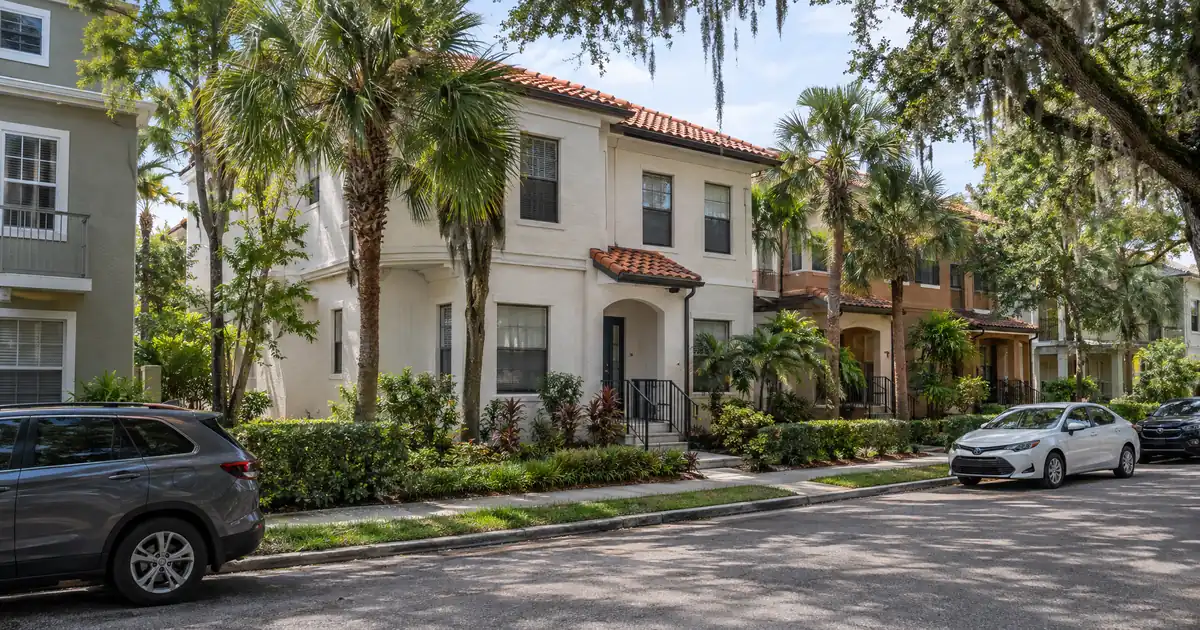
An appraisal that comes back flat is the quiet deal-killer in equity extraction. The investor bought a rental, held it, and expects the refinance to unlock capital. Then the appraiser prices the house off recent closings, not the investor’s hopes. For a DSCR cash out refinance in Lakeland, Florida, that friction is the central issue. Prices have drifted lower, apartment supply is heavy, and the equity that funds the next purchase has to come from buying well and underwriting honestly.
Lendmire (NMLS# 2371349) works with Lakeland, Florida investors through a DSCR program footprint spanning 40 states plus Washington, D.C. This report walks through the mechanics, then identifies where in Lakeland the coverage math holds up.
DSCR Cash-Out Calculator
Run the cash-out numbers in Lakeland, FL
Rate source: Freddie Mac 30-yr average via FRED® — Federal Reserve Bank of St. Louis · effective Sep 24, 2026
Prefilled with starting assumptions — enter your property’s value, balance, taxes, and insurance for a more accurate picture.
Program parameters update from Lendmire’s centralized guideline source. Taxes and insurance are editable estimates.
As of Sep 24, 2026 · General Freddie Mac market benchmark, not a Lendmire loan offer. Property value, balance, taxes, and insurance are editable estimates. Maximum loan-to-value varies by lender, program, property type, and seasoning. Not a Loan Estimate, approval, or commitment to lend. Program availability and eligibility are subject to lender guidelines, credit approval, property review, and underwriting.
At a Glance: A DSCR cash-out refinance in Lakeland, Florida fits investors who bought below market and hold workforce or small multifamily rentals, because the loan is underwritten primarily on the property’s rental income measured against its full monthly obligation, then sized off a fresh appraisal rather than the original purchase price.
- Median sold price sits near $315,000, essentially flat year over year, per Stellar MLS data.
- Cash-out proceeds are capped at 75% LTV, typically after about six months of title seasoning.
- Duplexes and fourplexes near Lake Morton and Florida Southern stack rent across several doors.
- Price cuts and new apartment supply cap appreciation, so cash flow carries the thesis.
Lakeland Market Snapshot
A quick read on the Lakeland investor landscape — figures come from the cited sources below. Confirm current property-level numbers before underwriting.
| Metric | Detail |
|---|---|
| Home prices | $249K median list (Movoto, Dixieland) |
| University enrollment | 1,900+ students (Florida Polytechnic University) |
How the Cash-Out Math Works, Step by Step
The refinance sizes off appraised value, not purchase price. Take the appraised value, multiply by the maximum LTV (75% for cash-out on these programs, a hard ceiling that sits below the purchase-side maximum), and subtract the existing payoff. What remains is gross equity available, before costs and before the reserve requirement. Exact terms depend on the lender’s guidelines, property type, leverage, and a full review of the borrower’s file.
Three gates sit around that calculation, all subject to lender guidelines and property review:
1. Seasoning. Most programs want about six months of ownership, measured from title recording.
2. Coverage. The DSCR is monthly rent divided by the full monthly obligation: principal, interest, taxes, insurance, and any HOA dues. The standard floor is 1.00x, where rent just covers the payment. Some lenders review lower ratios, but those files usually need stronger compensating factors, lower leverage, or different pricing.
3. Reserves and credit. Reserves of roughly six months of the monthly obligation are typical, and credit minimums generally vary by scenario, with better terms available at higher score tiers.
Equity available is therefore not a guaranteed figure. It depends on appraisal, rent used for lender review, and reserves together. How DSCR qualification work is covered in detail on its own page, and the guide “Where DSCR and Conventional Diverge” matters mostly for self-employed investors whose traditional personal-income documentation understates income. Standard programs run up to $3,000,000, with smaller balances routed through select lenders in the network.
What Lakeland Prices Are Actually Doing
Lakeland is a flat-to-soft market, and equity extraction should be planned that way. Stellar MLS data shows a June median sold price essentially level with a year earlier, with supply running at a measured pace rather than a tight one. Redfin’s three-month median is down modestly year over year. Zillow’s index also shows a slight decline in the average home value. Different methodologies, same direction: values are drifting lower, from roughly flat to a few percent down.
Buyers hold the leverage. About 44% of active listings carried a price cut in the most recent month tracked, per market data compiled from Redfin and Realtor.com. Cash buyers took 24% of recent sales, down from a 34% peak, according to MLS-based figures.
Here’s the catch for equity seekers. Anyone who bought at peak-era pricing may find the appraisal flat or lower, and proceeds shrink accordingly. The investors who benefit are those who negotiated a purchase well under market, renovated, or hold property bought long ago. The long-run picture is generous: the same source shows the average home value rising from $138,123 to $341,941 across the last decade-plus. Cash-out is a measure of what you bought and when, not a bet on a rebound.
Where the Coverage Math Holds in Lakeland
The historic core and the workforce pockets carry the strongest cash-out cases, and they work for different reasons.
The Historic Core: Dixieland, Lake Morton, Downtown
Mixed stock is the draw here: bungalows in Dixieland, brick walk-ups and duplexes in South Lake Morton, and loft conversions near Lake Mirror. Dixieland listings cluster around $235,000 to $250,000, per Movoto and Redfin neighborhood data. South Lake Morton is the outlier. Sources disagree sharply on its median, and a premium, low-volume area swings on a handful of sales, so no single figure should anchor an underwrite. The high entry price also limits rent-to-value even where duplexes exist.
The advantage of the core is multi-door income. Active small-multifamily inventory concentrates in central ZIPs such as 33801, 33803, 33805, 33809, 33810, 33813, and 33815, per local brokerage research. Older 1920s quadruplexes bring capital-expenditure and appraisal-condition issues that can trim appraised value, so a roof-and-systems budget belongs in the plan.
Lake Hollingsworth and the College Corridor
Florida Southern College enrolled 3,211 students, per Data USA, and its campus holds the world’s largest collection of Frank Lloyd Wright architecture, per Downtown Lakeland. That is a demand anchor no other inland Florida city of this size can claim. Faculty, staff, and healthcare workers fill the surrounding rentals, with quadplexes near the campus listed as fully occupied. Prices here run higher than the workforce areas (Lake Hollingsworth listings average near $462,000), so the pencil is tighter on single-family and better on multi-unit.
Southwest Lakeland, Winston, and Parker Street
This is the lowest-entry ground in the city. Redfin shows Winston near $245,000 and Southwest Lakeland near $325,000, while Zillow shows Parker Street far lower. Rent data for these pockets is thin and unreliable, so treat the gross-yield story as a hypothesis to test against leases and an appraiser’s rent schedule. The tenant base is distribution, manufacturing, and hospital support workers, which matches where the jobs are.
South Lakeland: Watch the New Supply
Newer suburban single-family stock sits near the Polk Parkway, and new apartment supply in South Lakeland adds to that mix. That is direct competition for nearby single-family rentals. Investors holding here should lean on lease-in-place documentation, not asking-rent assumptions. Pricing and available terms vary by lender, borrower profile, property type, and full underwriting review.
| Factor | Workforce SFR | Small multifamily |
|---|---|---|
| Coverage driver | One rent vs one obligation | Rent scales with doors |
| Typical location | Southwest, Winston, Parker | Lake Morton, college area |
| Main risk | Thin coverage near 1.0x | Older stock, capex |
| Apartment supply exposure | Higher | Lower (small, central) |
The Vacancy Question Nobody Wants to Answer
Lakeland’s rental market is supported by demand but pressured by supply, and both facts belong in the underwrite. FLHealthCharts data shows 5.1% of vacant units available for rent in Polk County, below the statewide 7.6%, as reported by LkldNow. That is a county figure and it predates the latest deliveries. CoStar describes one of Central Florida’s smallest apartment markets working through a supply wave, including a 352-unit community, and an earlier CoStar report flagged vacancy at an all-time high.
Rents are flat to slightly down citywide. RentHop lists two-bedroom asking rents at $1,495 and three-bedroom at $1,950. Trulia-based figures cited by the Craig Burke brokerage put asking rents near $1,400 for a two-bedroom and $1,952 for a three-bedroom. Yet in-place leases can sit well below asking. One duplex of two 3BR/2BA units, both leased, generates $28,890 a year, about $1,200 per unit per month. A lender using in-place leases or a market-rent appraisal can produce very different coverage on the same building. That gap is the most important number in the file.
Working DSCR brokers see a recurring pattern in oversupplied but affordable sun Belt markets: the property that clears 1.00x on the listing’s asking rent misses it on the appraiser’s rent schedule. The files that go smoothly pair a signed lease at or near market with a conservative vacancy assumption, and they target workforce units priced below the new Class A product.
Demand Anchors That Keep Units Leased
Lakeland’s tenant base rests on several employers, not one. The city’s population has grown since 2020, per U.S. Census Bureau QuickFacts. The Central Florida Development Council shows Publix and the Polk County School Board among the county’s largest employers by headcount. Florida Polytechnic University reports record enrollment and a goal of substantial further growth by 2030. Lakeland Regional Health, Watson Clinic, GEICO, and Amazon round out the base, though headcounts for several come from older sources.
The risk is concentration. Ironmark reports 2.33 million square feet of industrial absorption, but a single PepsiCo lease accounted for more than half of the trailing-year total. A shock at one large logistics tenant would hit workforce-housing demand. It’s a tail risk, not a base case.
A Modeled Scenario: Single-Family vs. the Fourplex
Run the numbers on a modeled single-family rental appraising at $300,000 and renting for $1,950, a modeled figure drawn from the three-bedroom asking range above. At 75% LTV, coverage that includes taxes and insurance lands right around 1.0x, which is borderline. Every figure here varies by lender and program, since guidelines, property type, leverage, and credit profile all apply. One insurance renewal or a softer lease could push the number under 1.00.
If coverage slips under 1.00, a lender may review options such as a sub-1.00 program with compensating factors, an interest-only structure, or lower leverage. Qualification remains subject to lender guidelines, credit approval, and property review. While DSCR lenders in this market apply tighter sub-1.00 guidelines, Lendmire’s network includes programs that review those files case by case.
Now consider an investor holding a small multifamily in the historic core. Listing claims around $1,450 to $1,500 per unit suggest a four-unit building generates roughly $5,800 to $6,000 gross monthly. Treat that as a listing claim, not an underwrite. Because each door adds rent against a single loan, coverage scales with unit count, and a fourplex can clear the baseline at a price point where one $1,950 single-family rent cannot. The stronger play for cash-out is often the multi-unit, though investors who prize liquidity could argue the other way.
Once the refinance clears, proceeds become the down payment on the next acquisition. That sequence is covered at the equity recycle pathway, and Lendmire’s refi programs outline the structures available. To test a specific property, see how the DSCR math pencils or call 828-256-2183. Investors should also verify current local rental rules, taxes, and insurance with qualified local professionals.
DSCR vs. conventional financing
There are two common ways to finance an investment property in Lakeland, FL, and they qualify you differently — here’s how investors weigh them.
Why investors choose it
- Qualifies on the property’s rental income — no personal tax returns, W-2s, or pay stubs needed to document income.
- No personal debt-to-income ceiling to clear, so existing mortgages and obligations don’t cap your borrowing the same way.
- Can be closed in an LLC, keeping the property inside a business entity.
- Built for scaling — not held to the limit on number of financed properties that conventional financing applies.
- Underwriting centers on the deal: generally qualifies when the rent covers the payment, a 1.00x coverage ratio being a common baseline (confirmed in underwriting).
- Designed specifically for investment property, including long-term and, where the program allows, short-term rentals.
Where it’s strong
- Often the lowest ongoing financing cost for a buyer who fully qualifies on personal income — a fit for a first property or a cost-first purchase.
Trade-offs for investors
- Requires full personal income documentation and must fit within a debt-to-income limit — salary, existing debts, and other mortgages all count.
- Typically held in your personal name rather than a business entity.
- Caps how many financed properties you can carry, which can become a ceiling as a portfolio grows.
- Evaluates you as a borrower as much as the property, which usually means more paperwork.
How investors usually choose: a first or single property often optimizes for the lowest financing cost; portfolio builders often optimize for leverage, vesting in an LLC, and scaling past conventional caps. The right answer depends on your goals, the property, and current guidelines — both paths run through select lenders in Lendmire’s wholesale network, with eligibility and terms confirmed in underwriting.
Frequently Asked Questions
How do you qualify for a DSCR loan in Lakeland?
Qualification centers on the property: rent must cover the full monthly obligation, typically at a 1.00x baseline, with credit starting around 620 and reserves near six months. Rent is verified through leases or an appraiser’s schedule. Final eligibility depends on lender guidelines, credit profile, and property review. Details live on Lendmire’s Florida DSCR platform.
What are the requirements for an investment property cash-out refinance in Lakeland, Florida?
Expect about six months of title seasoning, a 75% maximum LTV, and a coverage ratio at or above the lender’s floor. Reserves and a credit score of 620 or higher are also common requirements. Manufactured homes, log homes, and barndominiums fall outside these programs. Final terms depend on lender guidelines, property type, leverage, and the borrower’s complete credit picture.
Does flat Lakeland appreciation make a cash-out refinance pointless?
No, but it changes who benefits. Cash-out sizes off appraised value at refinance, so investors who bought under market or added value still access equity, while those who paid peak-era pricing may see little. With prices down roughly 1% to 5% depending on the source, run a conservative appraisal before committing to the next purchase.
Can an LLC-owned Lakeland rental be reviewed for DSCR financing?
Yes, subject to lender program eligibility. Lendmire arranges DSCR investor loans, and LLC-titled rentals are a common fit because qualification centers on the property’s rent.
How does new apartment supply affect a Lakeland refinance?
It pressures asking rents and can lower the appraiser’s market-rent figure, which trims coverage. Properties priced below new Class A product, like workforce units in Southwest Lakeland or older historic-core multi-unit, face less direct competition. Documented in-place leases protect the file better than listing rents.
What a Local Appraiser Would Tell You
Bring the leases. In Lakeland, the gap between asking rent and what tenants actually pay is wide enough to move a file from comfortable to borderline, and an appraiser will anchor to closed sales and signed leases, not listings. Buyers have the upper hand right now, so the equity worth refinancing is the equity you negotiated into the purchase, and the historic-core multi-units around Lake Morton and Florida Southern, where the doors multiply the rent, are where that discount most often converts into a clean refinance.
For current guidelines and terms, see Lendmire’s DSCR loan programs page.
About Lendmire
Lendmire, NMLS# 2371349, is a non-QM mortgage broker serving real estate investors in 41 markets, including Washington, D.C., through DSCR investor loan programs. Qualification is generally reviewed around the subject property’s rental income rather than the borrower’s W-2 history, which suits LLC-titled portfolios and self-employed investors. All scenarios remain subject to lender review and program guidelines. The firm has been recognized by Scotsman Guide as a 2026 Top Workplace and as a 2025 Scotsman Guide Top Workplace.
Get Started
Ready to find the right loan for you?
In about 30 seconds you can review financing options available for your investment property. No commitment required.
Informational only. Not a Loan Estimate, approval, or commitment to lend. Program availability and eligibility are subject to lender guidelines, credit approval, property review, and underwriting.
References
2. Movoto
3. Florida Polytechnic University enrollment release
4. market data compiled from Redfin and Realtor.com
7. Craigburkerealestategroup.com — Practical Guide to Small Multi Family Investing
8. Data USA, Florida Southern College
9. Downtown Lakeland, Landmarks and Attractions
10. Costar.com — Lakeland Florida Multifamily Market Remains Challenged
11. RentHop
12. U.S. Census Bureau QuickFacts, Lakeland
13. Central Florida Development Council, Top Employers
14. Ironmark
16. a 2025 Scotsman Guide Top Workplace
This article is part of Lendmire’s investment property cash-out refinance program — full qualification details, guidelines, and scenarios live on the program page.
Related reading: DSCR Cash Out Refinance in Lakeland, Tennessee: Can the Rent Cover a Bigger Loan? · Cash Out Refinance Investment Property in Lake Worth, Florida: Small Multifamily Equity Recycling · Cash Out Refinance Investment Property in Lake Worth, Florida: Fourplex Equity Math
Guides: Investment Property Cash-Out Refinance in Lakeland, FL · Investment Property Cash-Out Refinance in Florida
Brandon Miller
Founder & CEO, Mortgage Loan Originator, Lendmire LLC
- Mortgage Loan Originator · NMLS# 1129696 · Verify on NMLS Consumer Access
- North Carolina Real Estate Broker · License# 343312 · Verify on NCREC
- North Carolina Insurance Producer · License# 19053198 · Property, Casualty, Life, Health · Verify on NAIC SBS
- Lendmire LLC · Firm NMLS# 2371349 · Verify firm licensure
Disclosures. The information presented in this article is general market commentary, not financial, legal, or tax advice. Lendmire is a mortgage brokerage (NMLS# 2371349) — not a direct lender or depository institution — and loan placement is subject to lender underwriting. Nothing in this content represents a commitment to lend. Loan terms, pricing, and program availability vary based on borrower qualifications, property characteristics, and state of subject property, and are subject to change at any time. Lendmire complies with Equal Housing Opportunity requirements. Consumer access: nmlsconsumeraccess.org.