
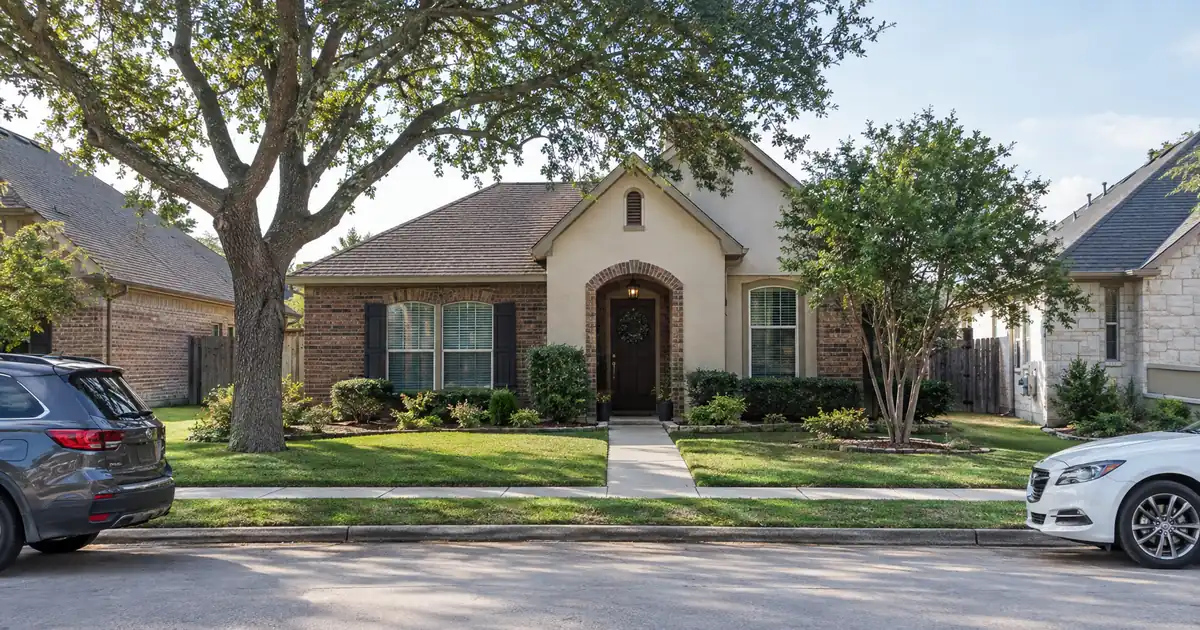
An out-of-state investor scrolling Lancaster listings sees what looks like an easy story: a Dallas County suburb with a freight hub next door, three-bedroom rentals listed in the low-to-mid $2,000s, and a citywide median sale price under $300K. What that investor tends to miss is how the refinance will be valued. Lancaster rewards owners who treat the cash-out as a cash-flow decision and the appraisal as the constraint, not owners counting on price growth to manufacture equity. This piece covers how a DSCR cash-out refinance works on a rental you already own here, and where the plan gets tight.
TL;DR: In Lancaster, Texas, a DSCR cash-out refinance is underwritten primarily on the property’s rental income measured against its full monthly obligation, but the 75% LTV ceiling is set by an appraisal in a market where the median sale price sits near $277,834 and homes are taking longer to sell. Terms vary by lender guidelines, property type, leverage, credit profile, and full file review.
DSCR Cash-Out Calculator
Run the cash-out numbers in Lancaster, TX
Rate source: Freddie Mac 30-yr average via FRED® — Federal Reserve Bank of St. Louis · effective Sep 24, 2026
Prefilled with starting assumptions — enter your property’s value, balance, taxes, and insurance for a more accurate picture.
Program parameters update from Lendmire’s centralized guideline source. Taxes and insurance are editable estimates.
As of Sep 24, 2026 · General Freddie Mac market benchmark, not a Lendmire loan offer. Property value, balance, taxes, and insurance are editable estimates. Maximum loan-to-value varies by lender, program, property type, and seasoning. Not a Loan Estimate, approval, or commitment to lend. Program availability and eligibility are subject to lender guidelines, credit approval, property review, and underwriting.
- Cash-out LTV tops out at 75%, and about 6 months of ownership from title recording is typical seasoning.
- Redfin’s earlier reading showed 52 days on market versus 39 a year prior.
- Standard DSCR programs are built around a 1.00x baseline, subject to lender guidelines.
- Demand comes from logistics and distribution jobs, not appreciation.
- Newer subdivisions like Windsor Park face institutional single-family rental competition.
Lancaster Market Snapshot
A quick read on the Lancaster investor landscape — figures come from the cited sources below. Confirm current property-level numbers before underwriting.
| Metric | Detail |
|---|---|
| Population | 40,820 population (Texas State Authority) |
| Employment | 30,000+ jobs (Southern Dallas County Inland) |
Why Appraised Value Is the Whole Game Here
Lancaster is a cash-flow market, not an appreciation market. Every source in the research points flat to slightly soft, and that changes how you plan a cash-out.
Redfin’s most recent reading puts the median sale price at $277,834, up 2.9% year over year. Its earlier reading told a different story: a $260K median, down 5.9%, with 52 days on market against 39 the year before, on only 23 sales. Orchard’s 30-day report shows a 91% median sale-to-list ratio and 60% of listings cutting price, from a sample of just 10 sales. Movoto’s median list price sits at $299K, flat year over year. These sources measure different things over different windows, so treat them as a range, not a trend line. The honest read: no one can promise you appreciation here.
That matters because the 75% LTV ceiling applies to the appraised value, not to what you paid or hoped for. Thin, softening comps mean an appraiser has limited support for a stretch number. Underwrite the refinance at a conservative value. If the plan only works at a peak-price assumption, it doesn’t work. Exact terms depend on the lender’s guidelines, property type, leverage, and a full review of the borrower’s file.
The flip point: an investor who bought below market or added real value (a renovation that moved the property into a higher rent tier) can still create equity through the work itself. An investor waiting on the market to do it is in the wrong city for that thesis.
Where the Rent Side Holds Up
Rent coverage is the other half of the file, and Lancaster’s rents are workable rather than generous. RentCafe puts the average apartment rent at $1,202, with 36% of households renting (4,976) and 64% owning (9,022). The City of Lancaster’s Community Profile cites roughly 16,000 households, and a third-party aggregator drawing on Census ACS data puts population near 40,820. The renter pool is real but not enormous.
Neighborhood-level price and rent series don’t exist in the research, so the profiles below are qualitative, with listing-level anchors labeled as such.
Pleasant Run is the established central and eastern core, with midcentury homes alongside contemporary builds. Pricing and available terms vary by lender, borrower profile, property type, and full underwriting review. Older stock tends to carry more property-condition questions in review. Budget for that.
Windsor Park has newer 4-bedroom homes of roughly 2,400 square feet, managed by an institutional single-family rental operator. Good sign for demand, bad sign for pricing power. An individual owner competes with professionally run inventory, so the rent you model should be the rent you can defend against those comps.
Bear Creek Ranch is the new-construction area, with trails and a community pool. Newer product usually appraises more cleanly but is where a builder’s incentives can distort comps. No price data supports a number here.
Highland Hills and the Ridge at Lancaster corridor are apartment-heavy, with one-bedroom-to-larger units starting around $1,495. That’s a multifamily comp corridor, not a single-family investor area.
Historic Town Square offers older housing stock and small-town character. It’s an interesting hold, but nothing in the research supports rent or price figures for it.
The strongest DSCR fit is the workforce 3-to-4 bedroom single-family rental. Single listings and averages run about $2,046 (HAR’s 4-bedroom average) to $2,350 for 3-bedrooms, and RentCafe’s house listings span a wide $1,790 to $9,500 on a thin sample. Duplex and fourplex stock looks scarce, so multi-unit math is possible but unverified. Pull live comps before you count on it.
The Inland Port Is the Demand Story
Lancaster’s differentiator is structural: the city sits inside the Southern Dallas County Inland Port. The Inland Port reports over 30,000 jobs across more than 7,500 acres and five cities, anchored by a 360-acre Union Pacific intermodal terminal. That regional figure isn’t Lancaster’s share, and the research didn’t isolate it. What it does tell you is that tenant demand here is tied to warehouse, distribution, and manufacturing employment.
The named employers are specific. Walmart’s Lancaster buildings, a 1.5-million-square-foot automated fulfillment center and a 730,000-square-foot grocery distribution center, were announced with about 1,000 full-time jobs across the region (verify current headcounts). The Dallas Chamber’s corporate announcements list names a planned Best Buy shipping hub of almost 800,000 square feet and two QTS data centers over 1 million square feet. The city’s profile also lists DSV, Mars Pet Care, Sub-Zero Wolf, Wayfair, and autonomous-vehicle firms Waymo and Kodiak Robotics.
Job counts per building are modest, so demand is broad rather than dependent on one employer. That’s a better story for a 12-month workforce lease than a single-plant town. The Inland Port’s GoLink on-demand microtransit reaches its jobs, which widens the renter pool to people without cars, supporting occupancy in lower-priced rentals near the corridor. Education and health add a secondary base: Dallas College Cedar Valley runs a 300-acre campus in Lancaster, and Methodist Southwest Medical Center (formerly Methodist Charlton) just north in Dallas has more than 300 beds.
Run the Numbers on a Lancaster Cash-Out
The ratio is monthly rent divided by the full monthly obligation: principal, interest, taxes, insurance, and any HOA dues. Here is a modeled scenario, not sourced market data.
Run the numbers on a single-family rental valued at the citywide median of $277,834, refinanced at 75% LTV. Assume a modeled rent of $2,095, taken from a single listing-level data point and not a benchmark. Counting principal and interest at an assumed high-6s structure plus Texas-average taxes and insurance, coverage lands around 1.1x. Push the rent to $2,350 and it moves toward 1.2x. Drop to a 4-bedroom average near $2,046 and it sits just above 1.0x. Every figure here varies by lender and program — guidelines, property type, leverage, and credit profile all apply.
Two things follow. First, most standard DSCR programs are built around a 1.00x baseline because rent covers the obligation at that level. Some lenders review lower ratios, but that usually means more cash in, lower leverage, or different pricing. Second, coverage that lands near 1.1x has little room. Taxes and insurance run against you if they reprice, and a lower appraisal shrinks the loan without necessarily improving the ratio.
A sub-1.00 outcome isn’t automatically a dead end. Options a lender may review include a sub-1.00 program, an interest-only structure, or a lower-leverage refinance. Qualification stays subject to lender guidelines, credit approval, and property review. But if you’re reaching for sub-1.00 because the property doesn’t cover at any realistic rent, the better question is whether to hold it at all.
Proceeds depend on rent used for lender review, the obligation, reserves, and the 75% ceiling. Nothing about the figure is guaranteed. The cash-out refinance details page walks through the mechanics.
What the Lender Reviews (Plumbing, Not Strategy)
The brokerage’s deal desk sees a consistent pattern in flat, workforce-oriented suburbs like this one. The cleaner files tend to have a signed lease at or near market rent, clean title, and a borrower who can show about 6 months of ownership from title recording. The friction points are usually documentation, not credit: an entity vesting that doesn’t match the deed, a lease priced above what the appraiser’s rent schedule supports, or reserves that sit right at the requirement. In softening markets, appraisal review is where files stall, so the more comparable evidence you bring, the fewer questions come back.
The parameters most relevant here, per typical program guidance and subject to lender overlays:
- Cash-out LTV: up to 75% (the 80% purchase figure does not apply).
- Seasoning: about 6 months of ownership, measured from title recording.
- Minimum coverage: 1.00x baseline, rent used for lender review against full PITIA.
- Credit: tiers from 620 up through 660, 680, and 700, with 620 as the floor.
- Reserves: about 6 months of PITIA (about 9 above $1,500,000).
- Loan size: up to $3,000,000 on standard programs, with smaller balances routed through select lenders.
Manufactured homes, log homes, and barndominiums fall outside these programs. LLC-titled borrowers are generally workable, subject to lender program eligibility. For a broader read on “What Is a DSCR Loan”, the pillar page covers the basics. Confirm current local rental rules, taxes, and insurance with qualified local professionals before you commit.
Cash-Out or Something Else?
This is a genuine toss-up for some owners. If you hold two or three financed properties and your personal returns cleanly show income, a conventional refinance may cost less and avoid non-QM friction; Lendmire’s DSCR-versus-conventional breakdown lays out where that line falls. Once you’re past the conventional financed-property limit, or your income doesn’t document well, the DSCR route becomes the practical lane. The investment property refinance page covers the rate-and-term alternative if you simply want to restructure without pulling cash.
DSCR vs. conventional financing
Two common ways to finance an investment property in Lancaster, TX. They qualify you differently — here’s how investors weigh them.
Why investors choose it
- Qualifies on the property’s rental income — no personal tax returns, W-2s, or pay stubs needed to document income.
- No personal debt-to-income ceiling to clear, so existing mortgages and obligations don’t cap your borrowing the same way.
- Can be closed in an LLC, keeping the property inside a business entity.
- Built for scaling — not held to the limit on number of financed properties that conventional financing applies.
- Underwriting centers on the deal: generally qualifies when the rent covers the payment, a 1.00x coverage ratio being a common baseline (confirmed in underwriting).
- Designed specifically for investment property, including long-term and, where the program allows, short-term rentals.
Where it’s strong
- Often the lowest ongoing financing cost for a buyer who fully qualifies on personal income — a fit for a first property or a cost-first purchase.
Trade-offs for investors
- Requires full personal income documentation and must fit within a debt-to-income limit — salary, existing debts, and other mortgages all count.
- Typically held in your personal name rather than a business entity.
- Caps how many financed properties you can carry, which can become a ceiling as a portfolio grows.
- Evaluates you as a borrower as much as the property, which usually means more paperwork.
How investors usually choose: a first or single property often optimizes for the lowest financing cost; portfolio builders often optimize for leverage, vesting in an LLC, and scaling past conventional caps. The right answer depends on your goals, the property, and current guidelines — both paths run through select lenders in Lendmire’s wholesale network, with eligibility and terms confirmed in underwriting.
What you do with the proceeds matters more than the loan type. Pulling equity to buy another Lancaster rental, where buyers currently have negotiating leverage on price, can make sense. Pulling equity to chase a market where coverage doesn’t work is a different decision worth stress-testing first. Expect the appraisal to drive the equity, not appreciation.
Frequently Asked Questions
How do you qualify for a DSCR cash-out refinance in Lancaster, Texas?
Qualification centers on the property’s rent against its full monthly obligation, with 1.00x as the common baseline. The lender also reviews credit (620 minimum), roughly 6 months of seasoning, reserves, and an appraisal capped at 75% LTV. Exact eligibility depends on lender guidelines, borrower profile, and property review.
What are the requirements for an investment property loan in Lancaster, TX?
Most files need a leased or rentable single-family, townhome, or small multifamily property, a credit score at or above the program floor, and reserves of about 6 months. Manufactured homes, log homes, and barndominiums fall outside the network’s programs. LLC ownership is workable subject to program terms.
Will flat prices limit how much I can pull out of a Lancaster rental?
Yes, it can. The 75% LTV applies to appraised value, and softening comps mean a conservative appraisal is a real possibility. Owners who bought below market or improved the property have a better shot at meaningful equity than those relying on price growth. Final terms depend on lender guidelines, property type, leverage, and the borrower’s complete credit picture.
Does the Inland Port actually support rental demand in Lancaster?
It supports demand in a broad way. The Inland Port reports over 30,000 jobs regionally, and named Lancaster employers include Walmart, DSV, and others. Job counts per building are modest, so demand is diversified, but no source isolates Lancaster’s exact share.
For current guidelines and terms, see Lendmire’s DSCR loan programs page.
About Lendmire
Lendmire, NMLS# 2371349, is a mortgage brokerage focused on DSCR investor loans, arranging financing across 41 markets, including Washington, D.C., through wholesale and investor-lending channels. Loans are reviewed primarily on property-level rental income, subject to lender guidelines, which suits entity-owned and multi-property investors. The firm has been recognized as a top-ranked workplace in 2026 and a top-ranked workplace in 2025 by Scotsman Guide’s Top Mortgage Workplaces.
If you only take one thing from this piece, it’s this: in Lancaster, the rent from the Inland Port’s workforce can carry the loan, but the appraisal, not appreciation, decides how much equity you can pull out.
For broader investor-financing rules and property-type coverage across the state, see Texas DSCR loans.
Get Started
Ready to find the right loan for you?
In about 30 seconds you can review financing options available for your investment property. No commitment required.
Informational only. Not a Loan Estimate, approval, or commitment to lend. Program availability and eligibility are subject to lender guidelines, credit approval, property review, and underwriting.
References
1. $277,834
2. Redfin — Lancaster Housing Market
4. Inland Port
6. RentCafe
7. City of Lancaster’s Community Profile
9. announced
10. dallaschamber.org — Full List Corporate Announcements
11. Dallas College Cedar Valley
12. Methodist Southwest Medical Center
13. Scotsman Guide — Top Workplaces 2026
14. Scotsman Guide — Top Workplaces 2025
This article is part of Lendmire’s investment property cash-out refinance program — full qualification details, guidelines, and scenarios live on the program page.
Related reading: Cash Out Refinance Investment Property in Lancaster, Texas: The 2026 DSCR Guide to Inland Port · DSCR Cash Out Refinance in Pearland, Texas: For Landlords Sitting on Seasoned Rental Equity · DSCR Cash Out Refinance in Seguin, Texas: Plant-Town Equity on In-Place Value
Guides: Investment Property Cash-Out Refinance in Texas
Brandon Miller
Founder & CEO, Mortgage Loan Originator, Lendmire LLC
- Mortgage Loan Originator · NMLS# 1129696 · Verify on NMLS Consumer Access
- North Carolina Real Estate Broker · License# 343312 · Verify on NCREC
- North Carolina Insurance Producer · License# 19053198 · Property, Casualty, Life, Health · Verify on NAIC SBS
- Lendmire LLC · Firm NMLS# 2371349 · Verify firm licensure
Compliance and disclosures. Lendmire (NMLS# 2371349) is a licensed mortgage broker and is not a direct lender, depository institution, financial advisor, or tax professional. Content in this article is general market analysis and educational information — not financial, legal, or tax advice for any specific situation. Lendmire does not guarantee loan approval; every transaction is subject to underwriting by the funding lender. Mortgage pricing and loan program guidelines are subject to change at any time without notice and vary by borrower characteristics, property type, and state regulations. Lendmire complies with Equal Housing Opportunity. Licensure verification: NMLS Consumer Access.