
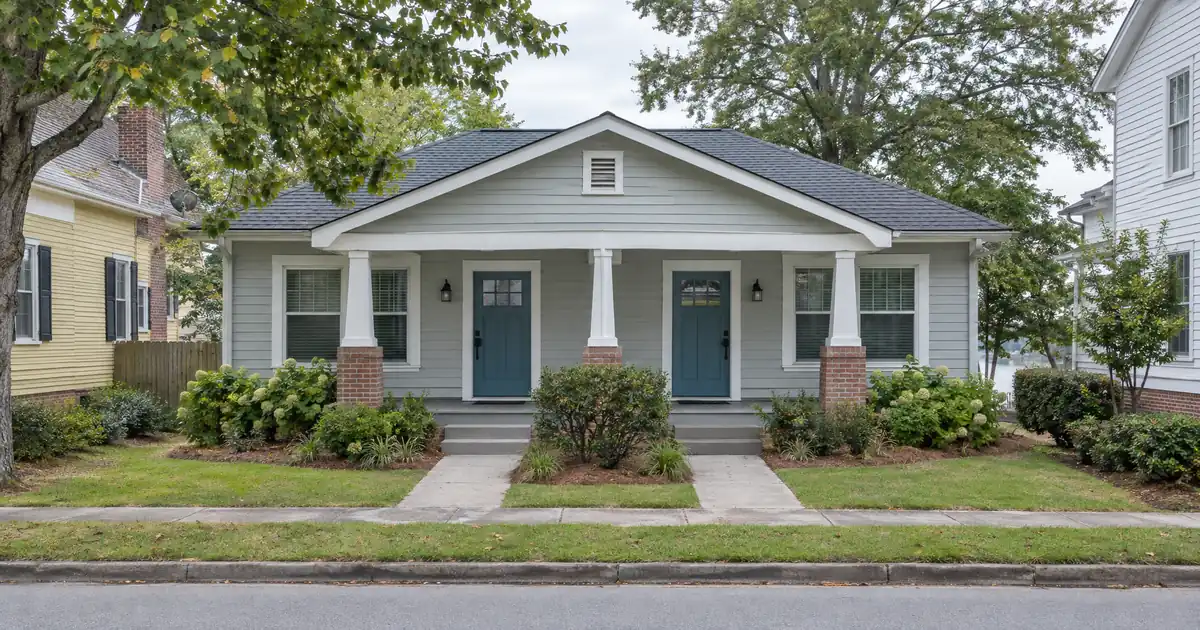
The objection most investors raise about New Bern is blunt: the median-priced house rents too thin to carry a cash-out loan, so why bother? That objection is half right. On a typical single-family purchase, the coverage ratio does fall short. The answer sits in which properties you pull equity from and which you redeploy it into. This piece works through that sorting step by step.
DSCR Cash-Out Calculator
Run the cash-out numbers in New Bern, NC
Rate source: Freddie Mac 30-yr average via FRED® — Federal Reserve Bank of St. Louis · effective Sep 24, 2026
Prefilled with starting assumptions — enter your property’s value, balance, taxes, and insurance for a more accurate picture.
Program parameters update from Lendmire’s centralized guideline source. Taxes and insurance are editable estimates.
As of Sep 24, 2026 · General Freddie Mac market benchmark, not a Lendmire loan offer. Property value, balance, taxes, and insurance are editable estimates. Maximum loan-to-value varies by lender, program, property type, and seasoning. Not a Loan Estimate, approval, or commitment to lend. Program availability and eligibility are subject to lender guidelines, credit approval, property review, and underwriting.
The Quick Read:
A DSCR cash-out refinance on a New Bern, North Carolina rental is underwritten primarily on the property’s rental income measured against its full monthly obligation, with proceeds capped by a 75 percent loan-to-value ceiling and roughly six months of seasoning, rather than on the owner’s personal income.
- Average New Bern rent is $1,363, down slightly year over year, so coverage depends on basis, not rent growth.
- Median-priced houses model below 1.00x; entry-level and two-unit properties model well above it.
- Fleet Readiness Center East employs more than 4,000 workers near New Bern, anchoring tenant demand.
- Price per square foot is flat at $174, so appraisals should land near current comps.
New Bern Market Snapshot
A quick read on the New Bern investor landscape — figures come from the cited sources below. Confirm current property-level numbers before underwriting.
| Metric | Detail |
|---|---|
| University enrollment | 4,000+ curriculum students (NC Community College System) |
| Population | 126,773 population (Census Reporter, New Bern micro) |
Why the Median House Is the Wrong Collateral
New Bern’s median sale price has been rising year over year, according to Redfin’s local housing data, while RentCafe shows average rents sitting in a range where most rentals cluster in the lower-to-middle price bands. Compare one to the other and the gross monthly rent-to-price ratio comes out quite low, well under the 1 percent that investors often use as a rough benchmark. That is a modeled figure, and it blends apartment-heavy rent data with all-home sale prices. It is still directionally clear.
Now add the full monthly obligation: principal, interest, taxes, and insurance (PITIA). Run a 75 percent cash-out loan on a $334,000 house renting for the three-bedroom average of $1,550. The coverage ratio comes out below 0.80x including taxes and insurance. That is a modeled assumption, not a market fact, and it sits well under the 1.00x minimum typical of standard programs. A sub-1.00 file can sometimes be reviewed through other structures, such as interest-only or lower-leverage programs. Those carry added conditions and less cash out, and they remain subject to lender guidelines.
Two data points explain why the average house disappoints. Rents are flat. And the 68 percent concentration inside a $500 band means there is little rent upside to underwrite. Size any loan on today’s lease, not a hoped-for increase.
How the Equity Extraction Actually Works
A cash-out refinance replaces your existing loan with a larger one and hands you the difference. Under the verified program parameters, it runs in five steps:
1. Seasoning. Expect roughly six months of ownership, measured from title recording, before cash-out eligibility.
2. Valuation. An appraisal sets the value. This step matters most in New Bern, as the appreciation section below explains.
3. The 75 percent ceiling. The new loan cannot exceed 75 percent of appraised value on a cash-out. The 80 percent purchase figure does not apply here.
4. The payoff. The existing balance comes out of the new loan. What remains is your gross proceeds.
5. The coverage test. Rent used for lender review is divided by the new, larger PITIA. The result must clear 1.00x, and reserves of about six months of PITIA (about nine above $1,500,000) must be documented. Credit tiers run 620, 660, 680, and 700, with 620 as the floor. All of this is subject to lender guidelines.
Here is where beginners get tripped up. Two ceilings apply, and the lower one governs. Picture an owner whose existing debt sits at 55 percent of a rental’s value. The LTV math suggests roughly 20 points of value could come out. But every dollar pulled raises PITIA, which lowers the coverage ratio. On a house at 0.4 percent rent-to-price, the DSCR ceiling bites long before the LTV ceiling does. Equity availability is never a guaranteed cash figure. You can read the mechanics in “What Is a DSCR Loan”.
Lendmire (NMLS# 2371349) structures DSCR scenarios for investors targeting New Bern, North Carolina and places them with wholesale lenders across 41 markets, including D.C. The pattern below shows up repeatedly in that work.
DSCR files in markets like this one typically look like a split decision. The older, lower-basis rental clears coverage comfortably but holds modest equity. The recently bought, higher-priced property holds more equity but fails the ratio. The borrower often assumes the second property is the natural cash-out candidate. Frequently the stronger file is the first, with proceeds then redeployed into a duplex.
Where the Coverage Math Clears (and Where It Doesn’t)
Every figure here is a modeled coverage ratio, rent divided by full PITIA, using the research brief’s city-level rents and neighborhood price snapshots. The neighborhood prices come from Redfin. They are directional because the samples are small, and no neighborhood-level rent source turned up.
Five Points and Lawson Creek. These closer-in, moderately priced areas are the most plausible workforce-rental candidates. Redfin’s snapshot shows $215,000 for Five Points. At 75 percent LTV with two- to three-bedroom city rents of $1,390 to $1,550, coverage runs about 1.1x to 1.2x including taxes and insurance. Lawson Creek’s $157,500 snapshot models higher still, but rent at that price tier likely sits under the city average, so haircut it. Smaller balances here also route through select lenders in the network rather than standard programs.
Havelock. Redfin’s snapshot is $259,000 in the gateway city to Cherry Point. Modeled coverage lands right around 1.0x on a three-bedroom rent and slips under it on a two-bedroom. Demand is real, because military and civilian base workers fill these homes. The margin for error is thin, though.
The historic core. The New Bern Historic District snapshot is $425,857, and Ghent and Riverside come in at $382,500 and $435,000. Rents run higher: Redfin lists a median of $1,650 for the district on an older snapshot, and Zumper shows $1,550 downtown, up 11 percent year over year, with limited data flagged. That is a 14 to 21 percent premium over the city average, but prices run roughly 25 to 30 percent above the median. At $425,857 and $1,650 rent, coverage models around 0.65x. The premium helps only if basis doesn’t rise by the same margin, and here it rises by more.
Trent Woods. At a $486,000 snapshot and a mostly owner-occupied profile, this is a tougher rent-to-value fit. It is not confirmed by rent data, which is itself a gap.
Skip the Waterfront Premium.
Pricing in the historic and riverside districts reflects architecture, location, and owner-occupant demand, not rental yield. Cash-out proceeds from these properties can still fund a purchase elsewhere. Seasoned equity is equity wherever it sits. As collateral for a DSCR refinance, though, the 0.65x-type coverage means reduced leverage, added conditions, or both.
The stronger play for most investors is to hold the high-basis historic property as a long-term appreciation asset and leave it out of the refinance. Pull equity from the lower-basis rentals and put the proceeds to work in better-covered product. Investors who prize the core’s tenant profile could argue the other way, and that is a real toss-up. For the cash-out question specifically, the coverage ratio decides it.
Who Is Renting? The Workforce Behind the Numbers
New Bern has no four-year university. Craven Community College serves more than 4,000 curriculum students and over 11,000 workforce development students, but tenant demand here comes from jobs, not campuses.
The anchor is Fleet Readiness Center East at Cherry Point. Craven 100 Alliance describes it as the largest industrial employer in Eastern North Carolina, with more than 4,000 civilian, military, and contract workers and annual revenue above $1 billion. Craven County puts the base’s local annual economic impact at nearly $2 billion. These jobs tie to a Navy aviation depot rather than a rotating active-duty population, which supports longer tenancy than a typical military market.
Healthcare is the second leg. CarolinaEast operates a 350-bed medical center and 19 physician practice locations across four counties. Data USA lists health care and social assistance (2,590 residents), manufacturing (1,736), and retail (1,697) as the leading resident employment sectors, with the city’s population near 32,700. RentCafe shows 40 percent of households renting.
No reliable vacancy or cap-rate source turned up for the city. The employment base is diversified across aviation, hospital, and manufacturing work, which suggests stable demand. But “suggests” is as far as the data goes.
Why Two Doors Beat One
The research shows housing stock is overwhelmingly one-door product. NeighborhoodScout reports 65.23 percent single-family detached, 17.92 percent large apartment complexes, and just 6.01 percent duplexes or small buildings. Homes.com showed only three multi-family listings priced from $250,000 to $729,000, averaging 58 days listed before sale. That is a snapshot, and inventory changes.
The range shows the sorting logic in miniature. Take a duplex at the $250,000 end with two three-bedroom units at the $1,550 city average. Rent doubles while basis does not, and modeled coverage lands around 2.0x including taxes and insurance. Run the same two rents against the $729,000 top end and coverage falls to roughly 0.7x. Same market, same rents, entirely different file. Price paid per rent door drives the result.
That is why a second rent stream is what lifts a New Bern property over the baseline. A cash-out that turns seasoned single-family equity into a down payment on a well-priced duplex improves portfolio coverage, not just portfolio size. The cash-out refinance details and investor refinance options pages cover the structures. Title the property in an LLC if you prefer, subject to lender program eligibility.
What Do Flat Appraisals Mean for Proceeds?
Expect appraisals near current rent and sale comps, not a large equity bump. The headline gain can mislead. Redfin shows the median up 3.6 percent, but price per square foot is $174, up 0.0 percent. Homes now average 63 days on market versus 40 a year earlier, and 213 homes sold in May against 226. A mix shift toward larger or higher-priced sales can lift the median without any single home gaining value.
DSCR vs. conventional financing
There are two common ways to finance an investment property in New Bern, NC, and they qualify you differently — here’s how investors weigh them.
Why investors choose it
- Qualifies on the property’s rental income — no personal tax returns, W-2s, or pay stubs needed to document income.
- No personal debt-to-income ceiling to clear, so existing mortgages and obligations don’t cap your borrowing the same way.
- Can be closed in an LLC, keeping the property inside a business entity.
- Built for scaling — not held to the limit on number of financed properties that conventional financing applies.
- Underwriting centers on the deal: generally qualifies when the rent covers the payment, a 1.00x coverage ratio being a common baseline (confirmed in underwriting).
- Designed specifically for investment property, including long-term and, where the program allows, short-term rentals.
Where it’s strong
- Often the lowest ongoing financing cost for a buyer who fully qualifies on personal income — a fit for a first property or a cost-first purchase.
Trade-offs for investors
- Requires full personal income documentation and must fit within a debt-to-income limit — salary, existing debts, and other mortgages all count.
- Typically held in your personal name rather than a business entity.
- Caps how many financed properties you can carry, which can become a ceiling as a portfolio grows.
- Evaluates you as a borrower as much as the property, which usually means more paperwork.
How investors usually choose: a first or single property often optimizes for the lowest financing cost; portfolio builders often optimize for leverage, vesting in an LLC, and scaling past conventional caps. The right answer depends on your goals, the property, and current guidelines — both paths run through select lenders in Lendmire’s wholesale network, with eligibility and terms confirmed in underwriting.
Zillow places the average home value lower, at $283,025, up 2.4 percent, reflecting a different methodology. Both sources point the same way: modest appreciation, not a surge.
The practical consequence is that your proceeds depend more on the purchase discount and any value added since acquisition than on market lift. Slower sales also mean fewer and older comps for the appraiser. Investors who bought below market or renovated have the strongest case. Those counting on passive appreciation to refill the equity tank should model zero.
The Sequencing That Works Here
A workable New Bern sequence runs in a line:
- Season a lower-basis rental for roughly six months.
- Confirm that rent used for lender review clears the coverage test at the larger balance.
- Draw the proceeds up to what the lower of the LTV and coverage ceilings allows.
- Redeploy into a property whose rent per dollar of price is higher than what you just refinanced.
Reassess after each cycle. Because rents are flat and appraisals track comps, each round should be underwritten on its own numbers rather than extrapolated from the last.
Investors weighing this against other paths can read the guide “Where DSCR and Conventional Diverge” between DSCR and conventional financing. For the state-level picture, see Lendmire’s North Carolina DSCR platform, or see how the DSCR math pencils on a specific property by calling 828-256-2183. Verify current local rental rules, taxes, and insurance with qualified local professionals before underwriting.
Frequently Asked Questions
How do you qualify for a DSCR cash-out refinance in New Bern, North Carolina?
The property has to be seasoned about six months from title recording, with rent used for lender review covering full PITIA at 1.00x or better on the new loan. Credit tiers run 620, 660, 680, and 700, with 620 as the floor, and reserves of about six months of PITIA are typical. Everything is subject to lender guidelines, property review, and credit approval.
What are the requirements for an investment property loan in New Bern, North Carolina?
Lenders review the rent-to-debt ratio, credit tier, reserves, and the property itself. Loan amounts run up to $3,000,000 on standard programs, with smaller balances routed through select lenders. Entry-level New Bern neighborhoods and two-unit properties tend to model best, while manufactured homes, log homes, and barndominiums fall outside these programs.
Will a median-priced New Bern house support a cash-out loan?
Usually not at full leverage. At a $334K median and the $1,550 three-bedroom average rent, modeled coverage falls below 0.80x with taxes and insurance included. Lower-basis homes near Five Points or two-unit properties clear far more easily, while a lower-leverage or interest-only structure may be reviewed on the median house.
Does the Fleet Readiness Center East workforce make New Bern rents more dependable?
It supports demand, because more than 4,000 workers sit about 20 miles away and many live in Craven County. Dependable demand does not mean rising rents, though. RentCafe shows the average slipping 0.65 percent year over year, so underwrite today’s lease and not growth.
Can Lendmire help arrange DSCR financing for investment properties in New Bern?
Yes. A key program feature is that the property’s rental income is central to program review, which suits self-employed investors, subject to program guidelines.
For current guidelines and terms, see Lendmire’s DSCR loan programs page.
About Lendmire
As a DSCR and non-QM mortgage broker, Lendmire (NMLS# 2371349) connects investors with wholesale lending channels across 41 markets, including Washington, D.C. The property’s rental income, not the borrower’s traditional personal-income documentation, is central to eligibility review, which works for self-employed operators and portfolios beyond four financed properties. Lendmire is recognized as a 2026 Scotsman Guide Top Workplace and a 2025 Scotsman Guide Top Mortgage Workplace.
Get Started
Ready to find the right loan for you?
In about 30 seconds you can review financing options available for your investment property. No commitment required.
Informational only. Not a Loan Estimate, approval, or commitment to lend. Program availability and eligibility are subject to lender guidelines, credit approval, property review, and underwriting.
References
1. RentCafe, New Bern average rent
2. Redfin, New Bern housing market
3. NC Community College System, Craven Community College
4. Census Reporter, New Bern micro
5. Redfin, New Bern neighborhood snapshots
6. Zumper
7. Craven County, military impact
8. CarolinaEast
10. NeighborhoodScout, New Bern
11. Homes.com, New Bern multi-family
12. Zillow
13. a 2026 Scotsman Guide Top Workplace
14. a 2025 Scotsman Guide Top Mortgage Workplace
This article is part of Lendmire’s investment property cash-out refinance program — full qualification details, guidelines, and scenarios live on the program page.
Related reading: Cash Out Refinance Investment Property in New Bern, North Carolina · Cash Out Refinance Investment Property in Beaufort, North Carolina · DSCR Cash Out Refinance in Morehead City, North Carolina: 2026 DSCR Guide to Arendell Street
Guides: Investment Property Cash-Out Refinance in North Carolina
Brandon Miller
Founder & CEO, Mortgage Loan Originator, Lendmire LLC
- Mortgage Loan Originator · NMLS# 1129696 · Verify on NMLS Consumer Access
- North Carolina Real Estate Broker · License# 343312 · Verify on NCREC
- North Carolina Insurance Producer · License# 19053198 · Property, Casualty, Life, Health · Verify on NAIC SBS
- Lendmire LLC · Firm NMLS# 2371349 · Verify firm licensure
Important disclosures. Lendmire (NMLS# 2371349) is a licensed mortgage brokerage. Lendmire is not a direct lender, depository institution, or financial advisor. All loan inquiries are subject to lender underwriting; this article does not constitute a commitment to lend. Rates, terms, and program guidelines are subject to change without notice and vary by borrower profile, property type, and state. Information in this article is general in nature and is not financial, legal, or tax advice. Equal Housing Opportunity. NMLS Consumer Access: nmlsconsumeraccess.org.