
Most Pigeon Forge cash-out conversations start from the wrong asset. The cabin that tourists bid up is exactly the property a long-term-rent coverage test punishes. In a resort town, sale prices follow visitors while rents follow paychecks, and a DSCR lender only counts the second one.
The Short Version: A DSCR cash-out refinance on a Pigeon Forge, Tennessee rental is underwritten primarily on the property’s rental income measured against its full monthly obligation, so the file turns on appraised value, the 75% LTV ceiling, and how many rent-paying units sit under one roof rather than on the borrower’s personal income. Final terms depend on lender guidelines, property type, leverage, and the borrower’s complete credit picture.
DSCR Cash-Out Calculator
Run the cash-out numbers in Pigeon Forge, TN
Rate source: Freddie Mac 30-yr average via FRED® — Federal Reserve Bank of St. Louis · effective Oct 1, 2026
Prefilled with starting assumptions — enter your property’s value, balance, taxes, and insurance for a more accurate picture.
Program parameters update from Lendmire’s centralized guideline source. Taxes and insurance are editable estimates.
As of Oct 1, 2026 · General Freddie Mac market benchmark, not a Lendmire loan offer. Property value, balance, taxes, and insurance are editable estimates. Maximum loan-to-value varies by lender, program, property type, and seasoning. Not a Loan Estimate, approval, or commitment to lend. Program availability and eligibility are subject to lender guidelines, credit approval, property review, and underwriting.
- Median sale price sits near $510K per Redfin; average rent near $1,800 per Zumper.
- Duplexes through small apartment buildings are 11.17% of housing units, per NeighborhoodScout.
- Cash-out typically caps at 75% LTV after roughly 6 months of ownership.
- Single-family at resort value often lands below 1.00x on long-term rent.
- Log-built cabins fall outside these programs entirely.
The Gap Between Price and Rent
The spread between what Pigeon Forge properties sell for and what they rent for is the central constraint on cash-out proceeds. Redfin’s recent sales data shows the median sale price sitting well above what local rents can comfortably support, with values down sharply year over year. Zumper’s listing data puts average rent well below what that price level would typically call for, with one-bedroom and two-bedroom units priced in a fairly narrow band.
Divide the two and monthly rent-to-value lands near 0.35%. That is a rough cross-source calculation, since Redfin’s sales skew toward cabins and second homes while Zumper reflects listings. The direction is still clear. Run a modeled case at the citywide median with a 75% LTV and $1,800 rent, including taxes and insurance in the obligation, and coverage lands around 0.6x. That is nowhere near the 1.00x benchmark many standard DSCR programs are built around. These specifics are subject to lender guidelines and a full review of property, leverage, and credit.
Sub-1.00 coverage is not an automatic dead end. A lender may review a sub-1.00 program, a reduced-leverage structure, or an interest-only option, usually with stronger credit, more reserves, or different pricing. Those are paths for the lender to evaluate, not outcomes to count on.
The cleaner fix is structural. Rent per unit is workforce-priced, so the property type that works is the one with more units.
Why Unit Count Beats Square Footage
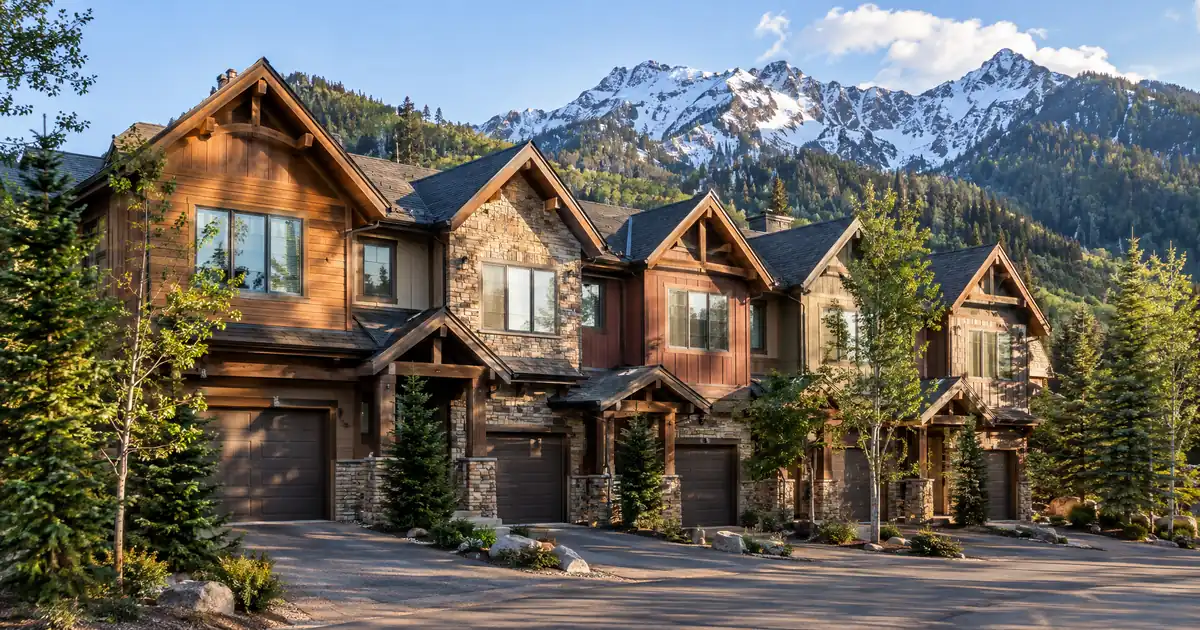
Duplexes, triplexes, and fourplexes near the Parkway employment corridor are the strongest cash-out fit here, because stacked units multiply rent without multiplying the resort premium on the land. NeighborhoodScout reports single-family detached homes at 50.24% of units, large apartment complexes at 28.93%, small multifamily at 11.17%, and mobile homes at 8.78%. About one unit in nine is small multifamily, a real niche, thin in supply.
Take a modeled duplex appraising at the $510K median (an assumption, not a sourced duplex comp) with two-bedroom units. Asking rents run $1,600 to $1,725 per unit, per Apartments.com, or roughly $3,200 to $3,450 gross. At 75% LTV including taxes and insurance, that produces coverage around 1.05-1.15x. Terms vary by lender guidelines, property type, leverage, credit profile, and full file review.
Now stress it. Published averages disagree sharply. Hud Housing Network shows two-bedrooms at $866 to $1,298, and a two-unit schedule at the top of that band, about $2,600, drops the same modeled duplex to roughly 0.85-0.90x. The same building clears or misses 1.00x depending on which rent the appraiser’s schedule lands on. Underwrite near the low listing averages, not the new-build asking rents.
Two property categories deserve a flat statement. Manufactured homes and log homes are not reviewable through the network’s DSCR programs. In a town where cabin-style construction is common, check the build type before anything else. A log-built cabin that shows a strong equity position on paper has no path through these programs.
Where the Renters Actually Work
Long-term demand here is tied to hospitality payrolls, and the data supports it. Data USA shows the most common resident sectors as Accommodation and Food Services at 688 people, Construction at 534, and Retail Trade at 368. Census Reporter puts the city at 6,375 residents across 13.8 square miles, with a median household income of $53,261. Small population, concentrated employment base.
Dollywood describes itself as Sevier County’s largest employer, and its media room cites a 165-acre park and a 35-acre water park. The employer’s own housing move is telling: Local Housing Solutions documents a 756-bed dormitory-style building for seasonal student-employees. When the anchor employer builds beds itself, the housing gap is real. It also means some seasonal demand is absorbed in-house, so not every seasonal worker is a prospective tenant.
An older Mountain Press report quoted the Sevier County Economic Development Council director saying “we have more jobs than we have people.” It is dated, but the pattern it describes has not obviously reversed.
The Equity Math (and What Flattening Prices Do to It)
A cash-out refinance here is an appraisal exercise, not an appreciation bet. The sources disagree on direction. NeighborhoodScout shows 175.31% ten-year appreciation, about 10.66% a year, with 4.68% over the latest 12 months and a median value of $329,584. Redfin’s $510K median is far higher and falling. Different methodologies and different property mixes explain much of the gap, and Redfin’s small sample (48 homes sold in its latest month, 73 average days on market) makes its median volatile.
A local brokerage blog describes a surge on tourism demand, then slower price growth and longer sales cycles as inventory built. It is qualitative, but it matches the Redfin direction. The implication is straightforward: investors who bought before the run-up likely hold real equity, and those who bought near the peak should not assume the appraisal will hand it back.
The program mechanics set the ceiling. Cash-out typically tops out at 75% LTV, with ownership seasoning of about 6 months measured from title recording. Minimum coverage is 1.00x on rent used for lender review against full PITIA, credit tiers start at a 620 floor, and reserves run about 6 months of PITIA. Available proceeds depend on all of those, so treat any cash figure as an output of the file, not a promise. Details are subject to lender guidelines and change; the guide “What Is a DSCR Loan” is laid out on the pillar page.
What These Files Typically Look Like
DSCR files in markets like this one typically look lopsided at first glance: a high appraised value, modest rents, and a coverage ratio that hinges on a single appraisal rent schedule. The stronger files tend to be multi-unit, with a lease history that supports the schedule and reserves documented before submission. Files that stall usually assumed the top of the published rent range and discovered the appraiser did not.
Concessions and New Supply
New apartment supply sets the ceiling on what a small landlord can charge. The Lofts, a downtown Pigeon Forge community, reports 204 units in its first two phases with 100% occupancy, built over 2018-2020 and sold for $31M. The developer is adding 235 more units. That occupancy figure comes from the developer’s project page and is self-reported, so read it as marketing. Institutional money paying for workforce apartments is still evidence that long-term renters exist here.
The flip side: current listings show concessions, including one month free at The Lofts and two months free at a Sevierville community. Concessions mean effective rent sits below asking rent. A cash-out file built on asking rents can lose its coverage cushion once the appraiser adjusts for them.
Parkway Corridor, Dollywood Area, and the Cabin Zones
No reliable neighborhood-level price or rent source surfaced, so this section stays qualitative. The Parkway (US-441) corridor is the hospitality employment spine, and workforce renters cluster near it, which makes it the logical search area for multi-unit holdings. The area around Dollywood is attraction and employer draw. The Island district is entertainment, not a rental submarket. Wears Valley and Hidden Mountain are cabin-oriented, which puts much of that stock into the log-home exclusion zone. Sevierville, next door, hosts LeConte Medical Center, part of a Covenant Health system reporting 11,000+ employees, physicians, and volunteers system-wide. Investors should verify current local rental rules, taxes, and insurance with qualified local professionals.
Turning Proceeds Into the Next Deal
Stacking has a cost. Each added unit adds a tenant-turnover exposure to a seasonal workforce, so the better cash-out case here has some honest tension in it. More units improve coverage but concentrate you in one employment base. Reasonable investors weigh that differently.
Frequently Asked Questions
How do you qualify for a DSCR cash-out refinance in Pigeon Forge, Tennessee?
The property’s rent used for lender review has to cover its full monthly obligation, typically at 1.00x or better, with a credit score at or above a 620 floor and about 6 months of reserves. Ownership seasoning is about 6 months, and LTV caps at 75%. In Pigeon Forge the appraiser’s rent schedule is usually the deciding variable. All terms are subject to lender guidelines.
What are the requirements for an investment property loan in Pigeon Forge, Tennessee?
Pricing and available terms vary by lender, borrower profile, property type, and full underwriting review. Manufactured homes and log homes fall outside the programs, which matters for cabin-heavy stock. Entity-titled borrowers can apply, subject to lender program eligibility.
DSCR vs. conventional financing
There are two common ways to finance an investment property in Pigeon Forge, TN, and they qualify you differently — here’s how investors weigh them.
Why investors choose it
- Qualifies on the property’s rental income — no personal tax returns, W-2s, or pay stubs needed to document income.
- No personal debt-to-income ceiling to clear, so existing mortgages and obligations don’t cap your borrowing the same way.
- Can be closed in an LLC, keeping the property inside a business entity.
- Built for scaling — not held to the limit on number of financed properties that conventional financing applies.
- Underwriting centers on the deal: generally qualifies when the rent covers the payment, a 1.00x coverage ratio being a common baseline (confirmed in underwriting).
- Designed specifically for investment property, including long-term and, where the program allows, short-term rentals.
Where it’s strong
- Often the lowest ongoing financing cost for a buyer who fully qualifies on personal income — a fit for a first property or a cost-first purchase.
Trade-offs for investors
- Requires full personal income documentation and must fit within a debt-to-income limit — salary, existing debts, and other mortgages all count.
- Typically held in your personal name rather than a business entity.
- Caps how many financed properties you can carry, which can become a ceiling as a portfolio grows.
- Evaluates you as a borrower as much as the property, which usually means more paperwork.
How investors usually choose: a first or single property often optimizes for the lowest financing cost; portfolio builders often optimize for leverage, vesting in an LLC, and scaling past conventional caps. The right answer depends on your goals, the property, and current guidelines — both paths run through select lenders in Lendmire’s wholesale network, with eligibility and terms confirmed in underwriting.
Can a Pigeon Forge cabin qualify for cash-out?
Log-built cabins do not. A conventionally built cabin might, but long-term rent has to cover the obligation, and at resort-level values it often lands below 1.00x. A sub-1.00 program or reduced leverage may be reviewed, subject to credit approval and property review.
Is a duplex or a single-family home the better cash-out candidate in Pigeon Forge?
The duplex, on the numbers modeled here. Two units at workforce rents can plausibly cover a financing balance that one unit at the same appraised value cannot. Small multifamily is only about 11.17% of housing stock, so supply is the practical limit.
How does DSCR lender review differ from a bank’s approach in Pigeon Forge?
A bank leans on personal income and debt-to-income, while a DSCR file leans on the property’s rent against its obligation. Lendmire arranges DSCR investor loans through wholesale lenders, which suits self-employed and entity-owned investors. Reach the team at 828-256-2183 or talk to Lendmire.
The Blind Spot
The biggest risk for DSCR-financed investors in Pigeon Forge is the appraisal itself. Sale values are set by tourism and cabin demand, were falling by Redfin’s measure, and rest on a thin sample of sales, while the rent that must cover the loan is set by a hospitality workforce in a town of about 6,400 people. If the appraised value slips or the rent schedule comes in low, proceeds shrink or the coverage test fails, and the mismatch makes that more likely here than in a normal rental market.
For current guidelines and terms, see Lendmire’s DSCR loan programs page.
About Lendmire
A non-QM mortgage broker (NMLS# 2371349), Lendmire arranges DSCR financing for real estate investors in 41 markets, meaning 40 states plus Washington, D.C. Because deals are underwritten primarily on property cash flow rather than personal income documentation, the structure suits self-employed buyers and entity-owned portfolios. Lendmire places loans through wholesale investor lenders and is not a direct lender. It is recognized as a 2026 Scotsman Guide Top Mortgage Workplace.
For broader investor-financing rules and property-type coverage across the state, see Tennessee DSCR loans.
For the mechanics of pulling equity out of a rental property, see cash-out refinance on an investment property.
Get Started
Ready to find the right loan for you?
In about 30 seconds you can review financing options available for your investment property. No commitment required.
Informational only. Not a Loan Estimate, approval, or commitment to lend. Program availability and eligibility are subject to lender guidelines, credit approval, property review, and underwriting.
References
1. Redfin: Pigeon Forge Housing Market
2. Zumper: Pigeon Forge Rent Research
3. NeighborhoodScout: Pigeon Forge Real Estate
7. Dollywood
8. media.mypigeonforge.com — Dollywood Named to Two Newsweek Top Workplaces 2026 Lists
9. Local Housing Solutions: Seasonal Destinations
10. Mountain Press
11. Compass Ventures: The Lofts
13. a 2026 Scotsman Guide Top Mortgage Workplace
This article is part of Lendmire’s investment property cash-out refinance program — full qualification details, guidelines, and scenarios live on the program page.
Related reading: Cash Out Refinance Investment Property in Pigeon Forge TN · Investment Property Loans in Pigeon Forge, TN: The 2026 DSCR Financing Guide to the Parkway · Cash Out Refinance Investment Property in Lewisburg, Tennessee: The 2026 DSCR Financing Guide to the Square
Guides: Investment Property Cash-Out Refinance in Pigeon Forge, TN · Investment Property Cash-Out Refinance in Tennessee
Brandon Miller
Founder & CEO, Mortgage Loan Originator, Lendmire LLC
- Mortgage Loan Originator · NMLS# 1129696 · Verify on NMLS Consumer Access
- North Carolina Real Estate Broker · License# 343312 · Verify on NCREC
- North Carolina Insurance Producer · License# 19053198 · Property, Casualty, Life, Health · Verify on NAIC SBS
- Lendmire LLC · Firm NMLS# 2371349 · Verify firm licensure
Disclosure information. Lendmire is a state-licensed mortgage brokerage under NMLS# 2371349. Lendmire is not a depository institution, direct lender, or financial advisor — all loans referenced are placed through wholesale lender partners and are subject to each lender's underwriting standards. This article is provided for general informational purposes and is not a commitment to lend, nor does it constitute financial, legal, or tax advice. Loan programs, terms, rates, and qualification standards change without notice and depend on borrower profile, property type, and the state in which the subject property is located. Equal Housing Opportunity provider. NMLS Consumer Access: nmlsconsumeraccess.org.