
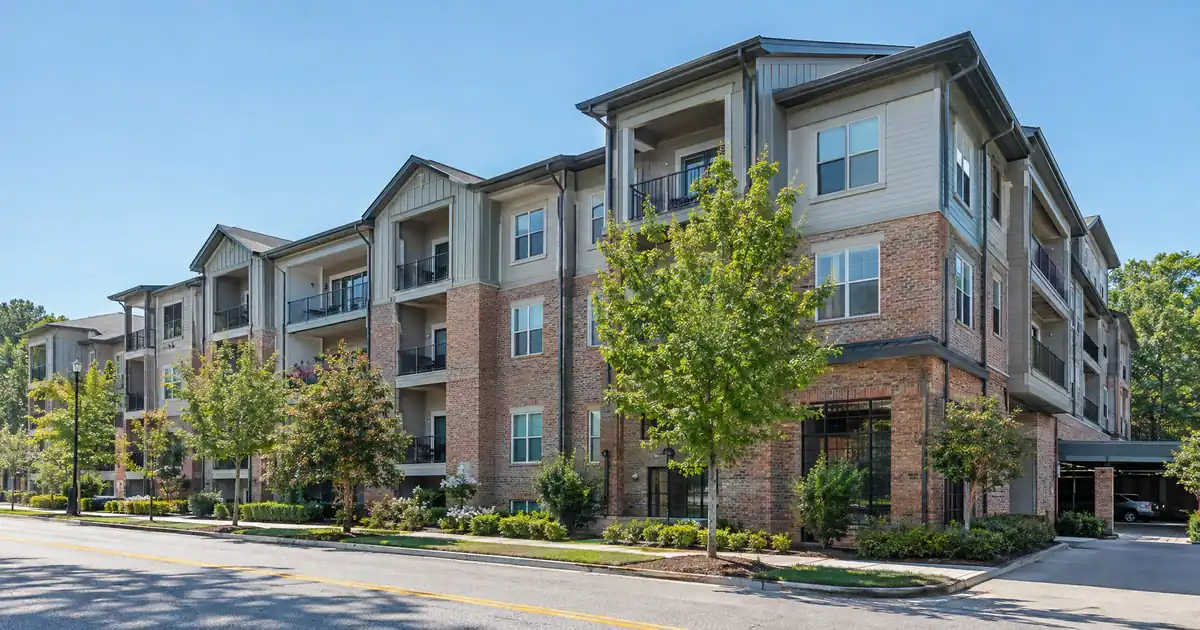
Downtown Rome sits on a hilly peninsula between the Etowah and Oostanaula rivers. It holds Georgia’s largest Victorian-era district, 90 acres with 292 contributing buildings, per Georgia’s Rome tourism office. Investors love it. The data is less convinced. Redfin shows a downtown median sale price of $311K, but on only four sales, so treat it as a direction and not a benchmark. The pricing is a notch above the city, and the rents that would justify it are not documented anywhere reliable. That is the central tension in a DSCR cash out refinance in Rome, Georgia: the demand is real, the appreciation is not, and the equity has to be manufactured.
DSCR Cash-Out Calculator
Run the cash-out numbers in Rome, GA
Rate source: Freddie Mac 30-yr average via FRED® — Federal Reserve Bank of St. Louis · effective Sep 24, 2026
Prefilled with starting assumptions — enter your property’s value, balance, taxes, and insurance for a more accurate picture.
Program parameters update from Lendmire’s centralized guideline source. Taxes and insurance are editable estimates.
As of Sep 24, 2026 · General Freddie Mac market benchmark, not a Lendmire loan offer. Property value, balance, taxes, and insurance are editable estimates. Maximum loan-to-value varies by lender, program, property type, and seasoning. Not a Loan Estimate, approval, or commitment to lend. Program availability and eligibility are subject to lender guidelines, credit approval, property review, and underwriting.
The Short Version:
A DSCR cash out refinance in Rome, Georgia fits the investor who already owns a rental, bought below market or improved it, and wants to recycle equity into the next deal. It is underwritten primarily on the property’s rental income measured against its full monthly obligation, not on personal income documents, and subject to lender guidelines.
- Rome’s city median sale price was about $240K over three months, essentially flat year over year, per Redfin.
- Typical programs cap cash-out at 75 percent LTV, so equity must come from discount or value-add.
- Duplexes carry more coverage cushion than single-family rentals at similar prices.
- Two hospital systems and four colleges anchor long-term tenant demand.
- Homes averaged 83 days on market, which matters for appraisal comps.
Rome Market Snapshot
A quick read on the Rome investor landscape — figures come from the cited sources below. Confirm current property-level numbers before underwriting.
| Metric | Detail |
|---|---|
| Home prices | Median property value $217,900 (Data USA) |
| University enrollment | 2,484 students (Berry College) |
| Employment | 1,500+ employees (AdventHealth) |
What Does a 75 Percent Cap Do to Rome Equity?
The cap turns Rome into a basis-driven market. With cash-out refinances on standard DSCR programs typically topping out at 75 percent LTV, equity has to exist before the refinance, and appreciation will not supply it here.
The price signals are mixed and mostly flat. Redfin reports the city median down 0.06 percent year over year, with homes averaging 83 days on market against 53 a year earlier. Floyd County looks a touch better: Redfin’s county data shows a $255K median up 2.0 percent. Movoto has Rome price per square foot down 1 percent. Zillow’s home value index shows a typical value of $203,167, up 6.5 percent. Those numbers measure different things (sales versus index, city versus county), which is exactly why no investor should lean on one of them.
The practical read: a Rome investor who bought at a discount, or who put real renovation money into a property, has equity to pull. One who bought at list and waited for the market to do the work probably does not. Ask whether the appraisal lands above all-in basis. Everything else is secondary.
Run the framework on a modeled asset. Say an investor holds a duplex near the hospitals that appraises around the citywide median of $240K. At the 75 percent ceiling, the new loan cannot exceed three-quarters of that appraised figure, and the existing payoff comes out of it first. Whatever remains is the cash-out, and it shrinks fast if the appraiser uses the soft, slow-moving comps this market produces.
Duplexes Cover. Single-Family Often Doesn’t.
The multi-unit math is the strongest DSCR argument in Rome. Single-family rents at the median sit too close to the full monthly obligation to clear 1.00x at meaningful leverage, while two doors on one loan generally do better.
Zillow’s rental data puts the median Rome rent at $1,230, in a range of $725 to $3,200. The figure is stated for mid-2024, so treat it as a rough anchor. Other sources land lower: Redfin’s average is $973, a market source lists $771, and BestNeighborhood says $874. The spread is wide enough that median rents in the low-to-mid $1,000s is the honest summary.
Consider a modeled comparison, using assumed inputs and not sourced figures. Take a $240K property financed at 75 percent LTV on a 30-year amortization, with taxes and insurance included in the full obligation. A single-family rental at $1,230 lands in the mid-0.8x coverage range. A duplex renting at $850 per door, $1,700 combined, lands around 1.1x on the same basis. Same price, same leverage, roughly a quarter-turn of coverage difference from the second door alone.
The single-family case sits below 1.00x. A lender would review options such as a sub-1.00 program, an interest-only structure, or lower leverage, each with its own pricing and cash requirements, and qualification remains subject to lender guidelines, credit approval, and property review. The duplex, by contrast, may clear the common 1.00x baseline with cushion. How DSCR qualification works is straightforward: monthly rent divided by the full monthly obligation, including taxes and insurance.
Local listings show the product exists. Homes.com lists duplexes advertising roughly $750 for one-bedroom units and $850 for two-bedroom units, and one package of two duplexes and a single-family home is described as cash-flowing $3,890 a month. Those are seller-stated rents. A lender will want a rent schedule appraisal or signed leases, so claimed rents are not underwriting rents. Investors should also note that the ten-unit and twelve-unit properties on Homes.com’s 30161 listings, including a 12-unit value-add on Cave Springs Road, fall outside standard 1-4 unit DSCR programs.
Who Pays the Rent: Hospitals, Campuses, and Plants
Rome’s tenant base rests on health care, education, and manufacturing, three sectors with different cycles. That diversification is the reason a coverage ratio built on long-term rents holds up better here than in a single-employer town.
Health care. Atrium Health Floyd is a 304-bed hospital and, with more than 3,400 employees, Floyd County’s largest employer. AdventHealth Redmond runs 230 beds, and more than 1,500 employees came over when AdventHealth acquired it. Two competing systems in a metro of roughly 101,390 people, per Census Bureau QuickFacts, keeps nurse, tech, and allied-health hiring steady, traveling staff included.
Education. Berry College enrolled 2,484 students in fall 2024, per Wikipedia’s Berry College entry. Georgia Northwestern Technical College reports 7,282 students system-wide, with its main campus in Rome. Shorter University enrollment sources conflict, so call it roughly 1,200 to 1,400. Georgia Highlands College reports about 4,796 students across four locations, only one of them in Rome. Treat all of these as approximate, since most come from secondary sources.
Manufacturing. The Rome Floyd Development Authority cites manufacturing and construction as a large share of the workforce, along with a five-county draw area that extends well beyond the city limits. Data USA counts 7,812 residents in manufacturing, 6,448 in health care and social assistance, and 5,002 in educational services. Employers in the area include Kellanova, International Paper, Pirelli, Suzuki, and Mohawk.
Household economics point the same direction. Data USA shows homeownership at 63.6 percent, so roughly 36 percent of households rent. AreaVibes puts the median asked rent about 21 percent below the national average, which keeps rents affordable but also caps what a landlord can charge.
Working DSCR brokers see a recurring pattern in small, employer-anchored Southern metros like this one: the cash-out file rarely fails on tenant demand. It stumbles on appraisal, where thin comps and long marketing times produce a value that lands at purchase price plus rehab and not meaningfully above it. The files that move cleanly arrive with a current lease, entity documents, title, and a documented renovation budget ready for lender review.
Submarkets: What the Data Supports (and What It Doesn’t)
Submarket-level rent and price data is thin in Rome, and any article claiming precise neighborhood cap rates would be inventing them. Here is what holds up.
Downtown and the Historic District. The demand profile is hospital staff and Shorter students, with Atrium Health Floyd close to the core. Older Victorian housing is a plausible source of small multi-unit stock, though conversions and legal unit counts need local verification. The $311K Redfin figure suggests a premium to the city median. No reliable rent figure was found, so whether the premium is earned is an open question. The stronger play might be outside downtown for cash flow, though an investor buying for character and long-hold value could argue otherwise.
East Rome and the Berry corridor. Berry College and AdventHealth Redmond pull student, faculty, and hospital-staff tenants toward the northeast side, and the city’s community development page notes Maple Street improvements in East Rome. Listings include a quadruplex in East Rome and a duplex marketed as near Berry. No independent rent or price dataset surfaced. The thesis is proximity to anchors, not proven numbers.
West Rome and Garden Lakes. Redfin’s rental page shows median rents of $1,137 in West Rome and $1,195 in Garden Lakes. Both figures date from 2024 and are stale, so they serve as directional color. Garden Lakes carries the higher of the two.
South Rome and North Rome. These are workforce and entry-level housing areas where public programs have funded affordable housing. Lower entry prices plausibly stack better on coverage than downtown, but no submarket data proves it.
Seasoning, Reserves, and Recycling the Proceeds
The six-month clock starts at title recording, and it is the operational constraint most investors miss. Most programs want about six months of ownership before a cash-out, and the file also carries reserves of about six months of full obligation, credit in tiers that start near 620, and a 1.00x minimum coverage ratio. These are typical guidelines from the wholesale network, not guarantees, and exact eligibility depends on the borrower, property, and lender. Loan amounts on standard programs run up to $3,000,000, well above anything a typical Rome duplex would need.
Timing the refinance around the renovation matters more than the calendar. A value-add investor who finishes work in month four and orders an appraisal in month six is in a stronger position than one who refinances the day seasoning clears against an unfinished property. Lenders and appraisers respond to the property as it stands, so finish the work, stabilize the lease, then refinance.
The asking-price gap adds a second wrinkle. Realtor.com’s median listing price for Floyd County was $319,900, against the $255K median sale price Redfin reported. Asking prices running that far ahead of closed sales signals negotiation room on acquisition, and it is a warning that an appraiser leaning on closed comps may land below list-based expectations. Underwrite the refinance on closed sales.
Most holdings here sit in an LLC, which is workable subject to lender program eligibility. Lendmire arranges these files through its wholesale lending network, and the pulling-equity-out process is covered in more depth at pulling equity out and the refinance side. For how the structure compares with bank financing, see the guide “Where DSCR and Conventional Diverge”. Georgia investors can also review DSCR loan options for Georgia investors for the state-level picture. A conversation at 828-256-2183 is the right place to test a specific Rome property against these parameters.
One reminder, once: verify current local rental rules, property taxes, and insurance with qualified local professionals before sizing any refinance.
Frequently Asked Questions
How much equity can a Rome investor realistically pull out?
Less than most expect. The 75 percent LTV ceiling applies to the appraised value, and the existing payoff comes out first. With Rome prices flat, equity mostly comes from a purchase discount or finished renovation, and the appraisal in a market averaging 83 days on market may come in conservative.
Is a Rome single-family rental enough to cover a cash-out refinance?
Often not at median pricing. A modeled single-family rent near the citywide median produces coverage in the mid-0.8x range once taxes and insurance are included. A lender may review sub-1.00 programs or interest-only structures, but those usually mean lower leverage or more cash in the file.
DSCR vs. conventional financing
Two common ways to finance an investment property in Rome, GA. They qualify you differently — here’s how investors weigh them.
Why investors choose it
- Qualifies on the property’s rental income — no personal tax returns, W-2s, or pay stubs needed to document income.
- No personal debt-to-income ceiling to clear, so existing mortgages and obligations don’t cap your borrowing the same way.
- Can be closed in an LLC, keeping the property inside a business entity.
- Built for scaling — not held to the limit on number of financed properties that conventional financing applies.
- Underwriting centers on the deal: generally qualifies when the rent covers the payment, a 1.00x coverage ratio being a common baseline (confirmed in underwriting).
- Designed specifically for investment property, including long-term and, where the program allows, short-term rentals.
Where it’s strong
- Often the lowest ongoing financing cost for a buyer who fully qualifies on personal income — a fit for a first property or a cost-first purchase.
Trade-offs for investors
- Requires full personal income documentation and must fit within a debt-to-income limit — salary, existing debts, and other mortgages all count.
- Typically held in your personal name rather than a business entity.
- Caps how many financed properties you can carry, which can become a ceiling as a portfolio grows.
- Evaluates you as a borrower as much as the property, which usually means more paperwork.
How investors usually choose: a first or single property often optimizes for the lowest financing cost; portfolio builders often optimize for leverage, vesting in an LLC, and scaling past conventional caps. The right answer depends on your goals, the property, and current guidelines — both paths run through select lenders in Lendmire’s wholesale network, with eligibility and terms confirmed in underwriting.
Do the hospitals and colleges actually support rents?
They support occupancy more than rent growth. Atrium Health Floyd, AdventHealth Redmond, Berry, and the technical and community colleges create steady demand for long-term rentals, but the median asked rent sits roughly 21 percent below the national average, which limits upside.
Can a duplex near Berry or the hospitals be financed with a cash-out?
Yes, in principle. A two-to-four unit property is a standard DSCR product, subject to lender guidelines and property review. Properties with five or more units, such as the ten- and twelve-unit listings in the area, fall outside standard 1-4 unit programs.
Does a recently purchased Rome property qualify right away?
Usually not. Most programs want roughly six months of ownership measured from title recording before a cash-out, though the exact requirement depends on the lender and the file. Finishing renovation and stabilizing the lease before the appraisal tends to help.
The Blind Spot: Appraisal Risk in a Thin, Slow Market
The biggest risk for DSCR-financed investors in Rome is not vacancy or tenant quality. It is the appraisal. The city has little sourced submarket data, closed prices hover flat, days on market have stretched from 53 to 83, and asking prices run well ahead of closed sales. An investor who sizes a cash-out on hoped-for value, then watches the appraisal land at purchase price plus rehab, finds the next acquisition short of cash. In Rome, plan the exit on the conservative number.
For current guidelines and terms, see Lendmire’s DSCR loan programs page.
About Lendmire
Lendmire, NMLS# 2371349, is a non-QM mortgage broker serving real estate investors in 41 markets, including Washington, D.C., through DSCR investor loan programs. Qualification is generally reviewed around the subject property’s rental income, not the borrower’s W-2 history, which suits LLC-titled portfolios and self-employed investors. All scenarios remain subject to lender review and program guidelines. The brokerage has earned two consecutive Scotsman Guide Top Mortgage Workplace recognitions, including a 2026 Scotsman Guide Top Workplace and a 2025 Scotsman Guide Top Workplace.
Get Started
Ready to find the right loan for you?
In about 30 seconds you can review financing options available for your investment property. No commitment required.
Informational only. Not a Loan Estimate, approval, or commitment to lend. Program availability and eligibility are subject to lender guidelines, credit approval, property review, and underwriting.
References
1. Georgia’s Rome, Victorian-Era District
3. Redfin, Rome Housing Market
5. Wikipedia’s Berry College entry
8. Movoto
10. Zillow Rental Manager, Rome
11. Homes.com
12. Homes.com’s 30161 listings
16. Georgia Northwestern Technical College
17. Rome Floyd Development Authority
18. AreaVibes
19. romega.us — Community Development
21. a 2026 Scotsman Guide Top Workplace
22. a 2025 Scotsman Guide Top Workplace
This article is part of Lendmire’s investment property cash-out refinance program — full qualification details, guidelines, and scenarios live on the program page.
Guides: Investment Property Cash-Out Refinance in Rome, GA · Investment Property Cash-Out Refinance in Georgia
Brandon Miller
Founder & CEO, Mortgage Loan Originator, Lendmire LLC
- Mortgage Loan Originator · NMLS# 1129696 · Verify on NMLS Consumer Access
- North Carolina Real Estate Broker · License# 343312 · Verify on NCREC
- North Carolina Insurance Producer · License# 19053198 · Property, Casualty, Life, Health · Verify on NAIC SBS
- Lendmire LLC · Firm NMLS# 2371349 · Verify firm licensure
Disclosures. The information presented in this article is general market commentary, not financial, legal, or tax advice. Lendmire is a mortgage brokerage (NMLS# 2371349) — not a direct lender or depository institution — and loan placement is subject to lender underwriting. Nothing in this content represents a commitment to lend. Loan terms, pricing, and program availability vary based on borrower qualifications, property characteristics, and state of subject property, and are subject to change at any time. Lendmire complies with Equal Housing Opportunity requirements. Consumer access: nmlsconsumeraccess.org.