
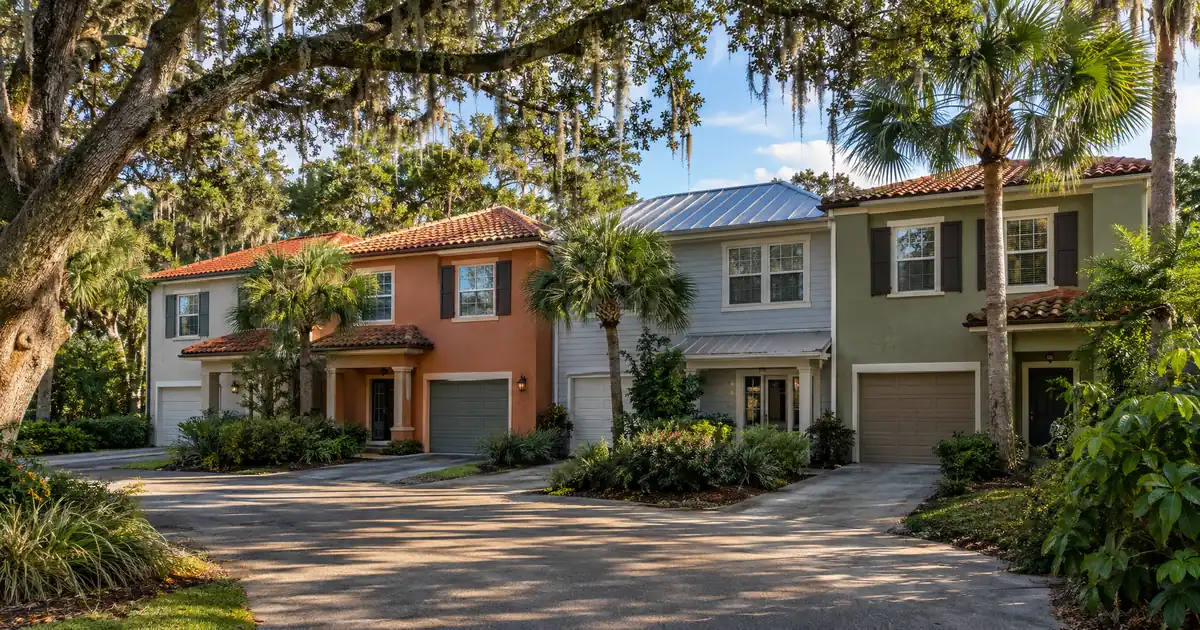
Cash-out files in St. Augustine tend to stall on one thing: nobody agrees on what the property is worth. Redfin puts the citywide median sale price at $462,500, down 6.1% year over year, while Zillow’s average home value sits at $429,114, down 1.7%. Those are different methodologies measuring the same town. Neither is the appraisal, and the appraisal is the number that sizes the loan.
An investor who already owns a rental here and wants to pull equity out needs three things lined up before the file goes in: seasoning, an appraised value that holds, and rent that covers the full monthly obligation. This article walks through each one using St. Augustine’s actual submarkets.
DSCR Cash-Out Calculator
Run the cash-out numbers in St Augustine, FL
Rate source: Freddie Mac 30-yr average via FRED® — Federal Reserve Bank of St. Louis · effective Sep 24, 2026
Prefilled with starting assumptions — enter your property’s value, balance, taxes, and insurance for a more accurate picture.
Program parameters update from Lendmire’s centralized guideline source. Taxes and insurance are editable estimates.
As of Sep 24, 2026 · General Freddie Mac market benchmark, not a Lendmire loan offer. Property value, balance, taxes, and insurance are editable estimates. Maximum loan-to-value varies by lender, program, property type, and seasoning. Not a Loan Estimate, approval, or commitment to lend. Program availability and eligibility are subject to lender guidelines, credit approval, property review, and underwriting.
The Quick Read:
A DSCR cash-out refinance on a St. Augustine, Florida investment property is underwritten primarily on the property’s rental income measured against its full monthly obligation, then sized to a 75% loan-to-value ceiling on a seasoned asset, with proceeds available only after reserves, seasoning, and lender review, subject to lender guidelines.
- St. Augustine West carries a median price near $293K and a median rent of $1,850.
- Cash-out leverage typically tops out at 75%, with about 6 months of ownership from title recording.
- Reserves generally run about 6 months of PITIA on most files.
- Citywide, homes sell after 173 days on average versus 91 a year earlier, which shapes appraisal risk.
- Small legal duplexes and triplexes under the multifamily median are the realistic collateral.
St Augustine Market Snapshot
A quick read on the St Augustine investor landscape — figures come from the cited sources below. Confirm current property-level numbers before underwriting.
| Metric | Detail |
|---|---|
| Home prices | $462,500 median (Redfin) |
| Typical rents | $1,670-$2,417 rent range (Jax Daily Record) |
| University enrollment | 2,425 total enrollment (Flagler College) |
| Population | 15,351 population (Census Reporter) |
| Vacancy | 5.2% total (Wikipedia) |
Why the Value Story Is the Whole File
The appraisal is the failure point on St. Augustine cash-out files. A 75% ceiling on an appraised number that comes in light shrinks proceeds, and in a market where the price signal is soft, that happens.
Consider what the sources show. The same Redfin page that reports the $462,500 median also shows a much longer sell-through: homes take 173 days on average, versus 91 the year before. That is a buyer’s market. Comparable sales are thinner and more spread out, and an appraiser working from them has more room to land conservative.
A cash-out thesis built on one-year momentum is fragile here. Other trackers show the opposite direction for different windows, so the annual number is noise. The more useful base is multi-year. Momentum Realty’s market page cites a median sold price that rose from $198,750 to $466,335 over 14 years, roughly 135% appreciation. That is the equity most St. Augustine owners are sitting on, and it is why a long-held property refinances more cleanly than a recent flip. Equity built slowly leaves cushion when the appraisal is conservative.
Lendmire (NMLS# 2371349) is a multi-state mortgage brokerage that helps St Augustine, Florida investors arrange DSCR financing across 41 markets, including Washington, D.C. For cash-out requests, its work starts with the equity picture: what the property realistically appraises for, what is owed, and whether rent supports the resulting loan size. The remaining sections cover what shapes that answer in this town. The general mechanics live in the equity-extraction mechanics page.
Seasoning and the 75% Ceiling
Two mechanical limits define how much equity is reachable.
Seasoning. Most programs in the network want about 6 months of ownership, measured from the date the title was recorded. The settlement statement documents it. Investors who bought recently and assume a same-year rehab-and-refi will clear are the ones whose files get kicked back. Count from recording, not from contract date.
LTV. Cash-out has its own loan-to-value cap, set by the lender’s guidelines and based on appraised value. That is a different cap than purchase financing, and the two are not interchangeable. What you can take out is the allowable percentage of the appraised value, less the existing payoff, less what reserves and closing costs absorb. It is not a guaranteed cash figure. It depends on rent used for lender review, PITIA, and the reserves the lender wants to see, which typically run about 6 months of PITIA and can be more on larger balances. Confirm the exact cap for your scenario with your loan officer and, for any local rent or legal questions, a qualified local professional.
The floor on coverage is a 1.00x benchmark, meaning rent equals the full monthly obligation. Some lenders review lower ratios with compensating factors such as lower leverage or more cash in reserve. Exact eligibility turns on credit profile (tiers run 620, 660, 680, and 700, with 620 as the floor), property review, and lender guidelines. The mechanics of the ratio are covered in the DSCR qualification mechanics.
St. Augustine West: Where the Coverage Almost Holds
St. Augustine West is the strongest cash-out submarket in town on rent-to-price, and it is also where the numbers run tightest against the 1.00x benchmark. Both statements are true.
Redfin’s neighborhood page shows a median of $293K, down 2.2% year over year, and the same page shows homes sitting 78 days versus 54 the year before. On the rent side, Redfin’s rental page has St. Augustine West at a $1,850 median, above the $1,799 citywide average, with Lincolnville at $1,895. Broader apartment-only averages run closer to $1,584, per Apartments.com. The gap matters. A workforce single-family or duplex in West Augustine rents above the citywide apartment blend, and using the flat city average understates the coverage.
Run the numbers on a modeled example. Assume a West Augustine rental appraising at the $293K submarket median, with rent modeled at $1,850. Coverage here is rent divided by full PITIA, meaning principal and interest, taxes, and insurance at Florida-average loads. At 75% leverage that lands right around 1.0x, sometimes a hair under. Trim leverage to roughly 65% and the same property moves into low-1.1 territory, including taxes and insurance. These are modeled inputs, not a quote, and the actual result depends on the appraisal, the loan terms, and the insurance quote that comes back. Every figure here varies by lender and program — guidelines, property type, leverage, and credit profile all apply.
If a file lands under 1.00x on long-term rent, the paths a lender would review include lower leverage, a sub-1.00 program, or an interest-only structure. Each is subject to lender guidelines, credit approval, and property review. None of them is a promise.
Two demand facts back the rent side. Institutional single-family operators, including AMH and Invitation Homes, are actively leasing duplex and single-family product in West Augustine. That is a useful comp signal when a lender questions rent achievability on a workforce duplex. And the public sector has moved on the shortage. The county approved the Spanish Forest workforce-housing development with roughly 106 single-family units on about 32 acres, and a 92-unit affordable community serving residents at 60% of area median income has opened. Two projects built to absorb workforce demand suggest existing small rental stock has a durable tenant base.
Shores and South: Cheaper Entry, Different Risks
St. Augustine Shores is the most affordable large residential submarket. Redfin’s Shores page shows a median sale price of $277K, down 3.3% year over year, with an average house price of $280K, down 2.3%. The Shores is a standard long-term single-family DSCR refi: established housing, a workforce tenant base, and modest price points that keep the loan size small. The tradeoff is flat-to-soft pricing. A refi there gets no help from appreciation, so equity comes from long ownership or a paydown, not from a market lift.
St. Augustine South sits higher. Redfin shows a three-month median sale price of $429K, up 0.9% year over year. The number to watch is vacancy. Census data cited on the St. Augustine South profile puts rental vacancy at 7.9% against a homeowner vacancy of 1.3%. That is roughly six times the owner figure, and it is a flag for vacancy reserves and lease-up assumptions. Lenders weigh lease evidence on these files, so a current signed lease matters more here than in tighter submarkets.
Skip the Beach (For Long-Term Rent Math)
Anastasia Island and St. Augustine Beach do not work for standard long-term-rent DSCR cash-outs. Redfin shows an average house price of $614K and a three-month median sale price of $610K, down 10.0% year over year. Entry price outruns what a long-term lease supports, so coverage on lease income alone is thin at any meaningful leverage.
The price-to-rent picture confirms the split. Homes.com puts the citywide price-to-rent ratio at 14.9, which generally favors renting and is unusually cash-flow-friendly for a coastal Florida tourist market. That average is carried by the workforce submarkets, not the beach. The historic core and Anastasia Island are where price premiums for location outrun achievable rent. A cash-out on a beachside property can pencil, but through a different documentation path, and that is a separate conversation from this one.
Duplexes and Triplexes: The Better Collateral?
This one is closer to a toss-up than it looks. Multi-unit stock is where the income stacking helps coverage, but the entry prices make it uneven.
Redfin shows 28 multifamily homes for sale in St. Augustine at a median listing price of $1.04M. That is roughly double the single-family median. Income stacking only pencils where per-unit rent clears about double the single-family rent per dollar of price. Large purpose-built multifamily rarely does. Small legal duplexes and triplexes priced well below that median, with several listings in the mid-$400Ks to $700Ks per Homes.com’s multifamily listings, are the realistic collateral.
Pulling equity from an existing duplex is easier than buying one. The owner already has the units leased, the rent roll exists, and a paid-down balance helps coverage. The stronger play may be a duplex refi over a single-family refi in the same neighborhood, since two rents cover one payment. Someone who wants simpler management could reasonably argue for the single-family. Both are defensible.
The Demand Anchors Behind the Rent
Long-term rent here rides on employment that does not depend on the beach season. Flagler Hospital is a 335-bed not-for-profit system that has served the area since 1889, and it is the dominant healthcare employer in the immediate market. Nurses, techs, and support staff are steady renters near the hospital corridor. (Flagler Hospital is not part of UF Health, a point sometimes gotten wrong in listings.)
Flagler College adds a smaller, seasonal layer. Enrollment is 2,425 students, and, 52% live off campus, which supports small-scale roommate-style rental demand near downtown.
The county-level picture is what feeds the wider market. St. Johns County has an estimated population of 306,841 and is among the fastest-growing counties in Florida. The city itself is small, 15,351 residents, inside an urban area of 88,385. The county’s largest employer is the school district, with about 900 personnel at the Florida Army National Guard headquarters also in the mix. No clean city-level employer ranking exists, so treat the county list as directional.
Another number frames the tenant base. Renters occupy roughly 34% of local housing units, 1,989 renter-occupied versus 3,844 owner-occupied. And per the Jacksonville Daily Record, the median single-family home in the county sits around $550,000, which prices out the tourism and service workforce. That gap between owning and renting keeps workforce rentals occupied.
What a Clean File Looks Like
DSCR files in markets like this one typically look like a mix of long-held workforce rentals with substantial equity and a few recent purchases that have not seasoned. The clean ones arrive with the settlement statement showing recording date, a current lease or rent roll, entity documents if the property is LLC-held (subject to lender program eligibility), and a fresh insurance quote in the file before it goes to the lender. The messy ones lean on a stale insurance quote, a lease that expired, or an appraisal assumption that ignores the local sell-through pace. The coverage number is rarely what sinks a file; documentation gaps are.
In practice, the friction points sort out like this:
1. Seasoning proof. The settlement statement and recorded deed, dated from title recording.
2. Lease evidence. A current signed lease, or a rent roll for a duplex, matched to the modeled rent.
3. Insurance quote. A complete, current quote in the file, not last year’s. St. Augustine’s flood exposure is real, with Redfin’s Flood Factor data flagging 96% of properties at risk of severe flooding over 30 years, so flood zone status and coverage need checking early. Verify current local rental rules, taxes, and insurance costs with qualified local professionals before underwriting.
4. Reserves documentation. Statements showing about 6 months of PITIA on most files, more on larger balances.
5. Appraisal reconsideration. If value comes in light, a packet of recent in-neighborhood sales and condition adjustments is a routine request, not an emergency move.
Unlike lenders that push every investor into the same qualification box, the wholesale network can route different property types and balances to different programs. Loan sizes run up to $3,000,000 on standard programs, and smaller balances go through select lenders in the network. Manufactured homes, log homes, and barndominiums fall outside these DSCR programs.
DSCR vs. conventional financing
Two common ways to finance an investment property in St Augustine, FL. They qualify you differently — here’s how investors weigh them.
Why investors choose it
- Qualifies on the property’s rental income — no personal tax returns, W-2s, or pay stubs needed to document income.
- No personal debt-to-income ceiling to clear, so existing mortgages and obligations don’t cap your borrowing the same way.
- Can be closed in an LLC, keeping the property inside a business entity.
- Built for scaling — not held to the limit on number of financed properties that conventional financing applies.
- Underwriting centers on the deal: generally qualifies when the rent covers the payment, a 1.00x coverage ratio being a common baseline (confirmed in underwriting).
- Designed specifically for investment property, including long-term and, where the program allows, short-term rentals.
Where it’s strong
- Often the lowest ongoing financing cost for a buyer who fully qualifies on personal income — a fit for a first property or a cost-first purchase.
Trade-offs for investors
- Requires full personal income documentation and must fit within a debt-to-income limit — salary, existing debts, and other mortgages all count.
- Typically held in your personal name rather than a business entity.
- Caps how many financed properties you can carry, which can become a ceiling as a portfolio grows.
- Evaluates you as a borrower as much as the property, which usually means more paperwork.
How investors usually choose: a first or single property often optimizes for the lowest financing cost; portfolio builders often optimize for leverage, vesting in an LLC, and scaling past conventional caps. The right answer depends on your goals, the property, and current guidelines — both paths run through select lenders in Lendmire’s wholesale network, with eligibility and terms confirmed in underwriting.
Where the Proceeds Go
Equity is only useful if it has somewhere to go. In St. Augustine the common redeployment is the next workforce rental in West Augustine or the Shores, where entry prices sit below the citywide median. A seasoned cash-out on one property becomes the capital for a purchase elsewhere, and the new purchase is its own file. Investors comparing the paths can see the guide “Where DSCR and Conventional Diverge”, or review Lendmire’s refi programs for the broader structure. Florida-specific program details sit on the Florida DSCR investor loans page. To talk through a specific property, talk to Lendmire or call 828-256-2183.
Frequently Asked Questions
How do you qualify for a DSCR cash-out refinance in St. Augustine?
Qualification centers on the property’s rent against its full monthly obligation, with a 1.00x benchmark on most standard programs. Beyond that, lenders review credit (tiers of 620, 660, 680, and 700, with 620 as the floor), about 6 months of ownership from title recording, and reserves of roughly 6 months of PITIA. A West Augustine duplex with a current lease and recorded deed is straightforward to document. Final eligibility depends on lender guidelines and property review.
What are the requirements for an investment property cash-out loan in St. Augustine, Florida?
The core requirements are seasoning, a 75% maximum LTV on appraised value, and coverage that meets the lender’s ratio. You also need a property type the programs accept, since manufactured homes, log homes, and barndominiums do not qualify. Loan amounts reach up to $3,000,000 on standard programs. Entity documents apply if the property is held in an LLC, depending on program guidelines.
How much equity can I take out of a St. Augustine West rental?
It depends on the appraisal, the existing payoff, and reserves, not on the market median. The ceiling is 75% of appraised value less what you owe. At the submarket’s roughly $293K median, leverage near that ceiling puts modeled coverage right around 1.0x, so the practical cash-out is often limited by rent, not by equity. Lower leverage improves the ratio at the cost of proceeds.
Can a self-employed investor buying in St Augustine be reviewed for DSCR financing?
Yes. Lendmire arranges DSCR programs and these programs are evaluated on property cash flow rather than personal income, subject to lender guidelines. That structure is why self-employed borrowers, who often have complicated traditional personal-income documentation, use them.
Does St. Augustine’s flood exposure change a cash-out refinance?
It changes the insurance line, which changes the coverage number. Flood zone status and a complete insurance quote need to be in the file before submission, because a quote that arrives late can shift the ratio during lender review. Confirm flood zone and coverage details with a local insurance professional.
For current guidelines and terms, see Lendmire’s DSCR loan programs page.
About Lendmire
Lendmire (NMLS# 2371349) is a mortgage brokerage focused on DSCR investor financing, helping arrange programs through wholesale and investor-lending channels in 41 markets, including Washington, D.C. DSCR loans are evaluated by the lender on property cash flow rather than personal income, subject to lender guidelines, supporting LLC closings and accommodating investors with four or more financed properties. Scotsman Guide named Lendmire a Top Mortgage Workplace in both 2025 and 2026.
Get Started
Ready to find the right loan for you?
In about 30 seconds you can review financing options available for your investment property. No commitment required.
Informational only. Not a Loan Estimate, approval, or commitment to lend. Program availability and eligibility are subject to lender guidelines, credit approval, property review, and underwriting.
References
1. Redfin: St. Augustine housing market
2. Zillow: Saint Augustine home values
4. Redfin: St. Augustine rental market
5. the Jacksonville Daily Record
6. Enrollment is 2,425 students
8. the St. Augustine South profile
9. Momentum Realty’s market page
10. Apartments.com
11. actively leasing duplex and single-family product in West Augustine
15. Redfin — St Augustine South Housing Market
16.
17. Homes.com puts the citywide price-to-rent ratio at 14.9
18. 28 multifamily homes for sale in St. Augustine at a median listing price of $1.04M
19. Homes.com’s multifamily listings
20. Flagler Hospital
22. Census Reporter — St Augustine FL Urban Area
23. Point2Homes — Average Rent St Augustine
24. 2025
25. 2026
This article is part of Lendmire’s investment property cash-out refinance program — full qualification details, guidelines, and scenarios live on the program page.
Related reading: Cash Out Refinance Investment Property in St. Augustine · Investment Property Loans in St. Augustine, FL: What the Purchase Math Actually Looks Like · DSCR Loans St. Augustine: Investor Financing for Historic District, Anastasia Island, St. Augustine Beach & Real Estate Investors
Guides: Investment Property Cash-Out Refinance in Florida
Brandon Miller
Founder & CEO, Mortgage Loan Originator, Lendmire LLC
- Mortgage Loan Originator · NMLS# 1129696 · Verify on NMLS Consumer Access
- North Carolina Real Estate Broker · License# 343312 · Verify on NCREC
- North Carolina Insurance Producer · License# 19053198 · Property, Casualty, Life, Health · Verify on NAIC SBS
- Lendmire LLC · Firm NMLS# 2371349 · Verify firm licensure
Disclosures. The information presented in this article is general market commentary, not financial, legal, or tax advice. Lendmire is a mortgage brokerage (NMLS# 2371349) — not a direct lender or depository institution — and loan placement is subject to lender underwriting. Nothing in this content represents a commitment to lend. Loan terms, pricing, and program availability vary based on borrower qualifications, property characteristics, and state of subject property, and are subject to change at any time. Lendmire complies with Equal Housing Opportunity requirements. Consumer access: nmlsconsumeraccess.org.