
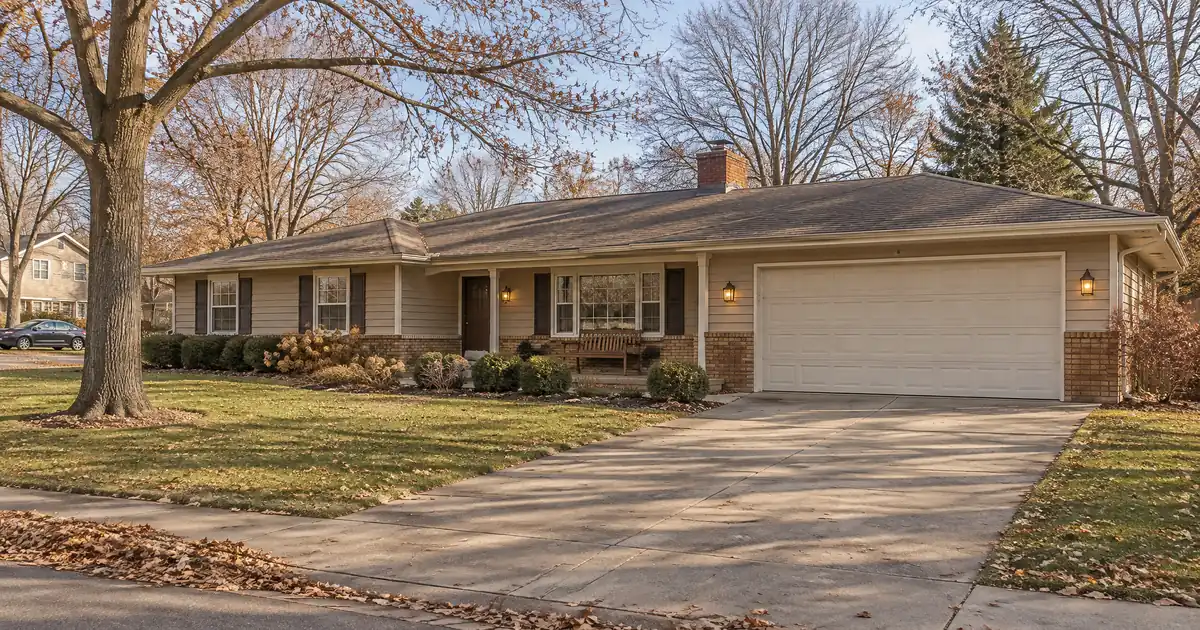
The Quick Read: A DSCR cash-out refinance and a like-kind exchange solve different problems, so they are rarely true substitutes. The first borrows against a rental you keep. The second defers tax on a rental you sell.
- A cash-out refinance on a standard rental tops out around 75% LTV across most of the network, with about 6 months of seasoning.
- A like-kind exchange works only for real property held for investment, and it runs on two fixed IRS deadlines.
- A DSCR loan can finance the replacement property in an exchange, or refinance it afterward.
- Both paths can be used in sequence: exchange first, then cash out once the replacement property has seasoned.
- Neither path is a guaranteed outcome. Lenders review each file, and a CPA or qualified intermediary should confirm the tax side.
The Honest Answer
Keep the property if it performs and will still cover a larger payment. A DSCR cash-out refinance fits that investor. Nothing is sold, no tax deadline applies, and the loan is reviewed primarily on property-level rental income covering the payment, subject to lender guidelines.
DSCR Cash-Out Calculator
Run the cash-out numbers in your market
Rate source: Freddie Mac 30-yr average via FRED® — Federal Reserve Bank of St. Louis · effective Nov 5, 2026
Prefilled with starting assumptions — enter your property’s value, balance, taxes, and insurance for a more accurate picture.
Program parameters update from Lendmire’s centralized guideline source. Taxes and insurance are editable estimates.
As of Nov 5, 2026 · General Freddie Mac market benchmark, not a Lendmire loan offer. Property value, balance, taxes, and insurance are editable estimates. Maximum loan-to-value varies by lender, program, property type, and seasoning. Not a Loan Estimate, approval, or commitment to lend. Program availability and eligibility are subject to lender guidelines, credit approval, property review, and underwriting.
Sell and exchange if you want to reposition. That might mean a different asset class, a different geography, or a way out of looming capital work. A like-kind exchange fits that investor, and a DSCR loan often finances the replacement.
The two tools answer different questions. One asks how to pull equity out of a rental you want to keep. The other asks how to move equity into a new rental without a tax bill today. Tax treatment varies; consult a qualified professional.
Side-by-Side
The exchange column reflects published industry norms. The refinance column reflects the guidelines of select lenders in Lendmire’s wholesale network, subject to lender guidelines.
| Factor | DSCR Cash-Out Refinance | Like-Kind Exchange |
|---|---|---|
| What it is | New loan on a property you keep | Tax-deferral structure for a sale |
| Review basis | Property rent against full PITIA | IRS rules; financing is separate |
| Documentation | Lease, appraisal rent schedule, payoff | Written ID, intermediary agreement |
| Property types | Eligible rentals; some types not offered | Real property held for investment |
| Entity vesting | LLC titles possible per program terms | Same taxpayer on both sides |
| Time pressure | No statutory deadline | Two hard IRS deadlines |
| Seasoning | About 6 months from recorded deed | Not applicable |
| Reserves | Commonly about 6 months PITIA | Set by the replacement lender |
| Main risk | Coverage falls on larger payment | Missed deadline forfeits deferral |
How the Cash-Out Side Works
A cash-out refinance is a new, larger loan that pays off the old one and returns the difference. Across most of the wholesale network it tops out around 75% LTV on a standard rental. For short-term-rental collateral, the ceiling drops to about 70%. Leverage, reserves, and pricing vary by lender and program; the final terms follow the full file review.
Seasoning is about 6 months, counted from the recorded deed. Before that window clears, loans are commonly sized on cost: purchase price plus documented rehab. After it clears, appraised value governs. No law sets DSCR seasoning. It is lender policy, and it varies.
The file runs on the property. The appraiser provides a rent schedule: Form 1007 for single-family and Form 1025 for 2-4 units. Most programs use the lower of lease rent or appraiser market rent. Coverage is monthly rent divided by PITIA (principal, interest, taxes, insurance, and any HOA dues). A bigger loan means a bigger payment, so coverage falls.
Here is the catch. Coverage is not cash flow. A file can clear 1.00 and still lose money after repairs, vacancy, management, and utilities. Those items sit outside the calculation.
Typical network parameters for this file:
- Credit: a 620 floor exists in parts of the network, most programs want around 660, and 700+ opens the strongest tiers.
- Coverage: 1.00 is where select programs start. A separate select-lender path takes coverage below 1.00, with leverage and terms adjusted.
- Reserves: commonly about 6 months of PITIA, stepping up to about 9 months above $1,500,000.
- Loan size: up to $3,000,000 on standard programs.
- Not offered: manufactured homes, log homes, and barndominiums.
Equity available is not a guaranteed figure. It depends on rent used for lender review, PITIA, reserves, and the LTV ceiling. The complete DSCR loans guide covers how those pieces fit together.
How the Exchange Side Works
Under the Tax Cuts and Jobs Act, the IRS says like-kind treatment applies only to real property. Property held primarily for sale does not qualify, so dealers and flippers holding inventory fail the test. Properties are like-kind if they share the same nature or character, even when grade or quality differs.
Two deadlines drive the exchange. CLA’s primer describes the 45-day identification period and the 180-day exchange period, and it calls both non-extendable. The 45 days sit inside the 180, not on top of them. The 180 days can also be cut short by the return due date unless an extension is filed.
A qualified intermediary holds the sale proceeds. Pease Bell’s rules guide explains that the investor must never have actual or constructive receipt of the funds. Identification must be in writing, signed, and delivered to the intermediary or another party to the exchange. Notice to your own agent or accountant is not enough.
The exchange is reported on Form 8824. Deferral is not elimination: the deferred tax and depreciation ride along into the replacement property’s basis.
Where the DSCR Loan Fits Inside an Exchange
A DSCR loan can be the replacement-property loan. It is reviewed on the replacement rental’s income, not the investor’s tax returns. The refinance and the exchange are not rivals in that case. One is the financing for the other.
Debt replacement matters here. Liabilities you are relieved of in the sale can be treated as money received, which creates boot. You can avoid debt boot by taking on replacement debt equal to or greater than the old debt, or by adding outside cash. Netting works in one direction: cash paid in offsets mortgage boot, but new debt does not offset cash boot.
Lenders need documents the exchange generates: the purchase contract, the settlement statements, and the entity documents. Disclose the exchange to the loan officer at the start. A reverse exchange, where an exchange accommodation titleholder acquires the replacement first, adds a titleholder entity the lender must be able to lend to. Raise that on day one, not at the point of review.
Entity vesting is the quiet friction point. The seller and buyer must be the same taxpayer. A single-member LLC that is a disregarded entity of the same owner can work. A personal sale followed by a purchase in a different taxpayer’s name generally cannot. LLC vesting is available subject to program terms, and a tax advisor should confirm the exchange side.
When a DSCR Cash-Out Refinance Is the Better Fit
Choose the refinance when the property is staying in the portfolio.
- The rental performs. Rent still covers the larger payment with room to spare. A coverage ratio near 1.2x or better after the cash-out is a stronger file than one sitting right at 1.00.
- No replacement target exists. An exchange requires a suitable replacement property to be identified within a required window. The refinance has no statutory clock, so it removes that problem.
- You want partial equity, not all of it. The 75% LTV ceiling limits what comes out, but it also leaves the rest working in the asset.
- You value the tenant and the hold. Nothing is sold, no intermediary is involved, and no like-kind compliance applies.
- You want to avoid the exchange’s operating risk. A missed deadline forfeits deferral entirely. Terms vary by lender guidelines, property type, leverage, credit profile, and full file review.
A refinance is commonly treated as borrowing rather than a sale. That is practitioner commentary, not IRS authority, so confirm with a CPA. For a related angle, Lendmire’s piece What a DSCR Cash-Out Refinance Looks Like When Your Rental Lost Value? covers the case where appraised value falls short.
Watch the weak spots. A low appraisal shrinks proceeds. A larger payment can push coverage toward 1.00. Short-term rentals need different rent evidence than Form 1007, and they carry lower cash-out leverage in this network. Properties inside the seasoning window are sized on cost, not value.
When a Like-Kind Exchange Is the Better Fit
Choose the exchange when the goal is repositioning and the tax bill is the problem.
- You want to change asset class or geography. Moving from a tired single-family into small multifamily is a classic use.
- Capital work is coming. Selling before a roof, systems, or structural expense lands can make sense.
- You want access to all net equity. A refinance is capped by the LTV ceiling. An exchange redeploys all net equity, subject to the debt-replacement rule.
- You already have a target. If a replacement property is lined up, the 45-day identification is manageable.
- You plan to trade up repeatedly. Serial exchanges keep deferring the tax.
The risks are mechanical. Miss either deadline and deferral is gone. Take cash off the table and it becomes boot. Property held for personal use does not qualify. States also differ in how they follow the federal tax code, so state treatment needs its own check.
Can You Combine Them?
Yes, but sequence matters. Practitioners disagree on the edges, so treat this section as a map of risk, not a rule.
Refinancing before the sale. A pre-sale cash-out can be recharacterized as taxable boot and may jeopardize the exchange. BiggerPockets says post-exchange refinancing is widely preferred by advisors. Treat a pre-sale cash-out as the higher-risk route and take it to a tax advisor before moving.
Refinancing after the exchange. This is the common sequence. Exchange first, then take a DSCR cash-out on the replacement once it has seasoned. No statute sets a waiting period, though some advisors suggest a few months. That is practitioner opinion.
Seasoning on the replacement. The replacement property follows the lender’s own seasoning policy, about 6 months in most network programs. Delayed financing for all-cash buyers waives seasoning only. It does not waive coverage, reserves, or leverage.
Separate property, separate loan. An investor can also cash out a different property to raise liquidity while leaving exchange proceeds untouched.
DSCR vs. conventional financing
There are two common ways to finance an investment property, and they qualify you differently — here’s how investors weigh them.
Why investors choose it
- Qualifies on the property’s rental income — no personal tax returns, W-2s, or pay stubs needed to document income.
- No personal debt-to-income ceiling to clear, so existing mortgages and obligations don’t cap your borrowing the same way.
- Can be closed in an LLC, keeping the property inside a business entity.
- Built for scaling — not held to the limit on number of financed properties that conventional financing applies.
- Underwriting centers on the deal: generally qualifies when the rent covers the payment, a 1.00x coverage ratio being a common baseline (confirmed in underwriting).
- Designed specifically for investment property, including long-term and, where the program allows, short-term rentals.
Where it’s strong
- Often the lowest ongoing financing cost for a buyer who fully qualifies on personal income — a fit for a first property or a cost-first purchase.
Trade-offs for investors
- Requires full personal income documentation and must fit within a debt-to-income limit — salary, existing debts, and other mortgages all count.
- Typically held in your personal name rather than a business entity.
- Caps how many financed properties you can carry, which can become a ceiling as a portfolio grows.
- Evaluates you as a borrower as much as the property, which usually means more paperwork.
How investors usually choose: a first or single property often optimizes for the lowest financing cost; portfolio builders often optimize for leverage, vesting in an LLC, and scaling past conventional caps. The right answer depends on your goals, the property, and current guidelines — both paths run through select lenders in Lendmire’s wholesale network, with eligibility and terms confirmed in underwriting.
Key Terms Defined
Boot: Cash or other non-like-kind value received in an exchange that is taxable to the extent of gain.
Qualified intermediary: The third party that holds sale proceeds so the investor never has actual or constructive receipt.
Seasoning: The ownership period a lender expects before it will return cash on a refinance.
PITIA: Principal, interest, taxes, insurance, and any HOA dues, the full payment used in the coverage ratio.
Debt replacement: Taking on equal or greater debt, or adding cash, so relief from the old loan does not create boot.
Same-taxpayer rule: The requirement that the seller and the buyer in an exchange be the same taxpayer.
The Balanced Verdict
Pick the refinance if you are keeping the property and the rent can carry a larger payment. Pick the exchange if you are selling anyway and want to move the whole equity stack without a tax bill today. Pick both, in order, if you want to reposition first and pull cash after.
The deciding questions are plain. Have you identified a replacement target within the exchange’s identification window? Does the rental still cover a bigger payment? Is the property one you want to hold? Run the coverage ratio before you commit, and bring a tax question list to your CPA and intermediary.
If you are buying or refinancing a rental property and want to see how the numbers work, Lendmire can help you compare DSCR loan options based on the property income, credit profile, leverage, and investor goals.
Frequently Asked Questions
Is a DSCR cash-out refinance taxable?
A refinance is commonly treated as borrowing, not a sale, so it is not itself the taxable event. That is practitioner commentary rather than IRS authority. Tax treatment can depend on how the funds are used and how the property is held; investors should keep clear records and speak with a qualified tax professional before relying on any deduction.
Can I refinance right before a like-kind exchange?
It is risky. A cash-out taken before the sale can be recharacterized as boot and may jeopardize the exchange. Advisors widely prefer refinancing after the exchange. Raise the plan with a tax advisor before any pre-sale loan.
Can a DSCR loan finance the replacement property?
Yes, subject to lender guidelines. The file is reviewed primarily on the replacement rental’s income against the full payment, plus value, reserves, and credit. Disclose the exchange at the start and confirm that entity vesting matches the taxpayer who sold.
How long after an exchange can I take a DSCR cash-out?
No statute sets a waiting period. The lender’s seasoning policy governs, and most network programs expect about 6 months from the recorded deed. Delayed financing for all-cash buyers is a narrow exception that waives seasoning only.
Do the 45 days add to the 180 days?
No. Both run from the closing of the relinquished property, so the 45 days sit inside the 180. Identification must be written and delivered to the intermediary or another party to the exchange. The 180 days can also be shortened by the return due date.
For the mechanics of pulling equity out of a rental property, see Lendmire’s guide to cash-out refinance on an investment property.
About Lendmire
Lendmire, NMLS# 2371349, is a non-QM mortgage broker serving real estate investors in 41 markets, including Washington, D.C., through DSCR investor loan programs. Qualification is generally reviewed around the subject property’s rental income, not the borrower’s W-2 history — a practical fit for LLC-titled portfolios and self-employed investors. All scenarios remain subject to lender review and program guidelines. Two consecutive Scotsman Guide Top Mortgage Workplace recognitions (2025, 2026).
Get Started
Ready to find the right loan for you?
See your offer in seconds. No credit pull, no obligation.
Informational only. Not a Loan Estimate, approval, or commitment to lend. Program availability and eligibility are subject to lender guidelines, credit approval, property review, and underwriting.
References
1. IRS – Like-kind exchanges, real estate tax tips
3. Pease Bell – 1031 rules guide
4. BiggerPockets – How to take cash out of a 1031
This article is part of Lendmire’s investment property cash-out refinance program — full qualification details, guidelines, and scenarios live on the program page.
Related reading: DSCR Cash-Out Refinance to Pull Cash From a Single Rental Property: The 2026 Guide · DSCR Cash-Out Refinance Requirements for Your First Airbnb Rental · Where to Get a DSCR Cash-Out Refinance When Comparing It to a Hard Money Loan on a Rental
Brandon Miller
Founder & CEO, Mortgage Loan Originator, Lendmire LLC
- Mortgage Loan Originator · NMLS# 1129696 · Verify on NMLS Consumer Access
- North Carolina Real Estate Broker · License# 343312 · Verify on NCREC
- North Carolina Insurance Producer · License# 19053198 · Property, Casualty, Life, Health · Verify on NAIC SBS
- Lendmire LLC · Firm NMLS# 2371349 · Verify firm licensure
Legal disclosures. Lendmire (NMLS# 2371349) is a state-licensed mortgage brokerage that arranges financing through wholesale lender relationships. Lendmire is not a direct lender, depository institution, or registered financial advisor. The discussion above is general informational content about real estate financing — it is not financial, legal, or tax advice, and readers should consult licensed professionals for guidance on their individual circumstances. Loan inquiries are subject to lender underwriting; this article does not represent a commitment to lend. Loan terms, rates, and qualification standards vary by borrower, property, and state, and are subject to change at any time. Equal Housing Opportunity. NMLS Consumer Access: nmlsconsumeraccess.org.