
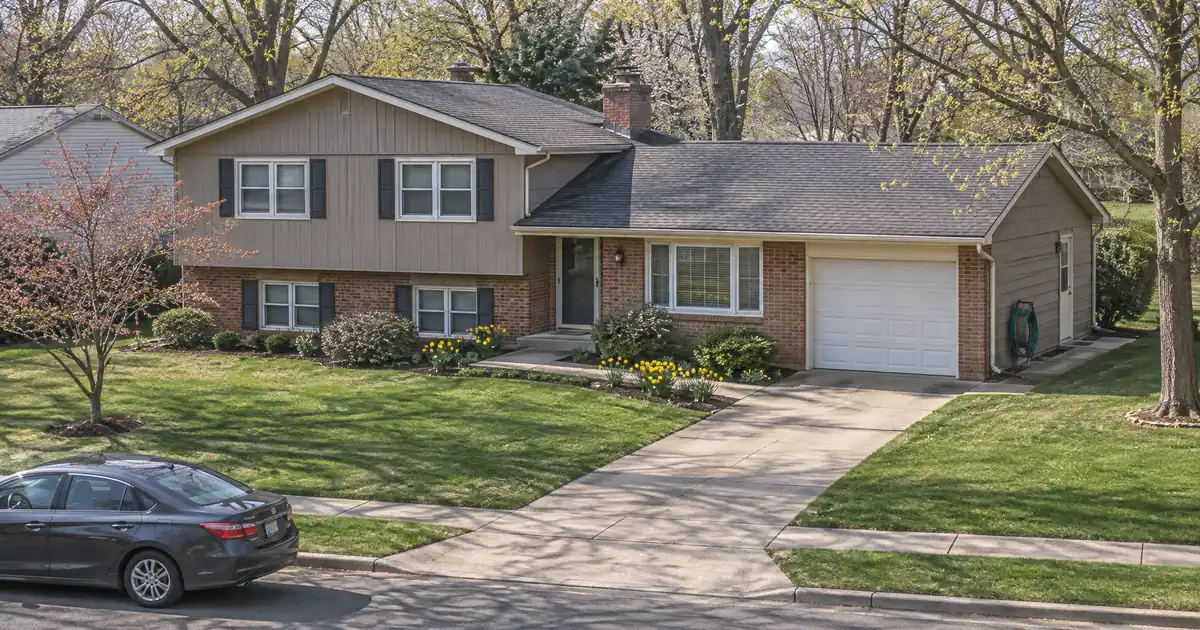
The Quick Read: A DSCR cash-out refinance fits the investor who wants liquidity but still believes in the asset, while a sale fits the investor who wants out, wants every dollar of equity, or cannot make the rental cover a larger loan. A listed property adds a wrinkle: most programs want the listing removed and look at recent listing history before they consider a cash-out.
- Cash-out refinances on standard rentals top out around 75% LTV across most of the network, so some equity stays locked in.
- Seasoning of about 6 months from title recording is the common expectation.
- The minimum DSCR is 1.00, measured as qualifying rent against PITIA.
- A sale releases all the equity, while a refinance returns only part of it as debt proceeds.
- Listing history is part of the review. Each figure is subject to lender guidelines and a complete review of property type, leverage, and credit.
Investors who list a rental usually have a reason. Maybe the numbers soured, maybe a better deal appeared, maybe a partner wants out. Then an offer comes in low, or the market softens, and the question flips: why sell if the equity can be borrowed against? This article weighs both paths fairly, because the right answer depends on the property, the tax picture, and what the cash is for.
DSCR Cash-Out Calculator
Run the cash-out numbers in your market
Rate source: Freddie Mac 30-yr average via FRED® — Federal Reserve Bank of St. Louis · effective Nov 5, 2026
Prefilled with starting assumptions — enter your property’s value, balance, taxes, and insurance for a more accurate picture.
Program parameters update from Lendmire’s centralized guideline source. Taxes and insurance are editable estimates.
As of Nov 5, 2026 · General Freddie Mac market benchmark, not a Lendmire loan offer. Property value, balance, taxes, and insurance are editable estimates. Maximum loan-to-value varies by lender, program, property type, and seasoning. Not a Loan Estimate, approval, or commitment to lend. Program availability and eligibility are subject to lender guidelines, credit approval, property review, and underwriting.
The Honest Answer: Who Each Option Is For
Cash-out refinancing is for the investor who wants to keep the property, expects the rent to cover the new loan, and plans to redeploy the cash into something that earns more than the added debt costs. A sale is for the investor who wants a clean exit, needs all the equity, has a rental that is weak on coverage, or is simply done with the asset.
Neither is the safer choice by default. Refinancing adds debt and shrinks cash flow, while selling ends the exposure. The property’s coverage ratio, the investor’s adjusted basis, and the purpose of the cash decide it.
Side-by-Side
| Factor | DSCR Cash-Out Refinance | Selling the Listed Rental |
|---|---|---|
| Review basis | Property rent vs. PITIA | None; no new loan is made |
| Documentation | Lease or market-rent schedule, entity papers | Listing and sale contract |
| Property types | Standard rentals; some types excluded | Any property that can be sold |
| Entity vesting | LLC can often hold title, subject to program terms | Titled entity sells |
| Reserves | Commonly around 6 months of PITIA | None required |
| Timeline | Appraisal, review and recorded loan | Offer, contract, and closing |
| Equity released | Capped near 75% LTV | All equity, before costs and tax |
| Tax event | Debt proceeds are not a sale | Taxable disposition |
| Asset afterward | Kept, with more debt | Gone |
Program figures in the refinance column reflect select lenders in Lendmire’s wholesale network, subject to lender guidelines. The sale column describes published industry norms and general tax rules, not a quote or a commitment to lend.
When a DSCR Cash-Out Refinance Is the Better Fit
A cash-out refinance wins when the investor wants to hold. Three situations stand out.
The rent can carry a bigger loan. DSCR divides monthly rent by PITIA: principal, interest, taxes, insurance, and any HOA dues. Taking cash out raises the loan, so the same rent now covers a larger payment and the ratio drops. 1.00 is where select programs start, and stronger ratios generally open better leverage. A property that clears comfortably before the cash-out has room to absorb the extra debt. A property that barely clears may not.
Clearing the ratio is not the same as positive cash flow. DSCR looks at rent against PITIA only. Repairs, vacancy, management, utilities, and capital expenses all sit outside it. An investor who refinances at 1.05 and then faces a roof replacement has learned the difference.
The cash has a better job. If the proceeds fund a down payment on another rental, the math is straightforward. The new property has to earn more than the extra debt on the old one costs. If the money would sit idle or fund consumption, selling may be cleaner.
The tax bill from a sale is the main obstacle. A sale is a taxable disposition. The IRS treats gains on property held more than one year as long-term, while short-term gains are taxed as ordinary income. A CPA firm’s explainer notes that straight-line depreciation on real property produces unrecaptured Section 1250 gain, taxed at a maximum federal rate of 25%, while accelerated depreciation on personal-property components, such as a cost segregation study, can produce ordinary-income recapture. A refinance creates no sale, so none of that is triggered today. It is deferral, not elimination: the gain and the depreciation are still there when the property sells. Tax treatment varies; consult a qualified professional.
The refinance route also suits investors who want to keep appreciation and the long-run income, and who have the reserves to carry the new loan. Across most of the network, reserves run around 6 months of PITIA, stepping up to about 9 months above $1,500,000, with flexibility by lender and file.
What Changes Because the Property Is Already Listed
This is the part most refinance explainers skip. A listing is a signal. It tells a lender the owner meant to sell, and many programs treat that signal carefully.
- Delisting. Most programs want the listing cancelled before the application, not just paused.
- Look-back. Lenders commonly review MLS history, and a withdrawn listing can still count. Rules vary by program.
- The delist-and-relist pattern. Pulling a listing to get the refinance and relisting afterward is a red flag in file review.
- The listing agreement. A contract with an agent may carry a commission tail or termination terms that need handling before the loan.
- Vacancy. A rental emptied or staged for sale may lack a signed lease. The appraiser’s market-rent schedule (Form 1007 for one unit, Form 1025 for two to four) can stand in, but the file is easier when real tenants are in place.
- Offers in hand. An active offer changes the calculus. Walking away from a contract to refinance has its own costs.
The practical point: if the sale is still plausible, the refinance is not a free option. Pulling a listing to test the loan market can cost weeks of lost exposure.
When Selling Is the Better Fit
Selling is the right call more often than refinance advocates admit. The honest cases:
The coverage does not work. If the rent barely covers the existing loan, a larger loan pushes the ratio under the 1.00 minimum DSCR. Select lenders in the network may consider coverage below that level, with leverage and terms adjusted, but that means less cash out and a thinner cushion. Taking on more debt against a property that struggles to carry it is a bad trade in most files.
The property is not eligible. Manufactured homes, log homes, and barndominiums are not offered through the network’s DSCR programs. For those, the choice narrows to selling or holding.
The investor wants everything out. A leverage cap near 75% LTV leaves part of the equity locked up. A sale releases all of it, before costs and tax. Leverage, reserves, and pricing vary by lender and program; the final terms follow the full file review.
A near-term exit is coming anyway. A new loan can start a new prepayment clock. If a sale is planned in a short window, the prepayment terms on the new loan can erase the benefit of the cash-out.
The goal is a smaller portfolio. Some investors want simplicity, and no loan structure supplies that.
The Third Path: Sell and Defer With a 1031 Exchange
A sale does not have to mean a tax bill today. A like-kind exchange under Section 1031 defers the gain if the proceeds go into replacement property on a strict schedule. Utah State University Extension explains the IRS rules: the investor must identify the replacement property in writing within 45 days of the sale, through a qualified intermediary, and the exchange must close within 180 days of the sale or by the return due date for that year, whichever comes first. These are IRS statutory deadlines, not loan timelines.
Two cautions matter for this decision. A 1031 produces no spendable cash, because the proceeds go to the intermediary. And refinancing during an exchange can create taxable boot, so the usual sequence is to complete the exchange and then refinance the replacement property. A tax advisor should confirm the specifics, since changes in the debt on the properties can affect the tax treatment of the exchange. A DSCR loan on the replacement property qualifies primarily on property-level rental income covering the payment, subject to lender guidelines.
Key Terms Defined
Cash-out refinance: a new loan larger than the old payoff, with the difference paid to the borrower.
DSCR: the property’s monthly rent divided by its monthly PITIA.
Seasoning: the ownership period a lender wants before it allows cash out, about 6 months in most programs.
Adjusted basis: the purchase cost plus improvements, minus depreciation taken or allowable, which determines taxable gain on a sale.
Boot: cash or other non-like-kind value received in an exchange, which is taxable.
Prepayment penalty: a fee for paying off a loan early, which a new loan can restart.
DSCR vs. conventional financing
There are two common ways to finance an investment property, and they qualify you differently — here’s how investors weigh them.
Why investors choose it
- Qualifies on the property’s rental income — no personal tax returns, W-2s, or pay stubs needed to document income.
- No personal debt-to-income ceiling to clear, so existing mortgages and obligations don’t cap your borrowing the same way.
- Can be closed in an LLC, keeping the property inside a business entity.
- Built for scaling — not held to the limit on number of financed properties that conventional financing applies.
- Underwriting centers on the deal: generally qualifies when the rent covers the payment, a 1.00x coverage ratio being a common baseline (confirmed in underwriting).
- Designed specifically for investment property, including long-term and, where the program allows, short-term rentals.
Where it’s strong
- Often the lowest ongoing financing cost for a buyer who fully qualifies on personal income — a fit for a first property or a cost-first purchase.
Trade-offs for investors
- Requires full personal income documentation and must fit within a debt-to-income limit — salary, existing debts, and other mortgages all count.
- Typically held in your personal name rather than a business entity.
- Caps how many financed properties you can carry, which can become a ceiling as a portfolio grows.
- Evaluates you as a borrower as much as the property, which usually means more paperwork.
How investors usually choose: a first or single property often optimizes for the lowest financing cost; portfolio builders often optimize for leverage, vesting in an LLC, and scaling past conventional caps. The right answer depends on your goals, the property, and current guidelines — both paths run through select lenders in Lendmire’s wholesale network, with eligibility and terms confirmed in underwriting.
A Fair Way to Decide
Run four questions in order.
1. Does the property clear coverage on the bigger loan? If not, selling or a smaller cash-out is the likelier fit.
2. Is the property eligible, and is the listing history clean? If the listing is recent or the type is excluded, the refinance may be off the table.
3. What would a sale actually net? Subtract the payoff, selling costs, and tax from the price. Compare that with the refinance proceeds after closing costs and any prepayment charge on the old loan.
4. What will the cash earn? If it will not outperform the cost of carrying more debt, keep it simple and sell.
The strongest refinance files show enough equity under the 75% LTV ceiling and enough rental coverage on the new loan. Equity alone does not qualify a file, because leverage caps, credit floors, and reserve rules still apply. Lendmire’s complete DSCR loans guide covers program mechanics in more depth.
Verdict
Refinance when the rental earns its keep on a larger loan, the cash has a productive use, and the listing history will not trip the file. Sell when coverage is thin, the property is ineligible, the investor wants all the equity, or the exit was the point to begin with. Consider the 1031 route when the tax bill is the obstacle and a replacement property is already identified.
If the choice is truly close, the tiebreaker is usually risk tolerance. Debt against a rental is a bet that rent, value, and reserves hold up. A sale is a decision to stop betting. If you are buying or refinancing a rental property and want to see how the numbers work, Lendmire can help you compare DSCR loan options based on the property income, credit profile, leverage, and investor goals. The brokerage arranges DSCR financing through select lenders across 40 states plus Washington, D.C.
Frequently Asked Questions
Can I cancel my listing and still get a DSCR cash-out refinance?
Often, but not automatically. Most programs want the listing removed before application and review recent MLS history, so a withdrawn listing can still count. Rules differ by lender, and a delist-and-relist pattern draws scrutiny. Expect to document that the sale is off the table.
How much equity can I pull out compared with selling?
A sale releases all equity before costs and tax. A cash-out on a standard rental tops out around 75% LTV across most of the network, so part of the equity stays in the property. The actual amount depends on appraised value, coverage, reserves, and the old loan’s payoff. Terms vary by lender guidelines, property type, leverage, credit profile, and full file review.
Does a cash-out refinance trigger capital gains tax?
Borrowed funds are not a sale, so the refinance itself does not create a gain. The gain and depreciation remain and surface when the property is sold later. A qualified tax professional can confirm how that applies to your situation.
What happens to my DSCR if I take cash out?
It falls, because the same rent covers a larger payment. Many select programs start at 1.00 coverage, and stronger ratios open better leverage. A property that barely clears before the cash-out may fall short afterward. Sub-1.00 paths exist through select lenders with adjusted leverage and terms.
Can I do a cash-out refinance in the middle of a 1031 exchange?
Generally no. Refinancing during an exchange can create taxable boot, so the common sequence is to finish the exchange and then refinance the replacement property. Confirm the timing with a tax advisor and the intermediary.
For how equity extraction works on an investment property, see Lendmire’s guide to cash-out refinance on an investment property.
About Lendmire
Lendmire — NMLS# 2371349 — is a DSCR and non-QM mortgage brokerage with investor loan programs in 41 markets, including Washington, D.C. DSCR eligibility is commonly reviewed by the lender around property-level rent rather than personal income documentation, subject to lender guidelines, and the brokerage helps arrange financing for LLC-owned portfolios beyond conventional financed-property limits. Recognized by Scotsman Guide as a Top Mortgage Workplace in 2025 and 2026.
Get Started
Ready to find the right loan for you?
See your offer in seconds. No credit pull, no obligation.
Informational only. Not a Loan Estimate, approval, or commitment to lend. Program availability and eligibility are subject to lender guidelines, credit approval, property review, and underwriting.
References
1. IRS Topic 409, Capital Gains and Losses
2. Wiss, Depreciation Recapture and Real Estate Tax Implications
3. Utah State University Extension, Like-Kind Exchanges
This article is part of Lendmire’s investment property cash-out refinance program — full qualification details, guidelines, and scenarios live on the program page.
Related reading: Can You Do a DSCR Cash-Out Refinance While Unemployed With No Paystubs? · How to Get an Investor Cash-Out Refinance in TX, CA, NJ or FL · Can You Do a DSCR Cash-Out Refinance When an Heir Can’t Be Found?
Brandon Miller
Founder & CEO, Mortgage Loan Originator, Lendmire LLC
- Mortgage Loan Originator · NMLS# 1129696 · Verify on NMLS Consumer Access
- North Carolina Real Estate Broker · License# 343312 · Verify on NCREC
- North Carolina Insurance Producer · License# 19053198 · Property, Casualty, Life, Health · Verify on NAIC SBS
- Lendmire LLC · Firm NMLS# 2371349 · Verify firm licensure
Legal disclosures. Lendmire (NMLS# 2371349) is a state-licensed mortgage brokerage that arranges financing through wholesale lender relationships. Lendmire is not a direct lender, depository institution, or registered financial advisor. The discussion above is general informational content about real estate financing — it is not financial, legal, or tax advice, and readers should consult licensed professionals for guidance on their individual circumstances. Loan inquiries are subject to lender underwriting; this article does not represent a commitment to lend. Loan terms, rates, and qualification standards vary by borrower, property, and state, and are subject to change at any time. Equal Housing Opportunity. NMLS Consumer Access: nmlsconsumeraccess.org.