
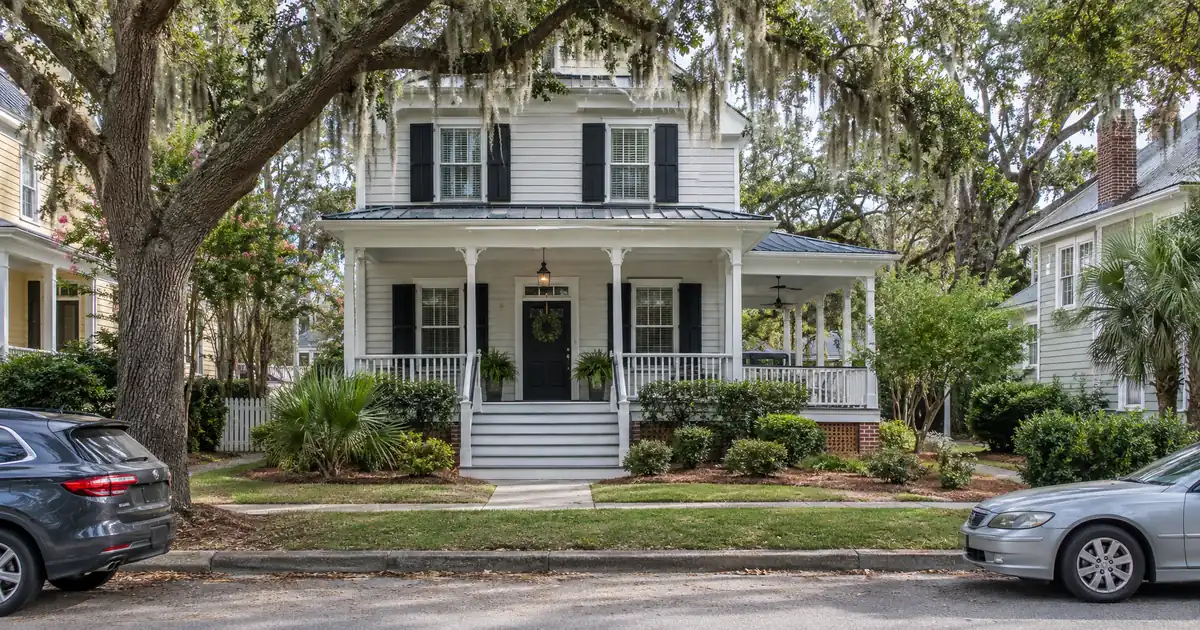
An out-of-state investor scrolling Walterboro listings sees a small Lowcountry city on I-95 with a rent number that looks attractive: Zumper reports an average house rent of $1,700, against a median house value of $257,517 per NeighborhoodScout. What that investor often misses is how thin the ratio between those two numbers gets once a cash-out refinance loads the property with debt. For an owner already holding a Walterboro rental, the useful question is not whether the market cash-flows on paper. It’s how much equity the appraisal will support, and whether rents can carry the larger balance.
The Quick Read: A DSCR cash-out refinance in Walterboro, South Carolina is underwritten primarily on the property’s rental income measured against its full monthly obligation, with the lender sizing the new balance off appraised value rather than the owner’s traditional personal-income documentation. Walterboro’s modest rents make unit count and appraised value the two variables that decide the outcome.
DSCR Cash-Out Calculator
Run the cash-out numbers in Walterboro, SC
Rate source: Freddie Mac 30-yr average via FRED® — Federal Reserve Bank of St. Louis · effective Sep 24, 2026
Prefilled with starting assumptions — enter your property’s value, balance, taxes, and insurance for a more accurate picture.
Program parameters update from Lendmire’s centralized guideline source. Taxes and insurance are editable estimates.
As of Sep 24, 2026 · General Freddie Mac market benchmark, not a Lendmire loan offer. Property value, balance, taxes, and insurance are editable estimates. Maximum loan-to-value varies by lender, program, property type, and seasoning. Not a Loan Estimate, approval, or commitment to lend. Program availability and eligibility are subject to lender guidelines, credit approval, property review, and underwriting.
- Cash-out is typically capped at 75 percent loan-to-value, with about six months of ownership from title recording.
- Only about 10.19 percent of housing units are duplexes or small multifamily.
- Movoto shows price per square foot down 3 percent year over year, so equity may not have grown.
- Single-family rent against value pencils in the low 1.1x range including taxes and insurance, modeled below.
Walterboro Market Snapshot
A quick read on the Walterboro investor landscape — figures come from the cited sources below. Confirm current property-level numbers before underwriting.
| Metric | Detail |
|---|---|
| Home prices | $257,517 median value (NeighborhoodScout) |
| Typical rents | Median contract rent $851 (City-Data) |
| Employment | 575 jobs (Live5 News) |
Why Appraised Value Matters More Than Appreciation Here
Walterboro cash-out proceeds depend on what the appraiser says the property is worth today, not on how far the market has climbed since purchase, because the local price trend is flat to soft. Movoto reports a median listing price near $305K with price per square foot at $164, down 3 percent from a year earlier.
The two headline value figures disagree, and that matters. NeighborhoodScout’s $257,517 is a modeled median house value; Movoto’s $305K is an asking-price median, which skews toward whatever is currently on the market. This article uses the NeighborhoodScout figure as its canonical benchmark because it reflects the stock rather than just the listings. An investor who bought recently should not assume equity has built up. Comp depth is also thin in a city of roughly 5,480 residents, per Census Bureau QuickFacts, so a wide spread between source medians often translates into a wide spread between appraisal outcomes.
The program mechanics are simple. Cash-out refinances generally cap at 75 percent LTV, which is a separate and lower ceiling than the 80 percent common on purchases. Seasoning is typically about six months of ownership measured from title recording, so an investor who closed on a rental this spring has a clock to watch. Reserves typically run about six months of the full monthly obligation. The 1.00x DSCR benchmark is common because rent covers the payment at that level, though some lenders review lower ratios with compensating factors such as reduced leverage or more cash down. Everything is subject to lender guidelines, credit profile (620 is a typical floor), and property review.
The equity available is whatever remains after the 75 percent ceiling, the existing balance, and the coverage test all clear. It’s not a fixed figure.
Where the Coverage Math Lands
At full 75 percent leverage, a Walterboro single-family rental sits near 1.1x at the house-rent level and drops below 1.00 at the apartment-rent level. Both figures below are modeled assumptions, not sourced market data, and both include taxes and insurance in the monthly obligation.
Run the numbers on a house appraising at the NeighborhoodScout median of $257,517. Assume rent of $1,700 (the Zumper average) and a 30-year amortization with property tax and insurance at South Carolina averages. Coverage comes out around 1.1x including taxes and insurance, which clears the standard benchmark with little cushion. Rent-to-value on that pairing is about 0.66 percent per month, Lendmire Research’s own arithmetic. Against the $305K listing median it falls to roughly 0.56 percent.
Now drop the rent. City-Data puts median contract rent at $851 and median gross rent at $1,040, and Zumper’s apartment average is $1,240. A unit renting near $1,240 against the same value and leverage models below 1.00x. Sources disagree materially on local rent, from about $850 contract rent to $1,700 house asking rent, and the gap is mostly measurement: contract rents reflect long-standing leases, while asking rents reflect what’s listed today. The appraiser’s market-rent opinion, not the owner’s current lease, typically drives rent used for lender review.
When a file lands under 1.00x on long-term rent alone, a lender may review several structures: a sub-1.00 program, interest-only restructuring, or a lower LTV that shrinks the balance. Which of those applies depends on lender guidelines, credit approval, and property review. Nothing here should be read as an assurance that a given property will qualify. Investors can see the guide “What Is a DSCR Loan” in detail, and a scenario run before ordering an appraisal is cheaper than one run after.
Duplex to Fourplex: Where the Stack Helps
In a market where one door rents for $1,240 to $1,700, a second through fourth door is the most direct way to support a larger refinance balance. Appraisers document market rent on a rent schedule (Form 1007 for single-family, Form 1025 for 2-4 units), and stacked rents raise the income supporting the same building.
The catch is supply. NeighborhoodScout reports single-family detached homes at 61.66 percent of Walterboro’s housing units, large apartment complexes at 20.64 percent, and duplexes, converted homes, and small apartment buildings at 10.19 percent. Roughly one unit in ten is the product that best fits this strategy. Owners who already hold a duplex or triplex are sitting on the scarcer asset, and a cash-out there pencils better than on a comparable single-family home. The 5+ unit tier is a different animal: commercial-style underwriting may apply, so confirm program rules before assuming a DSCR path.
Condition cuts the other way. City-Data lists a median build year of 1966 for houses and 1982 for apartments. Older stock invites appraisal repair conditions, and an unfinished roof or failing HVAC system can derail a cash-out just as cleanly as thin rent. Manufactured homes, log homes, and barndominiums fall outside the network’s DSCR programs entirely, which matters in a rural county where they are common.
Working DSCR brokers see a recurring pattern in small-city workforce markets: the single-family owner with a fully leased rental and a thin ratio is the most common file, and the owner with a two-to-four-unit building and a real rent schedule is the most comfortable one. The deciding factor is usually unit count and appraised rent, not credit score or reserves.
Demand Anchors Behind the Rent Line
Walterboro’s tenant base is a workforce base, and it rests on several employers rather than one. Data USA shows the largest resident employment sectors as educational services (387 people), manufacturing (366), and retail trade (329). The City of Walterboro describes itself as the shopping and dining hub for the surrounding rural areas, with an I-95 location and Lowcountry Regional Airport, the largest general aviation airport in the state by the city’s account.
Healthcare adds a steady layer. Colleton Medical Center, an HCA hospital, sits in central Walterboro, and the county’s largest-employer list also includes the school district, county government, PruittHealth, Walmart, and several manufacturers. Hospital and county staff are non-cyclical renters, which helps a lender accept the appraiser’s rent schedule as durable.
The pipeline is real but small, and it should stay out of the underwriting. Walterboro Live reported that QMP, a water-filtration manufacturer, chose Colleton County for a $5.1 million investment expected to create 233 jobs over five years. SouthernCarolina Alliance also lists smaller announcements: a 20-job expansion at Banks Construction, an 8-job aggregates terminal, and a 30-job oyster facility in Green Pond. Live5 News reported a battery-storage factory projected at 575 jobs on 90 acres along I-95, announced as a groundbreaking, though its current operating status wasn’t verified. Regionally, the SC Department of Employment and Workforce counts 3,323 announced jobs across Beaufort, Colleton, Hampton, and Jasper counties, 89 percent in manufacturing. Some of that growth will land outside Walterboro.
The read: diversified tens-of-jobs additions lower concentration risk for tenants, but they don’t justify aggressive rent assumptions. Treat hiring as upside for renewals, not as a reason to size a loan.
Submarkets, Without Invented Numbers
No reliable neighborhood-level price or rent data exists for Walterboro, so the submarkets below are described by demand driver and stock type only.
- Downtown and historic districts. The city points to its historic downtown and districts, and character housing here skews older, which raises the appraisal-condition question above.
- The I-95 interchange corridor. This is the industrial and logistics zone, per the city’s comprehensive plan, which also cites the operational Colleton County Commerce Center with foreign-trade-zone benefits. Workforce demand is the logic.
- The medical campus area. Central Walterboro, near the hospital. Probably the easiest location to justify to an appraiser as a durable long-term rental.
Near the hospital and the interchange is where an owner would expect the strongest case for a rent schedule. That is a judgment, not a measurement.
Where Out-of-State Owners Get It Wrong
A common error is using the wrong median. Sizing a refinance off the $305K listing median when the appraisal comes in nearer the $257K stock median produces a proceeds expectation that evaporates. Skip that shortcut.
The second is underwriting on the pipeline. A 233-job ramp and a 575-job announcement are the kind of headlines that make a rent bump feel inevitable. Lenders won’t see it that way, and a file built on projected demand will disappoint.
Third, and this one is genuinely a toss-up, is whether to refinance a single-family rental at all when the ratio sits near 1.1x. The cash-out works on paper, but with flat price trends and modest rents, an owner might do better holding the loan as is and adding a second door first. Investors who need capital now, for a duplex purchase elsewhere, could reasonably argue the other way.
Loan size is also a factor. Standard programs reach $3,000,000, and balances at the small end typically route through select lenders in the network. That shapes which lender a Walterboro file lands with. Any LLC-titled property can be reviewed, subject to lender program eligibility.
DSCR vs. conventional financing
Two common ways to finance an investment property in Walterboro, SC. They qualify you differently — here’s how investors weigh them.
Why investors choose it
- Qualifies on the property’s rental income — no personal tax returns, W-2s, or pay stubs needed to document income.
- No personal debt-to-income ceiling to clear, so existing mortgages and obligations don’t cap your borrowing the same way.
- Can be closed in an LLC, keeping the property inside a business entity.
- Built for scaling — not held to the limit on number of financed properties that conventional financing applies.
- Underwriting centers on the deal: generally qualifies when the rent covers the payment, a 1.00x coverage ratio being a common baseline (confirmed in underwriting).
- Designed specifically for investment property, including long-term and, where the program allows, short-term rentals.
Where it’s strong
- Often the lowest ongoing financing cost for a buyer who fully qualifies on personal income — a fit for a first property or a cost-first purchase.
Trade-offs for investors
- Requires full personal income documentation and must fit within a debt-to-income limit — salary, existing debts, and other mortgages all count.
- Typically held in your personal name rather than a business entity.
- Caps how many financed properties you can carry, which can become a ceiling as a portfolio grows.
- Evaluates you as a borrower as much as the property, which usually means more paperwork.
How investors usually choose: a first or single property often optimizes for the lowest financing cost; portfolio builders often optimize for leverage, vesting in an LLC, and scaling past conventional caps. The right answer depends on your goals, the property, and current guidelines — both paths run through select lenders in Lendmire’s wholesale network, with eligibility and terms confirmed in underwriting.
Recycling the Proceeds
Cash-out proceeds are only useful if the next property also covers its own debt. A refinance that pulls equity from a single-family rental to buy another single-family rental at similar rent-to-value stacks two thin ratios. Pulling equity from a stronger building, or deploying it into a duplex or fourplex, tends to produce better portfolio coverage. The side-by-side comparison shows why DSCR underwriting reads the property rather than the borrower’s traditional personal-income documentation, which is what makes multi-property scaling workable. For mechanics, see pulling equity out and refinance details, and the state-level picture is on the page for DSCR loans in South Carolina.
Investors should also verify current local rental rules, taxes, and insurance with qualified local professionals, since those vary by county and change over time.
Frequently Asked Questions
How do you qualify for a DSCR cash-out refinance in Walterboro, South Carolina?
Qualification centers on the property’s appraised market rent against its full monthly obligation, typically with a 1.00x benchmark, a credit score floor around 620, and about six months of reserves. The loan generally caps at 75 percent LTV and requires about six months of seasoning from title recording. Eligibility depends on lender guidelines, credit profile, and property review.
What are the requirements for an investment property loan in Walterboro, SC?
Expect an appraisal with a rent schedule, proof of reserves, entity documents if an LLC holds title, and a property type within program rules. Manufactured homes, log homes, and barndominiums are outside the network’s DSCR programs. Smaller balances, common in this market, often route through select lenders.
Does the announced factory hiring raise how much I can pull out?
No. Lenders size the loan from appraised value and current market rent, not projected demand. The 233-job QMP expansion and the announced 575-job battery plant may support renewals over time, but they don’t enter the coverage calculation.
Why might my Walterboro rental have less equity than I expected?
Movoto reports price per square foot down 3 percent year over year, so a recent purchase may not have appreciated. Source medians also diverge widely, from $257,517 to about $305K depending on the metric. Cash-out proceeds follow the appraisal, not the purchase price.
The One Step to Take First
Before anything else, order a rent-and-value read on the actual property: pull recent closed comps near the hospital, downtown, or the I-95 corridor, and compare them against the asking medians, because in Walterboro the spread between a $257K stock median and a $305K listing median is the gap that decides how much equity is really there.
For current guidelines and terms, see Lendmire’s DSCR loan programs page.
About Lendmire
Lendmire, NMLS# 2371349, is a mortgage brokerage focused on DSCR investor loans, arranging financing in 41 markets, including Washington, D.C., through wholesale and investor-lending channels. Its model rests on property-level rental income reviewed by the lender instead of W-2 documentation, subject to lender guidelines, which suits entity-owned and multi-property investors. Lendmire holds a 2026 Scotsman Guide Top Mortgage Workplace and a 2025 Scotsman Guide Top Mortgage Workplace recognition, detailed in the 2026 industry recognition release.
Get Started
Ready to find the right loan for you?
See your offer in seconds. No credit pull, no obligation.
Informational only. Not a Loan Estimate, approval, or commitment to lend. Program availability and eligibility are subject to lender guidelines, credit approval, property review, and underwriting.
References
1. Zumper: Walterboro Rent Research
2. NeighborhoodScout: Walterboro Real Estate
3. City-Data: Walterboro Housing
4. Live5 News
6. Census Reporter: Walterboro, SC
8. City of Walterboro: Business
10. SouthernCarolina Alliance: Colleton
11. a 2026 Scotsman Guide Top Mortgage Workplace
12. a 2025 Scotsman Guide Top Mortgage Workplace
13. EIN Presswire — Lendmire Recognized as a 2026 Top Workplace by Scotsman Guide
This article is part of Lendmire’s investment property cash-out refinance program — full qualification details, guidelines, and scenarios live on the program page.
Related reading: Cash Out Refinance Investment Property in Walterboro, South Carolina: 2026 DSCR Guide to the I-95 Corridor · DSCR Cash Out Refinance in Edisto Beach, South Carolina: How the Rent Math Clears at 75% LTV · Cash Out Refinance Investment Property in Gaffney, South Carolina: Equity Math on Thin Rents
Guides: Investment Property Cash-Out Refinance in South Carolina
Brandon Miller
Founder & CEO, Mortgage Loan Originator, Lendmire LLC
- Mortgage Loan Originator · NMLS# 1129696 · Verify on NMLS Consumer Access
- North Carolina Real Estate Broker · License# 343312 · Verify on NCREC
- North Carolina Insurance Producer · License# 19053198 · Property, Casualty, Life, Health · Verify on NAIC SBS
- Lendmire LLC · Firm NMLS# 2371349 · Verify firm licensure
Disclosure information. Lendmire is a state-licensed mortgage brokerage under NMLS# 2371349. Lendmire is not a depository institution, direct lender, or financial advisor — all loans referenced are placed through wholesale lender partners and are subject to each lender's underwriting standards. This article is provided for general informational purposes and is not a commitment to lend, nor does it constitute financial, legal, or tax advice. Loan programs, terms, rates, and qualification standards change without notice and depend on borrower profile, property type, and the state in which the subject property is located. Equal Housing Opportunity provider. NMLS Consumer Access: nmlsconsumeraccess.org.