
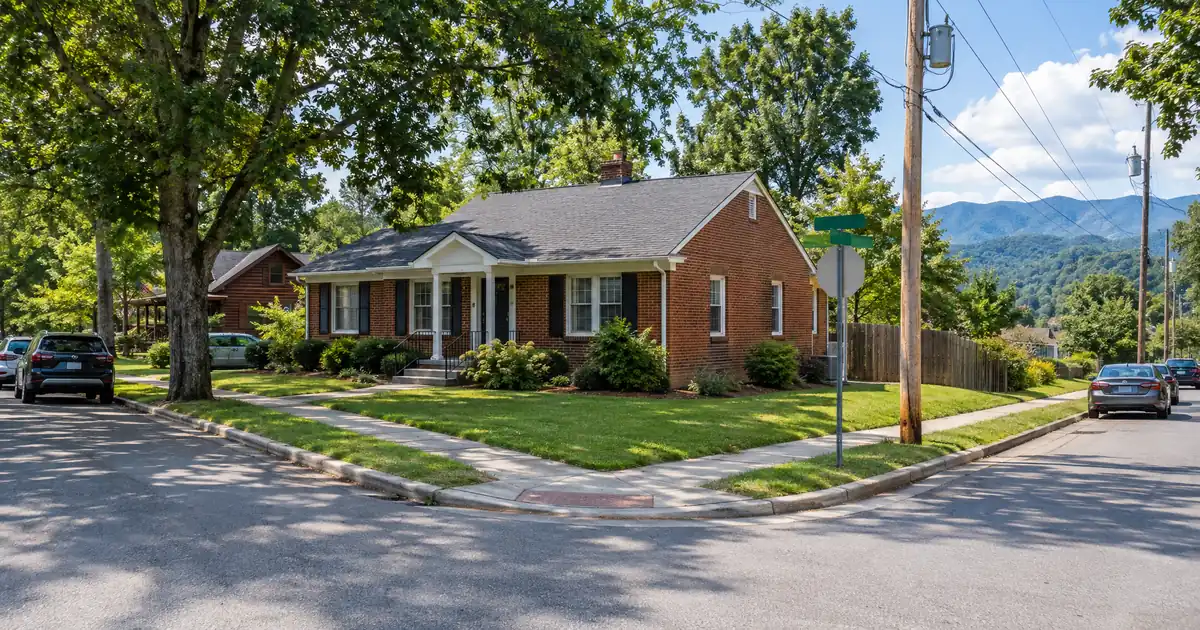
The mechanical problem with a cash-out refinance in Wears Valley is that the price and the rent live in different places. The valley prices like a cabin market, and the long-term rent evidence comes from Sevierville and Sevier County, so coverage has to be built from proxies. Cash-out caps at 75 percent LTV, and rent still has to clear 1.00 against full PITIA, which makes leverage the first lever to test. Lendmire (NMLS# 2371349) structures DSCR scenarios for investors targeting Wears Valley, Tennessee and places them with wholesale lenders across 41 markets, including D.C.
TL;DR: A DSCR cash-out refinance in Wears Valley, Tennessee is underwritten primarily on the property’s rental income measured against its full monthly obligation. The valley’s cabin-driven pricing means that test is usually met through lower leverage or two-unit stock rather than single-family cabins, with qualification subject to lender guidelines.
DSCR Cash-Out Calculator
Run the cash-out numbers in Wears Valley, TN
Rate source: Freddie Mac 30-yr average via FRED® — Federal Reserve Bank of St. Louis · effective Oct 1, 2026
Prefilled with starting assumptions — enter your property’s value, balance, taxes, and insurance for a more accurate picture.
Program parameters update from Lendmire’s centralized guideline source. Taxes and insurance are editable estimates.
As of Oct 1, 2026 · General Freddie Mac market benchmark, not a Lendmire loan offer. Property value, balance, taxes, and insurance are editable estimates. Maximum loan-to-value varies by lender, program, property type, and seasoning. Not a Loan Estimate, approval, or commitment to lend. Program availability and eligibility are subject to lender guidelines, credit approval, property review, and underwriting.
- Cash-out tops out at 75 percent LTV. Testing 65 to 70 percent is the realistic planning range here.
- No Wears Valley rent dataset exists. Rent evidence comes from Sevierville and Sevier County.
- Sevierville’s average home value sits at $418,816, down 1.0 percent per Zillow.
- Log homes fall outside these programs, which rules out a chunk of valley cabins.
- Seasoning runs about six months from title recording.
Wears Valley Market Snapshot
A quick read on the Wears Valley investor landscape — figures come from the cited sources below. Confirm current property-level numbers before underwriting.
| Metric | Detail |
|---|---|
| University enrollment | 14,000+ students (SCEDC) |
| Population | ~100,000 county residents (GuideStar) |
| Employment | 11,000+ covenant employees (Covenant Health LeConte) |
Where the Rent and the Price Part Ways
Wears Valley is an unincorporated community in Wear Cove, running parallel to Great Smoky Mountains National Park, per Wikipedia’s valley entry. It has no downtown, no big-box retail, and no city government publishing rent data. City-Data notes that the renting share there sits significantly below the state average. In plain terms, this is an owner-occupied and second-home valley.
That shapes the whole refinance conversation. A cash-out depends on appraised value and on rent used for lender review, and in Wears Valley the first runs high while the second runs thin. Cabin and visitor-driven pricing lifts the valuation. Long-term tenants, though, mostly live in Sevierville, Pigeon Forge, and Seymour. So the investor holding a long-term rental in the valley has the value side working and the coverage side straining. The investor holding one in the Sevierville ring has the opposite problem.
The neighborhood names a local brokerage lists, including Shagbark, Brother’s Cove, Waldens Ridge, Bluff Mountain, Cove Mountain, and Line Springs, are cabin-community names. No source gives long-term rents for any of them. Treat them as value stock, not coverage stock.
What the Coverage Math Looks Like
Coverage here is monthly rent divided by full PITIA, and the proxies show why the work starts with leverage. The modeled figures below use assumed rents, not Wears Valley data, and each includes taxes and insurance. They are rounded down.
Start with Sevierville workforce single-family. Apartments.com shows three-bedroom rents of $1,539 or more, and ApartmentFinder shows $1,646. Against Zillow’s $418,816 average value, that is roughly 0.37 to 0.39 percent monthly rent-to-value, a gross yield in the mid-4s. Model a house near that value at 70 percent LTV and coverage lands below 1.00. Model one nearer the $289,600 median owner-occupied value reported in a Sevierville living guide, and the same rents land right around 1.0x at 65 to 70 percent LTV. That is a single-family deal that barely works.
The cash-out ceiling is 75 percent, but planning there on single-family is a mistake. Equity available depends on rent used for lender review, PITIA, reserves of about six months, and the cap itself. It is never a guaranteed number. Qualification remains subject to lender guidelines, credit review (floor 620, with pricing tiers at 660, 680, and 700), and property review.
DSCR files in markets like this one typically look the same. The appraisal is the swing factor, the rent schedule gets underwritten conservatively, and the investor arrives expecting the headline LTV and leaves with a lower number. The files that go smoothly are the ones where the borrower modeled 65 to 70 percent before applying, and brought a lease or market rent support that matches the lender’s schedule rather than an asking rent. For a walkthrough of the ratio itself, see the guide “What Is a DSCR Loan”.
Duplexes: Where Coverage Can Actually Clear
Two units against one price is the cleanest fix. Redfin’s multi-family listings for Sevier County show 19 homes at a median list price of $450,000, sitting an average of 142 days. That is a thin sample, and the units are not confirmed long-term rentals, so verify every rent roll and use type.
Run the numbers on a duplex at that median with two-bedroom units at the Apartments.com average of about $1,163 each. At 70 percent LTV, full-PITIA coverage lands just under 1.00. At 65 percent it sits near 1.0x. Swap in the higher Apartment List two-bedroom figure of $1,745 or more per unit, and coverage clears comfortably. The spread between sources is the story. Underwrite to the lender’s rent schedule, not to the high number.
The cheaper end is more interesting. City-Data’s ZIP-level figures show a mean of $344,300 for all housing units and $284,237 for two-unit structures, an approximate and secondary-source figure. A two-unit property near that price at the lower rents modeled above would clear well north of 1.3x including taxes and insurance, at 70 percent LTV. Those properties are rare, and the aggregator is not an appraiser. But the direction is clear: small multifamily is the structure that stretches coverage furthest, and the investor should hunt for it rather than lean on a single-family cabin.
Skip the Cabin-Priced Core?
For long-term-rental cash-out, mostly yes. A local brokerage describes valley home prices as starting in the mid to high $500,000s and climbing past $3 million. That is listing-page copy, not a statistic, but the direction holds. Against Sevierville-proxy rents, the rent-to-price ratio in the valley’s core runs roughly a third below Sevierville’s. Coverage at any reasonable LTV is a stretch.
There is a harder stop too. Log homes, manufactured homes, and barndominiums are not reviewable through the DSCR programs Lendmire places. Many of the valley’s cabins are log construction, so a lot of the Wears Valley inventory is out before the math starts. Confirm construction type early. Land-heavy parcels, like the 7-plus-acre private lots brokers advertise in the Homestead area, point to build-your-own-cabin value, not workforce rental.
This is the honest read. If you own a valley cabin and want cash out, a DSCR file on long-term rent is the wrong tool. Equity there is better used where a lender’s rent schedule can support it, which brings the Sevierville ring back into the picture.
Demand Anchors That Ignore the Tourist Calendar
Tourism is the economy. Tourism Economics reported Sevier County visitor spending of $3,851,460,800 in a recent year, and the East Tennessee Economic Development Agency calls tourism a cornerstone alongside a diverse industrial base. Dollywood describes itself as the county’s largest employer, and a dated Knoxville Chamber major-employer list put its headcount at 4,500. The Sevier County Economic Development Council gives that title to Sevier County Schools, which employs more than 2,000 staff. The sources disagree, so hold both claims loosely.
The year-round tenants matter more for underwriting. Covenant Health, which runs LeConte Medical Center in Sevierville, counts more than 11,000 employees, physicians, and volunteers system-wide. Hospital staff are the most defensible non-hospitality renter profile in the ring because their employment does not follow the visitor calendar.
The SCEDC’s housing study adds a sourced demand case. It finds that housing availability and affordability lead to unfilled positions, that a significant share of employees commute in from other counties, and that in-commuting rose 2.3 percent over the study’s four-year window. It also says land cost in the tourism corridor can be prohibitive to development. Expensive land limits new workforce supply, which supports existing stock. The same study ties unemployment to tourism seasonality, so test coverage with a winter vacancy cushion.
All of this supports attainable-priced rentals, not cabin-priced ones.
What Could Break the Pattern in the Next 6 to 24 Months
The value side of a cash-out is soft right now. Redfin’s county housing market page showed the Sevier County median down 6.5 percent year over year and price per square foot down 17.1 percent. Days on market rose to 100 from 83. Zillow shows Sevierville’s average value down 1.0 percent. Medians swing with the mix of cabins sold, so these are directional, not precise. But no one should underwrite on appreciation here.
Rent growth is no help either. Apartments.com showed Sevierville rents up just 0.2 percent year over year in a dated read. Across sources, county rents range from roughly $1,072 to well over $2,600, a spread that reflects cabin and all-property-type listings mixed into the higher figures.
Indicators worth tracking:
- Sold comps versus list. If days on market keep climbing, plan on conservative appraisals and lower LTV outcomes.
- Rent schedule versus asking rent. Gaps signal where coverage gets cut.
- Small-multifamily listing counts. A thin pool of 19 listings can move fast in either direction.
- Seasonal turnover. A weak winter is the early warning for a tenant base tied to hospitality.
Verify current local rental rules, taxes, and insurance with qualified local professionals before underwriting any of this.
Where the Proceeds Go
A cash-out is only worth doing if the capital lands somewhere that clears 1.00 on its own. After roughly six months of seasoning, equity from a high-value valley property can be redeployed into stock that carries rent, such as the two-unit properties above. Lendmire’s refi programs and the cash-out refinance details cover seasoning and reserves in more depth. For a comparison with conventional financing, Lendmire’s guide to DSCR versus conventional loans covers the differences. Unlike lenders that push every investor into the same qualification box, a broker working across a wholesale network can route a rent-driven file to the programs that fit its leverage and property type.
Lendmire’s Tennessee DSCR platform is the state-level starting point. To model a specific property, request a quote or call 828-256-2183.
The asymmetric opportunity is small multifamily in the Sevierville and Seymour ring. It carries two rents against one price, sits inside the commuter and hospital-staff pool the SCEDC study describes, and trades in a market where soft values have not yet pulled the rent-to-price math down with them.
Frequently Asked Questions
How do you qualify for a DSCR cash-out refinance in Wears Valley, Tennessee?
Qualification centers on the property’s rent used for lender review versus its full PITIA, with 1.00 as the standard benchmark. Typical guidance also includes about six months of seasoning from title recording, reserves of around six months of PITIA, a 620 credit floor, and a 75 percent LTV ceiling for cash-out. Exact eligibility depends on lender guidelines, credit, and property review.
DSCR vs. conventional financing
There are two common ways to finance an investment property in Wears Valley, TN, and they qualify you differently — here’s how investors weigh them.
Why investors choose it
- Qualifies on the property’s rental income — no personal tax returns, W-2s, or pay stubs needed to document income.
- No personal debt-to-income ceiling to clear, so existing mortgages and obligations don’t cap your borrowing the same way.
- Can be closed in an LLC, keeping the property inside a business entity.
- Built for scaling — not held to the limit on number of financed properties that conventional financing applies.
- Underwriting centers on the deal: generally qualifies when the rent covers the payment, a 1.00x coverage ratio being a common baseline (confirmed in underwriting).
- Designed specifically for investment property, including long-term and, where the program allows, short-term rentals.
Where it’s strong
- Often the lowest ongoing financing cost for a buyer who fully qualifies on personal income — a fit for a first property or a cost-first purchase.
Trade-offs for investors
- Requires full personal income documentation and must fit within a debt-to-income limit — salary, existing debts, and other mortgages all count.
- Typically held in your personal name rather than a business entity.
- Caps how many financed properties you can carry, which can become a ceiling as a portfolio grows.
- Evaluates you as a borrower as much as the property, which usually means more paperwork.
How investors usually choose: a first or single property often optimizes for the lowest financing cost; portfolio builders often optimize for leverage, vesting in an LLC, and scaling past conventional caps. The right answer depends on your goals, the property, and current guidelines — both paths run through select lenders in Lendmire’s wholesale network, with eligibility and terms confirmed in underwriting.
What are the requirements for an investment property loan in Wears Valley, Tennessee?
Property type matters first. Log homes, manufactured homes, and barndominiums are outside the network’s DSCR programs, which excludes many valley cabins. Pricing and available terms vary by lender, borrower profile, property type, and full underwriting review. Loans on standard programs go up to $3,000,000, and smaller balances route through select lenders.
Why does my Wears Valley cabin struggle to hit 1.00 on long-term rent?
The price reflects cabin and visitor value, while long-term rent evidence comes from the Sevierville ring. A valley property priced in the mid-$500,000s and above carries roughly a third less rent relative to price than a Sevierville house. Lower LTV or a different property type is usually the fix.
Does falling value in Sevier County hurt a cash-out?
Yes, because proceeds depend on appraised value. Redfin shows the county median down 6.5 percent in its latest read I reviewed, with longer days on market. Plan on conservative appraisals and test 65 to 70 percent LTV, not the 75 percent cap.
Can Lendmire help structure a DSCR cash-out refinance scenario for a Wears Valley rental property?
Yes. Lendmire is a mortgage broker arranging DSCR investor loans. A key feature is that eligibility is reviewed primarily around the property’s rental income, subject to lender and program guidelines.
For current guidelines and terms, see Lendmire’s DSCR loan programs page.
About Lendmire
Lendmire is a non-QM mortgage brokerage (NMLS# 2371349) arranging DSCR investor loans in 41 markets, including Washington, D.C. DSCR eligibility is generally reviewed around property-level rental income rather than personal income, subject to lender and program guidelines, which suits self-employed investors and LLC-owned portfolios. Lendmire was recognized by Scotsman Guide as a 2026 Top Workplace and earned a 2025 Scotsman Guide Top Workplace designation as well.
Get Started
Ready to find the right loan for you?
In about 30 seconds you can review financing options available for your investment property. No commitment required.
Informational only. Not a Loan Estimate, approval, or commitment to lend. Program availability and eligibility are subject to lender guidelines, credit approval, property review, and underwriting.
References
1. Zillow: Sevierville Home Values
3. GuideStar
4. Covenant Health: LeConte Medical Center
5. Wikipedia: Wears Valley, Tennessee
6. City-Data: Wear Valley 37862
7. Shagbark, Brother’s Cove, Waldens Ridge, Bluff Mountain, Cove Mountain, and Line Springs
8. Apartments.com: Sevierville Rent Trends
10. Redfin: Sevier County Multi-Family Listings
11. Apartment List: Sevier County
12. Tourism Economics reported Sevier County visitor spending
13. East Tennessee Economic Development Agency: Sevier County
15. 4,500
16. SCEDC: Sevier County Housing Study
17. Redfin: Sevier County Housing Market
18. recognized by Scotsman Guide as a 2026 Top Workplace
19. a 2025 Scotsman Guide Top Workplace
This article is part of Lendmire’s investment property cash-out refinance program — full qualification details, guidelines, and scenarios live on the program page.
Related reading: Cash Out Refinance Investment Property in Wears Valley, Tennessee: Equity Math Beyond the Cabin · DSCR Loans Sevierville & Wears Valley: Investor Financing for Smoky Mountain Cabins, Douglas Lake, Townsend & Real Estate Investors · DSCR Investment Property Loans in Gatlinburg, TN: Beyond the Cabin Market
Guides: Investment Property Cash-Out Refinance in Tennessee
Brandon Miller
Founder & CEO, Mortgage Loan Originator, Lendmire LLC
- Mortgage Loan Originator · NMLS# 1129696 · Verify on NMLS Consumer Access
- North Carolina Real Estate Broker · License# 343312 · Verify on NCREC
- North Carolina Insurance Producer · License# 19053198 · Property, Casualty, Life, Health · Verify on NAIC SBS
- Lendmire LLC · Firm NMLS# 2371349 · Verify firm licensure
Legal disclosures. Lendmire (NMLS# 2371349) is a state-licensed mortgage brokerage that arranges financing through wholesale lender relationships. Lendmire is not a direct lender, depository institution, or registered financial advisor. The discussion above is general informational content about real estate financing — it is not financial, legal, or tax advice, and readers should consult licensed professionals for guidance on their individual circumstances. Loan inquiries are subject to lender underwriting; this article does not represent a commitment to lend. Loan terms, rates, and qualification standards vary by borrower, property, and state, and are subject to change at any time. Equal Housing Opportunity. NMLS Consumer Access: nmlsconsumeraccess.org.