
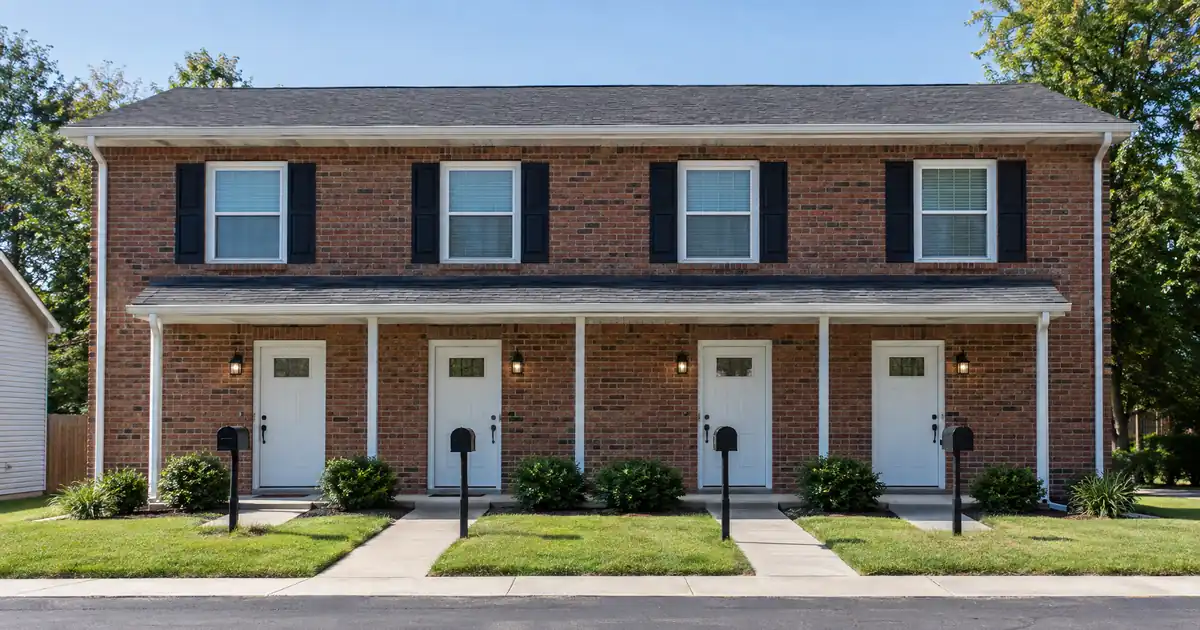
The Quick Read: It depends on which test binds first. Cash-out is capped by two separate tests: the loan-to-value ceiling and the rent-to-payment coverage ratio. Across most programs in Lendmire’s wholesale network, the cash-out ceiling is the same 75% LTV for both property types. A fourplex’s combined rents often give it more coverage cushion, while a house is more likely to hit the coverage wall first.
Here is the honest version. A fourplex does not automatically release more cash than a house. Cash released is the lower of what each test allows, less the payoff, closing costs, and any reserves. A house owner with deep equity but modest rent may find coverage limits the loan. A fourplex owner with strong rents but thin equity may find leverage limits it. Which property fits depends on whether your goal is to recycle equity, hold for income, or scale.
DSCR Cash-Out Calculator
Run the cash-out numbers in your market
Rate source: Freddie Mac 30-yr average via FRED® — Federal Reserve Bank of St. Louis · effective Oct 8, 2026
Prefilled with starting assumptions — enter your property’s value, balance, taxes, and insurance for a more accurate picture.
Program parameters update from Lendmire’s centralized guideline source. Taxes and insurance are editable estimates.
As of Oct 8, 2026 · General Freddie Mac market benchmark, not a Lendmire loan offer. Property value, balance, taxes, and insurance are editable estimates. Maximum loan-to-value varies by lender, program, property type, and seasoning. Not a Loan Estimate, approval, or commitment to lend. Program availability and eligibility are subject to lender guidelines, credit approval, property review, and underwriting.
This article covers one-to-four-unit residential collateral. It does not cover five-plus-unit lending, which usually moves into commercial channels.
Side-by-Side
| Factor | Single-Family House | Fourplex (4 units) |
|---|---|---|
| Review basis | Rent vs. PITIA | Combined rents vs. PITIA |
| Rent opinion form | Rent schedule (Form 1007) | Small income appraisal (Form 1025) |
| Documentation | One lease, appraisal | Up to four leases or rent roll |
| Cash-out LTV ceiling | 75% on most files | 75% on most files; some lenders trim it |
| Entity vesting | Individual or LLC | Individual or LLC |
| Reserves | Commonly about 6 months PITIA | Commonly about 6 months PITIA |
| Typical binding limit | Coverage ratio | Leverage (LTV) |
Program details are typical ranges from select lenders in the network and vary by borrower, property, and loan scenario. This is not a commitment to lend.
What Actually Sets the Cash-Out Amount
Two tests run side by side. Both must pass.
The LTV test. The new loan divided by the appraised value cannot exceed the ceiling. For standard rental cash-out in the network, that ceiling is 75%. Short-term-rental collateral sits lower, at 70%. Multiply value by the ceiling and you have the largest loan the equity allows.
The coverage test. Monthly gross rent divided by the full monthly obligation (principal, interest, taxes, insurance, and association dues, together called PITIA) gives the DSCR. A ratio of 1.00 means rent exactly covers the payment. Many select programs start at 1.00, and stronger ratios open better terms and leverage. A separate select-lender path goes below 1.00, with leverage and terms adjusted.
Releasable cash is the smaller of the two loan sizes, minus the existing payoff, closing costs, and any required reserves. Equity alone never sets the number. For the broader framework, see Lendmire’s complete DSCR loans guide.
Why the Gap Exists Between a Fourplex and a House
Four things move together when you compare the two, which is why “which releases more” has no fixed answer.
Price and rent scale together. A fourplex costs more and carries more rent. The ratio of rent to value, not the absolute rent, drives coverage. A fourplex in a modest-rent area can cover worse than a well-rented house.
Combined rents. On a fourplex, rents from all units are added and divided by the whole building’s payment. That is how practitioners run the method. Multiple tenants also soften the effect of a single vacancy on the underlying property, though the DSCR test itself does not model vacancy.
The appraisal. The appraisal produces both numbers that matter: the as-is value (the LTV denominator) and the market-rent opinion (the DSCR numerator). Two to four unit properties are typically appraised on Fannie Mae’s Form 1025, the small residential income report, while a house typically uses the Form 1007 rent schedule, both listed on the Fannie Mae forms index. DSCR loans are not agency products. The industry simply borrowed the forms.
Documentation load. A fourplex means more leases and more units to verify. A house means one.
Two Worked Patterns (Ratios, Not Dollars)
Think of two investors with identical equity percentages.
Pattern one: the house hits the coverage wall. Picture a single-family rental with deep equity but rent that sits only modestly above its payment at the current loan balance. The LTV test says a large cash-out is possible. The coverage test says a bigger loan pushes the ratio toward or below 1.00. Here coverage binds. The right cash-out is smaller than the equity suggests. Sub-1.00 structures are available through select lenders in the network, with leverage and terms adjusted, but the trade is less cash and less margin.
Pattern two: the fourplex hits the leverage wall. Now take a fourplex where combined rents clear well above 1.2x even at a high loan balance. Coverage is comfortable, but the 75% LTV ceiling stops the loan first. Here more rent does not buy more cash. Only more equity or a higher appraisal does. These specifics are subject to lender guidelines and a full review of property, leverage, and credit.
The reversal. A house in a high-rent, lower-price pocket can be leverage-bound, and a fourplex with soft rents in a high-price area can be coverage-bound. Property type predicts the binding test only loosely. Your actual rent-to-value ratio decides.
The Ratio Drift Trap
Pushing to maximum leverage can lower coverage. A file that covered well at purchase may look thinner at cash-out: taxes and insurance rise, and the larger loan carries a larger payment even if rents have grown. So the best cash-out amount is sometimes below the ceiling.
A practitioner observation from brokering these files: the strongest cash-out requests are sized backward from coverage, not forward from equity. Investors who start by asking “how much can I pull?” often find the answer is “less than you hoped.” Investors who start by asking “what ratio do I want to hold after the pull?” tend to land on a number a lender will actually approve.
Remember also that clearing 1.00 is not positive cash flow. DSCR compares rent to PITIA only. Repairs, vacancy, management, utilities, and capital expenses all sit outside the calculation. A fourplex that passes the test can still demand more of your time and money than a house.
What Reduces Your Net Proceeds
Gross loan size is not what lands in your account. Subtract:
- The payoff of the existing loan. A larger payoff shrinks proceeds, and it matters more when equity is thin.
- Closing costs and lender and broker fees, which take a percentage out of the cash you receive.
- Reserves. Commonly about 6 months of PITIA, stepping up to about 9 months above $1,500,000. Reserves vary by lender, leverage, loan size, and transaction type. On a fourplex, the larger payment means a larger reserve target in dollars. Some lenders allow cash-out proceeds to count toward reserves, but that varies.
- Prepayment terms. Many investor loans carry a prepayment structure in the early years, which matters if you plan to refinance again.
Seasoning also applies. Across most of the network, expect about 6 months of ownership, measured from title recording, before cash-out is available.
When a House Is the Better Fit
A house is the stronger choice in these situations:
- You want simplicity. One lease, one appraisal rent opinion, one tenant to manage. The file is lighter.
- You are cash-out sizing from a modest loan balance. When the existing payoff is small relative to value, a house can release a meaningful amount without stressing coverage.
- You may want financing flexibility later. Houses broaden your exit pool, with more buyers and more lenders comfortable with the collateral.
- You are a first-time investor. Lender policy varies, and some trim leverage on a first-time investor’s multi-unit file. A single-family property is often the gentler starting point.
- The rent-to-value ratio is strong. In markets where single-family rents are high against prices, coverage is not the constraint and the house can match a fourplex on proceeds.
The flip: if your house rents thin against its payment, a big cash-out is the wrong ask. Fix coverage first or accept a smaller pull.
When a Fourplex Is the Better Fit
A fourplex tends to win in these cases:
- You want more rent behind the loan. Combined rents often give a bigger cushion against the building’s payment, which keeps coverage healthy at higher leverage.
- You are recycling equity to scale. One fourplex cash-out can fund the next down payment, and four units in one building spread a single vacancy across more doors.
- Your equity is deep. If the 75% ceiling is the real limit, a fourplex’s larger appraised value produces a larger dollar release than a typical house, simply because there is more value to borrow against.
- You hold in an LLC. Subject to lender program eligibility, a DSCR cash-out generally lets you keep title in the entity rather than re-titling, which is not true of every product.
The flip: more units means more leases, more turnover, and more management. If your time is the scarce resource, the house can deliver better net return per hour even if the fourplex releases more cash.
Edge Cases Worth Knowing
Below-market units. The appraiser’s rent opinion and your actual leases can differ. The lender’s guidelines decide which figure counts, and a unit leased well below market can pull the number down.
Vacant or partly vacant buildings. Treatment is a lender-guideline question, not a fixed rule. Expect questions.
Mixed-use or owner-occupied units. These change the program and the leverage. They fall outside a standard investor-occupancy cash-out.
Short-term rentals. STR collateral uses its own income method and a lower cash-out cap (70% in the network), so a furnished fourplex and a long-term fourplex can release different amounts. Short-term rental rules can vary by city, county, HOA, and property type, so investors should confirm local rules before relying on projected rental income.
Ineligible structures. Manufactured homes (single- and double-wide), log homes, and barndominiums are not offered in the network’s DSCR programs.
Five or more units. Those properties usually move to commercial, agency, or bank-portfolio channels and are outside this comparison.
DSCR vs. conventional financing
There are two common ways to finance an investment property, and they qualify you differently — here’s how investors weigh them.
Why investors choose it
- Qualifies on the property’s rental income — no personal tax returns, W-2s, or pay stubs needed to document income.
- No personal debt-to-income ceiling to clear, so existing mortgages and obligations don’t cap your borrowing the same way.
- Can be closed in an LLC, keeping the property inside a business entity.
- Built for scaling — not held to the limit on number of financed properties that conventional financing applies.
- Underwriting centers on the deal: generally qualifies when the rent covers the payment, a 1.00x coverage ratio being a common baseline (confirmed in underwriting).
- Designed specifically for investment property, including long-term and, where the program allows, short-term rentals.
Where it’s strong
- Often the lowest ongoing financing cost for a buyer who fully qualifies on personal income — a fit for a first property or a cost-first purchase.
Trade-offs for investors
- Requires full personal income documentation and must fit within a debt-to-income limit — salary, existing debts, and other mortgages all count.
- Typically held in your personal name rather than a business entity.
- Caps how many financed properties you can carry, which can become a ceiling as a portfolio grows.
- Evaluates you as a borrower as much as the property, which usually means more paperwork.
How investors usually choose: a first or single property often optimizes for the lowest financing cost; portfolio builders often optimize for leverage, vesting in an LLC, and scaling past conventional caps. The right answer depends on your goals, the property, and current guidelines — both paths run through select lenders in Lendmire’s wholesale network, with eligibility and terms confirmed in underwriting.
Which Property Fits Which Goal?
| Your goal | Often the better fit |
|---|---|
| Recycle equity into the next deal | Fourplex, if equity is deep |
| Keep the file simple | House |
| Maximize coverage cushion | Fourplex (rent-to-value dependent) |
| First rental refinance | House |
| Hold long term with less management | House |
| Scale with fewer closings | Fourplex |
Treat this as a starting heuristic, not a rule. Your rent-to-value ratio overrides it.
Two related Lendmire pieces cover adjacent decisions: how much cash an investor cash-out refinance releases after costs and how much equity a cash-out refinance releases toward the next rental.
Key Terms Defined
Cash-out refinance: a new loan that pays off the existing one and returns the difference as cash.
LTV (loan-to-value): the new loan divided by the appraised value, which caps loan size.
DSCR: monthly gross rent divided by the full monthly payment (PITIA), which tests whether rent supports the loan.
PITIA: principal, interest, taxes, insurance, and association dues.
Seasoning: the ownership period required before cash-out, about 6 months in most of the network.
Verdict
Neither property type wins on principle. A house is the cleaner, lighter file and often the better first cash-out. A fourplex can release more dollars when equity is deep and rents are strong, but it asks more of you in documentation and management. Size the loan from the coverage ratio you want to keep, then check it against the 75% ceiling. Tax treatment can depend on how the funds are used and how the property is held; investors should keep clear records and speak with a qualified tax professional before relying on any deduction.
If you are buying or refinancing a rental property and want to see how the numbers work, Lendmire can help you compare DSCR loan options based on the property income, credit profile, leverage, and investor goals.
Frequently Asked Questions
Can I cash out a fourplex the same way as a house?
Largely yes. Both are one-to-four-unit residential collateral, and both run on rent, appraisal, credit, and reserves rather than personal income documents. The differences are the rent schedule form, the number of leases to document, and sometimes a lender trimming leverage on multi-unit files.
Which releases more cash, a fourplex or a house?
Usually the fourplex in dollars, because it carries more value to borrow against. Percentage-wise the ceiling is typically the same 75%. If coverage binds first, the share each property releases depends on its own rent-to-value ratio, not its property type.
How long must I own the property before cashing out?
About 6 months from title recording is the common expectation across most of the network. Exact seasoning varies by lender and file.
Does a vacant unit hurt a fourplex cash-out?
A vacant unit can affect the outcome. Lenders differ on how they treat vacant or partly vacant buildings, and the appraiser’s market-rent opinion may or may not stand in for missing leases. Confirm the guideline before assuming.
Can I keep the property in my LLC?
Often, subject to lender program eligibility. A DSCR cash-out generally allows entity vesting without re-titling, though specific programs differ.
About Lendmire
Lendmire (NMLS# 2371349) is a mortgage brokerage built around DSCR investor lending, with programs available in 41 markets, including Washington, D.C. DSCR lenders commonly evaluate rental-income coverage instead of personal income paperwork — a practical fit for LLC-owned and multi-property investors. Terms vary by lender, property, leverage, and program. Scotsman Guide named Lendmire a Top Mortgage Workplace in both 2025 and 2026.
Get Started
Ready to find the right loan for you?
In about 30 seconds you can review financing options available for your investment property. No commitment required.
Informational only. Not a Loan Estimate, approval, or commitment to lend. Program availability and eligibility are subject to lender guidelines, credit approval, property review, and underwriting.
References
1. Fannie Mae Selling Guide B4-1.2-01
2. Fannie Mae Guide Forms index
This article is part of Lendmire’s investment property cash-out refinance program — full qualification details, guidelines, and scenarios live on the program page.
Related reading: DSCR Second Lien Qualification Gates Every Rental Investor Should Know · Is a Rental Cash-Out Refinance Harder Than Refinancing a Home? · Hard Money Bridge vs Cash-Out Refinance for a Landlord Short on Time
Brandon Miller
Founder & CEO, Mortgage Loan Originator, Lendmire LLC
- Mortgage Loan Originator · NMLS# 1129696 · Verify on NMLS Consumer Access
- North Carolina Real Estate Broker · License# 343312 · Verify on NCREC
- North Carolina Insurance Producer · License# 19053198 · Property, Casualty, Life, Health · Verify on NAIC SBS
- Lendmire LLC · Firm NMLS# 2371349 · Verify firm licensure
Disclosure information. Lendmire is a state-licensed mortgage brokerage under NMLS# 2371349. Lendmire is not a depository institution, direct lender, or financial advisor — all loans referenced are placed through wholesale lender partners and are subject to each lender's underwriting standards. This article is provided for general informational purposes and is not a commitment to lend, nor does it constitute financial, legal, or tax advice. Loan programs, terms, rates, and qualification standards change without notice and depend on borrower profile, property type, and the state in which the subject property is located. Equal Housing Opportunity provider. NMLS Consumer Access: nmlsconsumeraccess.org.