
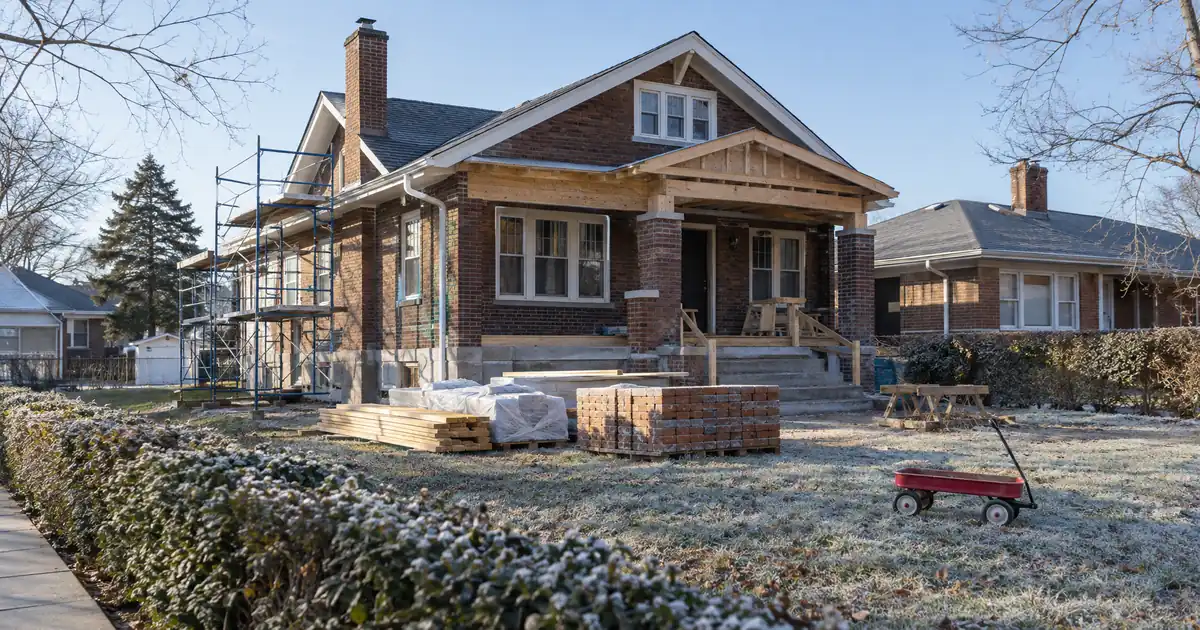
The Quick Read: An owner under six months usually faces a timing problem first and a product problem second, because most DSCR cash-out programs expect roughly six months of ownership while a hard money bridge is sized on the property’s value and the exit plan, not on how long the owner has held it.
- DSCR cash-out tops out around 75% LTV on a standard rental refinance, and about 6 months of seasoning is the common expectation across the wholesale network.
- A hard money cash-out or payoff-only refinance generally runs up to 65% of value, so the bridge returns less cash for the same property.
- Hard money terms run about 6 to 18 months, interest-only, with no prepayment penalty, and the loan only works with a credible exit.
- The usual path is a bridge now and a DSCR refinance once seasoning and rent coverage are in place, but a second set of closing costs is the price of that path.
- Every figure here varies by lender, property, and borrower experience, and nothing is a commitment to lend.
The Honest Answer
Each product fits a different owner. DSCR cash-out is for the investor whose property is finished, rented, and past the lender’s ownership clock, and who wants long-term money. A hard money bridge is for the investor who needs capital or a payoff while the clock is still running, or while the property is not yet rentable.
Under six months, the DSCR route is often closed off by seasoning alone. Rent coverage can be excellent and the file still gets kicked back. The bridge has no such clock. What it has instead is a short maturity, and that maturity has to land after the seasoning period ends, not before it.
Lendmire arranges both through its wholesale network, so this comparison is not a sales pitch for one side. Pick the product that matches the property’s condition, the date on the deed, and what the cash is for. The complete DSCR loans guide covers the long-term side in more depth.
Side-by-Side
| Factor | DSCR Cash-Out | Hard Money Bridge |
|---|---|---|
| Review basis | Rent vs. PITIA, plus appraised value | Property value, plan, and exit |
| Documentation | Lease or rent schedule, appraisal, entity papers | Deed or contract, budget if any, entity papers, exit plan |
| Property types | Finished, rentable 1-4 unit rentals | Non-owner-occupied 1-4 units |
| Entity vesting | Individual or entity; names must match | Individual or entity; names must match |
| Ownership clock | About 6 months is common | Set by the lender; collateral-first |
| Leverage on a refinance | Up to 75% LTV on standard rentals | Up to 65% of value |
| Time horizon | Long hold; 30-year fixed is the spine | Short by design; 6-18 months, interest-only |
| Reserves | Often around 6 months of PITIA; varies | Liquidity proof; varies by lender |
| Main risk | Seasoning or coverage falls short | Maturity arrives before the exit is ready |
The hard money column reflects typical program norms, and both columns vary by lender, property, and experience. LLC vesting is available on both sides, subject to lender program eligibility. If an entity holds title, the name on the contract, the title commitment, and the application must match exactly.
Key Terms Defined
Seasoning: The minimum time a borrower must have owned a property before a lender will do a cash-out refinance on it.
PITIA: The monthly principal, interest, taxes, insurance, and any association dues on the property.
DSCR: The property’s monthly rent divided by its PITIA, which shows whether rent covers the payment.
Payoff-only refinance: A refinance that retires the existing loan and returns no meaningful cash to the borrower.
Bridge: A short-term loan that covers a gap between a purchase or need for capital and a longer-term exit.
Exit: The way a short-term loan gets repaid, whether by sale, refinance, or cash.
When DSCR Cash-Out Is the Better Fit
DSCR cash-out is the better fit when the property is finished and rented, the ownership clock is satisfied, and the investor wants to keep the asset for years. The loan is reviewed primarily on property-level rental income covering the payment, subject to lender guidelines. There is no business plan to defend and no maturity date to manage.
Here is what the file needs on the leverage side. On a standard rental cash-out, most programs in the network cap at around 75% LTV. Short-term rental collateral is lower, around 70% on a cash-out. Credit floors vary, with 620 available in parts of the network and about 660 on most programs. A score of 700 or more opens the strongest leverage tiers. Standard loan sizes reach up to $3,000,000 on standard programs, with smaller balances available through select lenders.
Coverage is the second gate. Many select programs start at 1.00, and stronger ratios open better terms and leverage. A separate path through select lenders in the network accepts coverage below 1.00, with leverage and terms adjusted. Clearing 1.00 does not mean the property cash flows, though. Repairs, vacancy, management, utilities, and capex all sit outside the calculation.
The third gate is reserves. They vary by lender, leverage, loan size, and transaction type, and around 6 months of PITIA is common. Larger balances typically step up.
Picture an owner who bought a rent-ready fourplex with cash and has held it for a little over six months. Rent clears roughly 1.2x against the new payment, the lease is signed, and the entity papers match. This owner is the DSCR cash-out borrower. A bridge would only add a short maturity and a second closing.
Property type matters too. DSCR financing is not offered on manufactured homes, log homes, or barndominiums. If the collateral is one of those, neither this product nor a standard rental refinance fits.
The Seasoning Question for a Recent Owner
Seasoning is lender policy, not a statute. For contrast, the current Fannie Mae Selling Guide treats delayed financing as an exception inside its cash-out rules, and an archived version of the same section shows the six-month title expectation and the exception for purchases with no mortgage financing. Those are agency rules and they do not govern DSCR loans.
They do show the logic lenders borrow. A cash purchase with a clean settlement statement is treated differently from a financed one. A few non-agency programs write their own version of that exception. A purchase funded with a hard money loan generally does not fit it. Availability varies by program, so get the lender’s seasoning policy in writing before a bridge closes.
When a Hard Money Bridge Is the Better Fit
A hard money bridge is the better fit when the owner is inside the seasoning window and needs the capital or the payoff now. It is also the better fit when the property is not yet rentable. A DSCR loan needs a finished, leasable asset. A vacant shell with a half-done rehab is a bridge candidate, not a DSCR candidate.
The bridge is underwritten collateral-first, meaning property, plan, and exit. Across the network, a bridge purchase without rehab goes up to 80% of purchase price, and a cash-out or payoff-only refinance goes up to 65% of value. Fix-and-flip leverage is stated as a share of project cost and is capped at 75% of after-repair value, with the top cost tier reserved for experienced investors. Loan amounts run up to $5,000,000, larger by exception. Terms are 6 to 18 months, interest-only, with no prepayment penalty, and a 620 score is the minimum, with added conditions below 660. All of it varies by lender, property, and experience.
Consider an investor holding a property for four months who has a contract on a second deal that needs cash. The first property is finished but the ownership clock is short. A bridge against it can fund the second deal while the clock runs. The catch is the 65% ceiling. It returns less than the 75% a seasoned DSCR cash-out could, so the investor is paying for time, not for proceeds.
Planning the Exit Backward
The exit is what separates a useful bridge from a trap. Thinking “I’ll refinance into DSCR later” is not by itself an exit plan. The lender wants to see that the property will be rentable, that rent will cover the payment at the new loan size, and that the appraisal can support the payoff plus costs. Many investors refinance out of hard money into long-term DSCR financing once the property is stabilized, and Lendmire brokers that path.
Count backward from maturity. Confirm the date the seasoning clock ends, then make sure the bridge matures well after it. A bridge that matures before the clock runs out forces an extension, a replacement bridge, or cash to close. Each adds cost and carry.
Three Gates to Test Your File
Run the file through three gates before choosing a side.
1. Time. Count from the recording date on the deed. If the date is inside the lender’s seasoning window, a standard DSCR cash-out is unlikely, and the question becomes bridge, payoff-only, or wait.
2. Value. Find out how the property was acquired. A cash purchase with a settlement statement may open a cost-based exception at some lenders. A financed purchase generally does not. Before the seasoning window ends, proceeds tend to be sized near documented cost, not new appraised value.
3. Rent coverage. Test rent against the full monthly obligation at the new loan size. The lower of the lease rent and the appraiser’s market rent often controls, and short-term rentals rely on booking history rather than the standard rent schedule. A larger cash-out lowers coverage, so more cash taken means a thinner ratio.
If all three pass, DSCR cash-out is usually the cleaner answer. If time fails and the cash is needed, the bridge becomes the realistic choice. If rent coverage fails, neither product fixes it, and leverage may have to come down.
Four Paths When You Are Under the Clock
Owners inside the window have more than two options. The first is to wait, which costs nothing in fees but keeps the capital tied up. The second is a payoff-only DSCR refinance now, which clears an existing lien at long-term terms and leaves the cash-out for later. The third is a bridge, which frees capital at a lower leverage ceiling and adds a maturity to manage. The fourth is a bridge followed by a DSCR cash-out once seasoning clears, which gets the largest eventual proceeds but pays closing costs twice.
For a condo-heavy file, warrantability and association questions add a layer. Lendmire’s comparison for hard money bridge loan vs cash-out refinance for a condo investor covers that variation.
Compare the cost of waiting against the cost of switching. On one side sit the extension fees and carry on a bridge that matures early. On the other side sits a second set of closing costs for the refinance. Put the actual quotes next to each other. The cheaper path depends on how many months remain on the clock.
Documentation That Prevents Late Conditions
Most late-stage conditions on both products are preventable. For the bridge, have the deed or contract, entity papers, a scope and budget when a rehab is involved, and proof of liquidity and experience. For the DSCR loan, have the signed lease, the deposit evidence, formation papers, the operating agreement, the EIN letter, and a certificate of good standing for any entity.
The payoff statement from the bridge lender is a document investors forget. Order it early. Mismatched entity names between the bridge, the title commitment, and the new application are the other common snag.
DSCR loans are designed for non-owner-occupied investment properties. Because they are business-purpose investor loans, they are reviewed differently from a standard owner-occupied mortgage. Business-purpose status does not mean no rules apply, though. Lexology’s analysis of business-purpose lending notes that some requirements, such as HMDA reporting, can still apply.
The Balanced Verdict
If the property is finished, rented, and past the clock, take the DSCR cash-out. It is longer-term, carries higher leverage, and avoids a maturity date. If the property is early in ownership, needs work, or the cash is needed before seasoning clears, a hard money bridge is the tool built for that gap, as long as the exit is real and the maturity falls after the clock ends.
A bridge is not a shortcut around seasoning. It is a way to carry the asset until the long-term loan is available, and it only works when the numbers are checked backward from the exit. Either way, the leverage, reserves, and coverage figures vary by lender and by file.
Frequently Asked Questions
Can I do a DSCR cash-out if I have owned the property under six months?
Usually not on a standard program, because about 6 months of seasoning is the common expectation across the network. Some programs treat a documented cash purchase differently, and availability varies by lender. Ask for the seasoning policy in writing before committing to a path.
Is a bridge payoff automatically a cash-out refinance?
Not necessarily. A refinance that only retires the bridge and returns little or no cash is generally labeled payoff-only, and the seasoning treatment can differ from a cash-out. How a lender classifies it depends on the program and the file.
What happens if my bridge matures before I can refinance into DSCR?
You generally have a few options, including an extension, a replacement bridge, a payoff-only refinance, or bringing cash to close. Each adds cost or carry. Plan the maturity date past the seasoning date from the start.
Does a hard money loan return as much cash as a DSCR cash-out?
Typically no. A hard money cash-out or payoff-only refinance generally runs up to 65% of value, while a standard rental DSCR cash-out generally allows higher leverage against value. Both vary by lender, property, and experience.
Do the bridge lender and the DSCR lender have to be the same firm?
No. They are separate loans with separate guidelines. What matters is that the bridge payoff, plus costs, fits under the future DSCR leverage cap, and that the property is rentable when the refinance is ready.
Next Step
If you are buying, rehabbing or refinancing an investment property on a short timeline and want to see how the numbers work, Lendmire can help you compare hard money options based on the project, the exit plan, leverage, and your goals. Reach the team at 828-256-2183 or request a quote through the Lendmire quote page.
About Lendmire
Lendmire is a non-QM mortgage brokerage (NMLS# 2371349) arranging DSCR investor loans in 41 markets, including Washington, D.C., through wholesale and investor-lending channels. DSCR loans are evaluated by the lender on rental income rather than personal income, subject to lender guidelines — a fit for LLC-owned portfolios, self-employed investors, and operators scaling beyond conventional loan caps. Recognized as a Scotsman Guide Top Mortgage Workplace in 2025 and 2026.
Get Started
Ready to find the right loan for you?
See your offer in seconds. No credit pull, no obligation.
Informational only. Not a Loan Estimate, approval, or commitment to lend. Program availability and eligibility are subject to lender guidelines, credit approval, property review, and underwriting.
References
1. Fannie Mae Selling Guide, B2-1.3-03 Cash-Out Refinance Transactions (current)
2. Lexology, Beware of Business Purpose
This article is part of Lendmire’s hard money loan program — full qualification details, guidelines, and scenarios live on the program page.
Related reading: DSCR Loan vs Hard Money on a Condo With a Pending Special Assessment · Should You Take Cash Out on a DSCR Refinance or Skip It? · Should You Close a DSCR Cash-Out in an LLC or Personal Name?
Brandon Miller
Founder & CEO, Mortgage Loan Originator, Lendmire LLC
- Mortgage Loan Originator · NMLS# 1129696 · Verify on NMLS Consumer Access
- North Carolina Real Estate Broker · License# 343312 · Verify on NCREC
- North Carolina Insurance Producer · License# 19053198 · Property, Casualty, Life, Health · Verify on NAIC SBS
- Lendmire LLC · Firm NMLS# 2371349 · Verify firm licensure
Compliance and disclosures. Lendmire (NMLS# 2371349) is a licensed mortgage broker and is not a direct lender, depository institution, financial advisor, or tax professional. Content in this article is general market analysis and educational information — not financial, legal, or tax advice for any specific situation. Lendmire does not guarantee loan approval; every transaction is subject to underwriting by the funding lender. Mortgage pricing and loan program guidelines are subject to change at any time without notice and vary by borrower characteristics, property type, and state regulations. Lendmire complies with Equal Housing Opportunity. Licensure verification: NMLS Consumer Access.