
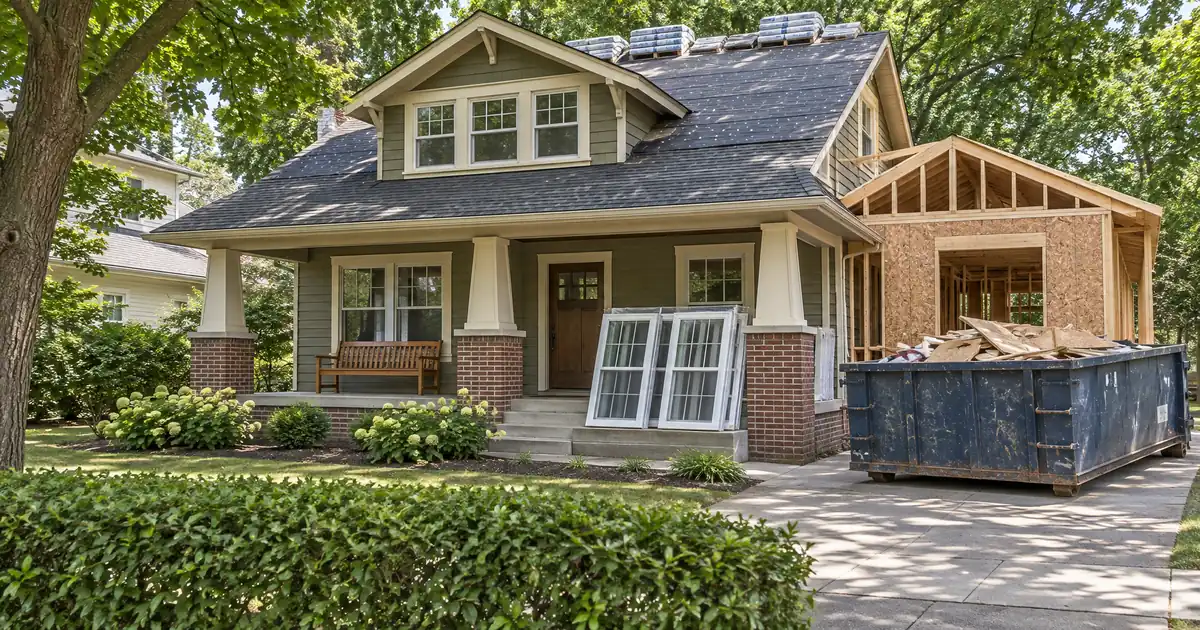
The Quick Read: A DSCR HELOC is built for a rental that is leased and stable, so a unit that is empty or gutted mid-rehab generally does not qualify. The line qualifies primarily on property-level rental income covering a stress payment on the whole credit limit, subject to lender guidelines. A lease must be in place. The practical path for a true mid-rehab property is usually to finish the work first, lease the unit, then apply.
- A lease in place is required, and a two-to-four-unit property may have at most 1 vacant unit.
- The rent test runs on the entire credit limit at a minimum 1.10x, not just on what you draw.
- A rental bought or refinanced in the last 6 months is not eligible.
- Light cosmetic work on a leased unit can fit. A gut job that empties the unit usually does not.
- The usual fallback: bridge or hard-money loan to finish the work, lease it up, then refinance into a long-term DSCR loan.
A DSCR HELOC is a home equity line on a non-owner-occupied rental, qualified on the property’s rent instead of your personal income. DSCR means debt service coverage ratio: monthly rent divided by the monthly payment the lender tests. If you hold a rental that is partway through a rehab, the question is not whether the product exists. It is whether the property looks like a rental to an underwriter today.
For the full picture of how these loans work, see the complete DSCR loans guide.
What Is a DSCR HELOC, Exactly?
It is a revolving line of credit secured by a rental you keep. It is written as a standalone second lien behind your existing first mortgage, or as a standalone first lien on a rental with no mortgage. It is never a third lien, never closed together with a purchase, and never a line on your own home.
The rent qualifies the line. There is no traditional personal-income documentation: no W-2s, pay stubs or debt-to-income calculation, subject to lender guidelines. The owner’s income is never calculated. Vesting in your LLC is allowed on investment property, subject to program terms, with the members signing as guarantors.
Programs like this are offered in 15 of Lendmire’s 16 licensed states, every licensed state except Tennessee, through select lenders in its wholesale network. Lendmire is the broker. The lender reviews and approves each file.
Why Does Mid-Rehab Change the Answer?
Because the product tests rent, and a rental under construction may not have any. The lender needs a lease in place and a rent figure it can trust. A unit stripped to the studs has neither.
Across a wholesale network, the pattern in program rules is consistent: these lines are meant for rentals that can be rented as they sit. A still-open construction loan makes a property ineligible. The line is also not draw-based construction money, so it does not pay contractors as milestones are hit.
How Underwriting Treats the File, Step by Step
Step 1: Lien position. The lender decides whether this is a second lien or a first lien. Position follows recording order. A borrower who keeps a first mortgage takes a second lien. A first lien exists only on a rental with no mortgage.
Step 2: The rent test. Minimum coverage is 1.10x. The payment tested is principal and interest on the entire credit limit, fully amortizing, at a stress rate above the start rate. Taxes and insurance are not part of that qualifying payment. Confirm on the file how the lender treats the first-mortgage payment on a second lien, because the lender’s own coverage calculation governs.
Because the test runs on the full limit, a bigger line lowers your coverage. A staged rehab does not help here. Oversizing the line to cover a worst-case budget can push a leased rental under the minimum.
Step 3: Rent evidence. Rent is the lesser of the appraisal’s market rent and the lease, unless three months of receipts support a lease above market. A lease must be in place. For a vacant unit, an appraiser’s market rent is the number that matters, and rent expected after a renovation that has not happened is not counted on an as-is file.
Step 4: Value. Lines to $400,000 use an automated valuation with a property inspection report, or a full interior appraisal. Lines above $400,000 use a full interior appraisal. Appraisal waivers are not accepted. The appraiser reports an as-is value and a market-rent opinion. For a single unit, the rent opinion typically comes from the Fannie Mae Form 1007, borrowed for format only. DSCR loans are not agency products.
An automated estimate may miss half-finished work. If a rehab has changed the property, a full appraisal gives the lender a truer picture.
Step 5: Leverage. On a second lien, combined loan-to-value (the first mortgage plus the new line, divided by value) goes up to 70% CLTV at a 720 credit score or better, on lines from $50,000 to $500,000. On a first lien, leverage goes up to 75% LTV at 740 or better and 70% LTV from 700 to 739, on lines to $500,000. Lines above $500,000, up to $1,000,000, carry a 65% LTV ceiling at 720 or better. All of this is subject to underwriting. A declining-market flag can lower the ceiling. Leverage, reserves, and pricing vary by lender and program; the final terms follow the full file review.
Step 6: Draws. At least 80% of the line is drawn at closing, and later draws are at least $5,000 each. You carry interest-only payments on the drawn balance for a 5-year draw period, then a 25-year repayment period, on a 30-year maturity. The rate is variable.
That draw structure matters for a rehab. This is not a pay-as-you-go budget. You draw most of the line up front, so you carry cost on money you may not have spent.
Where the Rule Bends: Rehab Stage by Rehab Stage
| Rehab stage | Likely fit | Next move |
|---|---|---|
| Leased, light cosmetic work | Often fits | Apply with lease in hand |
| 2-4 units, one vacant | May fit (1 vacancy max) | Lease the other units; confirm the rent test |
| Two or more vacant units | Does not fit | Finish and lease first |
| Fully vacant, gutted | Generally declined | Bridge or hard money, then refinance |
| Finished and leased | Fits if seasoned | Check the 6-month clocks |
| Open construction loan | Ineligible | Close out the construction loan first |
Light turn versus gut. Paint, flooring and fixtures are often treated as rent-ready. A unit stripped of kitchens or systems is not.
Tenant leaves mid-work. The stress test assumed rent keeps arriving. If the tenant leaves and the lease lapses, the file loses its basis. A lender wants a lease in place at the time of review.
Seasoning. A rental bought or refinanced inside the last 6 months is not eligible (that clock runs from the last note date to the new note date), and the owner must have held title for 6 months (settlement date to note date). A rehab does not shorten the wait. It may support a higher appraised value later, depending on comps and underwriter review.
Listed for sale. A property listed in the prior 2 months is excluded.
LLC title. Vesting in your LLC is allowed, subject to program terms. A rental already deeded to an LLC should be checked for how title is held before you apply.
Short-term rental. Fannie Mae states that the 1007 was not designed for short-term rentals and cannot estimate a nightly fee. McKissock notes that the lender decides what income counts. HousingWire reports that the UAD 3.6 appraisal standard will retire legacy forms including the 1007. Short-term rental rules can vary by city, county, HOA, and property type, so investors should confirm local rules before relying on projected rental income.
Key Terms Defined
DSCR HELOC: A revolving line on a rental, qualified on the rent rather than your personal income.
DSCR: Monthly rent divided by the monthly payment the lender tests.
CLTV: Combined loan-to-value, meaning the first mortgage balance plus the new line, divided by the property’s value.
Seasoning: The waiting period a lender wants after a purchase or refinance before the next loan.
Rent-ready: A property that can be leased as it sits, with working major systems and no open construction.
Stress payment: The payment the lender tests, based on the full limit at a higher-than-start rate.
Money Mistakes That Sink Mid-Rehab Files
Programs vary by lender, but several mistakes show up in how these rules read.
- Counting after-repair rent. On an as-is file, rent from work that has not happened is not counted.
- Thinking you only pay on what you draw. The rent test runs on the whole limit, and most of it is drawn at closing.
- Confusing a bank investment HELOC with this line. A bank product is typically underwritten on your personal income and debts. This line qualifies primarily on property-level rental income, subject to lender guidelines.
- Assuming a higher score raises the ceiling. The tiers are fixed, and each lien position has its own credit floor.
- Treating the 1007 as proof of short-term-rental income. It is not.
Not every investor opinion lines up. Some say light-rehab vacant properties can close on a DSCR loan using market-rent comps with no lease. That is a different product from a DSCR HELOC, which requires a lease in place.
What Should You Do If the Rental Is Genuinely Mid-Rehab?
The honest sequence is two steps. Fund the work with a bridge or hard-money loan, or cash. Lease the unit. Then refinance into a long-term DSCR loan, or apply for the line once the property is rent-ready and seasoned.
If the rehab is heavy, that is usually cleaner than forcing a line onto an unfinished property. Lendmire’s piece Can You Get Approved for a DSCR Cash-Out Refinance Midway Through a Rental Rehab? covers that route.
Here is a way to run it. Say you own a leased duplex and plan cosmetic updates on one unit while the other stays occupied. A lease is in place, one unit vacant is within the limit, and the question becomes whether rent covers the stress payment on the full line at 1.10x or better. Size the line to the real budget. A line sized larger than the project lowers coverage for no benefit.
Now say the same duplex loses both tenants for a gut renovation. Now there is no lease and both units are empty. That sits outside the program until work is finished and the units are leased.
Also consider the personal route. A line on your own home skips rental documentation. It is owner-occupied, personal-income financing, and it is not this product.
Carrying Costs and Exit Risk
A rehab that runs long hurts a line in two ways. Interest runs on a mostly drawn balance. And rent that the stress test assumed may pause while the unit sits empty.
Before you rely on any line, confirm the exit. If your plan is to refinance later, the file has to qualify then, with seasoning cleared, a lease on hand and a valuation that reflects finished work. Itemized scope of work, contractor bids and permits help the lender see what the money is for.
Document Checklist
- Current lease and rent receipts
- A scope of work or contractor bids
- Entity documents if the rental is in an LLC
- First mortgage statement, for a second lien
- Proof of title and settlement date, for seasoning
Frequently Asked Questions
Can I get a DSCR HELOC on a rental that is vacant during a rehab?
Generally no. The program requires a lease in place, and a two-to-four-unit property may have at most 1 vacant unit. A vacant or gutted unit usually has to be finished and leased first. Qualification is subject to lender guidelines.
Does the rent test cover only what I draw?
No. The 1.10x minimum is tested against a payment on the entire credit limit. At least 80% of the line is drawn at closing in any case, so the carry is real from day one.
How does seasoning work if I just bought the rental to rehab it?
A rental bought or refinanced in the last 6 months is not eligible, and title must have been held for 6 months. The clocks run from the last note date and from the settlement date. A rehab does not shorten either one.
Can the line fund the rehab in stages as I pay contractors?
Not in the way a construction loan does. Most of the line is drawn at closing, and later draws must be at least $5,000. It is a revolving home equity line, not draw-based construction money.
Does the rehab get counted in the valuation?
Lines to $400,000 may use an automated valuation with an inspection report, which can miss unfinished work. A full interior appraisal is the route for larger lines, and an improvement may support a higher appraised value, depending on comps and underwriter review.
If you are considering a home equity line on a rental property and want to see how the numbers work, Lendmire can help you compare DSCR HELOC options based on the property, the rent, the equity available, credit profile, combined leverage, and your goals. Reach the team at 828-256-2183 or request a quote.
Whether the work is a cosmetic refresh or a gut, the unit that is leased and finished is the one a rent-qualified line will actually see.
About Lendmire
Lendmire — NMLS# 2371349 — is a mortgage broker that arranges DSCR home equity lines of credit on rental property in 15 of its 16 licensed states (every licensed state except Tennessee) through wholesale lenders. The line is qualified on the rental’s rent rather than the owner’s personal income, and every line is subject to the lender’s guidelines and full underwriting. Scotsman Guide named Lendmire a Top Mortgage Workplace in both 2025 and 2026.
Get Started
Ready to find the right loan for you?
See your offer in seconds. No credit pull, no obligation.
Informational only. Not a Loan Estimate, approval, or commitment to lend. Program availability and eligibility are subject to lender guidelines, credit approval, property review, and underwriting.
References
1. Fannie Mae Appraiser Update, June 2024
2. McKissock
3. HousingWire: Short-term rentals and the appraisal playbook
This article is part of Lendmire’s DSCR HELOC program — full qualification details, guidelines, and scenarios live on the program page.
Related reading: How Much Can You Borrow on a DSCR HELOC for a Short-Term Rental Borrowing Power? · How Much Can You Borrow on a DSCR HELOC for a Rental Property Renovation? · How Much Can You Borrow on a DSCR HELOC for an LLC-Titled Rental Portfolio?
Brandon Miller
Founder & CEO, Mortgage Loan Originator, Lendmire LLC
- Mortgage Loan Originator · NMLS# 1129696 · Verify on NMLS Consumer Access
- North Carolina Real Estate Broker · License# 343312 · Verify on NCREC
- North Carolina Insurance Producer · License# 19053198 · Property, Casualty, Life, Health · Verify on NAIC SBS
- Lendmire LLC · Firm NMLS# 2371349 · Verify firm licensure
Compliance and disclosures. Lendmire (NMLS# 2371349) is a licensed mortgage broker and is not a direct lender, depository institution, financial advisor, or tax professional. Content in this article is general market analysis and educational information — not financial, legal, or tax advice for any specific situation. Lendmire does not guarantee loan approval; every transaction is subject to underwriting by the funding lender. Mortgage pricing and loan program guidelines are subject to change at any time without notice and vary by borrower characteristics, property type, and state regulations. Lendmire complies with Equal Housing Opportunity. Licensure verification: NMLS Consumer Access.