
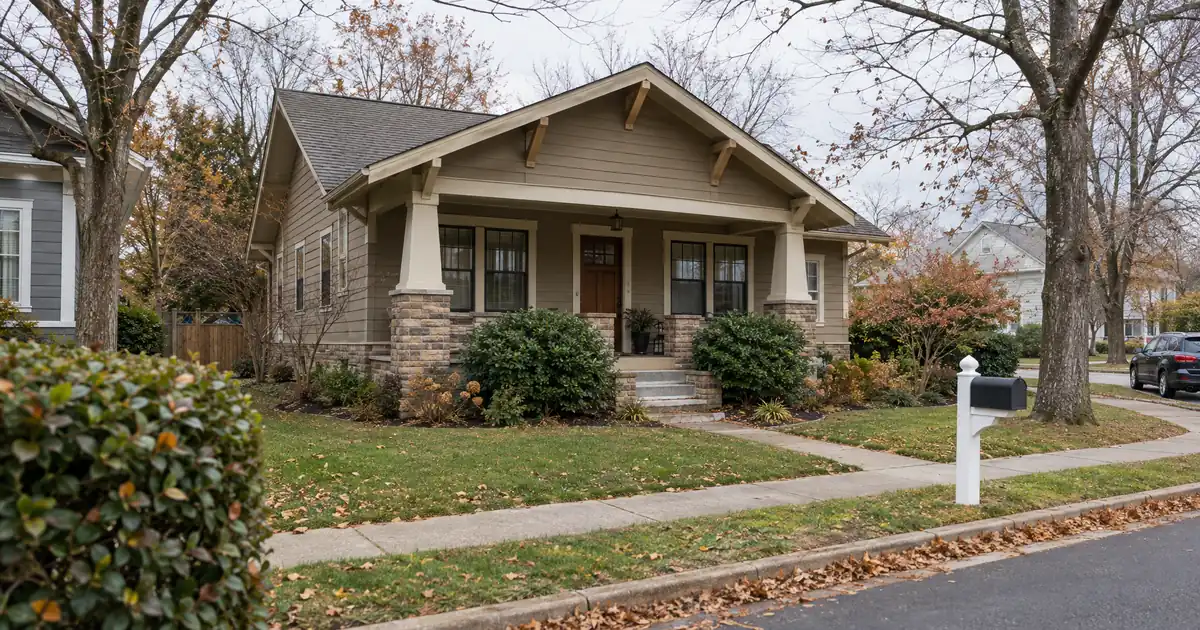
The Quick Read: A DSCR HELOC keeps your first mortgage in place and adds a revolving line behind it. A DSCR cash-out refinance replaces the first mortgage with one larger loan. The no-minimum-draw, no-inactivity-fee idea only applies to a line, and it depends on the specific plan, so read the disclosures before you count on it.
- A DSCR HELOC is a standalone second lien (or a first lien on a paid-off rental), qualified on the rent rather than your personal income.
- The network’s version of the line requires at least 80% of the limit drawn at closing, so it is not a zero-draw standby line.
- A cash-out refinance has no draw rules, so a minimum draw or inactivity fee cannot exist. You pay interest on the full new balance from day one.
- Pick the line to keep a good first mortgage. Pick the refinance when you want one loan, one payment and a clean reset.
The Honest Answer: Who Each Option Is Really For
A DSCR HELOC is for the investor who likes the first mortgage already on the rental. You keep it and tap equity behind it. The loan is reviewed primarily on property-level rental income covering the payment, subject to lender guidelines. Your tax returns and pay stubs stay out of the file.
A DSCR cash-out refinance is for the investor who wants a single closed-end loan and a large lump sum. It also suits someone whose current first mortgage has little worth keeping. Everything resets: new balance, new term, new coverage test.
Now the catch in the title. Plenty of investors want equity on standby that costs nothing while idle. Across the wholesale network, most DSCR line programs ask for a big draw up front. That changes what “no minimum draw” really means, and the sections below take it apart.
Side-by-Side
| Factor | DSCR HELOC (network guidelines) | DSCR Cash-Out (industry norms) |
|---|---|---|
| Lien position | Standalone 2nd lien, or 1st on a paid-off rental | Replaces the existing first lien |
| Review basis | Rent covering a stress payment on the full limit | Rent covering the new loan’s payment |
| Personal income docs | None; rent, lease, credit and valuation documented | Generally none; same property-based file |
| Funding structure | Revolving; 80%+ of limit drawn at closing | One lump sum at closing |
| Entity vesting | LLC allowed; members sign as guarantors | Commonly LLC, subject to program terms |
| Reserves | None required | Commonly required; amount varies by program |
| Seasoning | 6 months since the last note date and 6 months on title | Varies by program |
| Property menu | Narrower: no rural, condotel, row home, leasehold | Often broader; varies by program |
| Draw or inactivity rules | Plan-level terms; read the disclosures | None; no draw concept exists |
The cash-out column shows published industry norms, and the HELOC column reflects the guidelines of select programs in Lendmire’s wholesale network. Every figure here is subject to underwriting, and the lender’s own calculation governs.
When a DSCR HELOC Is the Better Fit
The line wins when the first mortgage is worth keeping. Picture an investor who has owned a rental for years and carries a first mortgage she would hate to replace. A second-lien line leaves that loan untouched. For that investor, the question is only how much equity she can reach.
On a non-owner-occupied rental, the network line reaches up to 70% combined loan-to-value (CLTV) behind the first mortgage. That is the first balance plus the new line, divided by value. It typically requires a 720 credit score or better, on lines from $50,000 to $500,000, subject to underwriting.
Two more situations favor the line:
- Staged needs. A renovation in phases or a reserve for the next purchase fits a revolving structure. After the opening draw, later draws are at least $5,000 each.
- Paid-off rentals. A rental with no mortgage can carry a standalone first-lien line. Loan-to-value (LTV) reaches 75% at a 740 score or better on lines up to $500,000. It is 70% at 700 to 739 on lines up to $500,000. Lines above $500,000 run to $1,000,000 but top out at 65% LTV at 720 or better. Final terms depend on lender guidelines, property type, leverage, and the borrower’s complete credit picture.
The line also shifts the cost profile. The draw period runs five years, interest-only on the drawn balance. A 25-year fully amortizing repayment period follows, inside a 30-year maturity. The rate is variable. Plan for the day the payment changes, because the repayment period brings a higher payment on the same balance.
Entity-held portfolios can use the line too. The LLC can stay on title, and the members sign as guarantors. A title holder who is not a borrower signs a non-borrowing owner acknowledgment. For borrower fit, the line is open to U.S. citizens, permanent residents and non-permanent residents with a Social Security number. Foreign nationals and ITIN borrowers are not eligible on this program.
Plenty of rentals fall outside the line. Rural-designated property, condotels, row homes, leaseholds and a property listed for sale in the prior two months are not eligible. A rental bought or refinanced inside the last 6 months is not eligible (that clock runs from the last note date to the new note date), and the owner must have held title for 6 months (settlement date to note date). The network also caps exposure at 5 loans or $2,500,000 per borrower with the program.
When a DSCR Cash-Out Refinance Is the Better Fit
The refinance wins when you want one big pile of cash and a simpler structure. Say you own a fourplex and plan to fund the down payment on two more properties. You need the full sum on day one. A closed-end loan delivers that, and nothing about draw windows or repayment cliffs enters the picture.
It also fits when the old first mortgage is not worth protecting. Perhaps the term is short or the loan is a bridge you want gone. A cash-out clears it and rolls everything into one loan.
Cash-out programs generally accept a wider range of collateral than the line does. The exact menu depends on the program. Leverage ceilings on cash-out vary by property type and credit, and they are usually set differently from the line’s tiers. Select lenders in the network will also review sub-1.00 coverage on a cash-out. Leverage and terms adjust when they do, and qualification stays subject to lender guidelines.
The weak spot is the re-test. The new payment sits on a larger balance, so coverage is recalculated on that bigger loan. A property that cleared comfortably at purchase can look thin after you pull equity. Run that math before you commit to a loan amount.
Documentation on a cash-out is property-focused but not light. Expect a full interior appraisal, and on a rental, an appraiser’s rent schedule. That is Form 1007 for single-family and Form 1025 for two-to-four units. Lenders also want entity papers, a credit review of the guarantor, and usually reserves. DSCR loans are designed for non-owner-occupied investment properties. Because they are business-purpose investor loans, they are reviewed differently from a standard owner-occupied mortgage.
What No Minimum Draw or No Inactivity Fee Really Means
It is a plan feature, not a product feature. The CFPB’s HELOC explainer notes that some plans require a minimum amount each time you borrow or a minimum balance outstanding. Others require an initial draw when the line opens. None of that is universal, and it sits in the plan’s terms.
Fees follow the same logic. The CFPB’s list of HELOC fees names an inactivity fee, meaning a charge for not using the line. Application, closing, annual, cancellation and conversion fees appear on the same list. The agency’s HELOC booklet adds that fees can keep running while the line sits idle. It also describes disclosure fields for minimum transaction, minimum balance and inactivity fee. Those fields are where you verify a no-fee claim.
Here is how that lands on each side of this comparison:
- Cash-out refinance: No minimum draw and no inactivity fee exist, because there is nothing to draw. The trade is that you carry interest on every borrowed dollar from the first day, used or not.
- DSCR line in the network: The opening draw is at least 80% of the limit and never less than $50,000. Later draws are at least $5,000. The line is not a zero-draw standby reserve. The flexibility is the remaining headroom, plus interest-only payments on the drawn balance during the draw period.
So the title’s wish, equity on standby at zero carrying cost, is hard to get from either structure. The refinance can’t offer it by design. The network line mostly can’t, because of the large draw at closing. Fee terms on the line come in the lender’s HELOC disclosures, so read them before you move forward.
What Idle Money Costs in Each Structure
Think of it as negative carry: interest on cash that is not yet doing anything.
On a refinance, that cost applies to the whole cash-out amount. If you plan to deploy the money in stages, the unused portion earns nothing while you pay on it. Invest it right away, and the cost shrinks.
On the line, the cost applies mainly to the opening draw. Say you take the minimum 80% and earmark it for an immediate purchase. Little sits idle. Take 80% and use half, and you are in the same position as the refinance, only with the first mortgage intact.
The honest way to compare: write down when each dollar will go to work. If most of it goes out in the first stretch, the carrying cost barely matters, and structure should decide. If the money will sit, shrink the draw as far as the program allows or reconsider the whole idea.
The Coverage Test Works Differently
The line tests coverage on the full limit; the refinance tests it on the new balance. For the line, the minimum is 1.10x. The test divides gross monthly rent by a fully amortizing payment on the entire credit limit. That payment uses a stress rate set 2 percentage points above the start rate. Drawing later therefore does not change the ratio, because the full limit was tested up front. The lender’s coverage calculation governs, including how a first-mortgage payment enters on a second lien.
Rent counts as the lesser of the appraiser’s market rent or the signed lease. A lease in place is required, and a two-to-four-unit property may have at most one vacant unit.
On a cash-out, DSCR is monthly rent divided by the full monthly obligation on the new loan. That covers principal, interest, taxes, insurance and any HOA dues. Run a modeled case. A duplex clears its current first mortgage at roughly 1.35x. After a large cash-out, the same rent covers the new payment at only around 1.05x. That is a pass on some programs and a miss on others, so equity and coverage do not always move together.
Valuation rules differ too. On the line, amounts up to $400,000 can use an automated valuation (confidence score 85 or better) with a property inspection report, or a full interior appraisal. Larger lines require a full interior appraisal. Appraisal waivers are not accepted on this program.
A Short Checklist Before You Pick
1. How much must be drawn at closing, and does that fit your plan for the money?
2. What is the minimum for later draws?
3. Does the plan charge for an idle line, in any form (the disclosure has a field for it)?
4. What happens when the draw period ends, and how does the payment change?
5. Can the lender freeze or reduce the line? Some plans allow it, and a closed-end loan has no such mid-term change.
6. Does the property sit inside the program’s eligible list?
7. What does your existing first mortgage say about leaving it in place behind a second lien? For the keep-or-replace question, see Lendmire’s piece No Cash Out Refinance vs Keeping Your Loan and Adding a HELOC.
One risk applies to both. Bankrate’s HELOC page warns that on an investment property you could end up owing more than the property is worth if its value falls. Higher leverage makes that more likely. Nobody enjoys learning this after the market moves.
Key Terms Defined
CLTV is combined loan-to-value: the first mortgage balance plus the new line, divided by the property’s value.
Draw period is the stretch when you can borrow from a line. On the network line, it runs five years, interest-only on the drawn balance.
Seasoning is the waiting period between buying or refinancing a property and taking new equity out of it.
Stress payment is the qualifying payment the lender uses to test coverage. It is not what you actually pay.
Negative carry is the interest cost of holding borrowed cash that is not yet earning anything.
The Balanced Verdict
Neither option is the safe default. They answer different questions.
Choose the DSCR HELOC when the first mortgage is worth keeping, the property fits the program, and your capital needs come in stages. Accept that the opening draw is large, and read the plan’s disclosures for any idle-line fees. The line suits portfolio owners who want to leave good loans alone.
Choose the DSCR cash-out refinance when you want one loan, a full lump sum, and a clean reset, or when the existing loan is not worth protecting. Accept the full-balance carry and the re-test of coverage on the bigger loan. It suits investors who deploy money right away.
Where both could work, the deciding question is usually the existing first mortgage. This is a genuine toss-up for many files, which is why a side-by-side run on your own property beats a rule of thumb.
Tax treatment can depend on how the funds are used and how the property is held; borrowers should keep clear records and speak with a qualified tax professional before relying on any deduction.
Frequently Asked Questions
Can I open a DSCR line and never draw on it?
Not on the network’s version. The program requires at least 80% of the line, and never less than $50,000, drawn at closing. If you want a true standby line with no draw, you would need a different plan, and its minimum-draw and inactivity terms would appear in that lender’s disclosures.
Does a DSCR cash-out refinance have an inactivity fee or minimum draw?
No, because it is a single closed-end loan funded at closing. Other fees can still apply, and the cost to watch is interest on the whole new balance from day one. The loan terms and pricing arrive with the lender’s disclosures.
Will drawing more later lower my DSCR?
Not on the line. Coverage is tested against a stress payment on the entire credit limit at the start, so later draws do not change the test. A cash-out works the other way: the new, larger balance sets the payment that rent must cover.
Can my LLC hold the line?
Yes, the LLC can hold title on the line, with members signing as guarantors and a non-borrowing title holder signing an acknowledgment. For a cash-out, LLC vesting is common but subject to program terms. Always confirm entity eligibility with the specific program.
Can I add the line behind an existing DSCR loan?
Often, if the existing loan sits as a first mortgage and the rental meets the program’s tests. The line goes in as a standalone second lien behind it, never as a third lien. Check the first mortgage’s own documents for restrictions on junior liens. Qualification stays subject to underwriting.
Next Step
The program offers DSCR HELOCs in 15 of Lendmire’s 16 licensed states, every licensed state except Tennessee, under Lendmire’s consumer licensing, and cash-out options come through the wider network. If you are considering a home equity line on a rental property and want to see how the numbers work, Lendmire can help you compare DSCR HELOC options based on the property, the rent, the equity available, credit profile, combined leverage, and your goals. For the bigger picture on how these loans work, see the complete DSCR loans guide.
Rentals that clear the coverage test with room to spare tend to have the most choices. Strong rent, modest leverage and a first mortgage worth keeping make the choice a real one.
Investors weighing their equity options can start with Lendmire’s guide to cash-out refinance on an investment property.
About Lendmire
As a mortgage broker (NMLS# 2371349), Lendmire helps homeowners and real estate investors in its 16 full-service states open home equity lines of credit arranged through wholesale lenders. Lendmire is never the lender; line amounts, ceilings and terms are set by the lender under its guidelines. Scotsman Guide named Lendmire a Top Mortgage Workplace in both 2025 and 2026.
Get Started
Ready to find the right loan for you?
See your offer in seconds. No credit pull, no obligation.
Informational only. Not a Loan Estimate, approval, or commitment to lend. Program availability and eligibility are subject to lender guidelines, credit approval, property review, and underwriting.
References
3. Bankrate: HELOC calculator page
This article is part of Lendmire’s DSCR HELOC program — full qualification details, guidelines, and scenarios live on the program page.
Related reading: DSCR HELOC vs DSCR Cash-Out Refinance for Qualifying Without a Paycheck From a Job · DSCR HELOC vs DSCR Cash-Out Refinance Without a Job · How to Use a DSCR HELOC With FHA Cash-Out
Brandon Miller
Founder & CEO, Mortgage Loan Originator, Lendmire LLC
- Mortgage Loan Originator · NMLS# 1129696 · Verify on NMLS Consumer Access
- North Carolina Real Estate Broker · License# 343312 · Verify on NCREC
- North Carolina Insurance Producer · License# 19053198 · Property, Casualty, Life, Health · Verify on NAIC SBS
- Lendmire LLC · Firm NMLS# 2371349 · Verify firm licensure
Required disclosures. Lendmire (NMLS# 2371349) operates as a licensed mortgage broker, not a direct lender or depository. The discussion in this article is general in nature and should not be relied upon as financial, legal, or tax advice — every investment scenario is unique and should be reviewed by a qualified professional. Any loan inquiry is subject to lender underwriting, and this article is not a commitment to lend or a guarantee of approval. Mortgage rates, loan terms, and program guidelines vary by borrower, property, and state, and may change without notice. Equal Housing Opportunity. Verify licensure at NMLS Consumer Access.