
The Quick Read: It depends on what the business debt costs, where the cash goes, and whether the rental still covers itself once the line is sized: a DSCR HELOC makes sense when the old debt is expensive, the payoff is documented, and the rent clears the 1.10x stress test on the full credit limit. It stops making sense when the debt is cheap and long-term, or when the new line would push a thin rental into negative cash flow. Program details below reflect select programs in Lendmire’s wholesale network and are subject to underwriting.
- The line is a standalone second lien behind the first mortgage you keep, or a standalone first lien on a paid-off rental.
- The rent qualifies the line. Your personal income is not calculated, and the LLC can stay on title.
- Second-lien leverage tops out at 70% combined loan-to-value, and lines run from $50,000 up.
- Most of the line is drawn at closing, so the line should match the debt you are retiring.
- Moving business debt onto a rental turns an unsecured obligation into a secured one. That is the real cost of the move.
What Is a DSCR HELOC, Exactly?
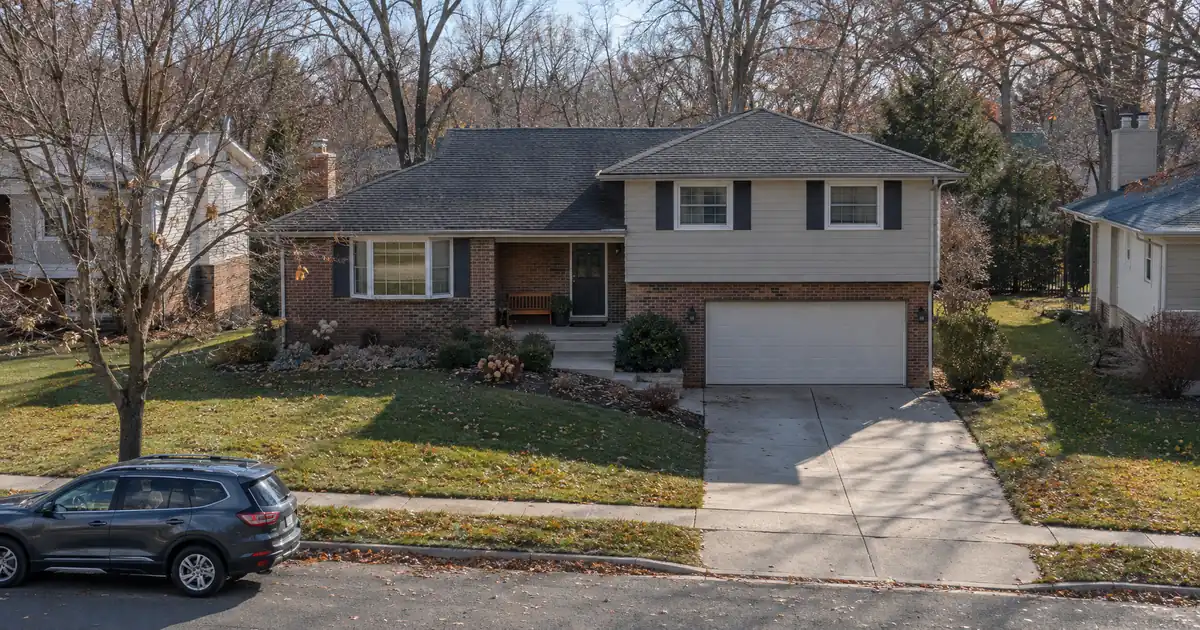
A DSCR HELOC is a revolving line of credit secured by a non-owner-occupied one-to-four-unit rental, qualified on the property’s rent instead of the owner’s personal income. The label gets used loosely, so the first job is to separate it from products that sound alike.
Across the wholesale network, three structures get called a “DSCR HELOC.” Only one of them is the product described here.
1. A rent-qualified line on a rental. This is the product here. It is a standalone second lien behind your existing first mortgage, or a standalone first lien on a rental with no mortgage.
2. A personal-income HELOC on an investment property. The lender looks at your credit, debt-to-income and equity. NerdWallet reports that not all lenders offer one, that qualification is strict, and that lenders see higher default risk than on a primary-home line. It also reports debt-to-income bands of about 40% to 50%, with 50% possible on projected rental income. Those are market figures, not this program’s. This program does not calculate your personal debt-to-income at all.
3. A DSCR cash-out refinance. Some pages use the term for this lump-sum loan. It replaces the first mortgage instead of sitting behind it.
The rent-qualified line is a niche product. It is not offered on an owner-occupied home, a second home, or a third lien. It is also never closed together with a purchase.
The Debt-to-Income Problem This Solves
Heavy business debt can crowd out a personal-income product. Business loans, cards and equipment financing show up on a credit report. A lender that measures your debt-to-income ratio counts them unless you can prove the business pays them.
A rent-qualified line moves the test to the property. The question becomes whether the rent covers the payment on the line, not whether your personal income can absorb your obligations. That is why investors with a messy credit report and a clean rental look at this product first.
It still has limits. Your credit score matters, the lease matters, and the valuation matters. The rent drives lender review, but the file is fully documented.
When Does a DSCR HELOC Make Sense to Retire Business Debt?
It makes sense when four conditions line up. Miss one and the case weakens.
1. The old debt costs more than the new line. Merchant cash advances, stacked short-term loans and high-balance cards are the usual candidates. The line carries a variable rate, and the pricing terms come with the lender’s HELOC disclosures. Compare the full cost of both before you decide.
2. The payoff is a lump you can name. Most of the line is drawn at closing. If your payoff is much smaller than the line, the extra draw sits on the books and accrues interest-only payments.
3. The rent still clears the test on the whole line. Coverage is measured on a payment for the entire credit limit at a stressed start rate (the start rate plus 2 percentage points), not just the drawn balance. Undrawn room counts against you.
4. You are fine with the rental backing the business. If the business fails, the lender holds a lien on the property. That is the trade.
When It Doesn’t Make Sense
Skip it when the business debt is cheap and long-term. A low-cost term loan with years of runway rarely deserves a lien on a rental.
Skip it when the property has thin coverage already. A rental that barely clears 1.10x on the stress payment has no room for a bigger line. A coverage ratio at or above 1.00 also does not mean the property cash flows. It only means the rent covers the modeled payment.
Skip it when the rental is outside the program. Rural-designated property, condotels, row homes, leaseholds, land trusts, age-restricted communities and mixed-use are all ineligible on this lane.
Skip it when a new first mortgage is the wrong move. Replacing a cheap existing first mortgage with a cash-out refinance can cost more than a second lien behind it. Prepayment penalties on the old first mortgage also reduce your net proceeds.
Which Business Debts Are Worth Retiring?
The debt type drives the answer more than anything else. This table gives a rough fit by type, assuming the property meets the program rules.
| Debt type | Fit | What to check | Main trap |
|---|---|---|---|
| Merchant cash advance | Strong | Payoff letter, early-payoff terms | Refilling it later |
| Stacked short-term loans | Strong | Total payoff amount | Same business habits, new lien |
| Business credit cards | Often strong | Personal vs. business obligor | Balances return after payoff |
| Equipment financing | Mixed | Prepayment terms, lien release | Cheap debt moved to a lien |
| SBA-style or long-term loan | Usually weak | Remaining cost and term | Trading cheap debt for secured debt |
| Owner or partner loans | Case by case | Paper trail for the payoff | Mixed-purpose proceeds |
A Worked Example
Run the numbers on an LLC-owned duplex with a lease in place and no recent purchase or refinance. The first mortgage sits at roughly 45% of value, and the owner holds a 740 credit score. These inputs are modeled assumptions, not market data. Exact terms depend on the lender’s guidelines, property type, leverage, and a full review of the borrower’s file.
The second-lien ceiling is 70% combined loan-to-value, which counts the first mortgage balance plus the new line. That leaves room for a line equal to about 25% of value. Now apply the coverage test. The rent has to cover a stress payment on the entire limit at the 1.10x floor.
Say the full-size line pushes coverage to about 1.12x. That file technically clears, but it has no cushion. Cut the line to just cover the payoff, and coverage may climb toward 1.3x. The smaller line is the safer file, and it avoids a large undrawn balance.
The lender’s own coverage calculation governs, and the program does not publish whether the first-mortgage payment joins the qualifying payment on a second lien. Treat any coverage figure you run as illustrative until the lender confirms it.
How the Options Compare
| Factor | DSCR HELOC | DSCR cash-out refinance | Personal-income investment HELOC |
|---|---|---|---|
| What is tested | Property rent | Property rent | Your income and credit |
| First mortgage | Kept in place | Replaced | Kept in place |
| Payout | Revolving line | Lump sum | Revolving line |
| Title | LLC allowed | LLC allowed | Often individual title |
| Fit | Keep a cheap first | Reset the first | Clean personal income |
The last two columns describe those products’ rules in general, not this program’s. The cash-out column is also a different product from the line described here. For a deeper look, see Lendmire’s discussion of how a bank statement HELOC compares with a cash-out refinance for retiring business debt.
What the Program Looks Like
These figures are ceilings and floors, never offers, and all of them are subject to underwriting through select programs.
- Second lien: up to 70% combined loan-to-value at a 720 credit score or better, on lines of $50,000 to $500,000.
- First lien: up to 75% loan-to-value at 740 or better on lines to $500,000, and 70% at 700 to 739. Lines above $500,000 run to $1,000,000 and carry a 65% ceiling.
- Terms: a 5-year interest-only draw period, then a 25-year repayment period. Maturity is 30 years.
- Draws: at least 80% of the line is drawn at closing. Later draws are at least $5,000 each.
- Credit: 720 on a second lien, 700 on a first lien. The program wants no 30-day mortgage late in the last 12 months.
- Valuation: lines to $400,000 use an automated valuation with a property inspection report, or a full interior appraisal. Larger lines take a full interior appraisal. Appraisal waivers are not accepted.
- Seasoning: a rental must be at least 6 months past its last note date, meaning a purchase or refinance, and the borrower must also have held title for 6 months since settlement.
- Reserves: none required. Each borrower is limited to 5 loans or $2,500,000 with the program.
- Borrowers: U.S. citizens, permanent residents, and non-permanent residents with a Social Security number. Foreign nationals and ITIN borrowers are not eligible. Every figure here varies by lender and program — guidelines, property type, leverage, and credit profile all apply.
The program is offered in 15 of Lendmire’s 16 licensed states, every licensed state except Tennessee: Alabama, California, Colorado, Florida, Georgia, Indiana, Michigan, Montana, New Mexico, North Carolina, Ohio, Pennsylvania, Texas, Virginia and Washington. A declining-market flag lowers the ceiling by 5 points. Philadelphia lines carry a ceiling 10 points lower. The complete DSCR loans guide explains how rent-qualified lending works across the broader investor lineup.
The Business-Purpose Question
Lenders treat this as business-purpose credit, so the stated use of funds matters. Federal rules exempt credit extended primarily for a business purpose, per 12 CFR 1026.3. The CFPB’s official commentary treats credit to acquire, improve or maintain a non-owner-occupied rental as business purpose. Retiring another business’s debt is not on that automatic list. It is judged on primary purpose, so expect a signed business-purpose statement and a paper trail.
Practically, that means payoff letters and direct pay to the creditor at closing. Keep proceeds out of personal and household accounts. Tax treatment can depend on how the funds are used and how the property is held. Borrowers should keep clear records and speak with a qualified tax professional before relying on any deduction.
What Derails These Files
Operators on these files see the same few gaps again and again.
Seasoning. An investor refinances a rental, then applies for the line a few months later. The note-date-to-note-date clock is 6 months, and the file is kicked back if it falls inside that window.
Lease evidence. A lease in place is required. Rent is the lesser of the appraiser’s market rent or the lease. A lease above market counts only with three months of receipts. A two-to-four-unit property can have at most one vacant unit.
Title and entity papers. If the LLC holds title, the members sign as guarantors. A title holder who is not a borrower signs a non-borrowing owner acknowledgment and the security instrument. Missing signatures stall the file.
Valuation and eligibility. A property listed for sale in the prior two months or carrying a solar lien is out. A declining-market flag does not disqualify a property, but it lowers the leverage ceiling by 5 points, so the line shrinks.
Insurance. Hazard coverage has to cover both liens, with flood coverage where required. A stale quote is a common gap.
Sizing the line to the payoff. With at least 80% drawn at closing, an oversized line creates extra interest-only cost and undrawn balances that hurt coverage.
The “Don’t Refill It” Problem
Paying off a card or advance does not fix the cash flow that created it. If the same habits continue, you end up with the rental lien and fresh business debt on top.
Later draws of at least $5,000 each make it easy to pull more. Set a rule before you close: the line retires named debts, and the rest stays undrawn or the line is sized smaller. After the 5-year interest-only draw period, the 25-year repayment period starts. That shift to amortizing payments can change the picture on a thin rental.
Honestly, some investors are better off with a business-level refinance and no rental lien at all. A DSCR HELOC works best when the rental is strong and the business debt is clearly worse than the line.
Key Terms Defined
DSCR: The debt service coverage ratio, which is the property’s gross monthly rent divided by the qualifying payment.
Combined loan-to-value (CLTV): The first mortgage balance plus the new line, divided by the property’s value.
Second lien: A loan that sits behind the first mortgage and is paid second if the property is sold or foreclosed.
Draw period: The 5 years in this program when you pay interest only on the drawn balance.
Seasoning: The time you must own or have refinanced the rental before the line is eligible, 6 months on this program.
Business purpose: The primary reason you are borrowing, which has to be a business use for this kind of credit.
Before You Decide: Six Questions
- Does the business debt cost more than the line?
- Do you have a payoff letter and a direct-pay plan?
- Does the rent clear 1.10x on the entire credit limit, not just the draw?
- Is the rental an eligible property with a lease in place, and have you cleared both seasoning clocks, one measuring from the last note date and the other from your title since settlement?
- Is the line sized to the payoff, with a plan not to draw it again?
- Are you comfortable with the rental backing the business’s obligations?
If you answer no to two or more, a different structure is likely a better fit.
Frequently Asked Questions
Can I use a DSCR HELOC to pay off a business loan?
Often yes, if the purpose is documented and the debt is worth retiring. Lenders review business-purpose credit on the primary use of funds, and a payoff letter with direct pay to the creditor builds the paper trail. Cheap long-term debt is usually a poor fit.
Does a DSCR HELOC count my personal debt-to-income?
No. The rent qualifies the line, and your personal income is not calculated. Your credit score, lease, valuation and property eligibility still matter. Heavy business debt on a credit report may affect the credit tier, but it does not become a debt-to-income test.
Can the property stay in my LLC?
Yes. Vesting in the owner’s LLC is allowed on investment property, subject to program terms. The members sign as guarantors, and a title holder who is not a borrower signs a non-borrowing owner acknowledgment. Many personal-income investment HELOCs push investors toward individual title.
What if I have a first mortgage on the rental?
The line is a standalone second lien behind it, up to 70% combined loan-to-value at a 720 credit score or better. The first mortgage stays in place. The lender’s coverage calculation governs how the first-mortgage payment is treated. Final terms depend on lender guidelines, property type, leverage, and the borrower’s complete credit picture.
Is every investor eligible?
No. The program is offered in 15 of Lendmire’s 16 licensed states, and foreign nationals and ITIN borrowers are not eligible. Rural properties, condotels, row homes and leaseholds are excluded. A rental bought or refinanced in the last 6 months does not qualify yet.
Next Step
If you are considering a home equity line on a rental property and want to see how the numbers work, Lendmire can help you compare DSCR HELOC options based on the property, the rent, the equity available, credit profile, combined leverage, and your goals. Lendmire is a broker that arranges the line through a wholesale lender, and approval is not a commitment to lend.
About Lendmire
Lendmire (NMLS# 2371349) is a mortgage broker. Home equity lines of credit — on a primary residence, a second home or an investment property — are arranged through wholesale lenders in Lendmire’s 16 full-service states, and every line is underwritten by the lender under its program guidelines. Scotsman Guide named Lendmire a Top Mortgage Workplace in both 2025 and 2026.
Get Started
Ready to find the right loan for you?
See your offer in seconds. No credit pull, no obligation.
Informational only. Not a Loan Estimate, approval, or commitment to lend. Program availability and eligibility are subject to lender guidelines, credit approval, property review, and underwriting.
References
1. NerdWallet: HELOC on an investment property
This article is part of Lendmire’s DSCR HELOC program — full qualification details, guidelines, and scenarios live on the program page.
Related reading: How to Use a DSCR HELOC for Debt Payoff or Reserves · DSCR HELOC vs DSCR Cash-Out Refinance for Business Expansion Capital · Does a DSCR HELOC Make Sense to Buy Out a Spouse?
Brandon Miller
Founder & CEO, Mortgage Loan Originator, Lendmire LLC
- Mortgage Loan Originator · NMLS# 1129696 · Verify on NMLS Consumer Access
- North Carolina Real Estate Broker · License# 343312 · Verify on NCREC
- North Carolina Insurance Producer · License# 19053198 · Property, Casualty, Life, Health · Verify on NAIC SBS
- Lendmire LLC · Firm NMLS# 2371349 · Verify firm licensure
Legal disclosures. Lendmire (NMLS# 2371349) is a state-licensed mortgage brokerage that arranges financing through wholesale lender relationships. Lendmire is not a direct lender, depository institution, or registered financial advisor. The discussion above is general informational content about real estate financing — it is not financial, legal, or tax advice, and readers should consult licensed professionals for guidance on their individual circumstances. Loan inquiries are subject to lender underwriting; this article does not represent a commitment to lend. Loan terms, rates, and qualification standards vary by borrower, property, and state, and are subject to change at any time. Equal Housing Opportunity. NMLS Consumer Access: nmlsconsumeraccess.org.