
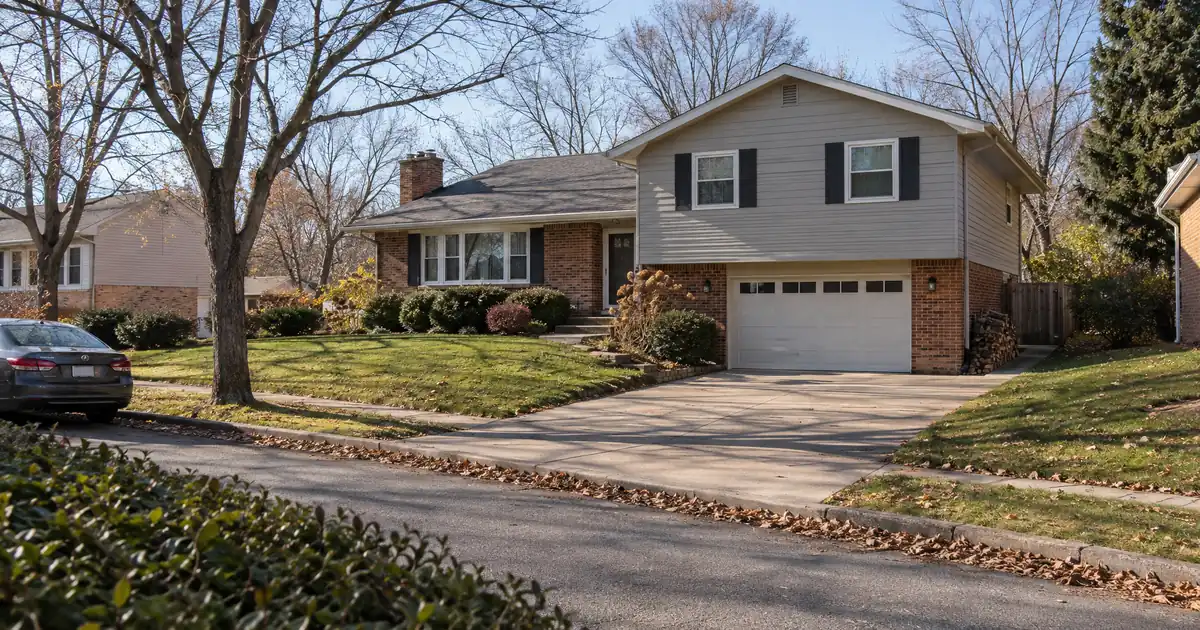
The Quick Read: A rental held in a funded revocable living trust can generally carry a rent-qualified home equity line, because the lender reviews the trust paperwork and then qualifies the line on the rental’s income. The trust changes who signs and what documents the lender and title company collect. It does not change the coverage test, and the rental’s income still has to cover the payment, subject to lender guidelines.
- The line is a standalone second lien behind the first mortgage you keep, or a standalone first lien on a rental with no mortgage.
- The rent qualifies the line at a minimum 1.10x coverage. There is no traditional personal-income documentation, W-2s or personal income calculation, subject to lender guidelines.
- The deed must actually name the trustee or trust. An unfunded trust can stall these files.
- Irrevocable trusts and land trusts are a different conversation, and land trusts are outside this program.
- The program runs in 15 of Lendmire’s 16 licensed states, every licensed state except Tennessee, through select programs.
What Is a DSCR HELOC, and Why Does the Label Cause Confusion?
A DSCR HELOC is a revolving line of credit on a non-owner-occupied one-to-four-unit rental, qualified on the property’s rent instead of the owner’s personal income. DSCR stands for debt service coverage ratio: the rent divided by the payment the lender tests.
The label gets used loosely. Some investment-property HELOCs are qualified on the borrower’s credit and debt-to-income ratio, and rent plays no role in them. Those are a different product with different rules. The line described here is reviewed on the rental itself.
It is also never a line on your own home or a second home. An owner-occupied HELOC is a separate product. This one exists for the landlord who wants to reach a rental’s equity without refinancing the first mortgage and without opening the personal income file. The complete DSCR loans guide covers how coverage-based qualification works across Lendmire’s programs.
Does a Revocable Trust Block a Rent-Qualified Line?
A revocable living trust is usually not the obstacle. The trust is the form of ownership, and the lender still looks at the rental, the credit report and the valuation. The grantor typically keeps control of a revocable trust and can undo it, so lenders generally treat the grantor as the economic owner.
Friction comes from three other places:
- The deed was never recorded into the trust.
- The paperwork does not show that the trustee can borrow and pledge the property.
- The existing first mortgage has a due-on-sale clause that someone triggered by retitling.
Across Lendmire’s wholesale network, most programs that accept trust vesting treat these as documentation problems, not credit problems. A few lenders will still ask for the full trust document. Others are content with a short certification. Lenders vary on this point, and your first lender’s preference may not be the second one’s.
Which Title Structures Work?
Revocable trusts are the workable case. Other structures range from reviewable to outside the program.
| Title structure | Typical treatment | What to do instead |
|---|---|---|
| Funded revocable trust | Generally reviewable | Provide deed and certification |
| Unfunded revocable trust | Stalls the file | Record a corrective deed |
| Irrevocable trust | Lender-dependent, often declined | Counsel review first |
| Land trust | Not eligible on this program | Re-vest or choose another loan |
| LLC | Allowed, investment property only | Members sign as guarantors |
Everything in that table sits under standard program review. Vesting in an LLC is allowed on this line, subject to lender program eligibility. The members sign as guarantors. A trust-owned LLC adds a layer, so the lender will want to see how the chain of ownership reads on the deed and the entity documents.
Who Signs, and Who Gets Underwritten?
The trust has no credit score or income of its own. The lender reviews people. In the common structure, the trustee signs the security instrument that pledges the property, and the individual who created the trust signs as borrower. If the trustee and the borrower are the same person, that is one signer wearing two hats, and the documents should say so.
| Role | What that person does | What gets reviewed |
|---|---|---|
| Grantor or settlor | Creates the trust, signs as borrower | Credit report, mortgage history |
| Trustee | Pledges the property | Authority to borrow |
| Title holder, not a borrower | Signs an acknowledgment and the security instrument | Name on the deed |
| LLC member (LLC case) | Signs as guarantor | Credit report |
| The rental itself | Carries the coverage test | Lease, market rent, valuation |
The borrowers on the line also need not be the borrowers on the first mortgage. That matters when a spouse or co-owner is on the first loan but not on the trust.
Credit is reviewed at the borrower level. A 720 score is the floor on a second lien and 700 on a first lien, subject to underwriting. Eligible borrowers are US citizens, permanent residents and non-permanent residents with a Social Security number. Foreign nationals and ITIN borrowers are not eligible on this program.
What Trust Paperwork Does the Lender Want?
Expect a recorded deed showing the trustee or trust as owner, a certification of trust or a copy of the trust, and title work confirming how the property is held. Exact requirements vary by lender and title company.
A certification of trust is a short document the trustee signs in place of handing over the whole trust. Most states have adopted a version of the Uniform Trust Code on this point. The Massachusetts statute is one example. It lets a trustee certify the trust’s existence, its powers and whether it is revocable. It says the certification need not include the trust’s dispositive terms. A third party who relies on it in good faith can enforce the deal against trust property. Details differ by state, so read your own state’s version.
Typical contents include:
- The trust’s name and date, and the person who created it.
- The acting trustee and address.
- The trustee’s powers, and who can revoke.
- Co-trustee signing rules.
- How title is held.
Some states also list the trust’s taxpayer ID. The certification should also state that the trust has not been revoked or amended in a way that makes it wrong.
The certification does not end every request. Colorado’s version lets a recipient ask for excerpts of the trust instrument that name the trustee and grant the power to act. A lender or title insurer that wants those pages is within its rights.
If co-trustees must sign together, the certification has to say that. A successor trustee needs the same treatment after the grantor’s death or incapacity, so confirm who is trustee today, not who was trustee when the trust was drafted.
Do You Have to Move the Property Out of the Trust?
No. In the usual structure the property stays in the trust, and you apply with the trustee signing the security instrument. Taking title out and putting it back in adds recording steps and can create problems with the existing mortgage and the title policy. Do not do that without talking to your attorney and your title company first.
You also do not need to add the new line to the trust afterward. The line is a lien on the property, not a transfer of it. The trust still owns the rental.
How Underwriting Treats the Line, Step by Step
1. Confirm the product. The rent qualifies the line, so there are no traditional personal-income documentation, W-2s or pay stubs, and no debt-to-income ratio.
2. Confirm the vesting. The deed should name the trustee or trust, and the trust should be revocable.
3. Collect the trust documents. The deed, the certification of trust (or a copy of the trust) and the title work.
4. Check authority. The certification must show that the trustee can borrow against the property.
5. Test the coverage. The program’s minimum is 1.10x. That is gross monthly rent divided by a qualifying payment. The qualifying payment is a fully amortizing payment on the entire credit limit at the start rate plus 2 percentage points. It is a stress payment, not what you would actually pay during the draw period.
6. Establish the rent. Rent is the lesser of the appraiser’s Form 1007 market rent or the lease. A lease above market counts only with three months of receipts. A lease in place is required. A two-to-four-unit property can have at most one vacant unit.
7. Value the property. Lines to $400,000 use an automated valuation with a confidence score of 85 or better, plus a property inspection report, or a full interior appraisal. Lines above $400,000 take a full interior appraisal. Appraisal waivers are not accepted.
8. Set the combined leverage. The lender sizes the line against the property’s value.
Whether the first mortgage payment joins the qualifying payment on a second lien is not something the program publishes. The lender’s coverage calculation governs. Ask before you assume your ratio.
How Much Can You Borrow Against a Trust-Held Rental?
The trust does not change the leverage tiers. They depend on lien position and credit score.
| Lien position | Credit score | Maximum | Line size |
|---|---|---|---|
| Second lien (behind your first mortgage) | 720 or better | 70% CLTV | Up to $500,000 |
| First lien (rental with no mortgage) | 740 or better | 75% LTV | Up to $500,000 |
| First lien | 700 to 739 | 70% LTV | Up to $500,000 |
| First lien, larger line | 720 or better | 65% LTV | Above $500,000 to $1,000,000 |
CLTV is combined loan-to-value: the first mortgage balance plus the new line, divided by value. On a first lien the measure is simply LTV. These are ceilings, not offers, and all are subject to underwriting. A declining-market flag lowers the ceiling 5 points. Lines start at $50,000.
What Do the Draw Rules and Property Limits Look Like?
The draw period runs 5 years, interest-only on the drawn balance. A 25-year fully amortizing repayment period follows, for a 30-year maturity. The rate is variable. At least 80% of the line, and never less than $50,000, is drawn at closing. Later draws are at least $5,000 each.
That structure matters for a trust-held rental. You are not holding a flexible line you can leave at zero. Most of the line is drawn at the start, so size it to the money you will use.
Eligible property types are single-family, PUD, townhome, two-to-four units, warrantable and non-warrantable condominiums, and lots to 10 acres. Rural-designated property, row homes, condotels, leaseholds and land trusts are outside this lane. So is a property listed for sale in the prior two months.
A rental bought or refinanced inside the last 6 months is not eligible (that clock runs from the last note date to the new note date), and the owner must have held title for 6 months (settlement date to note date). The program does not require reserves. Exposure is capped at 5 loans or $2,500,000 per borrower.
Title work follows the lien. A full title policy applies on a first lien and on second liens above $400,000. Smaller second liens use an owner-and-encumbrance report, which is where the trust-vesting question often first shows up.
Where the Due-on-Sale Question Fits
Most investors who put a rental into a trust did it to simplify estate planning. If the rental has a first mortgage, the move can raise a question about the first lender’s due-on-sale clause.
A federal exemption in the Garn-St Germain Act covers transfers into an inter vivos trust. As quoted by Johnson Legal, the lender cannot exercise a due-on-sale clause on such a transfer if the borrower is and remains a beneficiary and occupancy rights do not change. The exemption covers residential property with fewer than five dwelling units, FedLaws explains. It also adds a notice condition: the borrower cannot refuse to give the lender a reasonable way to receive timely notice of later transfers.
The catch for landlords: the exemption is written around a borrower who remains a beneficiary and whose occupancy rights do not change, so it may not extend to a rental the borrower does not live in, and the statute and its regulation do not line up neatly. A rental owner should not assume the exemption applies. Have counsel review it, and get the existing lender’s consent if there is doubt.
A second-lien line leaves the first mortgage in place, so the first lender’s clause stays live. A first-lien line on a rental with no mortgage avoids the question.
Moving a rental into an LLC is a different story. WealthCounsel notes the exemption does not protect a transfer into an LLC. If your rental sits in an LLC, the line can be written in that LLC. If it is in your own name or your trust, do not re-title it for the loan without counsel.
A Worked Example (Described, Not Quoted)
Picture an investor who owns a fourplex through a funded revocable trust, with a first mortgage she wants to keep. She asks for a standalone second-lien line. Her credit tier is 720 or better, which is the second-lien floor.
Her lender checks that the deed names the trustee, reads the certification and orders title work. It then orders the valuation. If the line is $400,000 or less, that may be an automated valuation plus a property inspection report. Above that, it is a full interior appraisal.
Rent comes from the lesser of the appraiser’s market rent and the leases. One of the four units is vacant, which is the program maximum. The lender stress-tests the full line. If the rent clears 1.10x on that stress payment and the first mortgage balance plus the line stays at or under 70% of value, the deal works forward, subject to underwriting.
If the rent lands at 1.05x, the file does not work at that line size. A smaller line, higher rent documented properly, or a different structure might.
Where the General Rule Breaks
- Unfunded trust. The trust exists, but the deed still shows the individual. Fix with a corrective deed or apply as an individual.
- Name mismatches. The deed, lease, insurance policy and application should show the same name and trustee capacity.
- Irrevocable trust. LLK Law notes the statute does not clearly bar a trust exemption but leaves it to the lender’s own policies. Expect case-by-case review, and in this network frequent declines.
- Land trust. Not eligible on this program.
- Lender wants the full trust. Some lenders ask for the full trust document, even when the state accepts a certification.
- Tennessee. The program is not offered there.
- Condotels and row homes. Out, trust or no trust.
The stronger play for a landlord holding a rental in an unfunded trust may be to fix the deed before applying, not after. Retitling mid-file can disrupt title work. Then again, if your attorney advises leaving title alone, applying as an individual is a legitimate fork.
Key Terms Defined
Revocable living trust: A trust you can change or cancel while you are alive, usually with you as trustee.
Funded trust: A trust whose assets, including the deed to the rental, have been retitled into the trust.
Certification of trust: A short signed statement that proves the trust exists and that the trustee can act.
CLTV: The first mortgage balance plus the new line, divided by the property’s value.
DSCR: Gross monthly rent divided by the qualifying payment.
Decision Time: Is a Trust-Held Line the Right Tool?
The line fits an investor who owns the rental personally through a trust, wants to keep a first mortgage in place and would rather not open the personal income file. It suits less well an investor who wants to pull a large lump sum for a purchase out of a property that is already near 70% combined leverage.
If the rental has no mortgage, the choice is between a first-lien line and a DSCR cash-out refinance.
If you are considering a home equity line on a rental property and want to see how the numbers work, Lendmire can help you compare DSCR HELOC options based on the property, the rent, the equity available, your credit profile, combined leverage and your goals.
This article is general information and not legal or tax advice. Trust, title and existing-mortgage questions depend on your state and your documents, so talk with a qualified attorney or CPA about your situation.
Frequently Asked Questions
Can a beneficiary who is not the grantor borrow against the rental?
Usually the person who created the trust signs as borrower, since the lender reviews that person’s credit and mortgage history. A beneficiary who is not on the deed and not a borrower generally cannot pledge the property. A title holder who is not a borrower signs an acknowledgment and the security instrument. Your attorney should confirm who holds authority.
What happens if the grantor dies or becomes incapacitated?
A successor trustee steps in under the trust’s terms. The lender’s documents will list the trustee who signed. The successor will need to show authority, usually with an updated certification, and the line terms continue. Plan with your attorney so the paperwork names who can act.
Does the trust affect my existing first mortgage?
Retitling a financed rental into the trust can raise a due-on-sale question with the first lender. A federal exemption covers certain transfers into living trusts on residential property of fewer than five units. The occupancy condition makes it unreliable for landlords. Get counsel’s review, or the first lender’s consent, before retitling.
What if my trust is irrevocable?
Irrevocable trusts are lender-dependent and are often declined in this network. If yours is irrevocable, ask your attorney whether a different structure or loan fits your plan. Land trusts are outside this program.
Which states offer the program?
It is offered in 15 of Lendmire’s 16 licensed states: Alabama, California, Colorado, Florida, Georgia, Indiana, Michigan, Montana, New Mexico, North Carolina, Ohio, Pennsylvania, Texas, Virginia and Washington. It is every licensed state except Tennessee. Lendmire is a broker and places the line through a wholesale lender, subject to underwriting. The rate and pricing terms come with the lender’s disclosures.
About Lendmire
Lendmire — NMLS# 2371349 — is a mortgage broker that arranges home equity lines of credit in its 16 full-service states through wholesale lenders, on primary residences, second homes and investment properties. Every line is subject to the lender’s guidelines and full underwriting. Scotsman Guide named Lendmire a Top Mortgage Workplace in both 2025 and 2026.
Investors who want the broader program framework can review how DSCR loans work.
Get Started
Ready to find the right loan for you?
See your offer in seconds. No credit pull, no obligation.
Informational only. Not a Loan Estimate, approval, or commitment to lend. Program availability and eligibility are subject to lender guidelines, credit approval, property review, and underwriting.
References
1. Massachusetts General Laws ch. 203E § 1013
2. Colorado Uniform Trust Code § 15-5-1013
3. Johnson Legal on 12 U.S.C. § 1701j-3(d)(8)
4. FedLaws: Garn-St Germain Act due-on-sale triggers and exceptions
5. WealthCounsel: transferring title of mortgaged real property
6. LLK Law: the Garn-St Germain Act and estate planning
This article is part of Lendmire’s DSCR HELOC program — full qualification details, guidelines, and scenarios live on the program page.
Related reading: Best DSCR HELOC Program for a Landlord With Three Rentals · Best DSCR HELOC Program on a Rental Owned by Your LLC or Trust · Best DSCR HELOC Program Vested in an LLC
Brandon Miller
Founder & CEO, Mortgage Loan Originator, Lendmire LLC
- Mortgage Loan Originator · NMLS# 1129696 · Verify on NMLS Consumer Access
- North Carolina Real Estate Broker · License# 343312 · Verify on NCREC
- North Carolina Insurance Producer · License# 19053198 · Property, Casualty, Life, Health · Verify on NAIC SBS
- Lendmire LLC · Firm NMLS# 2371349 · Verify firm licensure
Disclosure information. Lendmire is a state-licensed mortgage brokerage under NMLS# 2371349. Lendmire is not a depository institution, direct lender, or financial advisor — all loans referenced are placed through wholesale lender partners and are subject to each lender's underwriting standards. This article is provided for general informational purposes and is not a commitment to lend, nor does it constitute financial, legal, or tax advice. Loan programs, terms, rates, and qualification standards change without notice and depend on borrower profile, property type, and the state in which the subject property is located. Equal Housing Opportunity provider. NMLS Consumer Access: nmlsconsumeraccess.org.