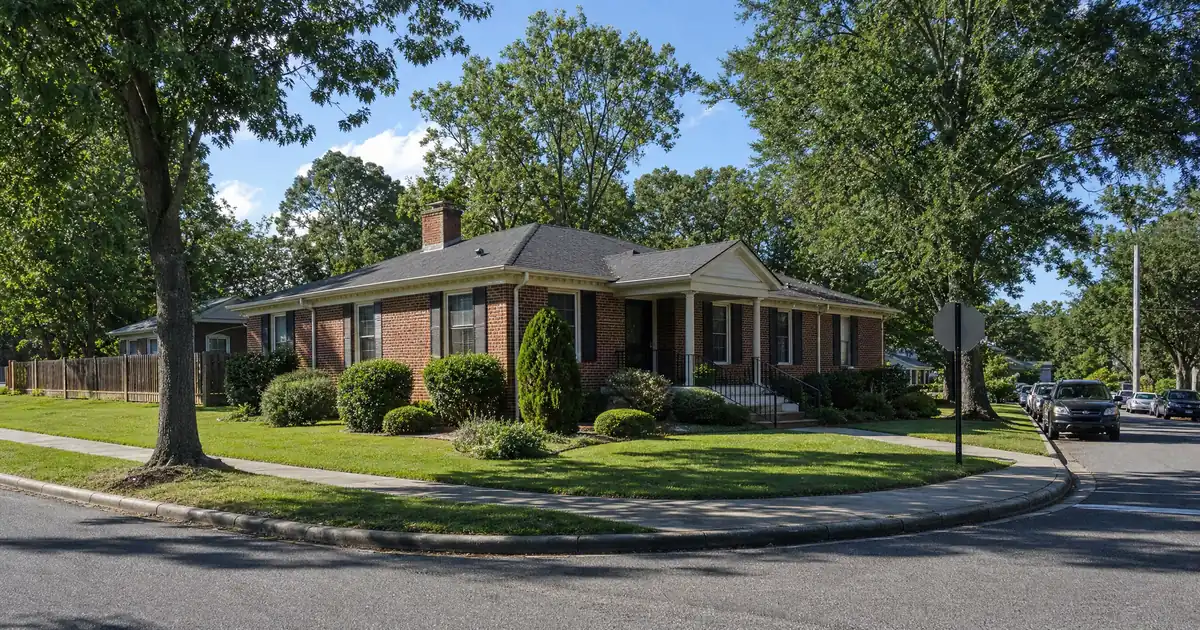
A 3-bedroom cabin along the Aska Road corridor near the Toccoa River hits the DSCR math like this: priced around $380,000 — squarely inside the $300,000 to $450,000 range that local brokerages report for performing 3-bedroom cabins in this market — and financed at 75 percent loan-to-value, the property’s modeled short-term rental income clears its full monthly housing obligation with real room to spare. That’s one version of Blue Ridge. The other version — a median-priced single-family home rented long-term at current asking rates — barely clears a 1.00x coverage ratio. Both properties sit inside the same zip code. The difference is entirely in how the income gets modeled, and that distinction is the whole story for anyone underwriting an investment property loan here.
TL;DR: In Blue Ridge, Georgia, a DSCR investment property loan is underwritten mainly on a property’s rental income measured against its full monthly housing obligation — taxes, insurance and principal-and-interest — rather than the borrower’s traditional personal-income documentation, and the income source (short-term cabin revenue versus a long-term lease) changes which properties actually clear the number.
DSCR Calculator
Run the numbers in Blue Ridge, GA
Rate source: Freddie Mac 30-yr average via FRED® — Federal Reserve Bank of St. Louis · effective Jul 2, 2026
Prefilled with local estimates — enter your own rent or nightly figures, taxes, insurance, and HOA for a more accurate picture.
As of Jul 2, 2026 · General Freddie Mac market benchmark, not a Lendmire loan offer. Rent, nightly rate, occupancy, taxes, and insurance are editable estimates. Short-term rental figures are estimates only and vary significantly by season, property type, management approach, and local short-term-rental rules — confirm local regulations before relying on them. Qualifying income for short-term rentals varies by program — some use appraisal market rent, others use documented STR history or projections — and is confirmed in underwriting. Not a Loan Estimate, approval, or commitment to lend. Program availability and eligibility are subject to lender guidelines, credit approval, property review, and underwriting.
- Aska Road/Toccoa River 3BR cabins model to a coverage ratio north of 1.50x on trailing STR revenue
- Zillow pegs the typical Blue Ridge home value at $490,404, down 6.6 percent over the past year
- Median-priced homes rented long-term at $2,350/month barely clear 1.00x once taxes and insurance are added
- STR supply has grown roughly 77 to 87 percent since 2021, compressing occupancy toward 53 percent
- Blue Ridge Medical Center employs 250-plus people, one of the few year-round W-2 anchors in city limits
Blue Ridge Market Snapshot
A quick read on the Blue Ridge investor landscape — figures come from the cited sources below. Confirm current property-level numbers before underwriting.
| Metric | Detail |
|---|---|
| Home prices | $348,200 median property value (DataUSA (Census-sourced)) |
| Typical rents | $2,350 median (Homes.com Houses for Rent) |
| Population | 1,323 population (Census Reporter (ACS 5-Year)) |
| Employment | 250+ employees (Blue Ridge Medical Center) |
The Aska Road Scenario, Worked in Full
The strongest coverage ratios in Blue Ridge right now sit with 2 to 4-bedroom cabins in the Aska Road/Toccoa River corridor, underwritten on short-term rental income rather than a long-term lease. Three-bedroom cabins are the market’s revenue sweet spot, with a median annual gross of $58,651 across active listings, according to The Short Term Shop, which sources its bedroom-level breakdown from AirDNA. Four-bedroom cabins push further — a median of $73,080, with the 75th percentile hitting $103,874 — reflecting group and family-reunion demand that single- and two-bedroom units simply can’t capture.
Run the numbers on that 3-bedroom example priced near $380,000. Financed at 75 percent LTV (25 percent down), and modeling rent used for lender reviewal income at a conservative haircut to the $58,651 median gross figure — lenders typically discount trailing short-term rental revenue to build in seasonality cushion, rather than qualifying on the full advertised total — the file pencils out to a coverage ratio north of 1.50x once taxes, insurance and principal-and-interest are all counted against it. That’s not a marginal file. That’s a property that clears the standard 1.00x benchmark most DSCR programs are built around, with meaningful cushion left for a soft month or a maintenance surprise.
Compare that to a median-priced home rented long-term. Homes.com lists Blue Ridge’s median long-term asking rent at $2,350/month, with 3-bedroom houses averaging $2,800 and 4-bedroom houses near $3,000. Against a home priced at DataUSA’s Census-based median property value of $348,200, financed at 80 percent LTV, that $2,350 rent models to a coverage ratio right around 1.05x once full carrying costs are included. It clears. It just doesn’t clear by much — and it illustrates the core structural fact of this market: Blue Ridge is a short-term-rental cash-flow market wearing a long-term-rental market’s zip code.
Why the City-Wide Median Is a Trap
Anyone underwriting a Blue Ridge deal off a single “median home price” headline is working with bad information — the sales pool is too small and too mix-skewed for one number to mean much. Zillow’s home value index, built on a much larger sample, puts the typical Blue Ridge home at $490,404, down 6.6 percent over the past year. Redfin’s median sale price, by contrast, sat at $284,000 last month — down 39.5 percent year over year — while price per square foot on that same dataset rose 24.9 percent. Those two numbers can’t both describe a stable market; they describe a tiny, low-volume pool where a handful of luxury cabin closings (or a handful of smaller resales) can swing the monthly median wildly in either direction. Redfin’s own data makes that volatility visible in the same report that shows price per square foot climbing while the headline median fell.
The more useful anchor is Zillow’s trend line, paired with the new-construction data. New cabins built within the past three years are commanding a real premium — 67 such homes on the market carry a median price of $599,000, per the E+E Group brokerage’s Blue Ridge market overview. At the county level, Fannin County posted $31.2 million in sales volume across 69 homes in a single reported month, with a $360,000 median — a figure that tracks much closer to the Zillow trend than to Redfin’s swing. For DSCR purposes, that spread matters: a below-median acquisition priced closer to the county figure has an entirely different cash-flow profile than a new-construction cabin priced near $599,000, even before rental strategy enters the picture.
Where the Submarkets Diverge
Blue Ridge functions as the hub of a wider North Georgia mountain market, and the submarkets around it — not just the city itself — are where most of the inventory and most of the pricing variation actually live, per The Short Term Shop’s local market breakdown.
Downtown Blue Ridge. More than 60 downtown businesses, including the Blue Ridge Scenic Railway, drive year-round foot traffic and support premium nightly rates for in-town cabins and cottages. This is the walkable, tourist-facing core — best suited to STR-qualified single-family product rather than long-term leasing.
Aska Road/Toccoa River. Already covered above — the highest-ADR corridor in the market, with strong demand pull from Atlanta buyers and renters alike.
Lake Blue Ridge. A Tennessee Valley Authority reservoir community where waterfront cabins command premium nightly rates but also carry higher acquisition costs. This is a segment where the underwriting question isn’t whether the income is strong — it usually is — but whether the purchase price still leaves room for a defensible coverage ratio at realistic leverage.
Mineral Bluff, Cherry Log and the western half of Morganton. Secondary submarkets that “can do very well,” per local brokerage reporting, typically at a lower entry cost than in-town Blue Ridge with comparable STR performance for well-positioned cabins. This is where a value-oriented DSCR investor often finds better rent-to-price math than in the flagship corridors.
Ellijay, roughly 20 minutes south in neighboring Gilmer County, is emerging as its own STR draw built on apple orchards, wineries and a growing food scene — reportedly 15 to 25 percent cheaper than Blue Ridge with less competition for booking share.
McCaysville and Copperhill, twin towns straddling the Tennessee line, offer the most affordable entry point into the broader Blue Ridge market, with the Ocoee River’s whitewater tourism drawing summer activity traffic. For an investor prioritizing acquisition cost over top-tier ADR, this corridor is worth a serious look.
Epworth and other rural, secluded lots appeal to buyers chasing larger acreage, new-construction opportunities or privacy-focused cabin product rather than in-town walkability.
The Workforce Play Most Investors Skip Over
Here’s the thing almost nobody underwriting a Blue Ridge deal talks about: there’s a real, durable, non-tourism tenant base in this city, and it isn’t chasing cabin rentals. Blue Ridge Medical Center — a CMS-designated critical access hospital operating as a 50-bed community facility, per its PracticeLink employer profile — employs more than 250 people in the community with a medical staff of over 75 physicians and providers, according to the Fannin County Chamber of Commerce & CVB. That’s one of the only year-round, W-2 employment anchors physically inside Blue Ridge city limits, independent of the tourism cycle entirely.
Layer on top of that the tourism workforce itself. A University of Georgia tourism study found that Fannin County’s tourism sector generated $178.8 million in output and supported 16.5 percent of county jobs, per reporting from the Randy Dockery Team. One in six county jobs tied to hospitality means a real hourly workforce that needs housing within a reasonable commute — not vacationers, but the people who clean the cabins, staff the restaurants and run the shuttle services. That workforce is the realistic tenant base for a long-term rental strategy here, and it’s a completely different underwriting story than the STR cabin play.
That story shows up in the rent data, too. Homes.com’s current asking-rent figures reflect updated, furnished-adjacent listings marketed to remote workers and lifestyle tenants. Against that stands a much older, unfurnished workforce tier: ACS-based estimates cited by Georgia State Authority put historical median gross rent well below those newer listings, with the occupied housing stock split nearly evenly between renter and owner households. Two rent tiers, one zip code. A DSCR file built on the newer, higher-end rent assumption for a property that actually competes in the older, legacy tier is a file that’s going to disappoint on lease-up — and the reverse is just as true.
There’s also a real multi-unit lane here that gets overlooked because the cabin narrative dominates. Named apartment properties already operate in Blue Ridge — Mineral Springs Apartments, Northcourt Apartments, Jones St Apartments, Riverwood Apartments and Brooks Summit Apartments among them, per current Zillow Rentals listings. That’s a real comp set for small multifamily DSCR acquisitions, distinct from the single-family cabin stock that dominates the STR conversation. Consider a scenario where an investor targets a below-median single-family home instead — say, one priced near $300,000, well under the citywide averages, rented long-term at the reported 3-bedroom rate of $2,800/month. Financed at 80 percent LTV, that combination models to a coverage ratio in the mid-1.40s once full carrying costs are included — a materially stronger number than the median-priced LTR scenario above, purely because the acquisition cost came down while the rent held near the 3-bedroom benchmark.
Blue Ridge’s own affordable-housing dynamics reinforce the long-term case here. Fannin County formed a dedicated affordable-housing committee after officials acknowledged that rising home prices and tight inventory are making it harder for workers to live locally — a concern serious enough to threaten the stability of the workforce businesses depend on, according to FetchYourNews reporting. That’s an honest signal that workforce-tier rental demand isn’t going away, and it’s part of why investors who build equity in a below-median acquisition may eventually look at refi programs to pull cash back out once the property has seasoned.
What Happens When the Cabin Supply Keeps Growing?
Supply has grown fast. StaySTRA reports active short-term rental listings jumped 77 percent since 2021 — from 839 to 1,484 — while occupancy compressed from 68.6 percent down to around 53 percent, though average daily rate has held firm above $280, per its 2026 market report. A separate analytics source, AirROI, shows a steeper 87.3 percent supply increase over the trailing year. Rates aren’t crashing. Occupancy is thinning.
That’s the honest risk sitting under every STR-qualified DSCR file in this market right now. But the saturation isn’t evenly distributed — it concentrates in undifferentiated, entry-level cabins, per The Short Term Shop’s own analysis of the crowded field. Older cabins that are updated and well-positioned — think Aska Road view lots, not a generic unit stacked among a dozen similar listings — reportedly still perform well even as the bottom of the market gets squeezed. The practical takeaway for a purchase-side buyer: differentiation matters more in this market than it did three or four years ago, and a property competing purely on price in the entry tier is taking on real vacancy risk that a well-positioned corridor property isn’t.
There’s an appreciation-versus-cash-flow tension worth naming plainly, too. One STR analytics platform, GetChalet, reports a median gross yield near 9.50 percent across its Blue Ridge dataset — nearly double the roughly 5.7 percent gross yield implied by current long-term asking rents against a comparable home value. That gap is the clearest evidence that Blue Ridge is structurally an appreciation-and-STR-cash-flow market rather than a traditional LTR market. An LTR DSCR strategy here really only works by targeting below-median-price acquisitions or multi-unit product — not median-priced cabins, where the STR-versus-LTR yield gap is at its widest.
What a Lender Actually Wants to See
Files in resort-and-cabin markets like Blue Ridge tend to come across a DSCR desk in one of two conditions: clean, or messy in a very specific way. The cleaner files from a documentation standpoint have a full trailing STR history (or a signed lease for the LTR route), current entity documents if the property is being purchased in an LLC, a recent title report, and property details — bedroom count, lot access, well/septic status — already assembled before the file goes to underwriting. The common friction point in markets like this is timing: STR revenue history that’s too thin to trust, or a cabin purchased mid-season with no full trailing twelve months to model against.
Most standard DSCR programs are built around a 1.00x benchmark because that’s the point at which a property’s rental income covers its full monthly housing obligation — taxes, insurance and principal-and-interest together, not principal-and-interest alone. On the current parameters available to investors buying in Blue Ridge, typical purchase leverage runs 75 to 80 percent LTV, meaning 20 to 25 percent down, with a ceiling as high as 85 percent available on the strongest files where guidelines allow. Minimum credit tiers generally varies by scenario, with a 700 floor layered on the highest-leverage scenarios, and reserve requirements typically run around six months of the full monthly obligation — nine months on loan amounts above $1,500,000. None of that is a promise of approval; every file still runs through underwriting, credit review and property-level analysis, subject to lender guidelines and program eligibility.
For property titled to an LLC — common among cabin investors managing a small portfolio — Lendmire (NMLS# 2371349) arranges DSCR investor loans across 39 states plus Washington, D.C. — 40 markets total — with entity-titled financing available subject to lender program eligibility. While some non-QM platforms layer state-specific overlays that quietly shrink usable leverage on rural or resort-zoned cabins, a broker with wholesale access across multiple lender channels can often shop a file against more than one set of guidelines rather than a single fixed rulebook. Investors can see how the DSCR math pencils on a specific Blue Ridge address before committing to a purchase contract, or reach the team directly at 828-256-2183.
For readers newer to this loan type, the basic mechanics — how the qualification works and how it compares to conventional vs DSCR on investor loans — are covered in full elsewhere. The short version: a DSCR loan is reviewed primarily on what the property earns, not on the borrower’s traditional personal-income documentation, which matters a great deal in a market like Blue Ridge where a chunk of the buyer pool is self-employed or holding income across multiple properties. Georgia investors comparing this market against other in-state options can review DSCR loans in Georgia or the Lendmire DSCR programs at a glance for a broader view of state-level parameters.
Frequently Asked Questions
Does a Blue Ridge cabin need a full booking history to qualify for a DSCR loan?
Not necessarily. A lender can review qualifying income from either trailing short-term rental history or a projected long-term lease, and the file gets structured around whichever income source is stronger and better documented, subject to lender guidelines. A cabin with a full trailing twelve months of STR revenue is generally the cleanest file; one purchased mid-season may need to lean on projected income or a signed long-term lease instead.
DSCR vs. conventional financing
Two common ways to finance an investment property in Blue Ridge, GA. They qualify you differently — here’s how investors weigh them.
Why investors choose it
- Qualifies on the property’s rental income — no personal tax returns, W-2s, or pay stubs needed to document income.
- No personal debt-to-income ceiling to clear, so existing mortgages and obligations don’t cap your borrowing the same way.
- Can be closed in an LLC, keeping the property inside a business entity.
- Built for scaling — not held to the limit on number of financed properties that conventional financing applies.
- Underwriting centers on the deal: generally qualifies when the rent covers the payment, a 1.00x coverage ratio being a common baseline (confirmed in underwriting).
- Designed specifically for investment property, including long-term and, where the program allows, short-term rentals.
Where it’s strong
- Often the lowest ongoing financing cost for a buyer who fully qualifies on personal income — a fit for a first property or a cost-first purchase.
Trade-offs for investors
- Requires full personal income documentation and must fit within a debt-to-income limit — salary, existing debts, and other mortgages all count.
- Typically held in your personal name rather than a business entity.
- Caps how many financed properties you can carry, which can become a ceiling as a portfolio grows.
- Evaluates you as a borrower as much as the property, which usually means more paperwork.
How investors usually choose: a first or single property often optimizes for the lowest financing cost; portfolio builders often optimize for leverage, vesting in an LLC, and scaling past conventional caps. The right answer depends on your goals, the property, and current guidelines — both paths run through select lenders in Lendmire’s wholesale network, with eligibility and terms confirmed in underwriting.
Why do the median home price figures for Blue Ridge look so different depending on the source?
Blue Ridge is a small, low-volume market, so a single month’s sales can swing the reported median dramatically. Zillow’s larger-sample home value index sits at $490,404, while Redfin’s most recent monthly median showed $284,000 — down 39.5 percent year over year on a tiny sales pool. The larger-sample trend line is the more reliable anchor for underwriting purposes.
Is McCaysville or Copperhill a cheaper way into this market than Blue Ridge proper?
Generally, yes. These twin towns straddling the Tennessee line offer the most affordable entry point into the broader North Georgia cabin market, with Ocoee River whitewater tourism supporting summer demand. Ellijay, about 20 minutes south, is reported to run 15 to 25 percent cheaper than Blue Ridge as well, with a growing food-and-wine tourism draw of its own.
How does the STR supply growth in Blue Ridge affect a new purchase?
It raises the bar on differentiation rather than eliminating cash flow entirely. Listing supply has grown roughly 77 to 87 percent since 2021 and occupancy has compressed to around 53 percent, but nightly rates have held firm — the properties losing bookings tend to be undifferentiated, lower-quality cabins rather than well-positioned ones in corridors like Aska Road or Lake Blue Ridge.
Does Blue Ridge have a workforce rental market outside the cabin economy?
Yes, and it’s underused as an underwriting angle. Blue Ridge Medical Center employs more than 250 people locally, and roughly 16.5 percent of Fannin County jobs trace to tourism-sector employment — a real, non-vacationer tenant base that supports long-term leasing on below-median-price single-family homes and existing apartment properties, separate from the STR cycle entirely.
Two Ways to Play Blue Ridge Right Now
Every investor looking at this market eventually lands on the same fork. Option one: buy into the Aska Road or Lake Blue Ridge corridors, qualify the file on short-term rental income, and accept that supply growth of 77 to 87 percent since 2021 means the coverage cushion has to be real, not theoretical — a well-positioned cabin still clears comfortably, but a generic one is competing in a thinner-margin field than it was a few years ago. Option two: skip the tourism premium entirely, buy below the median in Epworth or near McCaysville, lease to the hospital-and-hospitality workforce that actually lives here year-round, and accept a lower ceiling on income in exchange for a tenant base that isn’t tied to fall foliage season or holiday travel. Neither path is wrong. They’re just different bets on what Blue Ridge is — a resort market with a town attached, or a small mountain town with a resort economy layered on top. The DSCR math clears on both. Which one an investor picks probably says more about their risk tolerance than about the property itself.
About Lendmire
Lendmire — NMLS# 2371349 — is a DSCR and non-QM mortgage brokerage with investor loan programs in 40 markets, including Washington, D.C. DSCR eligibility is commonly reviewed by the lender around property-level rent rather than personal income documentation, subject to lender guidelines, and the brokerage helps arrange financing for LLC-owned portfolios beyond conventional financed-property limits. Recognized by Scotsman Guide as a Top Mortgage Workplace in 2025 and 2026.
Investors focused on short-term rentals can review DSCR loans for Airbnb and short-term rentals.
Lendmire’s Top Mortgage Workplace recognition is documented by Scotsman Guide 2025 Top Mortgage Workplace and Scotsman Guide 2026 Top Mortgage Workplace.
Investment property review
See how the DSCR math works for Blue Ridge, Georgia
Lendmire can review rent, leverage, property type, and DSCR fit before you get too far into the deal.
Informational only. Not a Loan Estimate, approval, or commitment to lend. Program availability and eligibility are subject to lender guidelines, credit approval, property review, and underwriting.
References
1. Zillow Home Value Index — Blue Ridge, GA
3. Homes.com — Blue Ridge Houses for Rent
4. Census Reporter (ACS 5-Year)
5. Fannin County Chamber of Commerce & CVB — Blue Ridge Medical Center
6. The Short Term Shop — Blue Ridge STR Income Analysis
7. Redfin Housing Market Data — Blue Ridge, GA
8. E+E Group — Blue Ridge Real Estate Market Overview
10. PracticeLink employer profile
13. Zillow Rentals
14. FetchYourNews — Fannin County Affordable Housing
15. StaySTRA — Blue Ridge Market Report
17. Scotsman Guide 2025 Top Mortgage Workplace
18. Scotsman Guide 2026 Top Mortgage Workplace
Brandon Miller
Founder & CEO, Mortgage Loan Originator, Lendmire LLC
- Mortgage Loan Originator · NMLS# 1129696 · Verify on NMLS Consumer Access
- North Carolina Real Estate Broker · License# 343312 · Verify on NCREC
- North Carolina Insurance Producer · License# 19053198 · Property, Casualty, Life, Health · Verify on NAIC SBS
- Lendmire LLC · Firm NMLS# 2371349 · Verify firm licensure
Important disclosures. Lendmire (NMLS# 2371349) is a licensed mortgage brokerage. Lendmire is not a direct lender, depository institution, or financial advisor. All loan inquiries are subject to lender underwriting; this article does not constitute a commitment to lend. Rates, terms, and program guidelines are subject to change without notice and vary by borrower profile, property type, and state. Information in this article is general in nature and is not financial, legal, or tax advice. Equal Housing Opportunity. NMLS Consumer Access: nmlsconsumeraccess.org.