
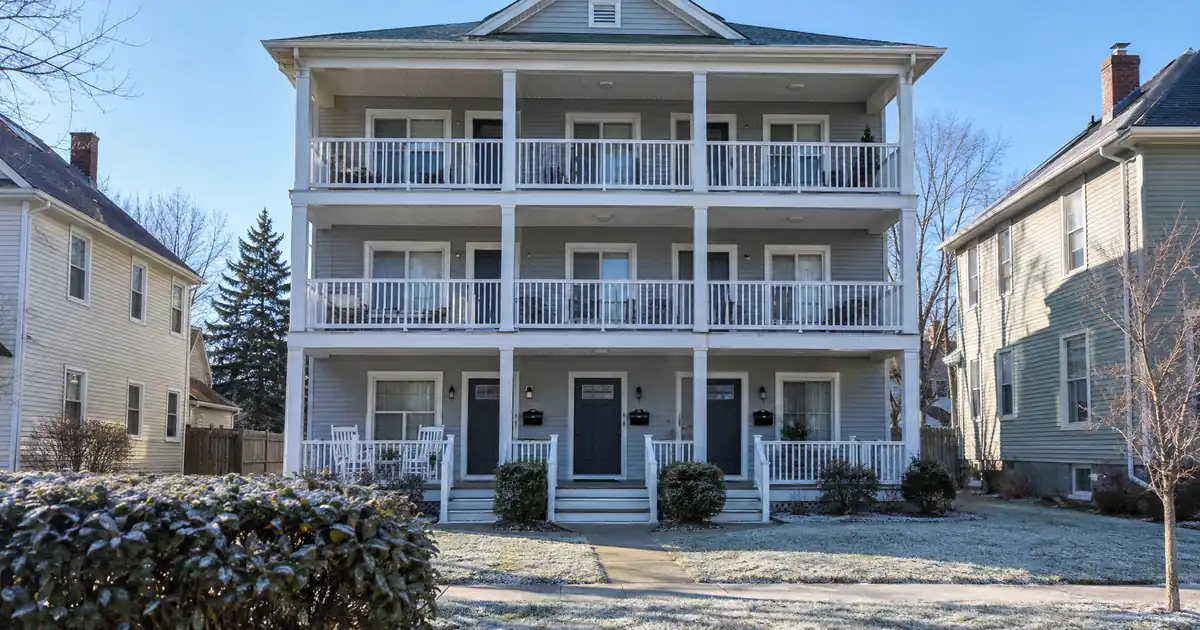
The Quick Read: On a triplex with one empty unit, most DSCR programs count the vacant unit at the appraiser’s market-rent opinion instead of zero, credit each leased unit at the lower of its lease or market rent, add the three figures together, and divide by the building’s single PITIA, which is principal, interest, taxes, insurance, and any HOA dues. Treatment is program-dependent, and some lenders want a signed lease before they count a unit’s income.
- The empty unit usually counts at appraised market rent, not at zero.
- An occupied unit counts at the lower of its signed lease or market rent.
- An above-market lease adds nothing, and a below-market lease sets the number.
- The empty unit still carries its share of the building’s payment.
- Clearing the ratio does not mean the building cash-flows.
Key Terms Defined
DSCR (debt service coverage ratio): the property’s qualifying monthly rent divided by its monthly PITIA. Investor programs in this category qualify primarily on property-level rental income covering the payment, subject to lender guidelines.
PITIA: principal, interest, taxes, insurance, and any association dues. A triplex has one PITIA for the whole building, however many units it has.
Market rent: what an appraiser concludes a unit would rent for today, based on comparable rentals. It is an opinion, not a signed contract.
Lease rent: the rent written in a signed lease. It is a fact about one tenant, which may or may not match the market.
Rent schedule: the part of the appraisal that lists each unit’s actual rent next to the appraiser’s market-rent opinion. This is where an empty unit gets a number.
Seasoning: a waiting period a lender wants between two events, such as buying a property and refinancing it.
DSCR Calculator
Run the numbers in your market
Rate source: Freddie Mac 30-yr average via FRED® — Federal Reserve Bank of St. Louis · effective Oct 22, 2026
Prefilled with starting assumptions — enter your own rent or nightly figures, taxes, insurance, and HOA for a more accurate picture.
Program parameters update from Lendmire’s centralized guideline source. Taxes and insurance are editable estimates.
As of Oct 22, 2026 · General Freddie Mac market benchmark, not a Lendmire loan offer. Rent, nightly rate, occupancy, taxes, and insurance are editable estimates. Short-term rental figures are estimates only and vary significantly by season, property type, management approach, and local short-term-rental rules — confirm local regulations before relying on them. Qualifying income for short-term rentals varies by program — some use appraisal market rent, others use documented STR history or projections — and is confirmed in underwriting. Not a Loan Estimate, approval, or commitment to lend. Program availability and eligibility are subject to lender guidelines, credit approval, property review, and underwriting.
What Does an Empty Unit Count As?
An empty triplex unit counts at the appraiser’s market rent on most programs we see across the wholesale network. The reason is simple. The lender needs a rent figure for every unit, and a vacant unit has no lease, so the appraisal supplies the missing number.
Triplexes are appraised on a small residential income property report, known as Form 1025. The Fannie Mae Selling Guide lists it as the appraisal report for two- to four-unit properties. DSCR loans are not agency loans. The lender borrows the form, and the lender writes the rules.
The form matters because it works at the unit level. A practitioner guide to Form 1025 explains that the report captures rent for each unit separately. Those unit rents roll into an operating income statement with gross rent, a vacancy and expense allowance, and net income.
Here is the catch for new investors. That operating income statement is the appraiser’s view of the building. The DSCR calculation on a residential program is simpler. It takes qualifying gross rent and divides it by PITIA. Commercial lending defines the ratio as net operating income over debt service, and mixing up the two definitions is a common source of confusion on small buildings.
How the Lender Builds the Number, Step by Step
The lender sets a rent figure for each unit, adds them, and divides by the building’s PITIA. Each step has a rule behind it.
1. Rent roll and leases. The borrower or seller provides a rent roll and lease copies for the two occupied units. Per-unit rents should tie out across the documents. Rent that cannot be documented tends to be treated as if the unit were vacant.
2. Appraisal. The appraiser reports value and per-unit rent together. For the occupied units, the report shows lease rent beside a market-rent opinion. For the empty unit, it shows only the market-rent opinion.
3. Rent figure per unit. Each occupied unit counts at the lower of lease or market. The vacant unit counts at market rent.
4. Sum. The three figures are added together.
5. Divide. The total goes over the building’s full PITIA. The empty unit adds its market rent to the top of the fraction, and its carrying cost is already inside the bottom.
6. Compare to the program. Many select programs start at 1.00 coverage. A separate select-lender path goes below 1.00, with leverage and terms adjusted. Stronger ratios open better pricing and higher leverage.
Notice what never enters the math. Your pro forma, your hoped-for rent, and the rent you plan to charge after a fresh coat of paint do not count. The appraiser’s number governs.
A Worked Example: Two Leased Units, One Empty
Say three units rent for about the same amount and the building clears roughly 1.25x with every unit counted at market. The inputs below are modeled assumptions, not market data. The point is how each rent decision moves the ratio.
| Scenario | How the units count | Approx. coverage |
|---|---|---|
| All three at market | Leases match the appraisal | About 1.25x |
| Empty unit at appraised rent | Two leases at market, one at appraiser’s figure | About 1.25x |
| Empty unit counted at zero | Two units only | About 0.83x |
| One lease 10% below market | Lease sets that unit’s rent | About 1.21x |
| Appraiser lands 15% low on empty unit | Lower market figure counts | About 1.19x |
The second and third rows are the heart of the topic. A lender that counts the empty unit at market keeps you near 1.25x. A lender that counts it at zero drops you to roughly two-thirds of that. Same building, same loan, very different file.
The fourth and fifth rows show the lower-of rule at work. Two modest leakages, one below-market lease and one cautious appraisal, take off a few hundredths of coverage. On a file that started at 1.25x, that is fine. On a file that started near 1.05x, it can decide the outcome.
Now flip the lease. If one occupied unit has a lease 10% above market, the lender counts market rent for that unit. The ratio stays about 1.25x. The extra rent is real money to you, but it does not help the coverage figure.
Why One Empty Unit Hurts More Than It Looks
In a triplex, one empty unit is a third of the units, and often close to a third of the rent. Small buildings are sensitive that way. Lose one tenant in a duplex and half the income goes. In a fourplex, it is a quarter.
Two details make the empty unit costlier than the table suggests.
First, the unit’s share of taxes, insurance, and principal and interest does not shrink because nobody lives there. The payment is for the building. The empty unit contributes only an appraised rent opinion to the numerator, while the denominator carries its full weight.
Second, units rarely rent equally. A ground-floor two-bedroom might rent for noticeably more than a one-bedroom upstairs. If the empty unit is the bigger one, losing it hurts the ratio by more than one-third. If it is the smallest, the damage is lighter. Run the math by rent share, not by unit count.
Where the General Rule Bends
Treat “market rent for the empty unit” as the common pattern, not a promise. The network has many lenders, and they do not all read vacancy the same way. These are the edge cases that move files.
Programs that want a lease first. Some lenders use the appraisal’s market rent. Others will not count a unit’s income until a lease exists. On those programs the empty unit may count for little or nothing until you document a tenant.
Lease-up or seasoning conditions. Some programs accept the market-rent figure but add conditions, such as a lease-up requirement or a waiting period before certain transactions. Ask which conditions attach before you choose a lender, not after.
Rent-ready condition. A unit that needs major rehab is a different problem from a unit that needs a tenant. One investor on a BiggerPockets forum thread argues there is no debt service coverage when a property is vacant or distressed and needs rehab to produce rental income. That is one investor’s view, but it matches how lenders think. An appraiser can only assign market rent to a unit that could be rented as it stands.
Month-to-month, related-party, and subsidized tenants. Treatment varies by program. Month-to-month leases lean on market rent. A lease with a relative gets closer review. Subsidized-rent leases tend to count the lowest credible figure.
Occupancy. DSCR loans are designed for non-owner-occupied investment properties. Because they are business-purpose investor loans, they are reviewed differently from a standard owner-occupied mortgage. If you plan to live in one of the triplex units, this is the wrong product for that purchase.
The FHA contrast. FHA has its own self-sufficiency test for three- and four-unit homes, which reduces the rent it credits. Some investors assume the same haircut applies to DSCR. It does not, because it is an FHA rule and not a DSCR one. Some programs still apply their own conservatism, so ask the lender.
Property types. Manufactured homes, log homes, and barndominiums are not offered through these programs, no matter how many units they contain. A conventional triplex is the target.
DSCR vs. conventional financing
There are two common ways to finance an investment property, and they qualify you differently — here’s how investors weigh them.
Why investors choose it
- Qualifies on the property’s rental income — no personal tax returns, W-2s, or pay stubs needed to document income.
- No personal debt-to-income ceiling to clear, so existing mortgages and obligations don’t cap your borrowing the same way.
- Can be closed in an LLC, keeping the property inside a business entity.
- Built for scaling — not held to the limit on number of financed properties that conventional financing applies.
- Underwriting centers on the deal: generally qualifies when the rent covers the payment, a 1.00x coverage ratio being a common baseline (confirmed in underwriting).
- Designed specifically for investment property, including long-term and, where the program allows, short-term rentals.
Where it’s strong
- Often the lowest ongoing financing cost for a buyer who fully qualifies on personal income — a fit for a first property or a cost-first purchase.
Trade-offs for investors
- Requires full personal income documentation and must fit within a debt-to-income limit — salary, existing debts, and other mortgages all count.
- Typically held in your personal name rather than a business entity.
- Caps how many financed properties you can carry, which can become a ceiling as a portfolio grows.
- Evaluates you as a borrower as much as the property, which usually means more paperwork.
How investors usually choose: a first or single property often optimizes for the lowest financing cost; portfolio builders often optimize for leverage, vesting in an LLC, and scaling past conventional caps. The right answer depends on your goals, the property, and current guidelines — both paths run through select lenders in Lendmire’s wholesale network, with eligibility and terms confirmed in underwriting.
Purchase Versus Refinance With One Empty Unit
The rent-counting logic is the same in both cases, but the pressure points differ.
| Factor | Purchase | Refinance |
|---|---|---|
| Rent for empty unit | Appraiser’s market rent | Same, on most programs |
| Typical leverage | 75%–80% LTV on a purchase | Cash-out about 75% LTV |
| Lease before applying | Optional, often helpful | Often the best lever |
| Main risk | Low appraisal rent | Vacancy shrinks the loan |
On a purchase, most files land at 75%–80% LTV on an investment property, and select high-leverage programs reach 85% with roughly a 700-plus credit score. On a cash-out refinance of a standard rental, the ceiling is around 75% LTV, and about six months of seasoning is the common expectation. A vacant unit lowers coverage, and on a refinance lower coverage can shrink the loan the file supports.
Leasing the empty unit before you apply gives the underwriter actual rent to review. If you are comparing exit paths, Lendmire’s piece Can One Vacant Triplex Unit Be Counted at Market Rent for DSCR? covers the narrower question of when that treatment applies. For larger balances, Lendmire’s piece Jumbo Cash-Out Requirements for a Triplex With One Unit Vacant picks up where this article stops.
Lease Before You Close? The Tradeoff
Signing a lease before the appraisal gives the lender real rent instead of an opinion. That helps, with one trap. A lease signed at a discount just to fill the unit sets the counted rent at that discount, because the lower-of rule applies. A below-market lease can lower the number you would have had from the appraiser alone.
A sensible approach is to price a new lease at or near market, and to confirm what market is before you sign anyone. If the unit is not rent-ready, finishing it first often matters more than rushing a tenant in.
Every unit does not have to be leased before a purchase closes. But on programs that want a lease first, an empty unit lowers coverage until rent is documented. The program you choose decides which camp you are in.
What a Lender May Ask About the Empty Unit
Expect questions about condition, legal status, and rent-readiness. Lenders want to know the unit has working systems, a legal kitchen and bath, and no open repair items that would stop a tenant from moving in. They may also ask for photos, a recent rental listing, or a short explanation of why the unit is empty.
Document the history. A unit that sat empty because the last tenant left last month is a different story from a unit that has been empty for a year. Neither is disqualifying on its own, but the second one invites more questions.
A Pre-Application Checklist
Run these before you submit a triplex file.
- Build a rent roll with each unit’s lease rent and lease dates.
- Gather lease copies for the two occupied units.
- Estimate market rent for each unit, including the empty one, from comparable rentals nearby.
- Calculate the ratio unit by unit at the lower of lease or market, not at hoped-for rent.
- Confirm the empty unit is rent-ready.
- Ask the broker how the target programs treat a vacant unit and whether they attach lease-up conditions.
- Check your credit and reserves. Programs commonly want a 660 score or better, with a 620 floor in parts of the network and 700-plus for the strongest leverage. Reserves are commonly about six months of PITIA, stepping up to about nine months above $1,500,000.
- Decide what you will do if the number falls short.
If the Ratio Falls Short
You have four paths, and they are not mutually exclusive.
1. Lease the unit first. Real rent gives the lender something to credit, at market or the lease, whichever is lower.
2. Put more down. A larger down payment lowers the monthly payment and can lift the ratio. It never erases leverage caps, credit floors, reserve rules, or property eligibility. The strongest files clear both tests, with enough equity and enough rental coverage.
3. Change the structure. Extended terms of 40 years and interest-only periods are available through select lenders in the network, which can improve coverage on the same building.
4. Look below 1.00. Programs below 1.00 coverage are available through select lenders in the network, with leverage and terms adjusted. Qualification stays subject to lender guidelines, credit approval, and property review.
Passing the Ratio Is Not the Same as Making Money
The DSCR compares rent to PITIA and nothing else. A building that clears 1.00 can still lose money. Repairs, turnover, vacancy, management, utilities, and capital expenses all sit outside the calculation.
An empty unit is the clearest example. The lender may credit it at market rent, but you are not collecting that rent until someone moves in. Run your own budget next to the lender’s math, and keep a cushion for the months a unit sits idle. Tax treatment varies; consult a qualified professional.
Frequently Asked Questions
Does a vacant unit count as zero rent on a DSCR loan?
On most programs we place files with, no. The appraiser’s market-rent opinion for that unit stands in for the missing lease. Some lenders want a signed lease before they count the income, so confirm the treatment for the specific program before you apply.
Which rent counts for the occupied units, the lease or the appraisal?
The lower of the two, unit by unit. If a lease is above market, the market figure counts. If a lease is below market, the lease figure counts. Either way, the three unit figures are added and divided by the building’s single PITIA.
Do all three triplex units need leases before closing?
Not on every program. Many programs credit an empty unit at market rent, so a lease is not always required. Others add lease-up conditions or want the lease first. Treatment varies, so ask which camp each program falls into.
Can I live in one unit of a triplex and still use a DSCR loan?
Generally not. DSCR programs are built for non-owner-occupied investment property. If you plan to live in the building, a different loan type is the better fit, and DSCR becomes useful again if you later move out and rent every unit.
If my ratio clears 1.00, does the triplex cash-flow?
Not necessarily. The ratio compares rent to PITIA only. Repairs, vacancy, management, utilities, and capital expenses are outside it, so a building can clear the lender’s test and still run thin for the owner.
Next Step
If you are buying or refinancing a rental property and want to see how the numbers work, Lendmire can help you compare DSCR loan options based on the property income, credit profile, leverage, and investor goals. As a mortgage broker arranging DSCR financing through select lenders across 41 markets, including Washington, D.C., it can show how different programs treat a vacant unit. For the full framework behind these mechanics, see the complete DSCR loans guide. Programs change, every file is underwritten individually, and nothing here is a commitment to lend.
A triplex with one empty unit is a normal file: price the building on the rent the appraiser will recognize, not the rent you hope to collect.
For current guidelines and terms, see Lendmire’s DSCR loan programs page.
About Lendmire
As a non-QM mortgage broker (NMLS# 2371349), Lendmire facilitates DSCR investor loans across 41 markets, including Washington, D.C. DSCR eligibility is generally reviewed around property-level rental income instead of personal income documentation, subject to lender guidelines, serving LLC-structured portfolios and self-employed borrowers who don’t fit conventional boxes. A two-time Scotsman Guide Top Mortgage Workplace (2025, 2026).
Get Started
Ready to find the right loan for you?
In about 30 seconds you can review financing options available for your investment property. No commitment required.
Informational only. Not a Loan Estimate, approval, or commitment to lend. Program availability and eligibility are subject to lender guidelines, credit approval, property review, and underwriting.
References
2. Form 1025 appraisal guide, New Jersey Real Estate Appraisal blog
3. BiggerPockets forum thread on DSCR loans for lower-priced purchases
This article is part of Lendmire’s DSCR loan program — full qualification details, guidelines, and scenarios live on the program page.
Related reading: Hard Money to DSCR Seasoning Rules After a Flip · Vacant Rental DSCR Payoff Requirements After Hard Money · One DSCR Portfolio Loan vs. a Loan in Each Southeastern State
Brandon Miller
Founder & CEO, Mortgage Loan Originator, Lendmire LLC
- Mortgage Loan Originator · NMLS# 1129696 · Verify on NMLS Consumer Access
- North Carolina Real Estate Broker · License# 343312 · Verify on NCREC
- North Carolina Insurance Producer · License# 19053198 · Property, Casualty, Life, Health · Verify on NAIC SBS
- Lendmire LLC · Firm NMLS# 2371349 · Verify firm licensure
Legal disclosures. Lendmire (NMLS# 2371349) is a state-licensed mortgage brokerage that arranges financing through wholesale lender relationships. Lendmire is not a direct lender, depository institution, or registered financial advisor. The discussion above is general informational content about real estate financing — it is not financial, legal, or tax advice, and readers should consult licensed professionals for guidance on their individual circumstances. Loan inquiries are subject to lender underwriting; this article does not represent a commitment to lend. Loan terms, rates, and qualification standards vary by borrower, property, and state, and are subject to change at any time. Equal Housing Opportunity. NMLS Consumer Access: nmlsconsumeraccess.org.