
The Quick Read: A DSCR lender judges the cabin, not your paycheck. It picks one supportable income figure, discounts it for the extra costs of running a nightly rental, and divides it by the full monthly obligation of principal, interest, taxes, insurance, and any HOA dues (PITIA). The result is the coverage ratio, and the income source the lender trusts decides it.
- The lender first checks that the cabin is eligible and legally operating as a short-term rental, then reads the income.
- Income evidence comes from trailing platform history, a third-party projection, or a long-term rent fallback. The three can give very different answers on the same cabin.
- Gross booking revenue is not qualifying income. Lenders apply a discount, and the size varies by program.
- On most files across our wholesale network, short-term-rental purchases go up to 75% LTV, and expect a 640+ score and a 1.00 coverage floor, subject to lender guidelines.
- Clearing the ratio is not the same as making money. Cleaning, management, utilities, and repairs sit outside the calculation.
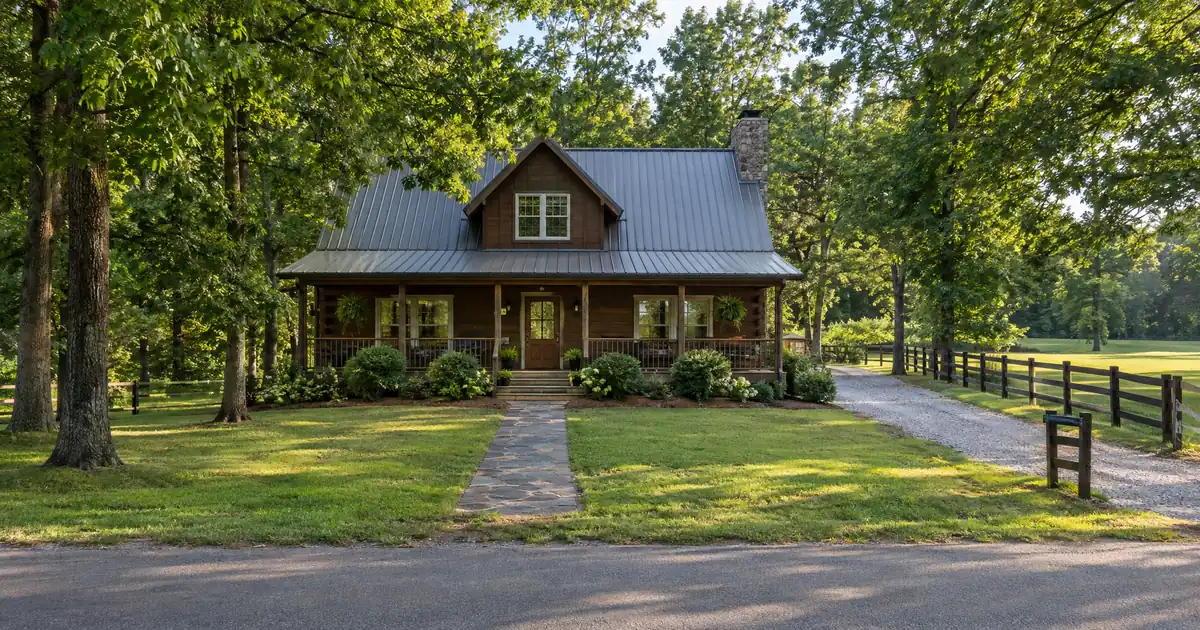
A cabin outside Gatlinburg and Pigeon Forge city limits is a good teaching case because it is marketed to nightly guests. That forces the lender to choose between several income stories. This guide walks through how that choice gets made.
DSCR Calculator
Run the numbers in your market
Rate source: Freddie Mac 30-yr average via FRED® — Federal Reserve Bank of St. Louis · effective Oct 29, 2026
Prefilled with starting assumptions — enter your own rent or nightly figures, taxes, insurance, and HOA for a more accurate picture.
Program parameters update from Lendmire’s centralized guideline source. Taxes and insurance are editable estimates.
As of Oct 29, 2026 · General Freddie Mac market benchmark, not a Lendmire loan offer. Rent, nightly rate, occupancy, taxes, and insurance are editable estimates. Short-term rental figures are estimates only and vary significantly by season, property type, management approach, and local short-term-rental rules — confirm local regulations before relying on them. Qualifying income for short-term rentals varies by program — some use appraisal market rent, others use documented STR history or projections — and is confirmed in underwriting. Not a Loan Estimate, approval, or commitment to lend. Program availability and eligibility are subject to lender guidelines, credit approval, property review, and underwriting.
What Does a DSCR Lender Actually Read on a Wears Valley Cabin?
The lender reads in a fixed order: eligibility and legality first, property type second, income evidence third, and the ratio last. Most surprises come from the first two steps, not the math. A cabin that fails early never gets its bookings counted.
Here is the sequence as it plays out on most files:
1. Eligibility and legal operation. Can this cabin lawfully run as a nightly rental? Is the permit current? Does the insurance policy name short-term-rental use?
2. Property type. Is it a standard one-to-four-unit dwelling? Some construction types are simply not offered (more on that below).
3. Income evidence. Which source will the program accept: history, projection, or long-term rent?
4. The discount. The lender trims gross receipts for operating costs.
5. The ratio. Qualifying monthly income divided by PITIA.
DSCR loans are designed for non-owner-occupied investment properties. Because they are business-purpose investor loans, they are reviewed differently from a standard owner-occupied mortgage. That is why your W-2 never enters this sequence. The loan is reviewed primarily on property-level rental income covering the payment, subject to lender guidelines. For the full framework, see Lendmire’s complete DSCR loans guide.
Key Terms Defined
DSCR (debt service coverage ratio): Qualifying monthly rental income divided by the monthly housing obligation. A result of 1.00 means income equals the obligation.
PITIA: Principal, interest, taxes, insurance, and any HOA dues. It is the full monthly cost of holding the loan.
Qualifying income: The income figure the lender actually uses after choosing a source and applying a discount. It is rarely the number on your booking dashboard.
Trailing twelve months: The most recent full year of documented bookings and payouts. It is the strongest evidence for an operating cabin.
Haircut: The discount a lender applies to gross short-term-rental receipts to account for higher operating costs.
Form 1007 and Form 1025: Appraisal forms that report market rent from long-term leases. The 1007 covers single-family homes, and the 1025 covers two-to-four-unit properties.
Which Income Path Will the Lender Use?
The lender uses whichever path the program allows, and strong files usually have the most direct evidence. Documented history generally carries the most weight. A projection fills in when there is no history. The long-term rent fallback is the most conservative and the one that most often hurts a mountain cabin.
| Income path | When it applies | How it tends to be treated |
|---|---|---|
| Trailing platform or manager statements | Cabin already operating | Strongest evidence |
| Third-party projection | Purchase with no history | Usable, with a discount |
| Appraiser STR analysis | Program accepts it | Supports value-side review |
| Form 1007 long-term rent | Fallback or conservative program | Often far below nightly income |
BiggerPockets notes that lenders may use AirDNA or Rabbu projections on short-term rentals, and that the 1007 market-rent survey often lands well below what a short-term rental really earns. That matches what we see. Different lenders in a network weigh these paths differently, so the same cabin can look strong with one program and thin with another.
Why does the 1007 miss so badly? It was built for monthly leases. Fannie Mae’s appraiser guidance says the form calls for monthly-leased comparables, that multiplying a nightly rate by 30 is incorrect, and that the form cannot estimate a nightly fee. This is agency guidance about the form, not a rule for DSCR loans. DSCR loans are non-QM, and the industry simply borrows the form names.
How Does a Lender Turn Uneven Bookings Into One Number?
The lender averages the whole year. It does not underwrite to peak months. A cabin that books heavily in the fall and holiday season and sits quiet in winter gets one blended monthly figure.
Smokies-wide commentary from The Short Term Shop calls October, July, and December the strongest months and January and February the slowest, with occupancy often below 25% in the slow stretch. A lender reading trailing statements sees all twelve months and adds them up. That is why a cabin with one spectacular season can still produce a modest average.
Picture the logic with a modeled twelve-month pattern. These are illustrative assumptions, not market data:
- Three peak months produce the largest deposits.
- Six shoulder months produce moderate deposits.
- Three slow months produce thin deposits.
Add all twelve, divide by twelve, then apply the program’s discount. That blended number goes into the ratio. If you quote yourself a peak-month income, you are running a different deal than the lender is.
For a market sense check, AirROI lists 183 active listings and about 40.3% average occupancy for Wears Valley. Treat that as indicative only, since data vendors differ in method.
Same Cabin, Three Readings
One cabin can produce three different coverage ratios depending on the income source. Here is the logic with no dollar figures, using modeled relationships.
- History reading. Trailing twelve months of documented payouts, discounted. This often clears 1.00 comfortably on a well-run cabin.
- Projection reading. A third-party estimate, discounted more heavily because nothing is proven. It lands near history on a strong cabin and below it on a weak one.
- Long-term rent reading. The 1007 figure. On a cabin whose nightly income far exceeds what a monthly tenant would pay, this can fall well below 1.00.
BiggerPockets gives a worked example where projected revenue is twice PITIA, producing a 2.00 ratio. That is the simple math. The real work is the bridge from dashboard to qualifying income:
1. Start with gross platform revenue.
2. Remove owner-use nights, which never counted as rental income.
3. Remove months before the permit was in place.
4. Reconcile to manager statements and bank deposits.
5. Apply the program’s discount.
6. Divide by PITIA.
Across our network, 1.00 is where many select programs start. Stronger ratios open better pricing and leverage. A separate select-lender path takes coverage below 1.00, with leverage and terms adjusted. If the only program available falls back to long-term rent, a cabin with strong bookings can still land in that lower territory, so lender selection matters as much as the property.
DSCR vs. conventional financing
There are two common ways to finance an investment property, and they qualify you differently — here’s how investors weigh them.
Why investors choose it
- Qualifies on the property’s rental income — no personal tax returns, W-2s, or pay stubs needed to document income.
- No personal debt-to-income ceiling to clear, so existing mortgages and obligations don’t cap your borrowing the same way.
- Can be closed in an LLC, keeping the property inside a business entity.
- Built for scaling — not held to the limit on number of financed properties that conventional financing applies.
- Underwriting centers on the deal: generally qualifies when the rent covers the payment, a 1.00x coverage ratio being a common baseline (confirmed in underwriting).
- Designed specifically for investment property, including long-term and, where the program allows, short-term rentals.
Where it’s strong
- Often the lowest ongoing financing cost for a buyer who fully qualifies on personal income — a fit for a first property or a cost-first purchase.
Trade-offs for investors
- Requires full personal income documentation and must fit within a debt-to-income limit — salary, existing debts, and other mortgages all count.
- Typically held in your personal name rather than a business entity.
- Caps how many financed properties you can carry, which can become a ceiling as a portfolio grows.
- Evaluates you as a borrower as much as the property, which usually means more paperwork.
How investors usually choose: a first or single property often optimizes for the lowest financing cost; portfolio builders often optimize for leverage, vesting in an LLC, and scaling past conventional caps. The right answer depends on your goals, the property, and current guidelines — both paths run through select lenders in Lendmire’s wholesale network, with eligibility and terms confirmed in underwriting.
What Does Not Count Toward the Number?
Several items sit outside qualifying income, even if they feel like income to you.
- Owner-use nights. Time you or family spend in the cabin earns nothing the lender can count.
- Unpermitted periods. Bookings from a stretch when the cabin was not lawfully operating raise both a legal and an underwriting question.
- One-off peak months. A single record month does not represent the year.
- Gross revenue. Platform fees, cleaning, and management come out of what you keep, and lenders discount for them.
- Projected upside. A hoped-for income figure is not a supportable one.
Does the Cabin Pass Before Income Is Even Read?
Yes, it has to. Eligibility comes first, and some cabins fail there. DSCR on log homes, manufactured homes (single- and double-wide), and barndominiums is not offered in our network. “Cabin” is a marketing word, not a property type. A conventionally built, stick-framed cabin with a log-style exterior is a different file from a true log home, so confirm construction before you fall in love with the numbers. Utilities, septic, road access, and acreage can also draw lender questions, and each lender screens them differently.
Then comes legality. Short-term rental rules can vary by city, county, HOA, and property type, so investors should confirm local rules before relying on projected rental income. In Wears Valley, a useful fact for the file is jurisdiction. The valley is unincorporated, and the Sevier County Fire Marshal’s program page says the short-term rental permit program began on January 1, 2024, and covers rentals outside city limits. A property-management guide from Haven Vacation Rentals adds that a Pigeon Forge or Gatlinburg mailing address can still sit in the county, so check the parcel rather than the postal address.
Permit paperwork matters because the lender wants proof the income is lawful. The county’s permit application tiers its fee by occupancy, and a lapsed permit can bring added code requirements on reinstatement. A current permit, an inspection record, and an insurance policy that names nightly use all strengthen the file.
What Proves the Income?
Lenders reconcile three document types, and mismatches slow everything down.
| Document | What it shows | Common mismatch |
|---|---|---|
| Platform payout reports | Booking revenue paid out | Gross vs. net of fees |
| Property-manager statements | Revenue after management | Timing differences |
| Bank deposits | Cash that actually arrived | Missing months or transfers |
Clean, matching records are worth more than a bigger number you cannot support. A strong file lines up all three for the same twelve months.
What if the Cabin Has No History, or Was a Second Home?
Purchases without history rely on a projection or an appraiser’s short-term-rental analysis. Refinances usually need actual history, and some programs want about twelve months of hosting history. A cabin you just converted from a long-term tenant or personal use only has income evidence since the switch, so lenders weigh the months that exist.
Our network’s short-term-rental guidance runs like this, subject to lender guidelines: purchases go up to 75% LTV with a 1.00 coverage floor. Refinances run around 70% with a 1.00 floor. Cash-out on short-term-rental collateral tops out at 70%, while standard rentals reach 75% on cash-out. Expect a 640+ score and about 12 months of hosting history. Reserves commonly run around 6 months of PITIA, though they vary by lender, leverage, and loan size.
A larger down payment lowers the payment and can lift the ratio. It never erases leverage caps, credit floors, reserve rules, or property eligibility. The strongest files clear both tests: enough equity and enough rental coverage.
Passing the Ratio vs. Making Money
Clearing 1.00 is not positive cash flow. DSCR compares rent to PITIA only. Cleaning, management fees, utilities, hot tub and pool care, supplies, repairs, vacancy, and capital expenses all sit outside the calculation. A cabin can pass the ratio and still lose money in a slow winter.
Run your own conservative number first. Use the blended annual figure, subtract the real operating costs, and see what remains. If the cabin only works at peak-season income, it does not really work.
One practitioner note: files on seasonal mountain cabins often look fine on a trailing-twelve-month basis but get tight when the lender discounts a projection. When we see a cabin with no history, we usually run the long-term-rent fallback alongside the projection before submission, so the investor knows the worst-case reading in advance.
Pre-Submission Checklist for Wears Valley Owners
- Confirm the parcel is in the county and the permit is current.
- Confirm construction type is eligible and the cabin is not a log home.
- Gather twelve months of platform, manager, and bank records that match.
- Remove owner-use nights from your income figure.
- Confirm insurance names short-term-rental use.
- Run the ratio three ways: history, projection, long-term rent.
- Compare against your credit score, reserves, and leverage targets.
Frequently Asked Questions
Does the lender use my Airbnb dashboard number?
Not at face value. Gross dashboard revenue gets reconciled to payouts and bank deposits, then discounted for operating costs. The resulting qualifying income is nearly always lower than the headline number.
Can I qualify with no rental history?
Often yes on a purchase, using a third-party projection or an appraiser’s analysis, subject to lender guidelines. Expect a larger discount than on proven history. Refinances generally need actual history.
What happens if the lender uses long-term rent instead?
The ratio can drop sharply, because monthly-lease comps sit far below nightly income on a tourist cabin. Some select lenders in the network offer paths below 1.00, with leverage and terms adjusted. Choosing the right program is the main fix.
Does personal use of the cabin hurt?
Owner-use nights do not count as income, so they shrink the figure the lender can use. Heavy personal use can also raise questions about whether the property is truly run as a rental.
How many months of income count?
Lenders typically look at the most recent twelve months of documented history on an operating cabin and average them. A partial year only reflects the months since the cabin began operating as a rental.
If you are buying or refinancing a rental property and want to see how the numbers work, Lendmire can help you compare DSCR loan options based on the property income, credit profile, leverage, and investor goals. Lendmire is a broker arranging financing through select lenders in its wholesale network across 41 markets, including Washington, D.C. Tax treatment varies; consult a qualified professional.
About Lendmire
Lendmire (NMLS# 2371349) is a DSCR-focused mortgage broker that helps arrange investor financing across 41 markets, including Washington, D.C., through wholesale and investor-lending channels. DSCR eligibility is generally reviewed by the lender around the property’s rental income rather than personal income documentation, subject to lender guidelines — which works for self-employed investors, LLC operators, and portfolios above four financed properties. Scotsman Guide named Lendmire a Top Mortgage Workplace in both 2025 and 2026.
Get Started
Ready to find the right loan for you?
See your offer in seconds. No credit pull, no obligation.
Informational only. Not a Loan Estimate, approval, or commitment to lend. Program availability and eligibility are subject to lender guidelines, credit approval, property review, and underwriting.
References
1. BiggerPockets on DSCR loans for short-term rentals
2. Fannie Mae Appraiser Update, June 2024
3. The Short Term Shop on Smoky Mountain income
4. AirROI Wears Valley market data
5. Sevier County Fire Marshal short-term rental program
6. Haven Vacation Rentals on Sevier County rules
This article is part of Lendmire’s DSCR loan program — full qualification details, guidelines, and scenarios live on the program page.
Related reading: How a DSCR Lender Sizes a Refinance on a Rental Property · How to Fix Rental Income Documentation and Get a DSCR Loan Approved · How Much a DSCR Lender Lends on a Rental Vested in an LLC
Brandon Miller
Founder & CEO, Mortgage Loan Originator, Lendmire LLC
- Mortgage Loan Originator · NMLS# 1129696 · Verify on NMLS Consumer Access
- North Carolina Real Estate Broker · License# 343312 · Verify on NCREC
- North Carolina Insurance Producer · License# 19053198 · Property, Casualty, Life, Health · Verify on NAIC SBS
- Lendmire LLC · Firm NMLS# 2371349 · Verify firm licensure
Important disclosures. Lendmire (NMLS# 2371349) is a licensed mortgage brokerage. Lendmire is not a direct lender, depository institution, or financial advisor. All loan inquiries are subject to lender underwriting; this article does not constitute a commitment to lend. Rates, terms, and program guidelines are subject to change without notice and vary by borrower profile, property type, and state. Information in this article is general in nature and is not financial, legal, or tax advice. Equal Housing Opportunity. NMLS Consumer Access: nmlsconsumeraccess.org.