
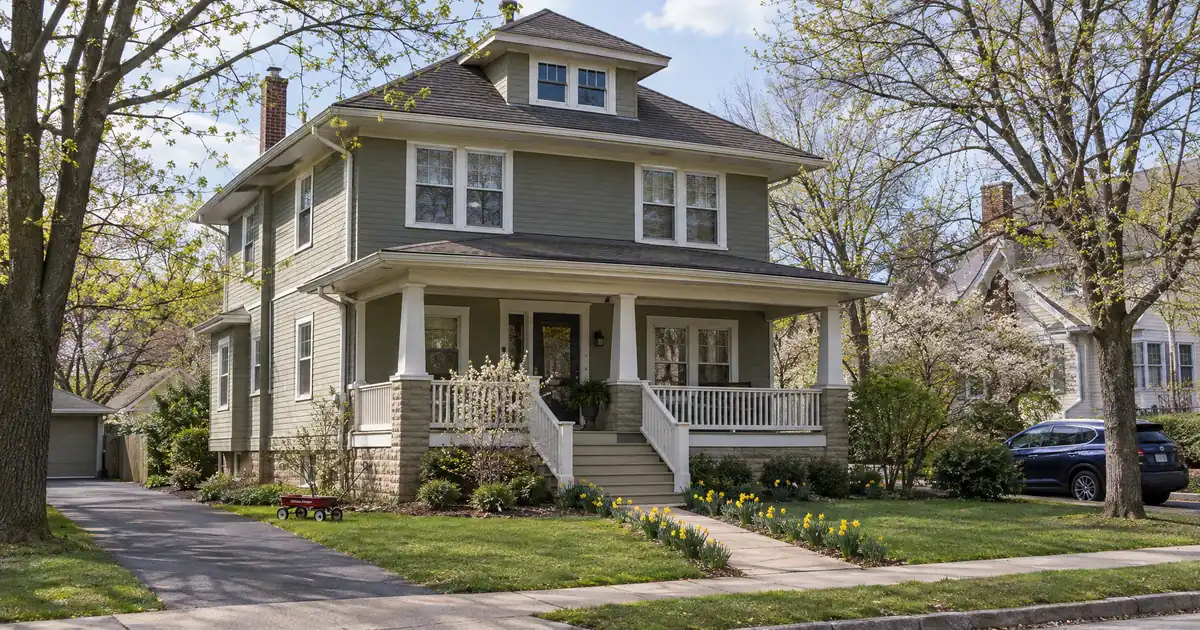
The Quick Read: A DSCR purchase moves through a set sequence of steps, and the pace is set by third parties and file completeness, not by a rule. The appraiser, title company, insurer, and entity paperwork control the calendar. The lender’s conditions add to it. No standard schedule applies to every file, so this article explains the order of work and what stalls it.
- The appraisal is usually the first and longest step. It sets both the value and the market rent.
- Title, insurance, and entity review run alongside the appraisal, not after it.
- Condos, short-term rentals, 2-4 unit buildings, and title problems are where files slow down.
- Most purchases run at 75%-80% LTV across the network, and a larger down payment never replaces rental coverage.
- Clearing coverage is not the same as positive cash flow.
This is how a working broker sees the process. Lendmire arranges DSCR purchase loans through a wholesale network of lenders, and the same stall points show up file after file. The complete DSCR loans guide covers the product itself. This piece covers the calendar.
DSCR Calculator
Run the numbers in your market
Rate source: Freddie Mac 30-yr average via FRED® — Federal Reserve Bank of St. Louis · effective Oct 29, 2026
Prefilled with starting assumptions — enter your own rent or nightly figures, taxes, insurance, and HOA for a more accurate picture.
Program parameters update from Lendmire’s centralized guideline source. Taxes and insurance are editable estimates.
As of Oct 29, 2026 · General Freddie Mac market benchmark, not a Lendmire loan offer. Rent, nightly rate, occupancy, taxes, and insurance are editable estimates. Short-term rental figures are estimates only and vary significantly by season, property type, management approach, and local short-term-rental rules — confirm local regulations before relying on them. Qualifying income for short-term rentals varies by program — some use appraisal market rent, others use documented STR history or projections — and is confirmed in underwriting. Not a Loan Estimate, approval, or commitment to lend. Program availability and eligibility are subject to lender guidelines, credit approval, property review, and underwriting.
What Actually Sets the Pace on a DSCR Purchase?
Four things set the pace: third-party vendors, file completeness, entity documents, and the lender’s conditions. No regulator publishes a closing schedule for DSCR loans. Any number you see advertised is a marketing claim, not a standard.
Vendors are the largest variable. The appraiser’s availability depends on the market and the property type. Title work depends on the county and the property’s history. Insurance depends on the carrier and the property’s condition.
Real-world files vary widely. Some move in a straight line. Others sit for a long stretch because one vendor or one lender condition stalls. Plan around the slowest likely step, not the average.
The pattern is simple. A clean file with fast vendors moves. A file with a gap in any one area waits on that gap.
How Does a DSCR Purchase Move From Application to Funding?
The work runs in six stages, and several of them overlap. A well-run file starts the appraisal, title, and insurance together instead of one after another.
1. Scenario check and application. The borrower provides the property details, the purchase contract, ID, a credit authorization, and asset statements for reserves. If the borrower is buying through an LLC, the entity documents go in now, not later.
2. Appraisal ordered. This is the longest step on most files. The report supplies two numbers. Value drives LTV. Market rent drives coverage. The rent exhibit is a Form 1007 on one-unit properties and a Form 1025 on 2-4 units. Those are appraisal form names only. They do not make agency rules govern the loan.
3. Title, insurance, and entity review in parallel. Title orders the commitment and the lender’s policy. The borrower binds landlord or hazard insurance. On a condo, the HOA questionnaire is requested. For LLC vesting, the documents must match whoever signs.
4. Underwriting. The underwriter checks credit, the appraised value and rent, the coverage calculation, LTV, reserves, and the entity file.
5. Conditions. Typical open items are the insurance binder, entity authority documents, a lease that matches the rent schedule, and updated statements if the file ages.
6. Clear to close, signing, and funding. Signing happens in person, by mobile notary, or by remote online notarization. Funds move through title or escrow. The recorded deed follows later.
Closing, funding, and recording are three different events. Closing is the signing. Funding is the money moving. Recording is the deed reaching the public record. Contracts that confuse them cause avoidable arguments.
How Does the Appraisal Shape Both Leverage and Coverage?
The appraisal controls two tests at once. Value sets leverage, and market rent sets the debt coverage ratio. The ratio compares rent to the full monthly obligation: principal, interest, taxes, insurance, and any HOA dues.
Many programs use the lower of the in-place lease or the appraiser’s market rent. That is common, not universal. A lease signed above market can be pulled down to the appraiser’s figure.
Here is the catch. The rent figure used to screen the deal can move when the report lands. A property that looked like 1.2x on a listing estimate can come back lower. That can change the ratio, the leverage, or the cash required at closing.
A low appraisal is not an automatic dead end. An appraisal reconsideration request, backed by recent in-neighborhood sales and condition adjustments, is a routine step. Whether it works depends on the comps and the underwriter’s review.
Coverage works on a ladder. A 1.00 ratio is where many select programs start. A separate select-lender path takes coverage below 1.00, with leverage and terms adjusted. Stronger ratios open better pricing and higher leverage.
Why Is the Closing Date in Your Contract the Real Risk?
The purchase agreement’s closing date has to allow for the appraisal, title, and insurance lead times. Sellers and agents often assume cash-like speed. DSCR loans do not run that way, and the contract has to say so.
Three habits protect the date:
- Order insurance quotes and a preliminary title review before the appraisal returns.
- Have entity documents, reserve statements, and the lease ready at application.
- Ask the lender for its closing-document process in writing, because it varies by lender.
Compare lenders on a like-for-like basis. An “as fast as” claim is marketing. Ask how long the appraisal takes in the specific market, and whether the lender orders it the day the application lands.
Extensions are worth negotiating up front. A short built-in extension costs the seller little. A missed date with earnest money at stake costs the buyer a great deal. Lendmire’s piece How to Time a Rental Cash-Out Refinance Around a Purchase Closing covers the next step after the purchase funds.
Do Federal Disclosure Waiting Periods Apply to DSCR Loans?
Generally no. DSCR purchases on non-owner-occupied rentals are business-purpose credit, and these loans are exempt from the consumer disclosure calendar. The CFPB’s Regulation Z page exempts credit extended primarily for a business purpose, and its commentary treats acquiring a non-owner-occupied rental as business purpose.
The three-business-day Closing Disclosure waiting period belongs to consumer-purpose mortgages, as the CFPB’s TRID FAQ describes. DSCR purchases are exempt from TRID, so that wait is not built into a DSCR closing, even though some explainers present it as if it were. Many lenders and title companies still deliver a pre-closing package by their own policy, so closing-document timing depends on their process.
One boundary matters. If the borrower will live in the property, the analysis changes, and acquisition credit is treated as business purpose only above a certain unit count. That is not a typical DSCR purchase.
Where Does the General Timeline Break?
The sequence holds on a clean single-family rental. It stretches in predictable places.
| Situation | What slows it |
|---|---|
| Condo | HOA questionnaire and master-policy documents |
| Short-term rental | Different income-support method and added review |
| 2-4 units | Form 1025 rent and operating review |
| Rural or unusual property | Thin appraiser pool, few rent comps |
| Title problems | Liens, probate, ownership gaps |
| Entity mismatch | Expired good-standing, missing amendment, wrong signatory |
Condos. HOA questionnaire completeness is the common stall. The HOA controls that clock, not the borrower or the lender. Request it the day the contract is signed.
Short-term rentals. These need an STR-specific income method. Across the network, purchases run up to 75% LTV, with a 1.00 coverage floor on purchases. Expect a 640+ score and about 12 months of hosting history. Short-term rental rules vary by city, county, HOA, and property type, so investors should confirm local rules before relying on projected rental income. Leverage, reserves, and pricing vary by lender and program.
Portfolio and blanket loans. Each property carries its own appraisal, title, and insurance. One slow county or one title defect can hold the whole package, and coverage is measured on the pool.
Title surprises. These are the highest-variance delays on any file. A lien or probate issue can take clearing title from routine to a project of its own.
Entity mismatches. An LLC borrower must match across documents, subject to lender program eligibility. The articles, operating agreement, EIN letter, and signatory authority have to agree. A name that differs by one word is enough to pend the file.
Some property types are simply not offered. Manufactured homes (single- and double-wide), log homes, and barndominiums fall outside these programs. Better to know before you write the offer.
DSCR vs. conventional financing
There are two common ways to finance an investment property, and they qualify you differently — here’s how investors weigh them.
Why investors choose it
- Qualifies on the property’s rental income — no personal tax returns, W-2s, or pay stubs needed to document income.
- No personal debt-to-income ceiling to clear, so existing mortgages and obligations don’t cap your borrowing the same way.
- Can be closed in an LLC, keeping the property inside a business entity.
- Built for scaling — not held to the limit on number of financed properties that conventional financing applies.
- Underwriting centers on the deal: generally qualifies when the rent covers the payment, a 1.00x coverage ratio being a common baseline (confirmed in underwriting).
- Designed specifically for investment property, including long-term and, where the program allows, short-term rentals.
Where it’s strong
- Often the lowest ongoing financing cost for a buyer who fully qualifies on personal income — a fit for a first property or a cost-first purchase.
Trade-offs for investors
- Requires full personal income documentation and must fit within a debt-to-income limit — salary, existing debts, and other mortgages all count.
- Typically held in your personal name rather than a business entity.
- Caps how many financed properties you can carry, which can become a ceiling as a portfolio grows.
- Evaluates you as a borrower as much as the property, which usually means more paperwork.
How investors usually choose: a first or single property often optimizes for the lowest financing cost; portfolio builders often optimize for leverage, vesting in an LLC, and scaling past conventional caps. The right answer depends on your goals, the property, and current guidelines — both paths run through select lenders in Lendmire’s wholesale network, with eligibility and terms confirmed in underwriting.
What Does a File With One Delay Look Like?
Run it as a scenario. An investor goes under contract on a single-family rental, buying at 75% LTV through an LLC. The application goes in with entity documents, reserve statements, and a signed lease. Terms vary by lender guidelines, property type, leverage, credit profile, and full file review.
The appraisal comes back with market rent below the lease. Coverage drops from the screening estimate to just above the floor. At the same time, the insurance quote was pulled before the file went in, and the binder is now stale.
The investor takes two steps. First, a fresh insurance binder goes to the underwriter, replacing the old quote. Second, the file is reviewed against the lower appraised rent to confirm the ratio still clears. Because entity documents were already in, nothing else was open.
The lesson: delays stack when documents are loose. Fresh binders before the file goes in, not after, keep conditions short.
What Does Strong Preparation Look Like Before an Offer?
A pre-offer checklist removes most of the preventable gaps:
- Entity formed, with articles, operating agreement, EIN letter, and good-standing certificate.
- Reserve statements current. Reserves commonly run around 6 months of PITIA, vary by lender, leverage, and loan size, and step up to about 9 months on loans above $1,500,000.
- Credit reviewed. A 620 floor exists in parts of the network, most programs want around 660, and 700+ unlocks the strongest leverage tiers.
- Insurance quotes requested for the target property type.
- A realistic read on rent, using a range, not the listing figure.
On leverage, most purchases land at 75%-80% LTV. Select high-leverage programs reach 85% LTV on a purchase with roughly a 700+ score. Loan sizes run up to $3,000,000 on standard programs, subject to lender guidelines.
A larger down payment lowers the monthly obligation and can lift the ratio. It never erases leverage caps, credit floors, reserve rules, or property eligibility. The strongest files clear both tests: enough equity and enough rental coverage.
Also keep the limits of the ratio in view. DSCR compares rent to PITIA only. Clearing 1.00 does not mean positive cash flow. Repairs, vacancy, management, utilities, and capex sit outside the calculation.
Cash-out tops out around 75% LTV on standard rentals, with about 6 months of seasoning as the common expectation. Exact terms depend on the lender’s guidelines, property type, leverage, and a full review of the borrower’s file.
Key Terms Defined
Debt service coverage ratio (DSCR): Monthly rent divided by the monthly principal, interest, taxes, insurance, and HOA dues.
PITIA: Principal, interest, taxes, insurance, and association dues, the full monthly obligation the ratio is measured against.
Clear to close: The underwriter’s sign-off that all conditions are met and closing documents can be prepared.
Appraisal reconsideration: A written request asking the appraiser to revisit value using additional comparable sales or corrected facts.
Vesting: The way title is held at closing, such as in an individual’s name or an LLC’s name.
Funding vs. recording: Funding is the money moving; recording is the deed being entered in the public record.
Frequently Asked Questions
How long does a DSCR purchase take to close?
It depends on the appraiser, title, insurance, and the completeness of the file. Advertised ranges are lender marketing, and real-world files can run well beyond them when a vendor or document is late. Lendmire does not promise a schedule, and the sound approach is to build the contract date around the slowest likely step.
Does the Closing Disclosure waiting period apply to a DSCR loan?
Generally not. That waiting period is part of the consumer mortgage disclosure rules, and business-purpose investor loans are exempt. The lender or title company may still use its own pre-closing process, so ask for it in writing.
What delays a DSCR file most often?
Third parties usually cause it: the appraiser, title, an HOA, or the insurer. Missing entity documents and a lease that does not match the rent schedule are the common borrower-side gaps. Condos and short-term rentals add steps.
Can a bigger down payment make up for weak rental coverage?
Partly. More equity lowers the monthly obligation and can lift the ratio. It does not override credit floors, reserve rules, leverage caps, or property eligibility, so the file has to clear both tests.
Does coverage below 1.00 still work?
Coverage below 1.00 is available through select lenders in the network, with leverage and terms adjusted. Many select programs start at 1.00, so a property that screens near that line is worth running both ways.
If you are buying or refinancing a rental property and want to see how the numbers work, Lendmire can help you compare DSCR loan options based on the property income, credit profile, leverage, and investor goals. Reach the team at 828-256-2183 or request a quote. All programs are subject to lender guidelines and credit approval, and none of this is a commitment to lend. Tax treatment varies; consult a qualified professional.
About Lendmire
A non-QM mortgage broker (NMLS# 2371349), Lendmire arranges DSCR financing for real estate investors in 41 markets — 40 states plus Washington, D.C. Because deals are underwritten primarily on property cash flow rather than personal income documentation, the structure suits self-employed buyers and entity-owned portfolios. Lendmire places loans through wholesale investor lenders; it is not a direct lender. Scotsman Guide named Lendmire a Top Mortgage Workplace in both 2025 and 2026.
Get Started
Ready to find the right loan for you?
See your offer in seconds. No credit pull, no obligation.
Informational only. Not a Loan Estimate, approval, or commitment to lend. Program availability and eligibility are subject to lender guidelines, credit approval, property review, and underwriting.
References
1. CFPB – 12 CFR 1026.3 Exempt transactions
2. CFPB – TILA-RESPA Integrated Disclosure FAQ (PDF)
This article is part of Lendmire’s DSCR loan program — full qualification details, guidelines, and scenarios live on the program page.
Related reading: Can You Refinance a Rental With a DSCR Loan Right After Buying It? · Refinancing a DSCR Loan vs Selling the Rental for a Landlord · How to Qualify for a DSCR Loan on a Month-to-Month Rental
Brandon Miller
Founder & CEO, Mortgage Loan Originator, Lendmire LLC
- Mortgage Loan Originator · NMLS# 1129696 · Verify on NMLS Consumer Access
- North Carolina Real Estate Broker · License# 343312 · Verify on NCREC
- North Carolina Insurance Producer · License# 19053198 · Property, Casualty, Life, Health · Verify on NAIC SBS
- Lendmire LLC · Firm NMLS# 2371349 · Verify firm licensure
Legal disclosures. Lendmire (NMLS# 2371349) is a state-licensed mortgage brokerage that arranges financing through wholesale lender relationships. Lendmire is not a direct lender, depository institution, or registered financial advisor. The discussion above is general informational content about real estate financing — it is not financial, legal, or tax advice, and readers should consult licensed professionals for guidance on their individual circumstances. Loan inquiries are subject to lender underwriting; this article does not represent a commitment to lend. Loan terms, rates, and qualification standards vary by borrower, property, and state, and are subject to change at any time. Equal Housing Opportunity. NMLS Consumer Access: nmlsconsumeraccess.org.