
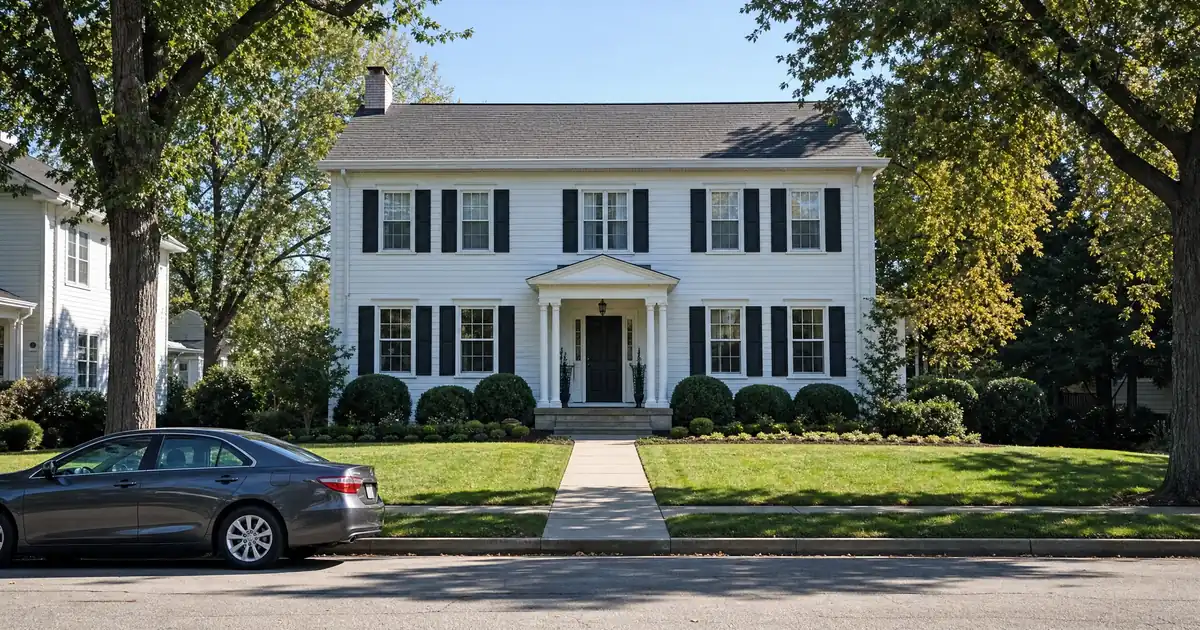
DSCR Loan Denied Because The Appraisal Listed A Different Unit Count — The Quick Read: An appraiser’s unit count controls which rent form gets used, and that form controls what income counts toward your DSCR ratio. If the appraiser calls your “3-unit” a legal 2-unit, one rent stream disappears from the math — and the ratio can fall below what the program requires. The fix depends on why the count changed: missing permits, an unpermitted conversion, or a straightforward appraiser error each point to a different next step.
This isn’t a rare glitch. It’s one of the most predictable ways a DSCR file goes sideways, because the whole underwriting process is built on the appraiser’s legal read of the property — not on the MLS listing, not on the tax record, and not on what the seller told you.
DSCR Calculator
Run the numbers in your market
Rate source: Freddie Mac 30-yr average via FRED® — Federal Reserve Bank of St. Louis · effective Aug 27, 2026
Prefilled with local estimates — enter your own rent or nightly figures, taxes, insurance, and HOA for a more accurate picture.
Program parameters update from Lendmire’s centralized guideline source. Taxes and insurance are editable estimates.
As of Aug 27, 2026 · General Freddie Mac market benchmark, not a Lendmire loan offer. Rent, nightly rate, occupancy, taxes, and insurance are editable estimates. Short-term rental figures are estimates only and vary significantly by season, property type, management approach, and local short-term-rental rules — confirm local regulations before relying on them. Qualifying income for short-term rentals varies by program — some use appraisal market rent, others use documented STR history or projections — and is confirmed in underwriting. Not a Loan Estimate, approval, or commitment to lend. Program availability and eligibility are subject to lender guidelines, credit approval, property review, and underwriting.
Key Terms Defined
DSCR (debt service coverage ratio): the monthly rent divided by the monthly PITIA (principal, interest, taxes, insurance, and any association dues) — a ratio at or above 1.00 means the rent covers the payment.
PITIA: the full monthly housing obligation used in the DSCR calculation — principal, interest, taxes, insurance, and association dues, if any.
Highest and Best Use (H&BU): the appraiser’s legal determination of what a property actually is, based on zoning, permits, meters, and legal rentability — not on marketing descriptions.
Form 1007 / Form 1025: the two rent-support forms an appraiser can use — 1007 for a one-unit property, 1025 for a legally distinct two-to-four-unit property. Which one gets ordered depends entirely on the appraiser’s unit-count conclusion.
Reconsideration of Value (ROV): a formal request asking the lender to have the appraiser review specific evidence — permits, a certificate of occupancy, or corrected comps — before the deal works forward or a new appraisal gets ordered.
Why Does Unit Count Even Matter This Much?
Unit count isn’t a cosmetic field on the appraisal report — it decides which form the appraiser fills out, and that form decides which rent gets counted. A one-unit property gets a Single-Family Comparable Rent Schedule; a legally distinct two-to-four-unit property gets a Small Residential Income Property Appraisal Report, the form that documents value and per-unit market rent together, per Fannie Mae’s Selling Guide — cited here only because that’s where these form names originate, not because Fannie Mae governs DSCR loans in any way.
DSCR loans are non-QM, business-purpose products. They sit entirely outside agency eligibility. But the appraisal panels who do this work move between agency and non-QM files all day, and the form-selection logic came with them. That’s the whole reason a listing that says “duplex” doesn’t guarantee a duplex appraisal. The appraiser’s own legal conclusion — built during the highest-and-best-use analysis — is what actually controls the file, based on things like separate utility meters, a unique postal address, and whether the unit can legally be rented.
Across Lendmire’s wholesale network, unit count, occupancy, and property type are the three variables that decide what gets ordered on a DSCR file — loan size and leverage don’t factor in here at all. Get the unit count wrong and the wrong form goes out, the wrong rent gets pulled, and the DSCR math built on that rent shifts under you.
Key Takeaways
- The appraiser’s legal unit count — not the listing, tax record, or purchase contract — decides whether a 1007 or 1025 rent form gets used.
- A lower appraised unit count usually means one rent stream drops out of the DSCR numerator entirely, not just a smaller adjustment.
- Illegal or unpermitted units can be excluded from income calculations regardless of how many comparable sales exist.
- A property that appraises as five units instead of four can move out of standard residential DSCR treatment altogether.
- Most unit-count disputes are resolved through a documented Reconsideration of Value, a second appraisal, or a corrected filing — not an automatic denial.
The Step-by-Step Mechanics of How This Plays Out
Here’s the chain, start to finish: the appraiser decides what the property legally is, that decision picks the form, the form determines what rent gets counted, and the lender reconciles all of it against the loan file before anything moves forward.
Step 1 — Highest and best use. Before a rent number gets written anywhere, the appraiser settles what the property actually is. That determination leans on separate meters, a distinct postal address, and legal rentability — not what the seller or the listing agent called it. Misclassifying an accessory unit as a second legal unit (or the reverse) is one of the most common ways this goes wrong, and mortgage-insurance underwriting guidance flags separate entrances and local legal rentability as the same test lenders watch for.
Step 2 — Form selection follows the conclusion, automatically. Once the unit count is settled, the form choice isn’t a judgment call — it’s mechanical. One legal unit gets a rent schedule built around a single income stream. Two to four legal units get an income property appraisal that supports value and per-unit market rent together. If the appraiser lands on fewer units than the file assumed, the second unit’s rent generally can’t be counted toward the DSCR numerator anymore — the underwriting was built for two rent streams, and the appraisal only supports one.
Step 3 — The lender reconciles, the appraiser doesn’t approve anything. The appraisal supports value, condition, marketability, and rent evidence for the assignment. It doesn’t approve the loan — that’s the lender’s job, working against program and underwriting guidelines. In practice, underwriting will specifically re-check legal use — zoning, permits, unit count, occupancy certificates, rental registration — against the title, the purchase contract, and any lease documentation already in the file.
Step 4 — Rent nets against the lower of lease or market, unit by unit. Even when unit count isn’t contested, the standard treatment across most DSCR programs uses whichever figure is lower: the actual signed lease or the appraiser’s market-rent conclusion. On tenanted multi-unit files, some lenders in the network will also want an operating income statement alongside the standard multi-unit form, since that document captures actual income and expenses rather than a projection. For a deeper walkthrough of how that all fits together, Lendmire’s complete DSCR loans guide covers the full appraisal-to-underwriting sequence.
Step 5 — Escalation when the file and the appraisal don’t agree. When a lender believes the original report is flawed — and a unit-count mismatch is a textbook trigger — the standard paths are a desk review, a field review, or a brand-new appraisal. A field review specifically includes an on-site inspection of the subject property, going beyond what the original report shows on paper, and gets used when a file is high-value, complex, or the first report raises questions that only a physical look can resolve. The standard the industry holds to matters here: pick the most reliable conclusion, not the one that produces the highest value or the friendliest unit count.
What the DSCR Swing Actually Looks Like
Losing a unit’s rent from the DSCR calculation isn’t a minor haircut — it’s the difference between a file that clears and one that doesn’t. DSCR for a multi-unit property runs on total gross rental income from every unit divided by total PITIA. Drop one unit’s income out of that equation and the ratio can fall well below a program’s minimum in a single step, not gradually.
Rent-conclusion swings alone can move a file from comfortably approvable to needing a different program — a property that pencils around 1.05x on an investor’s own numbers can land closer to 0.95x once the appraiser’s figure replaces the assumed rent. A unit-count mismatch produces the same kind of move, only bigger, because an entire unit’s income disappears rather than a per-door adjustment.
Sub-1.00 coverage isn’t automatically a dead end. Programs below 1.00 are available through select lenders in Lendmire’s network, though leverage and terms typically adjust to account for the thinner margin. There’s also a no-ratio path for borrowers who already own a primary residence, available only through select lenders — but that’s a narrow lane, not a general fallback, and it’s never priced or leveraged the same as a standard qualifying file.
When a Unit-Count Change Pushes You Out of DSCR Entirely
A duplex, triplex, or fourplex gets treated as a residential-scale investment property across the network. A building the appraiser determines has five or more units gets analyzed as commercial real estate instead — a completely different underwriting framework, running on net operating income against debt service rather than a straightforward rent-to-payment ratio.
This is where a unit-count finding stops being a rent-math problem and becomes a program problem. Real investors run into this fear directly: a buyer under contract on what he believed was a four-unit property, with a non-conforming basement studio, was warned the appraiser might treat it as a five-plex — which would have pushed the loan out of residential financing and into commercial territory, according to one investor’s account of the scenario. Residential-certified appraisers are typically capped at four units by state licensing rules, which is part of why a fifth unit — legal or not — creates a real assignment problem, not just a paperwork one.
If a deal was priced assuming standard DSCR treatment and the appraisal comes back with a unit count that bumps it into commercial territory, the entire structure of the loan is in question — not just the rent line. That’s a conversation worth having with a broker before the appraisal ever gets ordered, not after.
The Illegal-Unit Trap That Kills Deals Outright
An unpermitted or illegal unit doesn’t just shrink the rent number — in many cases it can remove the whole unit from consideration, regardless of how many comparable sales exist to support it. Zoning non-compliance is treated as an outright eligibility problem in parts of the residential appraisal world, not a valuation nuance, per industry appraisal guidance on illegal units. That same discipline shows up across DSCR appraisal panels, since the same firms and the same appraisers work both sides of the market.
There’s an important distinction, though. A unit that predates the local zoning ordinance can be classified as legally nonconforming rather than illegal — a materially better status, and often reviewable with the right documentation. An appraiser also can’t simply drop a unit from the analysis because comps are thin; the report has to justify and support whatever conclusion it reaches, per Freddie Mac’s appraisal guidance on this exact scenario — again cited only for the general principle, since Freddie Mac doesn’t govern DSCR files directly.
If your property has an accessory unit or unpermitted addition and you’re not sure how it’ll get classified, this is worth flagging before the appraisal is ordered, not after the denial letter shows up. If a unit is coming back vacant on top of a unit-count question, it’s worth reading Lendmire’s breakdown of what happens when one unit is vacant at appraisal, since the two issues often compound on the same file.
What Underwriting Actually Sees on Your File
Across files Lendmire places through its wholesale network, the pattern is consistent: multi-unit DSCR deals with a certificate of occupancy, current permits, and a rent roll that matches the legal unit count move through underwriting with far less friction than files where that paperwork is thin or missing. On older buildings especially, a rent roll that doesn’t match the certificate of occupancy is one of the most common red flags underwriters flag before the appraisal even comes back — a mismatch that, once caught early, is often resolved with a one-page fact sheet covering legal unit count, current layout, square footage, bed-bath mix, and utility meters, submitted alongside the appraisal order rather than after a denial.
Root Causes: Why the Count Came Back Different
| Cause | What’s Actually Happening | Typical Path Forward |
|---|---|---|
| Unpermitted conversion | A basement or garage was finished into living space without permits | Permit and legalize, or accept the lower unit count |
| Legal nonconforming unit | Unit predates current zoning, may still be reviewable | Supply zoning letter or historical permit evidence |
| Tax record lag | County records haven’t updated to reflect an addition or conversion | Supply current certificate of occupancy |
| Condo vs. fee-simple confusion | Property is legally deeded as condo units, not a fee-simple multi-unit | Different appraisal form (condo) applies entirely |
| Appraiser physical-inspection finding | On-site inspection contradicts the listing or application | Request a desk or field review with supporting documents |
What to Do When the Count Comes Back Wrong
If the appraiser found fewer legal units than expected, gather permits, the certificate of occupancy, and any zoning documentation that supports the higher count, then request a formal reconsideration. If the appraiser found more units than the loan program was built around — pushing a four-unit into five-unit territory — the conversation shifts to whether the deal still fits a residential DSCR structure at all, or whether it needs to be repositioned as a commercial purchase.
DSCR vs. conventional financing
Two common ways to finance an investment property in this market. They qualify you differently — here’s how investors weigh them.
Why investors choose it
- Qualifies on the property’s rental income — no personal tax returns, W-2s, or pay stubs needed to document income.
- No personal debt-to-income ceiling to clear, so existing mortgages and obligations don’t cap your borrowing the same way.
- Can be closed in an LLC, keeping the property inside a business entity.
- Built for scaling — not held to the limit on number of financed properties that conventional financing applies.
- Underwriting centers on the deal: generally qualifies when the rent covers the payment, a 1.00x coverage ratio being a common baseline (confirmed in underwriting).
- Designed specifically for investment property, including long-term and, where the program allows, short-term rentals.
Where it’s strong
- Often the lowest ongoing financing cost for a buyer who fully qualifies on personal income — a fit for a first property or a cost-first purchase.
Trade-offs for investors
- Requires full personal income documentation and must fit within a debt-to-income limit — salary, existing debts, and other mortgages all count.
- Typically held in your personal name rather than a business entity.
- Caps how many financed properties you can carry, which can become a ceiling as a portfolio grows.
- Evaluates you as a borrower as much as the property, which usually means more paperwork.
How investors usually choose: a first or single property often optimizes for the lowest financing cost; portfolio builders often optimize for leverage, vesting in an LLC, and scaling past conventional caps. The right answer depends on your goals, the property, and current guidelines — both paths run through select lenders in Lendmire’s wholesale network, with eligibility and terms confirmed in underwriting.
Either direction, the appraisal doesn’t approve or deny the loan on its own — the lender applies program guidelines against what the appraisal supports. That means a documented ROV, a desk or field review, or in some cases a fresh appraisal from a different assignment, are all normal parts of getting a unit-count dispute resolved rather than treated as a final word. If comparable rents are also thin on the file, that’s a separate but related issue worth understanding — see Lendmire’s piece on denials tied to insufficient rental comparables. And if the appraisal came back showing the property vacant on top of the unit-count question, that combination is covered in Lendmire’s guide to denials tied to vacancy at appraisal.
A Structural Fix Is Already in Motion
Fannie Mae and Freddie Mac’s updated appraisal data standard, mandatory for new appraisal reports submitted on or after November 2, 2026, specifically targets this exact friction point — the update is designed to provide more clarity around how appraisers handle unit-count adjustments in the sales comparison approach. DSCR loans don’t get delivered through that dataset directly, but because non-QM appraisal panels overlap heavily with agency-panel appraisers, the clearer documentation standard is likely to ripple into how DSCR unit-count issues get written up going forward.
Where This Fits Against Conventional Financing
DSCR loans qualify primarily on the property’s own rental income covering the payment, subject to lender guidelines — not on your personal income documentation the way a conventional mortgage does. That’s exactly why the appraisal carries so much weight on these files: it’s not just establishing value, it’s establishing the income the entire loan is built around. For a side-by-side look at how that changes the qualification process, Lendmire’s DSCR vs. conventional comparison walks through the mechanics in more detail.
Across the network Lendmire places files through, standard purchase leverage typically runs 75-80% LTV, with select high-leverage programs reaching 85% for borrowers around a 700 credit score. Cash-out refinances typically cap near 75% LTV, generally with around six months of seasoning expected on the property. None of that changes because of a unit-count dispute — but the DSCR ratio driving eligibility for those leverage tiers absolutely does, which is the whole reason this issue deserves attention before an appraisal gets ordered, not after.
DSCR loans are designed for non-owner-occupied investment properties. Because they’re business-purpose investor loans, they’re reviewed differently from a standard owner-occupied mortgage.
Frequently Asked Questions
Can I use the higher unit count if I have permits for the extra space?
Permits and a certificate of occupancy are exactly the evidence that supports a higher legal unit count in a reconsideration request. Without them, an appraiser generally has no basis to count an unpermitted space as a legal unit, no matter how it’s currently being used or rented.
Does an unpermitted unit still count toward DSCR income?
Generally no — if the appraiser determines a unit isn’t legal, its rent typically doesn’t get included in the qualifying income calculation. Some lenders in the network may review supporting documentation on a case-by-case basis, but this isn’t a given.
Will a second appraiser count the units differently?
It’s possible, since unit-count determination involves some judgment around meters, entrances, and legal rentability — but a second appraisal isn’t a guaranteed fix. Lenders are directed to select the most reliable conclusion, not simply the one with the friendliest number, so a documented case (permits, zoning letters, occupancy certificates) matters more than just ordering a new report.
What happens if my property gets reclassified from four units to five?
A fifth unit — legal or not — can push the property out of standard residential DSCR treatment into commercial multifamily underwriting, since residential-certified appraisers are typically limited to properties with four units or fewer. That’s a different qualification framework entirely, built around net operating income against debt service rather than a straightforward rent-to-payment ratio.
Is a low DSCR from a unit-count problem an automatic denial?
Not necessarily. Coverage below 1.00 is available through select lenders in Lendmire’s network, though leverage and pricing typically adjust to reflect the thinner margin, and a no-ratio option exists through select lenders for borrowers who already own a primary residence. Qualification in either case is subject to lender guidelines, credit approval, and full property review.
If you’re buying or refinancing a rental property and a unit-count question is complicating the file, Lendmire can help you compare DSCR loan options based on the property’s documented income, credit profile, leverage, and your goals as an investor. Reach Lendmire at 828-256-2183, or request a quote directly through Lendmire’s mortgage quote form.
Manufactured homes (single- and double-wide), log homes, and barndominiums fall outside DSCR eligibility across the network regardless of how their unit count resolves — that’s a property-type exclusion, not an appraisal outcome.
Tax treatment can depend on how the funds are used and how the property is held; investors should keep clear records and speak with a qualified tax professional before relying on any deduction.
A unit-count discrepancy on a DSCR appraisal is rarely the end of the road — it’s a documentation problem with a documented fix, and the sooner permits, occupancy certificates, and zoning history get in front of underwriting, the less it costs an investor in delay.
About Lendmire
Lendmire, NMLS# 2371349, is a non-QM mortgage broker serving real estate investors in 40 markets, including Washington, D.C., through DSCR investor loan programs. Qualification is generally reviewed around the subject property’s rental income, not the borrower’s W-2 history — a practical fit for LLC-titled portfolios and self-employed investors. All scenarios remain subject to lender review and program guidelines. Two consecutive Scotsman Guide Top Mortgage Workplace recognitions (2025, 2026).
Lendmire’s Top Mortgage Workplace recognition is documented by Scotsman Guide 2025 Top Mortgage Workplace and Scotsman Guide 2026 Top Mortgage Workplace.
Get Started
Ready to find the right loan for you?
In about 30 seconds you can review financing options available for your home or investment property. No commitment required.
Informational only. Not a Loan Estimate, approval, or commitment to lend. Program availability and eligibility are subject to lender guidelines, credit approval, property review, and underwriting.
References
1. Fannie Mae Selling Guide — Rental Income (B3-3.8-01)
2. United Valuation Appraisal — ADU Classification Article
3. Enact MI — ADUs and How They Impact Loans
4. r3amc.com — Desk Review vs. Field Review
5. Blind — 4-Plex Non-Conforming Unit Appraisal Discussion
6. Rick Hiton & Associates — Appraiser Q&A
7. Freddie Mac Guide FAQs — ADU
Brandon Miller
Founder & CEO, Mortgage Loan Originator, Lendmire LLC
- Mortgage Loan Originator · NMLS# 1129696 · Verify on NMLS Consumer Access
- North Carolina Real Estate Broker · License# 343312 · Verify on NCREC
- North Carolina Insurance Producer · License# 19053198 · Property, Casualty, Life, Health · Verify on NAIC SBS
- Lendmire LLC · Firm NMLS# 2371349 · Verify firm licensure
Disclosures. The information presented in this article is general market commentary, not financial, legal, or tax advice. Lendmire is a mortgage brokerage (NMLS# 2371349) — not a direct lender or depository institution — and loan placement is subject to lender underwriting. Nothing in this content represents a commitment to lend. Loan terms, pricing, and program availability vary based on borrower qualifications, property characteristics, and state of subject property, and are subject to change at any time. Lendmire complies with Equal Housing Opportunity requirements. Consumer access: nmlsconsumeraccess.org.


