
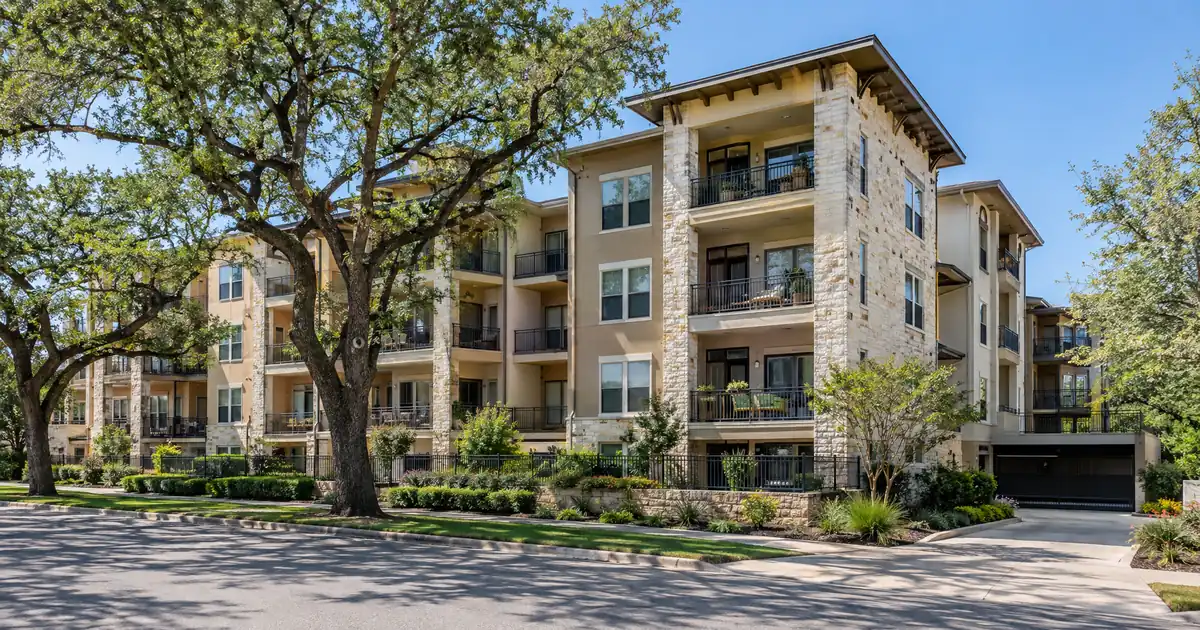
The Quick Read: Fixed is the better fit for most investors who plan to hold their Texas rentals for the long term, and an adjustable structure suits a defined, shorter hold with a clear exit or refinance plan. The qualifying test is the same either way, because the lender compares rent to the full monthly obligation. The structure changes what that obligation looks like at closing and what it does later.
- DSCR (debt service coverage ratio) is monthly rent divided by PITIA: principal, interest, taxes, insurance, and association dues. The ratio is the same test under both structures.
- Fixed holds the payment steady for the whole term, which makes a multi-property portfolio easier to plan.
- An adjustable loan holds the payment steady for an initial window, then resets, and every reset lands on its own date.
- Across the network, the spine is the 30-year fixed. Above $2,500,000 the network generally holds to it alone.
- Clearing 1.00 is not the same as positive cash flow, so stress the portfolio before you pick a structure.
Lendmire is a DSCR-focused mortgage broker that arranges these loans through a wholesale network of lenders, across 40 states and Washington, D.C. Every program has its own guidelines, and every file is underwritten individually. Nothing here is a commitment to lend. For the full foundation, see the complete DSCR loans guide.
Side-by-Side
The table below compares structure only. Pricing lives in the calculator. The adjustable column shows published industry norms, because ARM terms vary widely from one lender to the next. Neither column is a promise of terms.
| Factor | Fixed | Adjustable (hybrid ARM) |
|---|---|---|
| Review basis | Property rent vs. PITIA | Same test; qualifying payment basis varies |
| Personal income docs | Not the basis for qualifying | Not the basis for qualifying |
| Appraisal | Rent schedule included | Rent schedule included |
| Property types | 1-4 unit rentals; no manufactured, log, or barndominium | Same eligibility; structure doesn’t change it |
| Entity vesting | LLC common, per program terms | LLC common, per program terms |
| Payment after closing | Stays level for the term | Level for an initial window, then resets |
| Reserves | Commonly around 6 months of PITIA | Often similar; confirm with each lender |
| Loan size | Standard programs up to $3,000,000 | Often limited at larger balances |
| Best for | Long holds, tight coverage | Defined shorter holds, planned refinance |
A few rows deserve a note. Documentation is essentially the same under both structures. Each needs the appraisal with rent schedule, entity documents, credit, asset verification, and the insurance and tax figures. Neither structure asks you to prove personal income, because the file qualifies primarily on property-level rental income covering the payment, subject to lender guidelines.
The qualifying payment is the one place the two can diverge. Some programs run an adjustable loan at its starting payment. Others stress it. If a lender stresses it, a borderline property may show better coverage on fixed.
What Does Not Change Between Them
Four things stay constant in both structures. They matter, because investors often assume the adjustable option is easier to get.
Leverage caps. Most purchase files land at 75%-80% LTV (loan-to-value, the loan as a share of the property’s value) on an investment property. Select high-leverage programs reach 85% on a purchase, generally with a score around 700 or higher. Cash-out refinances top out around 75% LTV on standard rentals, and the lender usually expects about 6 months of seasoning, meaning ownership time before you pull equity out.
Credit. A 620 floor exists in parts of the network. Most programs want around 660, and 700 or higher unlocks the strongest leverage tiers.
Coverage. 1.00 is where many select programs start, and stronger ratios open better leverage. A separate select-lender path takes coverage below 1.00, with leverage and terms adjusted.
Reserves. Reserves are liquid cash held after closing. Across the network they commonly run around 6 months of PITIA. Conservative rate-and-term files at modest leverage under $1,500,000 can see reserves waived, and loans above that size typically step up to about 9 months. Rules vary by lender, leverage, loan size, and transaction type.
A larger down payment lowers the payment and can lift the ratio. It never erases leverage caps, credit floors, reserve rules, or property eligibility. The strongest files clear both tests: enough equity and enough rental coverage.
DSCR loans are designed for non-owner-occupied investment properties. Because they are business-purpose investor loans, they are reviewed differently from a standard owner-occupied mortgage.
When Fixed Is the Better Fit
Fixed is the right choice when you plan to hold, when coverage is tight, or when the loan is large. It gives you one number to underwrite for the life of the loan.
Long holds. If you buy Texas single-family rentals or small multifamily to keep for a decade, a level payment makes the portfolio predictable. You are not guessing what the payment will be on a future date.
Thin coverage. A property that clears the test only narrowly has little room for a payment increase. Taxes and insurance already sit inside PITIA and move on their own, which can vary by county. Adding a second moving part, the reset, makes a thin file thinner.
Larger loans. Above $2,500,000 the network generally holds to 30-year fixed structures, so the adjustable option often narrows as balances grow.
A portfolio you want to stress-test once. With fixed, you can run the ratio on every door today and know it holds. Staggered resets turn that into a recurring task.
Fixed does not mean free of risk. A property can clear the ratio and still lose money in a given year. DSCR compares rent to PITIA only, so repairs, vacancy, management, utilities, and capital expenses sit outside the calculation. Clearing 1.00 is not the same as positive cash flow.
When Adjustable Is the Better Fit
Adjustable fits when your hold is short and defined. It is also worth a look when a lower starting payment helps a marginal file during the initial window, and when you have a believable plan for the reset date.
According to the CFPB’s explanation of how ARMs work, after the initial period the loan resets to an index plus a margin, subject to any caps. The index moves with general market conditions. The margin is set in the loan agreement and does not change after closing. The lender picks the index at application, and that choice generally stays put.
Here is what that means for a Texas portfolio:
- The first number in a 5/1 or 7/1 is the fixed window. It is still a 30-year loan. A 7-year hybrid is not a 7-year loan.
- Resets follow the market, not your finances. A strong year of rents does not soften a reset.
- Caps limit the move but do not remove it. Periodic and lifetime caps are written into the note, so read them before you sign.
- Extended terms and interest-only periods are available through select lenders in the network. Interest-only changes the payment basis the ratio uses, so ask the lender how coverage will be computed.
Adjustable works best for a flip-to-rent plan, a refinance planned inside the initial window, or a property you intend to sell. It works worst when the exit depends on a market you cannot control.
Prepayment terms deserve a hard look here. A shorter hold is the whole case for an adjustable loan, and a prepayment penalty can overlap that hold. Prepayment terms are written into the note. The Texas Finance Code, Chapter 302 limits penalties on residential homestead loans above a stated interest threshold. A homestead is the borrower’s own residence, so it does not obviously reach a rental. AAPL, a private-lending trade publication, says Texas generally allows prepayment penalties on business-purpose loans, with limits that depend on the interest and on owner occupancy. Treat that as orientation, not legal advice, and confirm the specifics with Texas counsel before you sign.
Does the Portfolio Change the Answer?
Yes, because every adjustable loan in a portfolio resets on its own date. Reset risk can compound, and coverage can compress across several doors at once. A portfolio is not one deal repeated four times.
Run a modeled example. These are assumptions, not market data. Picture four rentals with roughly equal monthly obligations. Three cover their payment at about 1.25x, and one covers it at about 0.95x.
- Fixed case. Blended across the four, coverage is roughly 1.18x. The weak property is carried by the strong ones.
- Adjustable case after a reset. Assume every obligation climbs 10% at reset. The three strong properties fall to about 1.14x, the weak one to about 0.86x, and the blend lands near 1.07x.
The blend still clears 1.00 in that case. But the margin that protected you from the weak property has thinned, and a vacancy or repair bill sits outside the ratio entirely.
Separate loans are tested property by property. A blanket structure ties properties together into a single note and a single coverage test. Whether a blanket note is available, and whether it comes fixed, adjustable, or both, depends on the lender and the file. A blanket also brings cross-collateralization and release mechanics when you sell one property.
Mixing structures is a sound way to stagger exposure. Put the long-hold doors on fixed. Put the exit candidates on adjustable, with the prepayment window matched to the plan.
One broker observation: files that need a lender to stress an adjustable payment tend to be the borderline ones. If the ratio only works at the starting payment, expect questions. If it works on fixed with room to spare, the structure is rarely the sticking point.
Short-term rentals are a separate lane with their own rules. Purchases run to 75% LTV, with about 12 months of hosting history and a 640 or higher score expected. Short-term rental rules can vary by city, county, HOA, and property type, so investors should confirm local rules before relying on projected rental income. Final terms depend on lender guidelines, property type, leverage, and the borrower’s complete credit picture.
Key Terms Defined
- Index: the market benchmark that an adjustable loan follows after the initial period.
- Margin: the fixed amount added to the index at each reset, set in the loan agreement.
- Fully indexed payment: the payment the loan would carry if it reset today to index plus margin.
- Teaser (initial) period: the early window during which the payment is held steady before the first reset.
- Cap: a limit on how far the payment can move at one reset or over the life of the loan.
- Blanket loan: one note and one deed of trust covering several properties.
The Balanced Verdict
Pick fixed when you hold for the long term, when coverage is thin, or when the balance is large. Pick adjustable only when you can name the exit, the refinance, or the sale before the first reset arrives. A mixed portfolio is a legitimate answer, with long holds on fixed and exit candidates on adjustable.
The honest tiebreaker is your tolerance for a payment you cannot predict. If a reset would keep you up at night, the lower starting payment is not a bargain. Tax treatment varies, so consult a qualified professional on how any structure affects your return.
Frequently Asked Questions
Can I mix fixed and adjustable across my properties?
Yes, in many cases. Separate loans on separate properties can each carry a different structure, which staggers your exposure. A single blanket note generally carries one structure, though that depends on the lender.
What happens to coverage when an adjustable payment resets?
The ratio falls when the payment rises and rents stay put. The index and margin set the new payment within the caps in your note. Run the portfolio at a higher payment before you commit, because a reset does not care how well the property is performing.
Is there a cap on how many properties I can finance?
Programs differ, and the limit is usually set by each lender’s guidelines. Each property is typically reviewed on its own rent against its own obligation, along with credit, reserves, and eligibility. Ask for the exposure rules before you build a plan around a specific number.
Do I need an LLC?
No, an LLC is not required in every case. Many investors close in one, subject to lender program eligibility. Entity documents are part of the file when you do.
Does a larger down payment fix a weak ratio?
It helps. It does not override leverage caps, credit floors, reserve rules, or property eligibility.
Next Step
If you are buying or refinancing a rental property and want to see how the numbers work, Lendmire can help you compare DSCR loan options based on the property income, credit profile, leverage, and investor goals. Reach the team at 828-256-2183 or request a quote at lendmire.com. A Texas portfolio rewards the structure you can stress-test today, not the one that looks best on day one.
About Lendmire
As a DSCR and non-QM mortgage broker, Lendmire — NMLS# 2371349 — connects investors with wholesale lending channels across 41 markets, including Washington, D.C. The property’s rental income, not the borrower’s tax returns, is central to lender review, which works for self-employed operators and portfolios beyond four financed properties. Scotsman Guide named Lendmire a Top Mortgage Workplace in both 2025 and 2026.
Get Started
Ready to find the right loan for you?
In about 30 seconds you can review financing options available for your investment property. No commitment required.
Informational only. Not a Loan Estimate, approval, or commitment to lend. Program availability and eligibility are subject to lender guidelines, credit approval, property review, and underwriting.
References
1. CFPB – ARM index and margin
2. Texas Legislature – Finance Code ch. 302
3. AAPL – prepayment rules for LLC borrowers
This article is part of Lendmire’s DSCR loan program — full qualification details, guidelines, and scenarios live on the program page.
Related reading: How a Portfolio DSCR Loan Moves From Application to Closing · How Much Leverage a Rental Portfolio Should Carry Under One DSCR Loan · Recourse vs Non-Recourse DSCR Portfolio Loan for a Rental Owner
Guides: DSCR Loans in Texas
Brandon Miller
Founder & CEO, Mortgage Loan Originator, Lendmire LLC
- Mortgage Loan Originator · NMLS# 1129696 · Verify on NMLS Consumer Access
- North Carolina Real Estate Broker · License# 343312 · Verify on NCREC
- North Carolina Insurance Producer · License# 19053198 · Property, Casualty, Life, Health · Verify on NAIC SBS
- Lendmire LLC · Firm NMLS# 2371349 · Verify firm licensure
Legal disclosures. Lendmire (NMLS# 2371349) is a state-licensed mortgage brokerage that arranges financing through wholesale lender relationships. Lendmire is not a direct lender, depository institution, or registered financial advisor. The discussion above is general informational content about real estate financing — it is not financial, legal, or tax advice, and readers should consult licensed professionals for guidance on their individual circumstances. Loan inquiries are subject to lender underwriting; this article does not represent a commitment to lend. Loan terms, rates, and qualification standards vary by borrower, property, and state, and are subject to change at any time. Equal Housing Opportunity. NMLS Consumer Access: nmlsconsumeraccess.org.