
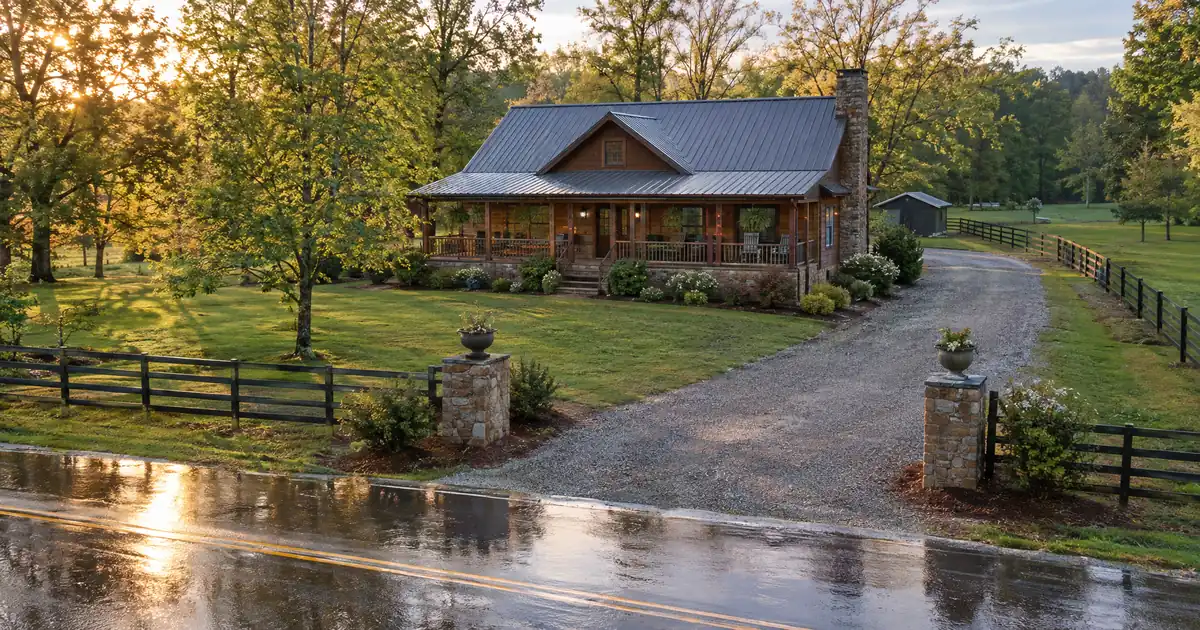
The Quick Read: Yes, often: neither label automatically rules out a DSCR loan, but both narrow the pool of lenders and usually tighten leverage, so the file turns on why the building is non-warrantable, how rural the location is, and whether market rent clearly covers the full payment.
- Non-warrantable describes the building. It is a label for the condo project, not a judgment on you or on the unit.
- Rural has no single definition. Lenders weigh population, distance to services, acreage and how well the rent can be supported.
- Leverage is the usual trade-off. Purchase files across the network typically run 75%–80% LTV, and these two property types tend to sit at the lower end of that range or below, subject to lender guidelines.
- Some property types are simply not offered. Manufactured homes, log homes and barndominiums fall outside the network’s DSCR programs.
- Rural and non-warrantable files are reviewed case by case. The network does not auto-approve or auto-decline either one.
A DSCR loan (debt service coverage ratio loan) lets an investor qualify primarily on property-level rental income covering the payment, subject to lender guidelines. That makes the property itself the star of the file. When the property is unusual, the property gets more scrutiny, not less.
DSCR Calculator
Run the numbers in your market
Rate source: Freddie Mac 30-yr average via FRED® — Federal Reserve Bank of St. Louis · effective Oct 15, 2026
Prefilled with starting assumptions — enter your own rent or nightly figures, taxes, insurance, and HOA for a more accurate picture.
Program parameters update from Lendmire’s centralized guideline source. Taxes and insurance are editable estimates.
As of Oct 15, 2026 · General Freddie Mac market benchmark, not a Lendmire loan offer. Rent, nightly rate, occupancy, taxes, and insurance are editable estimates. Short-term rental figures are estimates only and vary significantly by season, property type, management approach, and local short-term-rental rules — confirm local regulations before relying on them. Qualifying income for short-term rentals varies by program — some use appraisal market rent, others use documented STR history or projections — and is confirmed in underwriting. Not a Loan Estimate, approval, or commitment to lend. Program availability and eligibility are subject to lender guidelines, credit approval, property review, and underwriting.
Key Terms Defined
You will see these terms throughout this page. Each one gets one plain definition here.
- DSCR: the monthly rent divided by the monthly PITIA. A result of 1.00 means rent equals the full payment.
- PITIA: principal, interest, taxes, insurance and association dues where they apply. Lenders count HOA dues alongside the payment.
- LTV (loan-to-value): the loan amount as a percentage of the property’s value or price.
- Warrantable condo: a condo in a project that meets the standard rules used by conventional, agency-style lenders. Think of it as the building passing a checklist.
- Non-warrantable condo: a condo in a project that fails one or more of those rules. The problem lives in the project, such as its ownership mix, legal issues or use.
- Rural: a loose lender-by-lender label, usually built from population, distance to services, surrounding land use and acreage.
- Condotel: a condo run like a hotel, with a rental pool or front desk services.
- Reserves: cash left in the bank after closing, measured in months of PITIA.
Where Each Situation Usually Lands
Here is the quick map. Every row is a starting point, not a verdict.
| Situation | Typical DSCR treatment | What drives the outcome |
|---|---|---|
| Standard condo, warrantable | Generally eligible | Rent coverage, credit, leverage |
| Non-warrantable condo | Case by case | Why the project fails, HOA health |
| Condotel or hotel-style condo | Varies; some lenders decline | Operation and rental pool |
| Rural house, modest acreage | Case by case | Comps, rent support, land |
| Rural house, large acreage | Often tighter or reduced leverage | Value of home vs. land |
| Working farm or ranch | Usually outside rental programs | Agricultural use |
| Manufactured, log, barndominium | Not offered | Property type |
Why a DSCR Loan on a Rural or Non-Warrantable Property Can Work When Conventional Fails
A conventional lender sells most of its loans into a pool that has strict project rules. A DSCR lender holds its own guidelines. That is why a building a conventional lender turns away can still be reviewed for a DSCR loan.
Fannie Mae’s Condo Status Finder FAQ explains the idea well. Units in projects that fail its requirements cannot be sold to it until the problem is resolved. That makes the label a statement about the building, not the borrower.
DSCR loans are designed for non-owner-occupied investment properties. Because they are business-purpose investor loans, they are reviewed differently from a standard owner-occupied mortgage.
Those agency rules do not govern DSCR files, though. They are useful mainly as a map of what can go wrong inside a building. Across the wholesale network Lendmire places files with, each lender writes its own rules. The result is a spread: some lenders welcome a given project, some price it tighter, and some decline it.
DSCR waives personal-income documentation in favor of property income, but the collateral gets more scrutiny, not less. Project review, appraisal and rent comps all carry weight. Anyone who expects a DSCR lender to wave through a troubled building is in for a surprise.
What Makes a Condo Non-Warrantable?
Most denials trace back to the project, not the buyer. Fannie Mae’s ineligible-projects section of its Selling Guide lists the usual suspects. They include hotel or motel operations, commercial space above 35% of the project, pending litigation over safety or structure, one owner holding too many units, critical repairs and financial insolvency.
DSCR lenders react to these triggers differently. Here is how the main ones tend to play out.
| Trigger | Agency-style review | DSCR review |
|---|---|---|
| Investor concentration | Caps apply | Often tolerated; varies |
| Pending litigation | Safety cases block | Cause and insurance matter |
| Commercial space | Capped share | Varies by lender |
| Condotel operation | Excluded | Some lenders decline |
| Critical repairs, thin reserves | Blocked until fixed | Reviewed with HOA financials |
Investor concentration is the one most buyers have heard of. Litigation, insurance gaps, thin reserves, commercial space and condotel traits cause the label just as often. Short-term-rental management inside the project is another common cause.
A DSCR lender that accepts these projects will still ask for the HOA questionnaire, the budget and reserve figures, a litigation disclosure and the master insurance policy. A clean answer on those items often matters more than the label itself.
Here is a simple test for any unit: can the owner list, rent and manage it independently? A unit under its own control reads very differently from one locked inside a rental pool.
Mixed opinions among practitioners are real here. Some lenders price warrantable and non-warrantable condos almost the same, and others tighten terms noticeably. The honest answer is that it varies by program and by building.
For the full file requirements on this property type, see Lendmire’s breakdown of DSCR loan requirements for a non-warrantable condo.
How Do Lenders Treat a Rural Property?
A rural property is not an automatic decline. Lenders look at several things at once: how many people live nearby, how far the nearest services sit, what the surrounding land looks like, how much acreage comes with the house, and whether the appraiser can find real rent evidence.
The definition varies. Some lenders set their own population or distance tests. Others borrow the federal rural and underserved areas tool as a reference point. That tool exists for a separate consumer-lending compliance purpose, so it does not decide DSCR eligibility. Private lenders set their own overlays.
The appraisal is where most rural files are won or lost. The appraiser may flag the property as rural, separate the house and homesite from excess land, and give an opinion of market rent. For a single unit, that rent opinion comes on the 1007 rent schedule form. For two to four units, it comes on the 1025 income report.
Thin rental comps are the usual rural problem. If few similar homes rent nearby, the rent opinion can come in low, and the coverage ratio drops with it. Strong evidence helps: recent leases on comparable homes, distance to employers and services, and local demand drivers.
Excess acreage deserves its own warning. A house on a large parcel may be valued on the home and a reasonable homesite only. Appraisers also may count usable land rather than raw acres, since wetland, steep slopes and poor access reduce what the land is worth. If the appraisal lands under the purchase price, the loan is sized on the lower value, and the buyer covers the gap in cash. Price that risk in before the offer, not after.
Working farms are a different product. A large parcel with barns, stables or active agriculture reads like an agricultural business rather than a rental home, and that usually pushes the file outside rental programs. Larger rural multifamily gets heavier scrutiny too. A house with a few acres and a well-supported rent is a very different file.
Lendmire also covers this niche in its page on DSCR loans for rural investment properties.
What If the Property Is Both Rural and Non-Warrantable?
This is the overlap most guides skip. Picture a mountain-resort condo or a lake-community unit. The building may fail the standard project rules, and the location may sit far from the nearest city.
Each layer gets its own review. The lender checks the project, then the location, then the rent. A weakness in one layer asks for strength in another.
In practice, fewer lenders in the network will take both layers at once. Leverage usually lands at the lower end of the purchase range or below, credit expectations rise, and the rent evidence has to be clean. Resort and lake units also tend to lean on short-term rentals, which brings in HOA and local permission questions.
The honest read is that this is a toss-up file at the start. Some combinations work well with a strong score and conservative leverage. Others simply do not fit any program. The only way to know is to submit the specifics.
What Do the Numbers Look Like?
Program parameters here come from the select lenders in the wholesale network and are typical ranges, not promises. Every file is underwritten individually.
- Purchase leverage: most files land at 75%–80% LTV on a purchase, meaning 20%–25% down. A few high-leverage programs reach 85% LTV on a purchase with roughly a 700+ score. Do not assume those tiers extend to a rural or non-warrantable property.
- Cash-out refinance: tops out around 75% LTV on a standard rental, and about six months of seasoning is the common expectation.
- Credit: a 620 floor exists in parts of the network. Most programs want around 660, and 700+ unlocks the strongest leverage tiers.
- Coverage: 1.00 is where many select programs start. A separate select-lender path takes coverage below 1.00, with leverage and terms adjusted. Stronger ratios open better pricing and leverage.
- Loan size: up to $3,000,000 on standard programs.
- Reserves: commonly around 6 months of PITIA, and about 9 months above $1,500,000. Reserves vary by lender, leverage, loan size and transaction type.
A bigger down payment lowers the payment and can lift the coverage ratio. It never erases leverage caps, credit floors, reserve rules or property eligibility. The strongest files clear both tests: enough equity and enough rental coverage.
Here is how HOA dues and rural costs move the ratio. These numbers are illustrative, not a quote. Say a unit’s rent covers principal, interest, taxes and insurance at roughly 1.25x. Add HOA dues to the obligation and the ratio might slide toward 1.10x. A special assessment or a jump in rural insurance could push it close to 1.00x. Same rent, same loan, thinner margin.
One more caution. Clearing 1.00 is not the same as positive cash flow. DSCR compares rent to PITIA only. Repairs, vacancy, management, utilities and capital expenses all sit outside the calculation.
DSCR vs. conventional financing
There are two common ways to finance an investment property, and they qualify you differently — here’s how investors weigh them.
Why investors choose it
- Qualifies on the property’s rental income — no personal tax returns, W-2s, or pay stubs needed to document income.
- No personal debt-to-income ceiling to clear, so existing mortgages and obligations don’t cap your borrowing the same way.
- Can be closed in an LLC, keeping the property inside a business entity.
- Built for scaling — not held to the limit on number of financed properties that conventional financing applies.
- Underwriting centers on the deal: generally qualifies when the rent covers the payment, a 1.00x coverage ratio being a common baseline (confirmed in underwriting).
- Designed specifically for investment property, including long-term and, where the program allows, short-term rentals.
Where it’s strong
- Often the lowest ongoing financing cost for a buyer who fully qualifies on personal income — a fit for a first property or a cost-first purchase.
Trade-offs for investors
- Requires full personal income documentation and must fit within a debt-to-income limit — salary, existing debts, and other mortgages all count.
- Typically held in your personal name rather than a business entity.
- Caps how many financed properties you can carry, which can become a ceiling as a portfolio grows.
- Evaluates you as a borrower as much as the property, which usually means more paperwork.
How investors usually choose: a first or single property often optimizes for the lowest financing cost; portfolio builders often optimize for leverage, vesting in an LLC, and scaling past conventional caps. The right answer depends on your goals, the property, and current guidelines — both paths run through select lenders in Lendmire’s wholesale network, with eligibility and terms confirmed in underwriting.
Short-Term Rental or Long-Term Rental?
Resort condos and rural cabins often pencil best as short-term rentals, and the program rules differ. Short-term-rental purchases run up to 75% LTV, with a 640+ score and about 12 months of hosting history expected. Those are typical guideline figures, subject to lender review.
Two cautions apply. Condotel traits and rental-pool structures can make a lender decline the condo outright. And short-term rental rules can vary by city, county, HOA, and property type, so investors should confirm local rules before relying on projected rental income.
For rural cabins, a long-term lease is often the cleaner path to a supportable rent figure. Short-term income needs a track record that a thin rural market may not provide.
Property Types That Do Not Fit
Some properties are not offered at all. Manufactured homes (single- and double-wide), log homes and barndominiums fall outside the network’s DSCR programs. Raw land and major rehabs are separate products too.
If your property is on that list, the path is a different loan type, not a different DSCR lender. That might mean a short-term acquisition loan followed by a DSCR refinance once the property is a stabilized rental. A refinance only works if the property itself becomes eligible.
Pre-Offer Checklist
Run these steps in order before going under contract.
1. Confirm the project status. Ask the seller or the HOA for the project’s current condition. Status can change when a building cures an issue.
2. Ask for litigation and insurance details. Request the HOA questionnaire, budget, reserve information and master insurance.
3. Check the rural flag and acreage. Ask a lender how the location and parcel size will read.
4. Gather rent evidence. Pull comparable leases, and expect the appraiser’s rent opinion to be the one that counts.
5. Price in the appraisal risk. On a rural purchase, assume the appraisal may land below the price and keep cash available for the gap.
6. Plan the exit. Non-warrantable buildings have a smaller buyer pool, which affects resale and the refinance later.
What If a Lender Says No?
You have three real moves. First, try another lender in the network, since appetite for a given project or location differs widely. Second, adjust the structure: lower leverage, a stronger score or more reserves can change a decline into a yes. Third, fix the problem and come back. A building that settles its litigation or completes its repairs may become eligible, and rental history on a rural property strengthens the next application.
Frequently Asked Questions
Does a rural property need a higher credit score?
Often yes, in practice. A 620 floor exists in parts of the network, and most programs want around 660. A score of 700+ unlocks the strongest leverage tiers. Rural and non-warrantable files get extra scrutiny, so a stronger score gives the file more room, subject to lender guidelines.
Can I buy a non-warrantable condo with 20% down?
Sometimes. Typical purchase leverage runs 75%–80% LTV, which means 20%–25% down. Non-warrantable condos often land at the lower end of that range or below, depending on the project and the lender. Expect a larger down payment than a comparable warrantable unit.
What happens if the appraisal comes in below the purchase price?
The loan is sized on the lower appraised value, so you cover the difference in cash. This is most common on rural properties with excess acreage, where the land adds less value than the price assumes. Build that cushion into your offer.
Do condotels qualify?
It varies by program. Condotels and hotel-style operations are excluded outright by conventional rules, and some DSCR lenders decline the category too. Others will review them case by case. Ask early, because the answer changes which lenders you can use.
Can I do a cash-out refinance on one of these properties?
Possibly. Cash-out tops out around 75% LTV on a standard rental, with about six months of seasoning typical. Rural and non-warrantable properties are reviewed more selectively and often with lower leverage. Remember that a smaller buyer pool can make later exits harder.
Next Step
If you are buying or refinancing a rental property and want to see how the numbers work, Lendmire can help you compare DSCR loan options based on the property income, credit profile, leverage, and investor goals. As a mortgage broker arranging financing through select lenders in its wholesale network, across 41 markets including Washington, D.C., Lendmire can show where an unusual property is likely to fit. For the bigger picture, start with the complete DSCR loans guide. Programs change, and every file is underwritten individually by the lender.
A property that raises two questions, one about the building and one about the location, is not a bad deal, but it does reward the investor who answers both before making an offer.
About Lendmire
Lendmire — NMLS# 2371349 — is a mortgage brokerage specializing in DSCR investor loans, helping arrange financing across 41 markets, including Washington, D.C., through wholesale and investor-lending channels. The model centers on property-level rental income reviewed by the lender rather than W-2 documentation, subject to lender guidelines, suiting entity-owned and multi-property investors. Lendmire holds Scotsman Guide Top Mortgage Workplace recognition for 2025 and 2026.
Get Started
Ready to find the right loan for you?
In about 30 seconds you can review financing options available for your investment property. No commitment required.
Informational only. Not a Loan Estimate, approval, or commitment to lend. Program availability and eligibility are subject to lender guidelines, credit approval, property review, and underwriting.
References
1. Fannie Mae Condo Status Finder FAQ
2. Fannie Mae Selling Guide B4-2.1-03, Ineligible Projects
This article is part of Lendmire’s DSCR loan program — full qualification details, guidelines, and scenarios live on the program page.
Related reading: How to Qualify for a Super Jumbo DSCR Loan in Washington · How to Qualify for a Super Jumbo DSCR Loan for Tower Buyers in Non-Warrantable Buildings · Second Home vs DSCR Loan for a 2-4 Unit Airbnb Property
Brandon Miller
Founder & CEO, Mortgage Loan Originator, Lendmire LLC
- Mortgage Loan Originator · NMLS# 1129696 · Verify on NMLS Consumer Access
- North Carolina Real Estate Broker · License# 343312 · Verify on NCREC
- North Carolina Insurance Producer · License# 19053198 · Property, Casualty, Life, Health · Verify on NAIC SBS
- Lendmire LLC · Firm NMLS# 2371349 · Verify firm licensure
Compliance and disclosures. Lendmire (NMLS# 2371349) is a licensed mortgage broker and is not a direct lender, depository institution, financial advisor, or tax professional. Content in this article is general market analysis and educational information — not financial, legal, or tax advice for any specific situation. Lendmire does not guarantee loan approval; every transaction is subject to underwriting by the funding lender. Mortgage pricing and loan program guidelines are subject to change at any time without notice and vary by borrower characteristics, property type, and state regulations. Lendmire complies with Equal Housing Opportunity. Licensure verification: NMLS Consumer Access.