
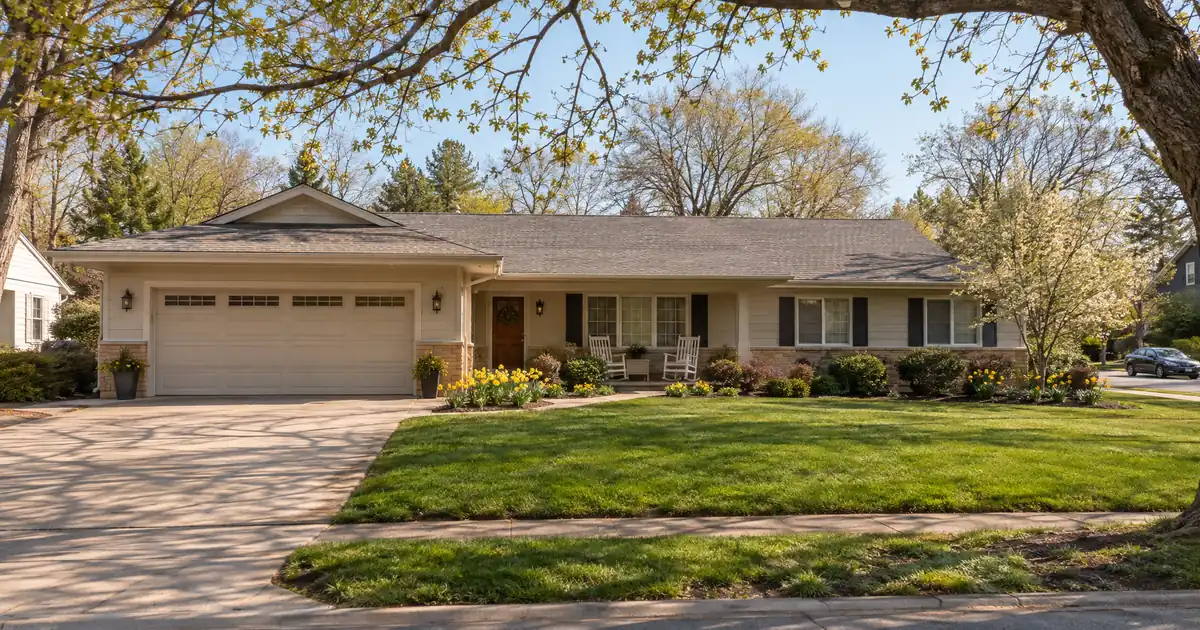
The Quick Read: A portfolio DSCR loan is reviewed primarily on the combined rental income of the properties, measured against their combined payment, subject to lender guidelines. Your traditional personal-income documentation is not the test. The lender still reviews credit, reserves, entity papers, and an appraisal with a rent opinion for every property.
- Coverage is measured on the pool: total rent against total debt service, so strong properties can offset weak ones.
- traditional personal-income documentation is replaced by property documents, not by nothing. Expect heavy paperwork on the real estate.
- Across the wholesale network, one blanket loan commonly covers 2 to 20 properties, with leverage up to 80% on a purchase or rate-and-term refinance.
- Clearing 1.00 coverage is not the same as positive cash flow after repairs, vacancy, and management.
- A blanket loan trades one closing for cross-collateral risk, so release terms matter.
What Does “Portfolio” Mean in a DSCR Loan?
“Portfolio” gets used three ways, and mixing them up causes bad decisions. Here is how each one works.
A DSCR loan describes how a loan is underwritten: on property income instead of personal income. A blanket loan is one note secured by several properties. A portfolio loan in the strict sense is a loan the lender keeps on its own books. This article is about the second one: several rentals under one loan, underwritten on pooled rent.
Our wholesale network offers two main versions. The first is a 30-year portfolio DSCR loan covering 2 to 20 properties under one note, typically $300,000 to $5,000,000 (larger balances on review). The second is a rental portfolio term loan for five or more rental properties or units, typically $500,000 to $50,000,000, with fixed terms of 3, 5, 7, or 10 years and a balloon at maturity. Both are subject to lender guidelines and property review.
How the Qualifying Works, Step by Step
Qualification follows a sequence. The order matters because each step feeds the next.
1. The lender confirms the loan is for business purposes. These are investor loans on non-owner-occupied rentals. Because they are business-purpose loans, they are reviewed differently from a standard owner-occupied mortgage.
2. The pool is defined. The borrower, often an LLC (subject to lender program eligibility), lists the properties. Eligible types in the pool are single-family, 2-4 unit, condo, and townhome, plus small multifamily on the term loan.
3. Each property gets a rent figure. Every property needs a lease or an appraiser-supported market rent. Appraisals commonly include a rent schedule, and the appraiser’s market rent often controls, or the lesser of the lease and market rent, depending on the program.
4. The pool ratio is calculated. Add up the monthly rent of every property. Add up the monthly principal, interest, taxes, insurance, and any HOA dues (called PITIA). Divide rent by PITIA.
5. The lender checks the remaining file. Credit, reserves, entity documents, title, and insurance still apply.
Across the network, the pooled coverage floor is typically 1.00. A ratio of 1.00 means rent equals the full monthly obligation. A ratio of 1.25 means rent covers the obligation with a 25% cushion. Stronger coverage generally opens better pricing and leverage.
How Is the Pooled Ratio Different From Testing Each Property?
The pooled ratio lets a strong property carry a weak one. With separate loans, each property stands alone. With a blanket, the lender looks at the whole.
Picture an investor with four rentals. Two clear 1.30x, one sits near 1.05x, and one runs around 0.90x. Taken alone, the last one is a problem. Pooled, the four together may land comfortably above 1.00x. A rental below 1.00 can sit in the pool, but the pooled coverage, the leverage, and the terms are what underwriting tests, subject to underwriting.
The pool cuts both ways. A weak address dragging the blend down can pull the whole file under the floor. Interest-only periods, available on the 30-year portfolio structure, lower the payment used in the math. Every property recasts together when that period ends.
That is the commercial-style logic. It is not the commercial formula. Commercial lenders divide net operating income by debt service. Mixing the two formulas is why some sources seem to contradict each other.
What “No Tax Returns” Does and Doesn’t Mean
It means your personal return is not the qualifying document. It does not mean no documentation. The table shows the trade.
| Not the qualifier | Still verified | Why the lender wants it |
|---|---|---|
| Traditional personal-income documentation, W-2s | Credit report | Shows repayment history |
| Personal DTI | Appraisal and rent schedule | Proves the property income |
| Employment letters | Asset statements | Confirms reserves |
| Pay stubs | Entity documents | Confirms who owns what |
| Lease or market rent | Supports each property’s income |
Qualification runs on documented property income under the applicable program, subject to lender guidelines. Credit floors start at 640 on the portfolio structures, and some want 680 or 720. Reserves on the term loan are held for taxes, insurance, and capital expenditures.
Here is the practical angle. Depreciation and deductions can shrink taxable income, so a tax return may understate what a rental portfolio really produces. Underwriting on rent sidesteps that. Tax treatment varies; consult a qualified professional.
Why Can a Lender Skip Your Tax Returns?
Personal-income checks are a consumer-credit requirement. These are business-purpose loans, and federal rules treat them differently. The CFPB’s Regulation Z commentary deems credit to buy or maintain non-owner-occupied rental property a business-purpose loan. The eCFR text of the same section also exempts credit extended to anyone other than a natural person, which is why entity borrowers matter.
The rule has a hard edge. Expecting to occupy the property for more than 14 days in the coming year can break the business-purpose treatment. An LLC does not fix a property you plan to use personally.
The minimum coverage numbers, credit floors, and reserve rules are not law. They are lender practice, set by each lender.
Blanket Loan or Separate Loans: The Real Decision
This is the main choice for a portfolio investor, and it is a tradeoff, not a ranking.
| Factor | Blanket loan | Separate loans |
|---|---|---|
| Closings | One | One per property |
| Coverage test | Pooled | Per property |
| Weak property | Offset by strong ones | Judged alone |
| Default risk | Can cascade across pool | Isolated |
| Selling one property | Needs release terms | Simple payoff |
A blanket default can reach every property in the pool. Selling one can require a partial release, which follows the loan documents and the lender’s release terms. The release price runs above the property’s allocated balance, and the remaining portfolio must still cover its debt service. Get those terms in writing before closing, especially if you expect to sell individual properties.
Investors focus on getting the pool approved and read the exit terms last. The better order is the reverse.
The term loan adds more features to weigh. Fixed terms of 3, 5, 7, or 10 years end in a balloon. Prepayment follows a yield-maintenance schedule, 54 months on the 5-year note and 114 months on the 10-year note. Non-recourse and recourse versions exist. A non-recourse loan looks to the real estate, with recourse limited to carve-outs such as fraud and bankruptcy. A recourse loan carries a personal guarantee. Properties in several markets may sit under one loan.
Where the Rule Breaks: Named Edge Cases
Personal use. Any expectation of staying in the property beyond 14 days undermines the business-purpose classification. Owner-occupied property is ineligible in the pool.
Trusts. A consumer-purpose loan to a trust can still fall under consumer rules, so vesting does not decide the outcome. Purpose and occupancy do.
Low appraisal rent. The appraiser’s market rent can come in under the actual lease. Programs differ on whether they allow a variance, so the lease does not always win.
Short-term rentals. Income is documented differently and typically takes an expense-factor reduction. On standard programs, short-term-rental purchases go to 75% LTV, with cash-out at 70% on short-term-rental collateral.
Ineligible property. Manufactured homes, log homes, and barndominiums are not offered in these programs. Mobile homes, co-ops, mixed-use, and commercial property are also ineligible in the pool.
Failed business purpose. If a loan turns out not to be business purpose, consumer obligations could attach. Doss Law’s business-purpose guide walks through how the deeming rules apply to rentals, including owner-occupied buildings above two units. Program guidelines may still bar borrower occupancy, so this is not a house-hacking route.
Can You Pull Cash Out of a Portfolio?
Yes, on seasoned properties, but never above 75% of pooled value on standard rentals. Inside the first six months of ownership, leverage is limited to 90% of total cost. From six to twelve months it is limited to 100% of total cost. A rate-and-term refinance carries no cost restriction.
Cash-out is measured on the pool, so one strong property’s equity can support the group. Subject to lender guidelines.
Who This Fits and Who It Doesn’t
It fits investors whose traditional income documentation understates their rental cash flow, owners holding several rentals, and borrowers who want one closing instead of many. It fits entity borrowers too.
It fits poorly if you plan to sell properties one at a time, if your pool has several rentals well below 1.00 coverage, or if you cannot hold the reserves. Reserves vary by lender, leverage, loan size, and transaction type, commonly around 6 months of PITIA, stepping up to about 9 months above $1,500,000.
Compared with a single-property DSCR loan, the portfolio structure raises the size range and adds cross-collateral risk. On one rental, programs typically run 75%-80% LTV on a purchase. Single-property loans reach up to $3,000,000 on standard programs. Portfolio figures are different, so label them when comparing.
One more caution. DSCR compares rent to PITIA only. Repairs, vacancy, management, utilities, and capital expenses sit outside the calculation. A pool at 1.10x is not necessarily throwing off profit.
Your Pre-Application Checklist
- ID and credit authorization
- Entity documents for the borrowing LLC, subject to program terms
- Asset statements covering reserves
- A property list with leases for each rental
- Current mortgage statements on properties you own, or purchase contracts for new ones
- A decision on blanket versus separate notes, and written release terms if you expect to sell
- A plan for any rental under 1.00, since pooled coverage and leverage are what get tested
Programs change and every file is underwritten individually. Bring the full list to the table early. For the broader picture, see the complete DSCR loans guide. Lendmire’s piece on whether a portfolio operator can borrow at large sizes without tax returns covers the bigger-balance end of this market.
Key Terms Defined
DSCR (debt service coverage ratio): Monthly rent divided by the monthly payment, showing whether rent covers the debt.
PITIA: Principal, interest, taxes, insurance, and association dues, the full monthly housing obligation.
Blanket loan: One note secured by several properties.
Cross-collateralization: Using every property in the pool as security for the whole loan.
Partial release: A lender’s agreement to free one property from the pool, usually at a price above its allocated balance.
Recourse: A personal guarantee that lets the lender look past the property to you.
Frequently Asked Questions
Will a lender ever ask for conventional personal-income paperwork anyway?
Some programs and borrower profiles can trigger extra documentation, so “not required” is different from “never requested.” On the typical portfolio DSCR file, the qualifying documents are property-level: appraisal, rent evidence, and entity papers. Ask early which program your file fits.
Can one weak property sink the whole portfolio loan?
Not by itself. Pooled coverage means stronger properties can offset it. But if the blend falls under the floor, the whole file is affected. Underwriting tests pooled coverage, leverage, and terms.
Do I need an LLC?
Some structures require a special-purpose entity, typically an LLC, while others do not. Subject to program terms, the entity papers are part of the file. Recourse loans carry a personal guarantee either way.
Does non-recourse mean no personal liability at all?
No. Non-recourse structures exist on the term loan, but recourse is limited to carve-outs such as fraud and bankruptcy.
Can I sell one property out of the pool?
Usually, but it follows the release terms in the loan documents.
If you are buying or refinancing rental properties and want to see how the numbers work, Lendmire can help you compare DSCR loan options based on the property income, credit profile, leverage, and investor goals. Lendmire is a broker, arranging financing through select lenders in its wholesale network across 41 markets, including Washington, D.C. Not a commitment to lend.
About Lendmire
Lendmire is a non-QM mortgage brokerage (NMLS# 2371349) arranging DSCR investor loans in 41 markets, including Washington, D.C., through wholesale and investor-lending channels. DSCR loans are evaluated by the lender on rental income rather than personal income, subject to lender guidelines — a fit for LLC-owned portfolios, self-employed investors, and operators scaling beyond conventional loan caps. Recognized as a Scotsman Guide Top Mortgage Workplace in 2025 and 2026.
Get Started
Ready to find the right loan for you?
In about 30 seconds you can review financing options available for your investment property. No commitment required.
Informational only. Not a Loan Estimate, approval, or commitment to lend. Program availability and eligibility are subject to lender guidelines, credit approval, property review, and underwriting.
References
1. CFPB Regulation Z §1026.3 and commentary
3. Doss Law, Business Purpose Exemption
This article is part of Lendmire’s DSCR loan program — full qualification details, guidelines, and scenarios live on the program page.
Related reading: Landlord at Five Doors vs Operator at Twenty on a Portfolio DSCR Loan · Can You Get a DSCR Loan for an Airbnb in Ohio? · How to Find a Portfolio DSCR Loan After Two Lenders Said No
Brandon Miller
Founder & CEO, Mortgage Loan Originator, Lendmire LLC
- Mortgage Loan Originator · NMLS# 1129696 · Verify on NMLS Consumer Access
- North Carolina Real Estate Broker · License# 343312 · Verify on NCREC
- North Carolina Insurance Producer · License# 19053198 · Property, Casualty, Life, Health · Verify on NAIC SBS
- Lendmire LLC · Firm NMLS# 2371349 · Verify firm licensure
Compliance and disclosures. Lendmire (NMLS# 2371349) is a licensed mortgage broker and is not a direct lender, depository institution, financial advisor, or tax professional. Content in this article is general market analysis and educational information — not financial, legal, or tax advice for any specific situation. Lendmire does not guarantee loan approval; every transaction is subject to underwriting by the funding lender. Mortgage pricing and loan program guidelines are subject to change at any time without notice and vary by borrower characteristics, property type, and state regulations. Lendmire complies with Equal Housing Opportunity. Licensure verification: NMLS Consumer Access.