
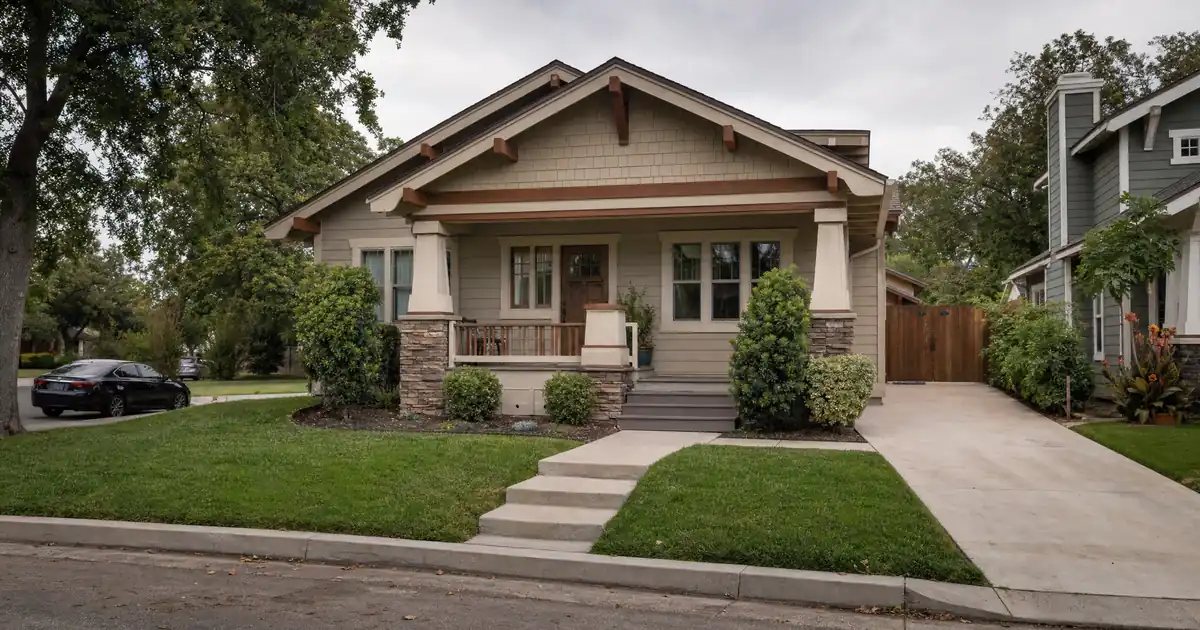
The Quick Read: A DSCR loan lets you buy a house as a rental property, qualifying on the rent the house can generate rather than your personal income. It does not let you buy the house you plan to live in — DSCR loans are business-purpose investor products, and occupancy is the line that decides which loan type applies. Once you accept that boundary, the mechanics are straightforward: the lender compares monthly rent to the monthly payment, and that ratio — not your traditional personal-income documentation — drives approval.
DSCR Calculator
Run the numbers in your market
Rate source: Freddie Mac 30-yr average via FRED® — Federal Reserve Bank of St. Louis · effective Jul 30, 2026
Prefilled with starting assumptions — enter your own rent or nightly figures, taxes, insurance, and HOA for a more accurate picture.
Program parameters update from Lendmire’s centralized guideline source. Taxes and insurance are editable estimates.
As of Jul 30, 2026 · General Freddie Mac market benchmark, not a Lendmire loan offer. Rent, nightly rate, occupancy, taxes, and insurance are editable estimates. Short-term rental figures are estimates only and vary significantly by season, property type, management approach, and local short-term-rental rules — confirm local regulations before relying on them. Qualifying income for short-term rentals varies by program — some use appraisal market rent, others use documented STR history or projections — and is confirmed in underwriting. Not a Loan Estimate, approval, or commitment to lend. Program availability and eligibility are subject to lender guidelines, credit approval, property review, and underwriting.
What You Need to Know First
- DSCR loans finance non-owner-occupied rental property only — not the house you’ll live in.
- Qualification runs on the property’s rent-to-payment ratio, not your traditional personal-income documentation.
- Most files in a wholesale network land at 75%–80% loan-to-value, with select high-leverage programs reaching 85% for stronger credit files.
- A 1.00 ratio is a common floor on select programs, not a universal minimum — and clearing it isn’t the same as positive cash flow.
- A no-ratio option is available for DSCR below 1.00 with stronger credit or higher down payment; qualification on that path rests on credit and equity rather than a rent-coverage calculation.
Key Terms Defined
DSCR (debt-service coverage ratio): the number you get when you divide a property’s monthly rent by its total monthly housing payment — the higher the number, the more cushion the rent provides.
PITIA: principal, interest, taxes, insurance, and association dues — the full monthly obligation a DSCR loan measures rent against.
Non-QM (non-qualified mortgage): a mortgage that doesn’t fit the standard federal mortgage box, usually because it skips traditional income documentation — DSCR loans are the largest category inside non-QM.
Business-purpose loan: a loan made for an investment or commercial reason rather than to buy a home you’ll occupy — this classification is what allows DSCR loans to skip standard consumer-mortgage disclosures.
LTV (loan-to-value): the loan amount expressed as a percentage of the property’s value or purchase price — a lower LTV means more equity in the deal upfront.
Reserves: verified funds left over after closing, usually expressed in months of PITIA, that a lender wants to see in case rent stops flowing for a stretch.
Can You Actually Buy a House With a DSCR Loan?
Yes — but only if you’re buying it as a rental, not a residence. That’s the entire hinge point of this product, and it’s worth stating plainly before anything else: DSCR loans are designed for non-owner-occupied investment properties. Because they are business-purpose investor loans, they are reviewed differently from a standard owner-occupied mortgage.
The reason isn’t arbitrary lender policy. Loans made to acquire or maintain a rental property that isn’t owner-occupied are treated as business-purpose credit, which is why the paperwork and disclosures around a DSCR loan look different from a standard consumer mortgage. Say you tell your lender the property is a rental, close on that basis, and then move in — that’s occupancy misrepresentation, and it puts the loan itself at risk of being called or unwound. Lenders take the occupancy question seriously for exactly that reason.
So if you’re asking “can I buy a house I’ll live in with a DSCR loan,” the honest answer is no. If you’re asking “can I buy a house as a rental and qualify on its income instead of mine,” the answer is yes, and that’s what the rest of this covers.
How the Ratio Actually Gets Calculated
The DSCR formula is simple: monthly rent divided by monthly PITIA equals the ratio. A property that rents for enough to fully cover its payment, with a little room left over, clears 1.00x with margin — a property whose rent barely matches the payment sits right at 1.00x, and one where rent falls short of the payment lands below 1.00x.
Run a scenario: a duplex purchased at 75% LTV, with rent that comfortably covers the full monthly obligation and then some, might clear somewhere in the 1.15x–1.25x range — a comfortable file for most programs. A single-family rental purchased at higher leverage, where rent tracks closer to the payment, might land closer to 1.00x–1.05x — still workable on select programs, but with less pricing flexibility.
Two things trip people up here. First, a 1.00 reading is not the same as positive cash flow. DSCR only measures rent against PITIA — it has nothing to say about repairs, vacancy, property management, utilities, or capital expenses. A property that clears 1.00x can still cost you money in a slow month once those real costs hit. Second, a bigger down payment lowers the payment and lifts the ratio, but it never overrides a leverage cap, a credit floor, or a reserve requirement on its own. The strongest files clear both tests — enough equity in the deal and enough rent covering the payment. Terms vary by lender guidelines, property type, leverage, credit profile, and full file review.
Lendmire’s complete DSCR loans guide walks through the formula in more depth if you want to model your own property before talking to anyone.
Step by Step: How a DSCR File Actually Moves Through Underwriting
Underwriting doesn’t start with your income — it starts with the property’s income. Here’s the actual sequence across most files placed through a wholesale lending network:
1. Rent gets established. The lender uses a market-rent appraisal or a signed lease to set the monthly rent figure the ratio will be built on. 2. PITIA gets calculated. Principal, interest, taxes, insurance, and any HOA dues get added together to form the monthly obligation. 3. The ratio gets run. Rent divided by PITIA produces the DSCR number that anchors the rest of the file. 4. Credit and reserves get layered in. A credit score check and a verified-funds review happen alongside the ratio — DSCR loans skip income paperwork, not underwriting altogether. 5. Leverage and pricing get set. The ratio, the credit tier, and the loan size together determine how much leverage the file supports. 6. The entity question gets settled. Many investors close in an LLC rather than their own name — something DSCR programs allow that agency-backed loans generally don’t, subject to program eligibility and lender requirements.
Because these are business-purpose loans, most also skip the standard consumer-mortgage disclosure package and its waiting period — which is one reason DSCR files often feel less document-heavy than a personal-income mortgage, even though the credit and reserve review is very real.
The Structures and Variations Actually on the Table
The 30-year fixed is the backbone of DSCR lending — but it’s not the only shape available. Select lenders in the network also offer 40-year terms and interest-only periods for investors who want a lower payment early on, and adjustable-rate structures exist for those who prefer them. Above roughly $2,500,000, the network generally holds to 30-year fixed structures rather than extended or interest-only terms.
Loan sizes across most standard programs run up to about $3,000,000; smaller balances route through select lenders that specialize in them. Reserve requirements scale with the file — commonly around six months of PITIA, though conservative rate-and-term refinances at modest leverage under $1,500,000 sometimes see reserves waived, and loans above that size typically step up to around nine months.
Credit tiers matter more than people expect for a product marketed as “no income docs.” A 620 floor exists in parts of the network, but most programs want something closer to 660, and 700-plus is where the strongest leverage tiers open up — including the 85% LTV purchase programs available to well-qualified borrowers.
If you already own rentals and want to pull equity rather than buy new, cash-out refinances on DSCR loans generally top out around 75% LTV, with roughly six months of ownership seasoning expected before a lender will consider it. Lendmire’s piece on using DSCR loans to pull cash out and buy more deals covers that path if scaling a portfolio is the actual goal here.
Where the Math Breaks: DSCR vs. the Alternatives
| Factor | DSCR Loan | Conventional | FHA / VA | Bank-Statement |
|---|---|---|---|---|
| is reviewed on | Property’s rent vs. payment | Borrower’s income + DTI | Borrower’s income + DTI | Bank deposits over time |
| Occupancy required | Non-owner-occupied only | Either | Owner-occupied (primary) | Either |
| Income docs | Property income only | W-2s, traditional personal-income documentation | W-2s, traditional personal-income documentation | Bank statements, no traditional personal-income documentation |
| Entity closing | Allowed, program-dependent | Not allowed | Not allowed | Program-dependent |
| Best for | Rental purchases, portfolio scaling | Owner-occupants, strong W-2 buyers | First-time or low-down owner-occupants | Self-employed owner-occupants |
The takeaway: if you’re buying to live in the house, DSCR isn’t on the menu — FHA, VA, or conventional financing is the right lane. If you’re buying to rent it out and your personal income doesn’t tell the full story of what you can afford, DSCR is built for exactly that gap. Lendmire’s page on what a DSCR loan is breaks the product down further if you’re still weighing it against a standard mortgage.
DSCR vs. conventional financing
Two common ways to finance an investment property in this market. They qualify you differently — here’s how investors weigh them.
Why investors choose it
- Qualifies on the property’s rental income — no personal tax returns, W-2s, or pay stubs needed to document income.
- No personal debt-to-income ceiling to clear, so existing mortgages and obligations don’t cap your borrowing the same way.
- Can be closed in an LLC, keeping the property inside a business entity.
- Built for scaling — not held to the limit on number of financed properties that conventional financing applies.
- Underwriting centers on the deal: generally qualifies when the rent covers the payment, a 1.00x coverage ratio being a common baseline (confirmed in underwriting).
- Designed specifically for investment property, including long-term and, where the program allows, short-term rentals.
Where it’s strong
- Often the lowest ongoing financing cost for a buyer who fully qualifies on personal income — a fit for a first property or a cost-first purchase.
Trade-offs for investors
- Requires full personal income documentation and must fit within a debt-to-income limit — salary, existing debts, and other mortgages all count.
- Typically held in your personal name rather than a business entity.
- Caps how many financed properties you can carry, which can become a ceiling as a portfolio grows.
- Evaluates you as a borrower as much as the property, which usually means more paperwork.
How investors usually choose: a first or single property often optimizes for the lowest financing cost; portfolio builders often optimize for leverage, vesting in an LLC, and scaling past conventional caps. The right answer depends on your goals, the property, and current guidelines — both paths run through select lenders in Lendmire’s wholesale network, with eligibility and terms confirmed in underwriting.
Where the General Rule Runs Into Edge Cases
House-hacking. Buy a 2-4 unit property, live in one unit, and rent the rest — that’s owner-occupied, so it falls under FHA, VA, or conventional rules, not DSCR. Once you move out and the property becomes a pure rental, a DSCR refinance can step in to replace that original loan.
Short-term rentals. Airbnb and VRBO properties get their own lane inside DSCR — purchase up to about 75% LTV, refinance and cash-out closer to 70%, generally with a 640-plus score and around 12 months of hosting history expected, plus the same 1.00 coverage floor as long-term rentals. Nightly-rental income doesn’t fit neatly into the standard rent-schedule appraisal tools built for monthly leases, so lenders typically lean on trailing rental-platform income data instead. Short-term rental rules can vary by city, county, HOA, and property type, so confirm local rules before relying on projected rental income.
Below-1.00 files and “no-ratio” loans. Some corners of the non-QM market advertise sub-1.00 or no-ratio structures, and a no-ratio option is available through this network for DSCR below 1.00. If a property’s rent doesn’t clear 1.00x, the path forward is this option, paired with a stronger credit tier or additional money down. Qualification on that path rests on credit and equity rather than a rent-coverage calculation.
Ineligible property types. Manufactured homes — single- or double-wide — along with log homes and barndominiums fall outside DSCR programs in this network. That’s a program boundary, not a soft preference.
State overlays. A handful of states — Connecticut, Florida, Illinois, New Jersey, and New York among them — generally cap purchase leverage closer to 75% LTV and hold loan sizes near $2,000,000 in DSCR programs, tighter than the national baseline.
Misclassification risk. An investor certification alone doesn’t settle whether a loan is business-purpose. Regulators weigh several factors together in making that determination — a distinction rooted in the Regulation Z exemption for business-purpose credit — and getting this wrong carries real consequences for lenders. That’s exactly why the occupancy conversation at application matters as much as it does.
What the Decision Actually Looks Like
If the house you want cash flows as a rental and you don’t want your traditional personal-income documentation dictating the loan, DSCR is the tool. If you’re planning to live there, stop reading here and look at FHA, VA, or conventional instead — no amount of rent math changes that boundary.
For everyone else, the practical checklist is short: get a market-rent estimate on the property, run rent against the full projected payment to see where the ratio lands, check your credit tier against the 620/660/700-plus bands that drive leverage, and confirm you can cover the reserve requirement for the loan size you’re targeting. If the ratio comes in tight, a larger down payment or a lower-leverage program can push it over the line — as long as the file still clears credit and reserve thresholds too.
Frequently Asked Questions
Can I buy a house with a DSCR loan?
Yes, if you’re buying it as a rental property. DSCR loans qualify you on the rent the property generates, not your personal income — but they’re built exclusively for non-owner-occupied purchases, so the house has to be an investment, not your home.
Can you use a DSCR loan to buy a house?
Only for a property you intend to rent out. The lender will require the file to be structured as a business-purpose transaction, and if you plan to move in yourself, DSCR isn’t the right product — conventional, FHA, or VA financing fits that goal instead.
What is a DSCR loan for a house?
It’s a mortgage that measures a rental house’s monthly rent against its monthly payment (PITIA) instead of measuring your income against your debts. A ratio at or above roughly 1.00x — the floor on select programs — generally clears the property-income test; how much leverage and pricing flexibility that opens up depends on credit tier and loan size.
What type of loan should I use to buy an investment property?
For a pure rental purchase where you’d rather not document personal income, a DSCR loan is usually the most direct route, since it is reviewed on the property’s rent. If you’re buying with a partner or want to compare debt-to-income-based options, a conventional investment-property loan is the other common path — worth comparing side by side before choosing.
Can you buy a house with an SBLOC?
A securities-backed line of credit (SBLOC) borrows against an investment portfolio rather than the property itself, and it isn’t a mortgage product — it doesn’t involve rent, PITIA, or a DSCR calculation at all. Investors sometimes use SBLOC funds as a down-payment source alongside a DSCR loan, but the SBLOC itself isn’t a substitute for the mortgage.
About Lendmire
Lendmire, a mortgage broker (NMLS# 2371349) arranging DSCR investor loans through select lenders across 40 states plus Washington, D.C. — 41 markets total — works these files property-by-property rather than against a single rigid rulebook. If you’re buying or refinancing a rental and want to see how the numbers actually work for your file, Lendmire can help you compare DSCR loan options based on the property’s income, your credit profile, available leverage, and what you’re trying to build. Reach the team at 828-256-2183 or start a quote to see where a specific property lands. Scotsman Guide named Lendmire a Top Mortgage Workplace in both 2025 and 2026.
Nothing here is a commitment to lend, and loan approval is never guaranteed — every scenario described is general information, subject to lender approval and to borrower, property, and program guidelines that change from file to file. This article is for general informational purposes only and isn’t financial, legal, or tax advice; speak with a licensed professional about your specific situation.
Get Started
Ready to find the right loan for you?
In about 30 seconds you can review financing options available for your investment property. No commitment required.
Informational only. Not a Loan Estimate, approval, or commitment to lend. Program availability and eligibility are subject to lender guidelines, credit approval, property review, and underwriting.
References
1. CFPB — Regulation Z, §1026.3 Exempt Transactions
This article is part of Lendmire’s DSCR loan program — full qualification details, guidelines, and scenarios live on the program page.
Related reading: Understanding the DSCR Loan Program · DSCR Loans Online Explained · How to Buy a Rental Property With a DSCR Loan
Brandon Miller
Founder & CEO, Mortgage Loan Originator, Lendmire LLC
- Mortgage Loan Originator · NMLS# 1129696 · Verify on NMLS Consumer Access
- North Carolina Real Estate Broker · License# 343312 · Verify on NCREC
- North Carolina Insurance Producer · License# 19053198 · Property, Casualty, Life, Health · Verify on NAIC SBS
- Lendmire LLC · Firm NMLS# 2371349 · Verify firm licensure
Legal disclosures. Lendmire (NMLS# 2371349) is a state-licensed mortgage brokerage that arranges financing through wholesale lender relationships. Lendmire is not a direct lender, depository institution, or registered financial advisor. The discussion above is general informational content about real estate financing — it is not financial, legal, or tax advice, and readers should consult licensed professionals for guidance on their individual circumstances. Loan inquiries are subject to lender underwriting; this article does not represent a commitment to lend. Loan terms, rates, and qualification standards vary by borrower, property, and state, and are subject to change at any time. Equal Housing Opportunity. NMLS Consumer Access: nmlsconsumeraccess.org.