
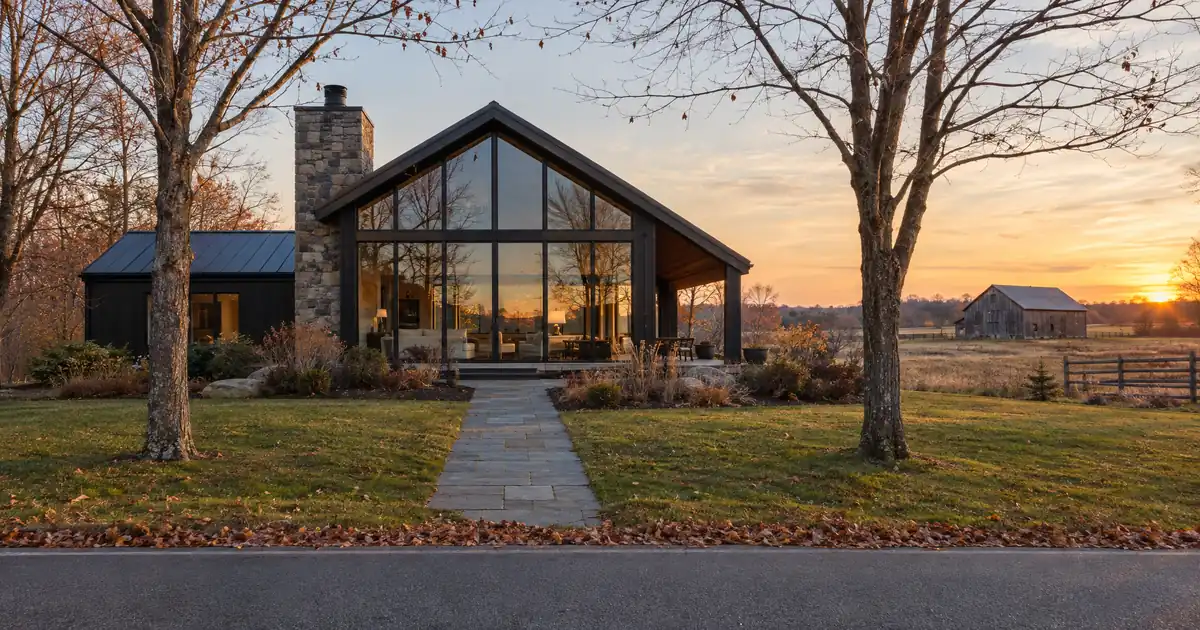
The Quick Read: On a purchase, the lender applies the leverage cap to the lower of the contract price or the appraised value, so an appraisal that lands under contract shrinks the loan and raises the cash the buyer must bring. Rural properties miss more often because comparable sales are thin, and the same report also sets the market rent used for coverage.
- Purchase leverage typically runs 75%-80% LTV across the network, subject to lender guidelines.
- A high appraisal does not raise the loan. A low one lowers it.
- The appraisal produces two numbers, value and market rent, and either one can miss.
- Taxes and insurance do not shrink when the loan does, so coverage improves less than you expect.
- A reconsideration request goes through the lender and needs evidence, not opinion.
A rural rental under contract carries two exposures that a suburban deal mostly avoids. Few comparable sales support the value, and few rental comps support the rent. This piece walks through how underwriting treats a short appraisal, step by step, then covers the structures, the edge cases, and the decision in front of the investor. For the full program picture, see the complete DSCR loans guide.
DSCR Calculator
Run the numbers in your market
Rate source: Freddie Mac 30-yr average via FRED® — Federal Reserve Bank of St. Louis · effective Oct 15, 2026
Prefilled with starting assumptions — enter your own rent or nightly figures, taxes, insurance, and HOA for a more accurate picture.
Program parameters update from Lendmire’s centralized guideline source. Taxes and insurance are editable estimates.
As of Oct 15, 2026 · General Freddie Mac market benchmark, not a Lendmire loan offer. Rent, nightly rate, occupancy, taxes, and insurance are editable estimates. Short-term rental figures are estimates only and vary significantly by season, property type, management approach, and local short-term-rental rules — confirm local regulations before relying on them. Qualifying income for short-term rentals varies by program — some use appraisal market rent, others use documented STR history or projections — and is confirmed in underwriting. Not a Loan Estimate, approval, or commitment to lend. Program availability and eligibility are subject to lender guidelines, credit approval, property review, and underwriting.
Key Terms Defined
LTV (loan-to-value): The loan amount divided by the value the lender uses, which on a purchase is the lower of price or appraisal.
DSCR (debt service coverage ratio): Monthly rent divided by the full monthly obligation: principal, interest, taxes, insurance, and any HOA dues.
PITIA: The monthly obligation in that ratio, meaning principal, interest, taxes, insurance, and association dues.
Market rent: The rent the appraiser concludes the property would command, which many files use as qualifying income.
Reconsideration of value (ROV): A request, routed through the lender, asking the appraiser to review the report in light of new or overlooked information.
Appraisal gap: The difference between contract price and appraised value.
Which Value Does the Lender Use When the Appraisal Misses the Contract Price?
The lower one. On a purchase, the loan is sized on the lesser of contract price and appraised as-is value. No law sets this. It is how lender grids work, and the wholesale programs Lendmire places files with follow it.
The formula is simple. Loan amount equals the LTV cap times the lower value. The down payment is the contract price minus that loan.
Run it as arithmetic on percentages. Say a rural rental is under contract and appraises 10% below price. At a 75% leverage tier, the loan falls by 7.5% of the purchase price. At an 80% tier, it falls by 8% of price. The buyer covers that difference on top of the original down payment. Nothing in the file judges the property. It is a cash-to-close problem. Terms depend on the lender’s guidelines, the property type, the leverage, and a full review of the credit profile.
Two corollaries trip people up:
- A high appraisal does not raise the loan. Buying below appraised value does not let you borrow against the discount. The cap still applies to price.
- Winning a value argument can cut both ways. A higher accepted value can raise the loan amount, which raises the payment and can lower coverage.
Opendoor’s explainer describes the same mechanic from the consumer side: the lender lends against appraised value, and a low number leaves the buyer to renegotiate, pay the gap, request a review, or walk.
Value, Rent, or Both: What Actually Came In Low?
Diagnose the miss before reacting. The appraisal does two jobs. It sets the value that goes under the LTV cap, and it sets a market rent that feeds the coverage ratio. On a single-family rental that rent comes from the comparable rent schedule (Form 1007). On a two-to-four unit property the operating income form (Form 1025) carries it. Those are appraisal form names, not DSCR rules.
| What missed | What it changes | Where it shows up |
|---|---|---|
| Value only | Loan size and cash to close | Smaller loan, bigger down payment |
| Rent only | Coverage ratio | Lower DSCR, tighter pricing or leverage |
| Both | Loan size and coverage | Cash gap plus a weaker ratio |
If the file is value-only, the fix is cash or price. If it is rent-only, the loan amount is fine but the coverage may not be. If both missed, one report has hurt the file twice.
Why Rural Appraisals Miss More Often
Rural markets have fewer sales and slower turnover. McKissock’s appraiser education notes that appraisers may have to search neighboring towns or even different regions for comparables, and that distant or dated comps must be explained in the report. A value built on stretched comps is more likely to land away from contract. It is also a better candidate for review if you can bring closer sales.
Rent has the same problem. In a thread on the Appraisers Forum, practitioners describe how hard it is to build credible rent data in a rural market, including cases with only a few older, non-MLS sales to work from. Thin rent comps push the market rent conclusion toward whatever the appraiser can defend, which may sit below the lease in place.
Three rural features move values most:
1. Acreage. Land is hard to value without comparable land sales. A price that bundles excess acreage can appraise short, and lender policy often limits how much land counts. Confirm acreage treatment with your broker before you offer.
2. Outbuildings and upgrades. Shops, barns, wells, and septic systems are hard to adjust for with few comps.
3. Property type. Manufactured homes (single- and double-wide), log homes, and barndominiums are not offered in the network’s DSCR programs, however well they appraise.
A rural address alone is not a denial. It is more often a program-selection, leverage, and collateral-scrutiny question. Terms vary by lender and file.
What Happens to Coverage When the Loan Shrinks?
Coverage improves less than most investors expect. A smaller loan lowers principal and interest. Taxes and insurance stay put. So the ratio moves up only modestly on a value miss.
Consider an investor whose rural duplex-style rental appraises 10% under contract with market rent holding steady. The loan drops, the interest-and-principal piece falls, and coverage might tick up from something like 1.10x toward 1.15x. That is a modeled illustration, not a market figure. The larger effect is the cash gap, not the ratio.
Now flip it. If the appraised rent comes in light while value holds, the loan is unchanged and coverage falls. If both miss, the loan shrinks and the ratio can still weaken. Run the three cases before deciding, because the answer to “does this still work” differs in each.
One more point on the number itself. Clearing 1.00 is not the same as positive cash flow. The ratio compares rent to PITIA only. Repairs, vacancy, management, utilities, and capex sit outside it.
A larger down payment lowers the monthly payment and can lift coverage. It never overrides leverage caps, credit floors, reserve rules, or property eligibility. The strongest files clear both tests: enough equity and enough rental coverage.
Can You Challenge the Value?
Sometimes. A reconsideration of value is a request that goes through the lender, not directly to the appraiser. One appraisal-education site explains that it is not a new appraisal and not a negotiation, and that the appraiser revises only if the evidence supports it.
The federal banking agencies issued interagency guidance on reconsiderations of value describing how regulated institutions can build ROV policies, including a way for consumers to submit information that may not have been considered. Consumer Finance Monitor’s summary notes the agencies define an ROV as a request from the institution to the appraiser to reassess the report. That guidance targets regulated institutions and residential consumer lending. Whether a given DSCR lender runs an ROV, and how, is that lender’s policy. Do not treat it as an entitlement on a business-purpose loan.
| A review can act on | A review cannot act on |
|---|---|
| Factual errors in the report | Opinions about what it should be worth |
| Closer or better-matched sold comps | Listings with no sale behind them |
| Missed features, acreage, or outbuildings | A seller’s asking price |
| Documented condition or upgrade evidence | Disagreement with the adjustments alone |
For a rural file, the evidence packet matters more than usual:
- Sold comps closer in location, size, and acreage than the ones used, with sources.
- A clear description of what the report got wrong or left out.
- Documentation of upgrades, outbuildings, and site features.
- A short note on why any distant comps do not fit.
Policies differ on second appraisals. The lender decides which value governs, and a higher second number may be averaged with the first or ignored. Do not plan around a second appraisal as a second chance.
DSCR vs. conventional financing
There are two common ways to finance an investment property, and they qualify you differently — here’s how investors weigh them.
Why investors choose it
- Qualifies on the property’s rental income — no personal tax returns, W-2s, or pay stubs needed to document income.
- No personal debt-to-income ceiling to clear, so existing mortgages and obligations don’t cap your borrowing the same way.
- Can be closed in an LLC, keeping the property inside a business entity.
- Built for scaling — not held to the limit on number of financed properties that conventional financing applies.
- Underwriting centers on the deal: generally qualifies when the rent covers the payment, a 1.00x coverage ratio being a common baseline (confirmed in underwriting).
- Designed specifically for investment property, including long-term and, where the program allows, short-term rentals.
Where it’s strong
- Often the lowest ongoing financing cost for a buyer who fully qualifies on personal income — a fit for a first property or a cost-first purchase.
Trade-offs for investors
- Requires full personal income documentation and must fit within a debt-to-income limit — salary, existing debts, and other mortgages all count.
- Typically held in your personal name rather than a business entity.
- Caps how many financed properties you can carry, which can become a ceiling as a portfolio grows.
- Evaluates you as a borrower as much as the property, which usually means more paperwork.
How investors usually choose: a first or single property often optimizes for the lowest financing cost; portfolio builders often optimize for leverage, vesting in an LLC, and scaling past conventional caps. The right answer depends on your goals, the property, and current guidelines — both paths run through select lenders in Lendmire’s wholesale network, with eligibility and terms confirmed in underwriting.
Your Options Under Contract
Most files resolve one of five ways.
| Option | What it costs | When it fits |
|---|---|---|
| Renegotiate to appraised value | Nothing extra | Seller wants the deal to hold |
| Split the gap | Part of the gap in cash | Both sides have room |
| Pay the gap in cash | Full gap, plus reserves pressure | Strong rent and a price you still like |
| Request a reconsideration | Time and evidence | Better comps actually exist |
| Walk away | Possibly the deposit | Gap is large or coverage fails |
Walking away only works cleanly if your contract has an appraisal contingency. Investors often waive these, so read yours before you count on it. As one practitioner view, a gap near 10% usually means a price conversation rather than a cash top-up.
Check reserves before agreeing to cover a gap. Reserves vary by lender, leverage, loan size, and transaction type. They commonly run around 6 months of PITIA, with about 9 months above $1,500,000, and conservative files at modest leverage can see reserves waived. Cash pulled into a gap is cash you may need to document elsewhere.
Does the Deal Still Work?
Use a short test.
1. Re-run the loan. Apply the LTV tier to the lower value and note the new down payment as a percentage of price.
2. Re-run coverage. Use the appraised market rent, not your hoped-for rent, against full PITIA.
3. Check the lease. Some programs use only the appraisal rent. Others allow a variance if a current lease exists. Ask how your lender treats the lower of the two.
4. Check reserves after the gap. Make sure the cash left still meets the lender’s requirement.
5. Decide on price. If the numbers only work at a lower price, that is your answer.
Where coverage lands below 1.00, note that 1.00 is where many select programs start. A separate select-lender path takes coverage below 1.00 with leverage and terms adjusted. Another path, no-ratio, is available only through select lenders, generally for borrowers who already own a primary residence. Qualification stays subject to lender guidelines, credit approval, and property review.
Here is the operator view. On rural files, the report is rarely the surprise. The surprise is that nobody priced the rural appraisal risk into the contract. Pull your own sold comps and rent listings before you offer, keep a lease in place if you can, and ask your broker up front how the lender handles reconsiderations. Those three habits prevent most of the scramble.
Program Parameters at a Glance
These are typical ranges from select wholesale-network guidelines. Terms vary by lender and file, and nothing here is a commitment to lend.
- Purchase leverage: typically 75%-80% LTV on an investment property purchase, with select high-leverage programs reaching 85% LTV at roughly a 700+ score.
- Cash-out refinance: around 75% LTV on standard rentals, with about 6 months of seasoning commonly expected. There is no purchase gap on a refinance. A low value just shrinks proceeds.
- Credit: a 620 floor exists in parts of the network, most programs want around 660, and 700+ opens the strongest leverage tiers.
- Loan size: up to $3,000,000 on standard programs, with smaller balances routed through select lenders. Above $2,500,000 the network generally holds to 30-year fixed structures.
- Structures: the 30-year fixed is the spine, with extended terms, interest-only periods, and ARMs available through select lenders.
DSCR loans are designed for non-owner-occupied investment properties. Because they are business-purpose investor loans, they are reviewed differently from a standard owner-occupied mortgage. Tax treatment varies; consult a qualified professional.
If you are buying or refinancing a rental property and want to see how the numbers work, Lendmire can help you compare DSCR loan options based on the property income, credit profile, leverage, and investor goals. Lendmire arranges financing through select lenders in its wholesale network across 41 markets, including Washington, D.C. Two related reads: how to prepare a rental package under contract and whether a DSCR loan can close in time for a deal like this one.
Frequently Asked Questions
What does the maximum LTV mean on a rural purchase?
It is a cap applied to the lower of price or appraised value, not a promise of that percentage of the price. Most files land at 75%-80% on a purchase, subject to lender guidelines, property type, and credit. A low appraisal pulls the loan below the cap-times-price figure.
Does a low appraisal kill the deal?
No. It changes the cash needed before it changes eligibility. Buyers commonly renegotiate price, split the gap with the seller, pay it in cash, or request a reconsideration. The deal fails only if the gap is too large or coverage no longer holds.
Does the seller have to lower the price?
No. Nothing forces a seller to adjust. Your leverage depends on your contract, including whether you kept an appraisal contingency, and on how motivated the seller is.
Can I order a second appraisal?
The lender orders the appraisal and decides which value governs. A second report may be averaged with the first or set aside, depending on lender policy. A documented reconsideration request is usually the more direct route.
What happens if coverage drops under 1.00?
Many select programs start at 1.00, so a drop can limit options. A separate select-lender path takes coverage below 1.00, with leverage and terms adjusted. Eligibility depends on credit, reserves, and property review.
About Lendmire
As a non-QM mortgage broker (NMLS# 2371349), Lendmire facilitates DSCR investor loans across 41 markets, including Washington, D.C. DSCR eligibility is generally reviewed around property-level rental income instead of personal income documentation, subject to lender guidelines, serving LLC-structured portfolios and self-employed borrowers who don’t fit conventional boxes. A two-time Scotsman Guide Top Mortgage Workplace (2025, 2026).
Get Started
Ready to find the right loan for you?
In about 30 seconds you can review financing options available for your investment property. No commitment required.
Informational only. Not a Loan Estimate, approval, or commitment to lend. Program availability and eligibility are subject to lender guidelines, credit approval, property review, and underwriting.
References
1. Opendoor: What to Do When an Appraisal Comes In Low
2. McKissock Learning: Appraising Rural Properties
3. Appraisers Forum: Form 1025 Gross Monthly Rent and Income Approach
4. howtoreadanappraisal.com: Reconsideration of Value
5. Interagency Guidance on Reconsiderations of Value (CFPB-hosted)
6. Consumer Finance Monitor: Federal Agencies Finalize Reconsideration of Value Guidance
This article is part of Lendmire’s DSCR loan program — full qualification details, guidelines, and scenarios live on the program page.
Related reading: DSCR Loan Appraisal Rules for Acreage With a Rental House · Super Jumbo DSCR Loan Appraisal for a Luxury Rental With No Comps · Short-Term Rental DSCR Loan Rules for Renting to Family
Brandon Miller
Founder & CEO, Mortgage Loan Originator, Lendmire LLC
- Mortgage Loan Originator · NMLS# 1129696 · Verify on NMLS Consumer Access
- North Carolina Real Estate Broker · License# 343312 · Verify on NCREC
- North Carolina Insurance Producer · License# 19053198 · Property, Casualty, Life, Health · Verify on NAIC SBS
- Lendmire LLC · Firm NMLS# 2371349 · Verify firm licensure
Disclosure information. Lendmire is a state-licensed mortgage brokerage under NMLS# 2371349. Lendmire is not a depository institution, direct lender, or financial advisor — all loans referenced are placed through wholesale lender partners and are subject to each lender's underwriting standards. This article is provided for general informational purposes and is not a commitment to lend, nor does it constitute financial, legal, or tax advice. Loan programs, terms, rates, and qualification standards change without notice and depend on borrower profile, property type, and the state in which the subject property is located. Equal Housing Opportunity provider. NMLS Consumer Access: nmlsconsumeraccess.org.