
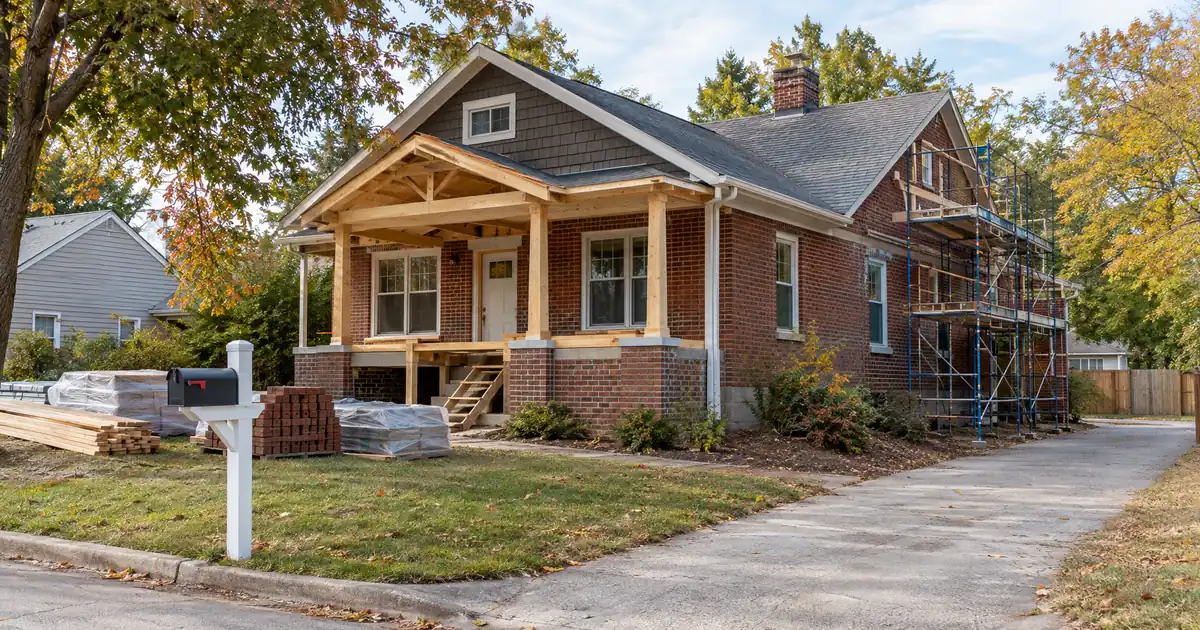
The Quick Read: For a storm-damaged rental, the property’s condition decides the choice: a DSCR loan fits a unit that can be rented as it sits and needs a long-term loan, while hard money fits a unit that cannot be rented until repairs are finished and inspected, with the plan being to refinance afterward.
- A DSCR loan is reviewed primarily on property-level rental income covering the payment, subject to lender guidelines. It generally does not pay for repairs.
- Hard money is short-term, interest-only financing built on the property, the repair plan, and the exit. Repair money is typically released in draws after inspected work.
- Light damage on a leased, livable unit may still work for a DSCR loan. A breached roof, water intrusion, or structural damage usually pushes you toward a bridge first.
- Both loans are for investment property. Neither replaces your insurance claim, and both need cash on hand for the deductible and early repair costs.
Here is the honest answer on who each loan is for. A DSCR loan is for the owner whose rental still works as a rental and who wants steady, long-term debt on it. Hard money is for the owner whose rental is on hold, who needs money for the repair work, and who has a clear plan for what replaces the loan. Neither is the better product in general. Each is the right tool for one condition of the property.
What this loan actually costs to carry.
Hard money is sized against the project and priced by time. Enter the deal and see how much the program will lend, the cash required at closing, the carry while you hold it, and what is left at the exit.
Leverage tiers on the current program: 85% with fewer than 2, 90% with 2 or more, 93% with 5 or more completed projects — every tier capped at 75% of after-repair value. Loan amounts up to $5,000,000, larger by exception; terms of 6 to 18 months, interest-only, no prepayment penalty. The rehab portion funds in draws against completed work, not at closing.
Program parameters shown update from Lendmire’s centralized guideline source. Rate, points, and months are editable assumptions, not quoted terms.
Cost cap sets the loan · positive spread
Illustrative estimate only — not a quote, Loan Estimate, approval, or commitment to lend. Rate, points, and months are editable assumptions. Hard money is business-purpose financing for real estate investors, not a consumer mortgage. Leverage on the current program tops out at 93% of project cost for investors with a documented track record, capped at 75% of after-repair value, with rehab funding up to 100% of the documented budget released in draws; actual terms vary by lender, borrower experience, property, and exit. Lendmire is a mortgage broker, not a lender.
Lendmire is a broker. It arranges both kinds of financing through select lenders in its wholesale network, so this comparison has no product to push. All figures below are typical ranges that vary by lender, property, and experience, and nothing here is a commitment to lend.
Side-by-Side
The DSCR column reflects what most programs in the network look like. The hard money column reflects the parameters for that product and published industry norms, and each lender sets its own terms.
| Factor | DSCR Loan | Hard Money |
|---|---|---|
| Review basis | Rent covering the full payment | Property value, repair plan, exit |
| Property condition | Generally rentable as it sits | Damaged or vacant is workable |
| Repair funding | Not a repair-draw product | Repair budget released in draws |
| Documentation | Lease, rent schedule, appraisal, insurance | Scope of work, budget, appraisal or BPO |
| Entity vesting | LLC common, subject to program eligibility | LLC common, varies by lender |
| Term structure | Long-term, 30-year fixed is the spine | 6-18 months, interest-only |
| Reserves and cash | Commonly around 6 months of PITIA | Cash for deductible and early repairs |
| Typical exit | Hold the loan | Refinance or sell after repairs |
A quick note on one cell. “Rentable as it sits” is the heart of the comparison, and the next section explains how lenders judge it.
How Lenders Read Storm Damage
Lenders on both sides look at the property first, but they ask different questions. A DSCR lender asks whether the property can be rented today. A hard money lender asks what the property is worth now, what it will be worth after repairs, and whether you can finish the job.
Appraisers describe condition on a six-step scale, C1 through C6. As McKissock’s appraisal education explains, an appraiser reports both an “As Is” condition and a “Condition Subject to Repair.” If any part of a dwelling warrants a C6, the whole dwelling is rated C6. DSCR lenders are not bound by that scale, but many borrow it. Across the network, most programs want a property in the better half of the range, and the strict ones want it rent-ready with no open safety or structural items. Individual cutoffs vary by lender.
Storm damage maps onto the bottom of that scale fast. A roof breach, active water intrusion, or a compromised structure is usually a problem for a DSCR file. Minor items on a leased unit often are not. The line is not whether a claim exists. The line is whether a tenant could live there today.
Insurance is the second gate, and it is where DSCR files on storm-prone properties often hit snags. Lenders generally want:
- property coverage with the right named insured, meaning the entity that owns the property if the loan is to an LLC
- effective dates that match the file
- separate wind, named-storm, hail, or flood coverage where the location calls for it
A policy written to you personally when an LLC holds title is a classic delay. So is a very high wind deductible. Also remember that the insurance cost is part of the payment the lender tests, so a higher premium lowers your coverage ratio.
When a DSCR Loan Is the Better Fit
A DSCR loan is the better fit when the property is livable, the rent is intact or easy to re-establish, and your repairs are minor enough to finish with cash. It is also the right end point for almost every storm-damaged rental once the work is done.
Picture an investor with a leased fourplex that lost some shingles and had a ceiling stain in one unit. Tenants are in place, and the repairs are cosmetic or small. A DSCR loan can make sense here, because the property still earns rent and the repair cost is manageable out of pocket. The lender’s property-condition policy and the appraisal have the final word.
The program basics, as typical ranges across the network, look like this:
- Purchase: most files land at 75%-80% LTV on a purchase, with select high-leverage programs reaching 85% LTV on a purchase at roughly a 700+ credit score.
- Cash-out refinance: generally tops out around 75% LTV, and about 6 months of seasoning (ownership time before a refinance) is the common expectation.
- Coverage: 1.00 is where many select programs start. A separate select-lender path takes coverage below 1.00, with leverage and terms adjusted. Stronger ratios open better terms and leverage.
- Credit: a 620 floor exists in parts of the network, most programs want around 660, and 700+ unlocks the strongest leverage tiers.
- Loan size: up to $3,000,000 on standard programs (smaller balances available through select lenders). Reserves commonly run around 6 months of PITIA, though they vary by lender, leverage, loan size, and transaction type.
Keep one caution in mind. Clearing 1.00 does not mean positive cash flow. The ratio compares rent to the housing payment and nothing else. Repairs, vacancy, management, utilities, and capital costs sit outside the calculation. If you are using a DSCR loan on a property that just took storm damage, budget those items yourself.
A larger down payment can lift the ratio by shrinking the payment. It does not erase leverage caps, credit floors, reserve rules, or property eligibility. The strongest files clear both tests: enough equity and enough rental coverage. Details on how the loan works are in Lendmire’s complete DSCR loans guide.
When Hard Money Is the Better Fit
Hard money is the better fit when the unit cannot be rented now, the repairs are real, and you have a believable plan for what replaces the loan. It lends against the asset and the plan instead of against current rent, which is why it can work on a property a DSCR lender would turn away.
Say you own a duplex where wind tore off part of the roof and water got into both units. The tenants are gone, rent is zero, and there is no coverage ratio to calculate. A DSCR file has nothing to qualify on. A hard money lender can look at the value as it stands, the value once repaired, and your scope of work.
The hard money parameters in the network look like this. All of them vary by lender, property, and experience:
- Rehab funding: up to 100% of the rehab budget funds in draws against completed work. That is a rehab-budget figure, not a purchase LTV.
- Refinance of a property you own: cash-out and rate/term refinances run up to 65% of value.
- Bridge purchase without rehab: up to 80% of purchase price.
- Fix-and-flip projects: 85% of project cost with fewer than 2 completed projects, 90% of project cost at 2+, and 93% of project cost at 5+, with every tier capped at 75% of after-repair value. The top tier is reserved for experienced investors.
- Term and size: 6-18 months, interest-only, no prepayment penalty, with loan amounts up to $5,000,000, and larger by exception.
- Credit: a 620 minimum score, with additional conditions below 660. Underwriting stays asset-based, so the property, the plan, and the exit drive the decision. Terms vary by lender guidelines, property type, leverage, credit profile, and full file review.
Draws are where investors get surprised. The lender typically holds back the repair money at closing and releases it after an inspector confirms the work. Often that means you pay the contractor first and get reimbursed. Plan to front part of each phase. Inspectors can be late, and a missing lien waiver can hold up a draw. The loan agreement controls those rules, so read the draw schedule before you sign.
Also check that your own lender mix fits. Hard money requires a lender willing to work in your state, since availability is not universal. The footprint covers 41 markets, including Washington, D.C., and it does not cover every state. For a rental already held long term, the 65% refinance figure also matters, because it caps how much of the property’s value the loan can cover.
If you want more depth on structuring repair-heavy deals, see Lendmire’s piece Hard Money vs. Portfolio DSCR Loan for a Rental Package With Repairs.
Three Damage Tiers, Three Paths
Most real files fall into one of three tiers. Use them as a first screen, then let the lender’s appraisal settle it.
Minor damage, tenants in place. Fix it with cash and insurance proceeds, and keep or pursue a DSCR loan. Hard money would be overkill here, since you would pay for a short-term loan to solve a problem a checkbook solves.
Moderate damage, partly rentable. This is the gray zone. Some programs tolerate minor open items. Others want the work done and re-inspected before closing. An appraisal completed subject to repairs may hold up a DSCR closing until the work is finished. Ask the lender what it will accept before you order anything.
Severe damage, no rent. Start with the claim and temporary repairs, then use a bridge or repair-capable loan for the rebuild. The DSCR loan comes after, once the property is rentable and the rent can be documented.
The Four-Step Path, and What Can Go Wrong
Many investors with a badly damaged rental use hard money to repair, then refinance into long-term DSCR financing once the property is stabilized. Lendmire brokers that path. It works, but each step has to land.
The refinance depends on three things. The repaired property must appraise in acceptable condition, the rent must support the payment with insurance included, and the loan must be seasoned long enough for the next lender. A refinance that cannot clear those tests leaves you holding a loan with a maturity date.
Four failure modes are worth planning around:
1. Repairs run over. Damage found after the scope was submitted often is not credited. Build a cushion into the budget.
2. Rent comes in low. If the repaired unit rents for less than you assumed, the coverage ratio drops and the refinance leverage can shrink with it. Some select lenders in the network will review coverage below 1.00, with leverage and terms adjusted.
3. Insurance changes. A new wind or flood requirement raises the payment and lowers the ratio.
4. Tenants leave. An empty unit has no lease to show. Rent has to be re-established before a DSCR lender will count it.
A Short Note on Business-Purpose Loans
DSCR loans are designed for non-owner-occupied investment properties. Because they are business-purpose investor loans, they are reviewed differently from a standard owner-occupied mortgage. The federal rule behind that treatment, Regulation Z section 1026.3, exempts credit extended primarily for a business or commercial purpose, and the creditor decides the primary purpose in each case. Business purpose does not mean unregulated, so expect a lender to document it. Hard money works the same way on this point.
When Neither Loan Is the Answer
Sometimes the right move is no new loan. If insurance proceeds and your cash cover the work, repair first and avoid a short-term loan. Tax treatment can depend on how the funds are used and how the property is held; investors should keep clear records and speak with a qualified tax professional before relying on any deduction.
Another route is federal disaster aid. The SBA’s physical damage loan program says qualified rental properties may be eligible under its business disaster loans, up to $2 million. It requires a declared disaster area, and it covers losses not fully covered by insurance, with insurance proceeds deducted from the eligible amount. It is a different product with its own terms, so treat it as an option to check, not a replacement for either loan here.
Documents to Gather After a Storm
Both paths go smoother when your file is organized before you call a lender:
- photos and a dated description of the damage
- the insurance claim number, adjuster report, and settlement status
- a written scope of work and contractor bids
- current leases and rent history, or notes on tenants displaced
- the policy declarations page showing the named insured and any wind or flood coverage
- entity documents, if an LLC owns the property (subject to lender program eligibility)
Key Terms Defined
DSCR (debt service coverage ratio): the property’s monthly rent divided by its monthly housing payment, used to test whether the rent covers the loan.
PITIA: principal, interest, taxes, insurance, and any association dues, which together make up the full monthly payment.
ARV (after-repair value): what the property is expected to be worth once repairs are complete.
Loan-to-cost: the loan amount as a share of total project cost, used on repair and flip loans.
Draw: a release of repair money after the lender confirms a phase of work is done.
Seasoning: the ownership time a lender wants before it will refinance a property.
The Verdict
Choose by condition first, then by plan. If the unit is livable or close to it, a DSCR loan is the cleaner long-term answer, and you cover the small repairs yourself. If the unit is uninhabitable, hard money gives you repair funding the DSCR route does not, but you accept a short term and the need for a real exit. The risk to weigh is time: hard money buys flexibility at the cost of a maturity date, while a DSCR loan buys stability but requires a rentable property. Many owners of heavily damaged rentals end up using both in sequence.
Frequently Asked Questions
Can a DSCR loan pay for storm repairs?
Generally not. A DSCR loan finances a rentable property and does not work like a construction draw facility. Any repair escrow or holdback depends on the individual lender, so confirm before you count on one. Most owners fund repairs with insurance proceeds, cash, or a short-term repair loan.
Does storm damage automatically disqualify a rental from a DSCR loan?
No. Minor items on a leased, livable unit may be acceptable depending on the lender and program. Damage that makes the unit unrentable, such as a breached roof or structural problems, typically needs to be repaired and re-inspected first.
Does hard money ignore my credit?
No. A 620 minimum score applies, with additional conditions below 660, and the lender still reviews your credit. The decision leans on the property, the repair plan, and your exit instead of rent coverage. Terms vary by lender, property, and experience.
Can I use an LLC for either loan?
Often, yes. Both products commonly lend to entities, subject to lender program eligibility. The insurance policy and title should name the same entity as the borrower, since a mismatch is a common cause of delay.
What if my repaired rental does not reach 1.00 coverage at the refinance?
That is a real risk to plan for. Select lenders in the network offer programs below 1.00, with leverage and terms adjusted. A larger down payment or lower leverage can also help the ratio, but eligibility still depends on lender guidelines, credit, reserves, and property review.
Next Step
If you are buying, rehabbing, or refinancing an investment property on a short timeline and want to see how the numbers work, Lendmire can help you compare hard money options based on the project, the exit plan, leverage, and your goals. You can reach the team at 828-256-2183 or request a quote through the Lendmire quote page.
About Lendmire
As a non-QM mortgage broker (NMLS# 2371349), Lendmire facilitates DSCR investor loans across 41 markets, including Washington, D.C. DSCR eligibility is generally reviewed around property-level rental income instead of personal income documentation, subject to lender guidelines, serving LLC-structured portfolios and self-employed borrowers who don’t fit conventional boxes. A two-time Scotsman Guide Top Mortgage Workplace (2025, 2026).
Get Started
Ready to find the right loan for you?
See your offer in seconds. No credit pull, no obligation.
Informational only. Not a Loan Estimate, approval, or commitment to lend. Program availability and eligibility are subject to lender guidelines, credit approval, property review, and underwriting.
References
1. McKissock: Understanding appraisal condition ratings C1 to C6
2. CFPB Regulation Z section 1026.3
This article is part of Lendmire’s hard money loan program — full qualification details, guidelines, and scenarios live on the program page.
Related reading: Can You Get a DSCR Loan Under 75K on a Small Rental? · Hard Money vs DSCR Loan Paperwork for an Investor Exiting a Flip · Can You Get a Higher LTV on a DSCR Rental Loan?
Brandon Miller
Founder & CEO, Mortgage Loan Originator, Lendmire LLC
- Mortgage Loan Originator · NMLS# 1129696 · Verify on NMLS Consumer Access
- North Carolina Real Estate Broker · License# 343312 · Verify on NCREC
- North Carolina Insurance Producer · License# 19053198 · Property, Casualty, Life, Health · Verify on NAIC SBS
- Lendmire LLC · Firm NMLS# 2371349 · Verify firm licensure
Compliance and disclosures. Lendmire (NMLS# 2371349) is a licensed mortgage broker and is not a direct lender, depository institution, financial advisor, or tax professional. Content in this article is general market analysis and educational information — not financial, legal, or tax advice for any specific situation. Lendmire does not guarantee loan approval; every transaction is subject to underwriting by the funding lender. Mortgage pricing and loan program guidelines are subject to change at any time without notice and vary by borrower characteristics, property type, and state regulations. Lendmire complies with Equal Housing Opportunity. Licensure verification: NMLS Consumer Access.