
The Quick Read: A DSCR loan fits a rental that is already rentable and qualifies primarily on property-level rental income covering the payment, subject to lender guidelines, while hard money fits a property that needs work or a short-term bridge and is sized on collateral, plan, and exit. Many Asheville investors end up using both, one after the other.
- DSCR is the hold tool: longer terms, property-rent-based lender review, a stabilized property.
- Hard money is the acquire-and-repair tool: short terms, interest-only, an exit plan required.
- Property condition is the dividing line. A house that cannot be leased today cannot show the rent a DSCR file needs.
- Neither product is a personal-income loan. Both look hard at the property.
- If you plan a short-term rental, confirm that the use is lawful before counting that income.
The Honest Answer: Who Each Option Is Really For
Choose a DSCR loan if the property is livable, leasable, and you plan to keep it. Choose hard money if the property needs repairs before anyone can rent it, or if you need a bridge while you line up long-term financing.
What this loan actually costs to carry.
Hard money is sized against the project and priced by time. Enter the deal and see how much the program will lend, the cash required at closing, the carry while you hold it, and what is left at the exit.
Leverage tiers on the current program: 85% with fewer than 2, 90% with 2 or more, 93% with 5 or more completed projects — every tier capped at 75% of after-repair value. Loan amounts up to $5,000,000, larger by exception; terms of 6 to 18 months, interest-only, no prepayment penalty. The rehab portion funds in draws against completed work, not at closing.
Program parameters shown update from Lendmire’s centralized guideline source. Rate, points, and months are editable assumptions, not quoted terms.
Cost cap sets the loan · positive spread
Illustrative estimate only — not a quote, Loan Estimate, approval, or commitment to lend. Rate, points, and months are editable assumptions. Hard money is business-purpose financing for real estate investors, not a consumer mortgage. Leverage on the current program tops out at 93% of project cost for investors with a documented track record, capped at 75% of after-repair value, with rehab funding up to 100% of the documented budget released in draws; actual terms vary by lender, borrower experience, property, and exit. Lendmire is a mortgage broker, not a lender.
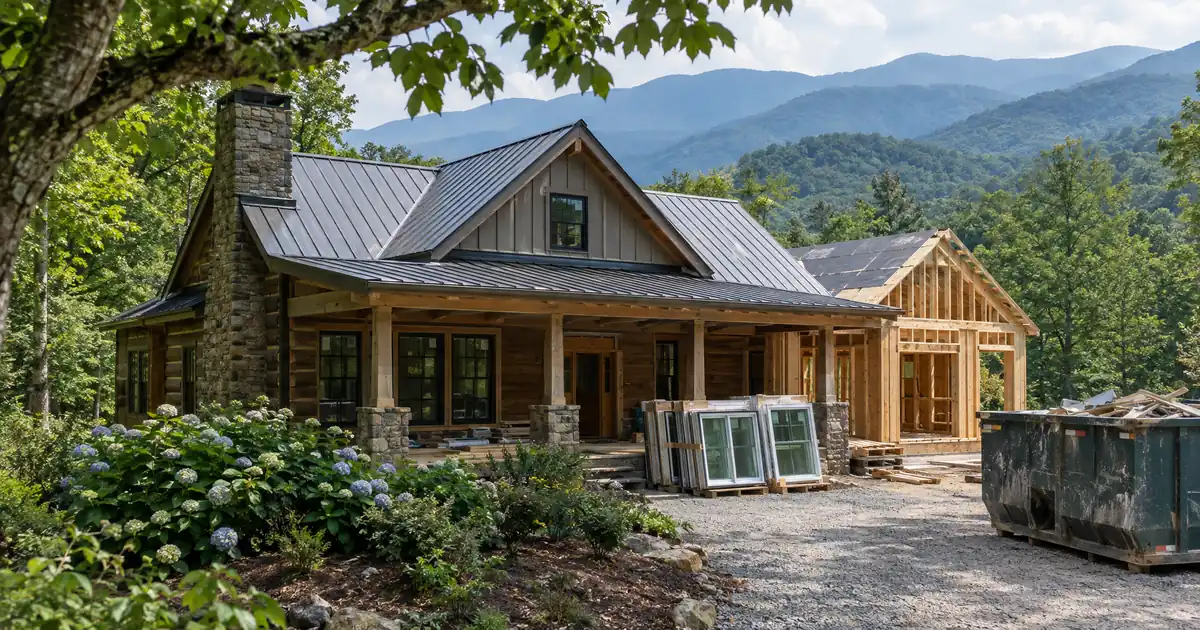
That is the whole decision for most investors. The rest is detail. Asheville adds a wrinkle, because older hillside houses often show condition surprises once an inspector walks them. A house with a failing roof or an unsafe access path is not a rental yet. It is a project.
An investor with a turnkey duplex and a tenant in place belongs on the DSCR side. An investor buying a dated bungalow that needs a full interior redo belongs on the hard money side first. An investor in the middle, with a house that is rentable but dated, can reasonably go either way. The tradeoffs below help you pick.
Side-by-Side
This table reflects how the two products typically work across Lendmire’s wholesale network and common industry practice. Specific terms vary by lender, property, and experience.
| Factor | DSCR Loan | Hard Money |
|---|---|---|
| Review basis | Rent covering the payment | Collateral value, plan, exit |
| Credit role | Central; most want about 660 | Secondary; 620 minimum typical |
| Documentation | Appraisal, rent evidence, entity papers | Contract, scope, budget, entity papers |
| Property condition | Rentable and stabilized | Distressed or in transition is fine |
| Property types | Investment 1-4 units, with exclusions | Non-owner-occupied 1-4 units |
| Entity vesting | LLC common, subject to program terms | LLC common |
| Term and exit | Long-term, 30-year fixed spine | 6-18 months, interest-only |
| Reserves | Commonly around 6 months of PITIA | Set by lender and deal |
| Rehab funding | Not designed for it | Up to 100% of budget in draws |
| Prepayment | Varies by program | Often none on current programs |
Notice what is missing: pricing. Neither loan should be compared on that line here, and the calculator on this site is where an illustrative estimate belongs.
Key Terms Defined
DSCR: Debt service coverage ratio, meaning the property’s monthly rent divided by its full monthly housing obligation (principal, interest, taxes, insurance, and any HOA dues).
PITIA: Principal, interest, taxes, insurance, and association dues, the full monthly obligation used in the DSCR calculation.
ARV: After-repair value, the estimated worth of a property once the planned work is finished.
Loan-to-cost: The loan as a share of what the project costs, rather than what the property is worth.
Draw: A release of rehab funds after completed work is inspected.
Seasoning: The period an owner holds a property before a cash-out refinance is available against it.
Exit strategy: The plan for repaying a short-term loan, usually a sale or a refinance.
How the Two Loans Actually Qualify
A DSCR loan asks one central question: does this property’s rent cover its own payment? The ratio uses rent against PITIA only. For many select programs, 1.00 is where coverage starts. A separate select-lender path takes coverage below 1.00, with leverage and terms adjusted. Stronger coverage generally opens better terms and leverage.
Clearing the ratio does not mean the property makes money. Repairs, vacancy, management, utilities, and capital expenses all sit outside the calculation. An investor can clear 1.00 and still lose money in a bad year.
Hard money asks a different set of questions. What is the property worth now? What will it be worth after the work? Is the budget realistic? How will you pay the loan off? Corporate Finance Institute describes these loans as sized off the value of the collateral, and that matches what we see. Credit still matters, but it is a secondary check. The lender mainly wants confidence in the deal and the exit.
Both loans are business-purpose credit for non-owner-occupied rentals. Under the CFPB’s ability-to-repay rule text, the consumer income-based test does not apply to credit extended primarily for a business purpose, even when a dwelling secures it. That is why neither product runs on your traditional employment income or debt-to-income ratio. The difference in qualification comes from how each product is designed.
When a DSCR Loan Is the Better Fit
A DSCR loan wins when the property is ready to rent and you plan to hold it. Think of a turnkey fourplex near the River Arts District, or a lived-in single-family rental with a lease in place. The rent exists, the condition is sound, and long-term financing makes more sense than a short-term bridge.
Here is what the network typically offers on that kind of file:
- Purchase leverage: most files land at 75%-80% LTV, which means 20%-25% down. Select high-leverage programs reach 85% LTV with roughly a 700+ score.
- Cash-out refinance: tops out around 75% LTV across most of the network, with about 6 months of seasoning as the common expectation.
- Credit: a 620 floor exists in parts of the network, most programs want around 660, and 700+ unlocks the strongest leverage tiers.
- Loan size: up to $3,000,000 on standard programs (smaller balances available through select lenders). Above $2,500,000, the network generally holds to 30-year fixed structures.
- Terms: the spine is the 30-year fixed. Extended terms and interest-only periods are available through select lenders, and ARM structures exist for investors who want them.
- Reserves: they vary by lender, leverage, loan size, and transaction type. Around 6 months of PITIA is common. Conservative rate-term files at modest leverage under $1,500,000 can see reserves waived, while larger loans typically step up to about 9 months.
A larger down payment lowers the payment and can lift the ratio. It does not erase leverage caps, credit floors, reserve rules, or property eligibility. The strongest files clear both tests: enough equity and enough rental coverage.
DSCR also removes the clock that hard money carries. There is no balloon due in a year or two, so a slow lease-up does not force a sale. An investor holding several rentals in an LLC often prefers that, subject to program terms on entity borrowers. Programs change, and every file is reviewed individually. For the full mechanics, see Lendmire’s complete DSCR loans guide.
What About Short-Term Rentals?
Asheville investors often model Airbnb income. DSCR programs for short-term rentals exist: purchase leverage runs up to 75% LTV, with a 640+ score and about 12 months of hosting history expected, and a 1.00 coverage floor on purchases. Short-term rental rules can vary by city, county, HOA, and property type, so investors should confirm local rules before relying on projected rental income. The City of Asheville’s compliance page is the place to start.
Storm recovery adds another reason for caution. Mountain Xpress, citing AirDNA data, reported that more than 1,400 short-term rental units left the Western North Carolina market after Hurricane Helene. Rent figures from before the storm may not describe today’s market. Run the long-term lease number first and treat short-term income as the upside.
When Hard Money Is the Better Fit
Hard money wins when the property is not a rental yet. That covers a dated house needing a full renovation, a property with deferred maintenance a DSCR appraiser would flag, or a deal where you need to move on a purchase and sort out long-term financing later.
Typical parameters across the network, varying by lender, property, and experience:
- Fix-and-flip or rehab: about 85% of project cost with fewer than 2 completed projects, 90% with 2+, and 93% with 5+. Every tier is capped at 75% of after-repair value.
- Bridge purchase without rehab: up to 80% of purchase price.
- Refinance, cash-out or rate/term: up to 65% of value.
- Rehab budget: up to 100% of the budget funds in draws against completed work. This is a budget figure, not a purchase loan-to-value. There is no true 100% purchase program.
- Terms: 6-18 months, interest-only, no prepayment penalty on the current program.
- Credit: 620 minimum, with additional conditions below 660. First-time investors qualify at the lower leverage tiers.
- Loan size: up to $5,000,000, larger by exception.
- Collateral: non-owner-occupied residential, 1-4 units. Ground-up construction goes up to 10 units. Commercial, land, and owner-occupied properties are not on the sheet.
The top leverage tier is reserved for experienced investors. First-timers should plan on more cash in the deal.
Draws deserve a warning. Rehab money is released after inspected work, so you usually front early costs and get reimbursed. Even a program that funds up to 100% of the budget can leave you carrying cash between draws. Build that into your liquidity plan.
The honest tradeoff is the clock. A short term means the exit is part of the underwriting. If the refinance appraisal comes in low, or the rent comes in light, you need a plan B. Many investors refinance out of hard money into long-term DSCR financing once the property is stabilized, and Lendmire brokers that path. The related piece Hard Money Bridge vs DSCR Loan for an Investor Stabilizing a Rental walks through that handoff.
A Scenario: The Same House, Two Paths
Consider an investor eyeing a dated three-bedroom in an older Asheville neighborhood. The roof is sound, but the kitchen, baths, and flooring are tired, and the house will not rent at a strong figure as-is.
Path one: the investor buys with hard money at the bridge or rehab tier, completes the work using draws, leases the house, and then refinances. If the stabilized rent covers the new payment at a healthy ratio, say comfortably above 1.00x, a DSCR refinance becomes realistic. Cash-out refinances in the network top out around 75% LTV, with seasoning of about 6 months as the common expectation. Terms vary by lender guidelines, property type, leverage, credit profile, and full file review.
Path two: the investor skips hard money and tries a DSCR purchase on the as-is house. The appraisal and rent schedule will likely reflect the condition, coverage may come in thin, and the file may not hold together. Sub-1.00 coverage is available through select lenders, with leverage and terms adjusted, but reaching for it because the property is not ready is a signal to reconsider the product.
If the same house were already renovated with a tenant in place, path two becomes the cleaner choice. Condition decides.
Mistakes That Cost Investors
- Treating the two as interchangeable. They differ in review basis and in purpose.
- Skipping the exit math. Hard money needs a refinance or sale plan before you sign.
- Assuming an LLC erases liability. Lenders often want personal guarantees, so confirm recourse terms on your specific file.
- Counting short-term rental income that may not be lawful. Check local rules before the number goes into your model.
- Confusing the ratio with profit. A DSCR above 1.00 is not positive cash flow.
Tax treatment varies; consult a qualified professional.
The Balanced Verdict
Neither loan is better. They solve different problems.
If your Asheville property is rentable and you want to hold it, DSCR typically fits, with the strongest files showing both enough equity and enough rental coverage. If the property needs real work, or you need a bridge, hard money fits, as long as you have a credible exit and cash to float early draws. If you are not sure which side your deal falls on, the related piece Jumbo DSCR Rental Loan vs Hard Money for an Investor With Thin Credit covers another common split.
And if neither works, say because the property is in poor shape and you have no exit, a cash purchase or a different bridge structure may be the better call. Re-examine the property before you reach for a loan.
If you are buying, rehabbing or refinancing an investment property on a short timeline and want to see how the numbers work, Lendmire can help you compare options based on the project, the exit plan, leverage, and your goals.
Frequently Asked Questions
Is a DSCR loan a type of hard money loan?
No. A DSCR loan is long-term financing that qualifies primarily on property-level rental income covering the payment. Hard money is short-term, interest-only, asset-based capital. Both serve investors, but they sit at different stages of a deal.
Can I use a DSCR loan on a fixer-upper?
Usually not on a property that cannot be leased today. DSCR relies on rent the property can actually produce, and condition affects both the appraisal and the rent evidence. Hard money tends to fit the repair phase, and a DSCR refinance can follow once the house is stabilized.
Can I refinance hard money into a DSCR loan?
Yes, many investors do. The common expectations are a leased property, rent that covers the new payment, and about 6 months of seasoning for a cash-out. If the appraisal or rent comes in low, the plan can stall, so build a fallback before you take the short-term loan.
Do I need tax returns for either one?
Neither runs on personal-income documentation in the way a consumer mortgage does. DSCR qualifies primarily on the property’s rent, though credit, reserves, and entity papers are still reviewed. Hard money centers on the contract, scope, budget, and exit.
Does short-term rental income count toward DSCR?
Select programs do consider it, with about 12 months of hosting history and a 640+ score typically expected. Many investors run the long-term lease number as the baseline.
About Lendmire
Lendmire, NMLS# 2371349, is a mortgage brokerage focused on investor financing, arranging DSCR loans in 40 states plus Washington, D.C. — 41 markets total. Qualification is based on the property’s income rather than personal income documentation, subject to lender guidelines, making it a fit for LLC-held rentals and scaling portfolios. Scotsman Guide named Lendmire a Top Mortgage Workplace in both 2025 and 2026.
Get Started
Ready to find the right loan for you?
See your offer in seconds. No credit pull, no obligation.
Informational only. Not a Loan Estimate, approval, or commitment to lend. Program availability and eligibility are subject to lender guidelines, credit approval, property review, and underwriting.
References
1. Corporate Finance Institute – Hard Money Loan
2. CFPB – 12 CFR §1026.43, Minimum Standards for Transactions Secured by a Dwelling
3. City of Asheville – Homestays and Short-Term Rental Violations
4. Mountain Xpress – Rental Reset
This article is part of Lendmire’s hard money loan program — full qualification details, guidelines, and scenarios live on the program page.
Related reading: No-Ratio DSCR Loan vs Standard DSCR Loan for a Vacant Rental · DSCR Loan vs Hard Money Loan for a Rental Under 75K · Buying a First Rental on a DSCR Loan vs Buying a Home First
Guides: Hard Money Loans in Asheville, NC · Hard Money Loans in North Carolina
Brandon Miller
Founder & CEO, Mortgage Loan Originator, Lendmire LLC
- Mortgage Loan Originator · NMLS# 1129696 · Verify on NMLS Consumer Access
- North Carolina Real Estate Broker · License# 343312 · Verify on NCREC
- North Carolina Insurance Producer · License# 19053198 · Property, Casualty, Life, Health · Verify on NAIC SBS
- Lendmire LLC · Firm NMLS# 2371349 · Verify firm licensure
Required disclosures. Lendmire (NMLS# 2371349) operates as a licensed mortgage broker, not a direct lender or depository. The discussion in this article is general in nature and should not be relied upon as financial, legal, or tax advice — every investment scenario is unique and should be reviewed by a qualified professional. Any loan inquiry is subject to lender underwriting, and this article is not a commitment to lend or a guarantee of approval. Mortgage rates, loan terms, and program guidelines vary by borrower, property, and state, and may change without notice. Equal Housing Opportunity. Verify licensure at NMLS Consumer Access.