
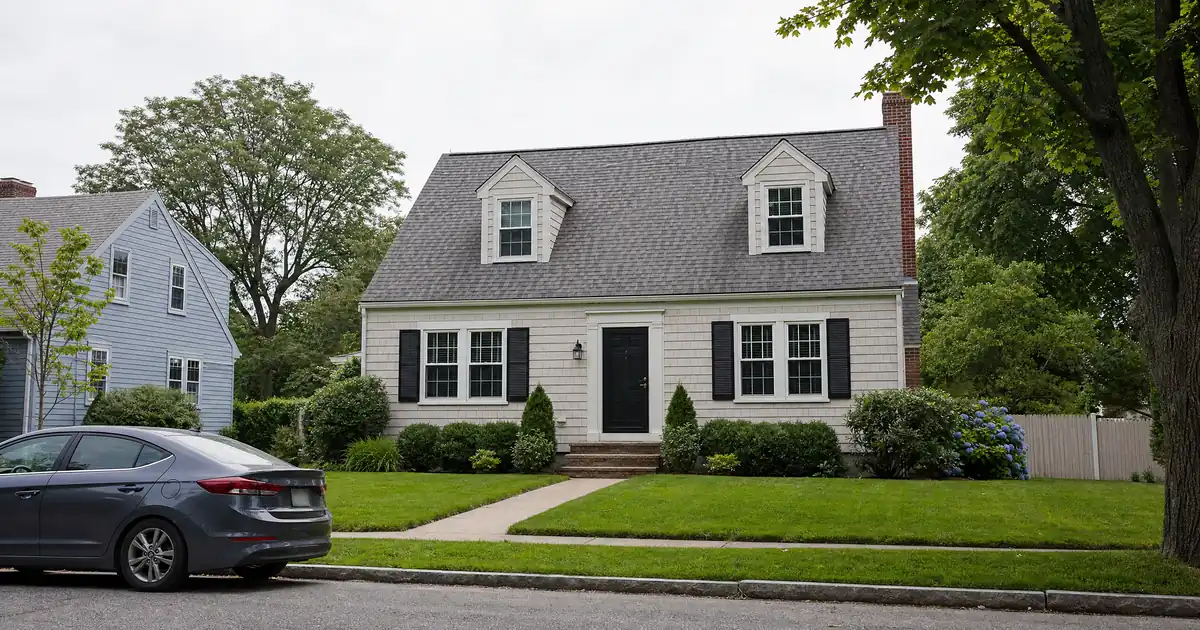
The Quick Read: These two loans answer different questions. A second home loan asks one thing: can you afford the property? It looks at your income, your traditional personal-income documents, and your debt-to-income ratio. A DSCR loan asks a different question: can the property pay for itself through rental income? Lenders draw the line based on occupancy intent. Will you use the place yourself, with some rental income on the side? Or are you buying it as a rental asset meant to produce cash flow? Answer that question first. The rest of the financing decision usually falls into place.
Most people shopping for vacation property loans think “second home” and “investment property” are just two pricing tiers on the same loan. They’re not. A second home loan is a personal-use mortgage. It locks rental income out of the qualification math entirely. A DSCR loan is a business-purpose loan. It’s built specifically to credit that rental income. Pick the wrong one, and you don’t just miss out on better options. You could also breach the loan’s occupancy terms if your actual use of the property doesn’t match what you told the lender.
DSCR Calculator
Run the numbers in your market
Rate is an editable market assumption — the live benchmark loads when available.
Prefilled with starting assumptions — enter your own rent or nightly figures, taxes, insurance, and HOA for a more accurate picture.
Program parameters update from Lendmire’s centralized guideline source. Taxes and insurance are editable estimates.
Fallback assumption · General Freddie Mac market benchmark, not a Lendmire loan offer. Rent, nightly rate, occupancy, taxes, and insurance are editable estimates. Short-term rental figures are estimates only and vary significantly by season, property type, management approach, and local short-term-rental rules — confirm local regulations before relying on them. Qualifying income for short-term rentals varies by program — some use appraisal market rent, others use documented STR history or projections — and is confirmed in underwriting. Not a Loan Estimate, approval, or commitment to lend. Program availability and eligibility are subject to lender guidelines, credit approval, property review, and underwriting.
Key Terms Defined
DSCR (debt service coverage ratio): This compares a property’s monthly rental income to its monthly PITIA — principal, interest, taxes, insurance, and any HOA dues. A ratio of 1.00 means the rent exactly covers the payment.
Second home: This is a lending category for a property you occupy part-time for personal use. It’s separate from your primary residence and from a pure investment property. Rental income is specifically excluded from the loan qualification math.
Business-purpose loan: This is a loan made for an investment or income-producing purpose, not personal use. This classification lets DSCR loans skip the personal income and debt-to-income paperwork used on a conventional mortgage.
PITIA: This stands for principal, interest, taxes, insurance, and association dues combined. It’s the full monthly housing bill that a DSCR ratio measures against rental income.
Non-QM (non-qualified mortgage): This is a loan that skips the standard agency underwriting rulebook. DSCR loans fall into this category because they’re written around property cash flow, not personal income and debt ratios.
Key Takeaways
- Second home loans qualify on your income and debt-to-income ratio. DSCR loans qualify on the property’s rental income against its payment.
- A second home loan excludes rental income from qualification by design — even if you plan to rent it out sometimes.
- DSCR loans can close directly into an LLC or other entity. Second home loans require personal-name, owner-occupant vesting.
- Second home guidelines are built around occasional personal use, not a rental-first strategy. Dedicated short-term-rental investors usually don’t fit that mold.
- Neither product is compared on rate here. The real decision driver is how you intend to use the property.
Side-by-Side
| Factor | Second Home Loan | DSCR Loan |
|---|---|---|
| Review basis | Borrower’s income, employment, DTI | Property’s rental income vs. its payment |
| Documentation | Traditional personal-income documentation, pay stubs, personal credit file | Lease or market-rent estimate; no personal income docs |
| Occupancy | Borrower must personally use the property | Non-owner-occupied investment property |
| Rental income treatment | Cannot be used to qualify | Is the qualifying factor |
| Entity/title vesting | Personal name only | LLC, corporation, or trust, subject to program eligibility |
| Property types | Standard warrantable properties; condotels often excluded | Broader range, including short-term rental collateral |
| Portfolio treatment | Subject to borrower-wide financed-property limits | Underwritten property-by-property |
| Typical use case | Occasional personal vacation use, rented rarely | Vacation property run primarily as a rental |
That table sums up the whole decision at a glance. Now let’s look at why each side works this way, and where each one actually fits.
The Occupancy Test Is the Real Dividing Line
Lenders don’t really care what you call the property. They care what you’re going to do with it. A second home has to stay, in Fannie Mae’s own words, a property occupied by the borrower and available mainly as a residence for the borrower’s personal use. It can’t be handed over to a rental pool or management company (Fannie Mae Selling Guide).
A DSCR loan flips that rule completely. It’s written as a business-purpose loan for a non-owner-occupied property. That places it outside the consumer-mortgage disclosure rules that govern a second home loan. DSCR loans are built for non-owner-occupied investment properties. Because they’re business-purpose investor loans, lenders review them differently than a standard owner-occupied mortgage.
Here’s the practical version of that split. If you plan to spend a few weeks a year at the property and rent it out the rest of the time to cover costs, you’re describing a second home. If you’re buying it because the rental income works and you don’t plan to occupy it yourself, you’re describing a DSCR deal. Forcing the wrong product onto either scenario causes trouble. You could break the lender’s occupancy covenant, or you could end up with a DSCR file that can’t document the income it needs.
Where the Money Question Diverges
On a second home loan, your personal finances are the whole file. Lenders check your traditional personal-income documents, W-2s, existing debt payments, and your DTI ratio, just like on any conventional mortgage. If you’re self-employed, or your income documents show heavy write-offs that shrink your paper income, that can work against you here. It doesn’t matter if your actual cash flow is strong.
A DSCR loan skips almost all of that. Qualification runs mainly on whether the property’s rental income covers the payment, subject to lender guidelines. Your personal income documents don’t drive the decision. Instead of pay stubs, the file usually leans on a signed lease or a market-rent estimate. Across the network of lenders Lendmire places DSCR files with, a coverage ratio of 1.00 or better is where select programs start opening up. That’s the point where the property’s rent covers its full monthly obligation. It’s a floor for specific programs, not a universal standard. Stronger ratios tend to unlock better leverage and pricing tiers.
Reserves are the extra months of PITIA a lender wants sitting in your accounts as a cushion. On DSCR files, that commonly lands around six months, though the number moves with leverage, loan size, and transaction type. Files above roughly $1.5 million in loan amount often step up to something closer to nine months. Conservative rate-and-term refinances at modest leverage under that threshold sometimes see reserves waived entirely. None of this is guaranteed on any individual file. It’s a range, not a promise.
One thing worth saying plainly: clearing a 1.00 DSCR isn’t the same as positive cash flow in your pocket. The ratio only measures rent against PITIA. Repairs, vacancy stretches, property management fees, utilities, and capital expenses all sit outside that math. A property that clears the coverage floor on paper can still break even, or lose money, once real operating costs hit the ledger. Plan your actual budget around that, not just the ratio.
Short-Term Rental Income Gets Verified Differently
If your vacation property is meant to run as a short-term rental — think Airbnb or VRBO — the appraisal and income-verification process looks different from a standard long-term lease file. Standard rent-schedule forms like Fannie Mae’s Form 1007 are built around monthly-lease comparables. Fannie Mae has specifically warned appraisers against multiplying a nightly short-term rate by 30 to manufacture a monthly rent figure (Fannie Mae Appraiser Update). Appraisal trade publications note that when a property runs as a short-term rental, appraisers often turn to platform-specific market data instead of forcing the property into a form built for a different rental model. Sources like AirDNA are commonly cited for that purpose (McKissock Learning).
Across Lendmire’s network, DSCR purchases on short-term rental collateral generally cap around 75% loan-to-value, with refinances closer to 70%. Lenders typically want roughly 12 months of hosting history and a credit score in the 640-plus range, along with a purchase-side coverage floor that matches the program’s minimum. Refinance coverage floors on short-term rental files are a separate conversation and shouldn’t be assumed to match the purchase-side number. The two get underwritten separately, and terms vary by lender and file. Short-term rental rules can also vary by city, county, HOA, and property type. It’s worth confirming local rules before relying on projected rental income to qualify.
Compare that to a second home file. Those guidelines generally assume occasional rental activity at most, not a booking-calendar business. Trade press covering lender practice commonly describes second home rental limits landing around 180 days a year, roughly half the calendar. That makes running a genuine short-term-rental income strategy through a second home loan structurally awkward. This isn’t a hard rule written into every guide, but it’s the practical ceiling most second home programs are built around.
When a Second Home Loan Is the Better Fit
A second home loan makes sense when the property is genuinely for you. Think of a place at the lake, in the mountains, or near family, that you’ll occasionally rent out to help offset costs, not to generate meaningful income. If your income and credit profile are strong and simple — steady traditional employment income, clean DTI, no complicated self-employment write-offs — the second home path is often the more familiar and better-documented route. It follows the standard agency underwriting rulebook lenders already know well.
It also fits if you want the property titled in your own name rather than an entity. Second home loans are structurally a personal-name product, so if LLC vesting isn’t a priority for you, that’s not an issue. And if your rental plans are genuinely occasional — a few weeks a year when you’re not using it, rather than a calendar full of bookings — the occupancy restrictions on a second home loan won’t feel limiting. They’ll simply describe how you were already planning to use the place.
Where it stops fitting: the moment rental income becomes central to how you plan to afford the property, or the moment you want to close in an entity for liability separation, a second home loan starts working against you rather than for you.
When a DSCR Loan Is the Better Fit
A DSCR loan makes sense when the vacation property is really an investment wearing a vacation-property label. You’re not planning to use it personally in any meaningful way, and the rental income — whether from a long-term tenant or a booking calendar — is what makes the purchase work. If your personal income documents are complicated (self-employed, multiple K-1s, paperwork that doesn’t reflect your real cash position), DSCR underwriting sidesteps all of that by qualifying on the property instead of you.
It’s also the clear fit if you want to close title in an LLC or other entity for liability separation, since that vesting flexibility isn’t available on a second home product. And if you’re scaling a portfolio, DSCR files get underwritten property-by-property. They don’t count against a borrower-wide financed-property cap the way second home and conventional loans do. That matters once you’ve financed several properties and a conventional lender starts counting them against you.
Purchase leverage on most DSCR files across Lendmire’s network lands in the 75% to 80% loan-to-value range. That means roughly 20% to 25% down on most files. Select high-leverage programs reach 85% LTV for borrowers with stronger credit, generally around 700 or better. Cash-out refinances on existing rental or vacation properties typically cap closer to 75% LTV, and lenders commonly want about six months of ownership seasoning before considering a cash-out request. Credit floors vary a lot across the network. Some programs go as low as 620, though most want something closer to 660, and the strongest leverage tiers open up around 700-plus.
DSCR vs. conventional financing
Two common ways to finance an investment property in this market. They qualify you differently — here’s how investors weigh them.
Why investors choose it
- Qualifies on the property’s rental income — no personal tax returns, W-2s, or pay stubs needed to document income.
- No personal debt-to-income ceiling to clear, so existing mortgages and obligations don’t cap your borrowing the same way.
- Can be closed in an LLC, keeping the property inside a business entity.
- Built for scaling — not held to the limit on number of financed properties that conventional financing applies.
- Underwriting centers on the deal: generally qualifies when the rent covers the payment, a 1.00x coverage ratio being a common baseline (confirmed in underwriting).
- Designed specifically for investment property, including long-term and, where the program allows, short-term rentals.
Where it’s strong
- Often the lowest ongoing financing cost for a buyer who fully qualifies on personal income — a fit for a first property or a cost-first purchase.
Trade-offs for investors
- Requires full personal income documentation and must fit within a debt-to-income limit — salary, existing debts, and other mortgages all count.
- Typically held in your personal name rather than a business entity.
- Caps how many financed properties you can carry, which can become a ceiling as a portfolio grows.
- Evaluates you as a borrower as much as the property, which usually means more paperwork.
How investors usually choose: a first or single property often optimizes for the lowest financing cost; portfolio builders often optimize for leverage, vesting in an LLC, and scaling past conventional caps. The right answer depends on your goals, the property, and current guidelines — both paths run through select lenders in Lendmire’s wholesale network, with eligibility and terms confirmed in underwriting.
If your vacation property purchase and refinance plans stretch over a couple of years, it’s worth reading up separately on “When It Makes Sense to Refinance a Rental Property”. The seasoning and leverage math shifts once you’re pulling equity back out rather than buying fresh.
One honest edge case: coverage ratios below the standard floor aren’t automatically disqualifying. Select lenders in Lendmire’s network will still consider a file with lighter coverage, though leverage and terms adjust to compensate. Expect a smaller loan-to-value or stronger reserves to offset the weaker ratio. Separately, no-ratio structures exist through select lenders, generally reserved for borrowers who already own a primary residence, and there’s no fixed numeric floor attached to that path. Neither of these is a guaranteed outcome. Both depend on the individual lender’s guidelines and the rest of the borrower’s file.
The Property Type Question Nobody Answers Cleanly
Second home financing generally excludes condotel and non-warrantable condo structures. This is a recurring reason vacation-property buyers end up looking at DSCR financing instead, since agency guidelines simply won’t touch that collateral type. DSCR programs are typically more flexible on property type, but that flexibility isn’t unlimited either. Certain property types fall outside DSCR eligibility entirely across Lendmire’s network — manufactured homes, both single- and double-wide, along with log homes and barndominiums. If your vacation property falls into one of those categories, it’s worth knowing upfront that it sits outside these programs rather than finding out mid-file.
For readers weighing whether to keep an existing second home financed conventionally or convert the strategy to a DSCR-financed rental, Lendmire’s guide to refinancing a second home versus an investment property covers that transition in more detail than fits here. And if your plan involves pulling equity from an existing property to fund the vacation-property purchase, it’s also worth comparing a HELOC against a home equity loan on the investment side before you commit to one structure.
What Happens If Your Plans Change
Say you buy a place as a genuine second home — light personal use, occasional rental. A year or two in, the rental side takes off and starts running like a real business. At that point, the loan you have on the property may no longer match how you’re actually using it. Occupancy covenants on second home loans aren’t just paperwork. They’re a contractual condition of the loan. If your usage pattern has genuinely shifted toward a rental-first strategy, refinancing into a DSCR loan lets the financing catch up to reality. It also opens the door to entity vesting if liability separation has become a priority as the rental side has scaled.
The reverse move happens too, though less often. An investor who first financed a property as a DSCR rental decides they want to occupy it personally for more of the year. That’s a different conversation with different qualification requirements, and it’s worth having early rather than assuming the switch is automatic.
DSCR files in Lendmire’s network commonly come from investors who started with a straightforward long-term rental question and ended up with a vacation or short-term-rental property instead. The file mechanics don’t change dramatically between the two, but the income documentation does. A property with 12 months of booking history on a platform like Airbnb documents very differently than one that’s pre-stabilization. Lenders in the network price and structure those two scenarios differently, even when the coverage ratio looks similar on paper.
Lendmire (NMLS# 2371349) is a mortgage broker that arranges DSCR investor financing through select lenders across a network spanning 40 states plus Washington, D.C. It doesn’t fund or underwrite loans directly. It structures files and places them with lenders whose guidelines fit the property and the borrower’s goals. For a broader walkthrough of how DSCR mortgage broker review works across property types, Lendmire’s complete DSCR loans guide covers the mechanics in more depth than fits into a single comparison piece.
None of the figures above are guarantees. Loan approval is never guaranteed, and nothing here is a commitment to lend. Every scenario described here is subject to lender approval and to the borrower’s, property’s, and program’s specific guidelines. This article is general information, not financial, legal, or tax advice, and tax treatment can depend on how funds are used and how the property is held. Investors should keep clear records and speak with a qualified tax professional before relying on any deduction. Investors weighing this decision can reach Lendmire at 828-256-2183 or request a quote to see how a specific property and financing goal fit against current program guidelines.
If your first move into real estate is this vacation property rather than a starter home, it’s also worth reading why your first property doesn’t have to be your home. The occupancy-intent question driving this whole comparison shows up there too, just from a different angle.
Frequently Asked Questions
Can I use a DSCR loan if I plan to visit the vacation property myself a few times a year?
Occasional personal visits alone don’t automatically disqualify a property from DSCR financing. But the loan is built around the property being a non-owner-occupied investment, not a part-time residence. If personal use is a meaningful part of your plan, a second home loan is generally the more structurally appropriate fit, subject to how the specific lender’s guidelines define occupancy.
Does a DSCR loan cost more than a second home loan?
Program terms, leverage, and eligibility differ meaningfully between the two products, and specific pricing always depends on the individual loan file, lender, and program. That’s a conversation for when you’re comparing actual quotes, not something a general comparison article can state as a fixed rule.
Can I close a vacation rental property in an LLC either way?
DSCR loans generally allow LLC or entity vesting, subject to program eligibility, because they’re structured as business-purpose loans. Second home loans require personal-name, owner-occupant vesting, since the occupancy covenant runs to a natural person rather than an entity.
What happens if my second home starts generating meaningful rental income?
At that point, the property’s actual use may no longer match the loan’s occupancy terms. Refinancing into a DSCR loan is worth exploring so the financing reflects how the property is actually being used. That refinance also opens the door to entity vesting if liability protection has become more of a priority.
How is rental income verified for a short-term rental compared to a long-term lease?
Long-term lease income is typically documented with a signed lease agreement. Short-term rental income more often relies on platform booking history or third-party market-rent data, since standard rent-schedule appraisal forms weren’t built around nightly rental rates. Lenders in Lendmire’s network commonly want to see roughly 12 months of hosting history to support that income on a purchase file.
About Lendmire
Lendmire is a DSCR-focused mortgage brokerage, NMLS# 2371349, placing investor loans across 41 markets, including Washington, D.C. Lenders generally review DSCR eligibility around a property’s rental income rather than personal income documents. That fits LLC-held rentals, self-employed investors, and portfolios scaling past conventional financed-property limits. Scotsman Guide named Lendmire a Top Mortgage Workplace in both 2025 and 2026.
Get Started
Ready to find the right loan for you?
In about 30 seconds you can review financing options available for your investment property. No commitment required.
Informational only. Not a Loan Estimate, approval, or commitment to lend. Program availability and eligibility are subject to lender guidelines, credit approval, property review, and underwriting.
References
1. Fannie Mae Selling Guide – Occupancy Types (B2-1.1-01)
2. McKissock Learning – Form 1007 & STR Appraisals
This article is part of Lendmire’s DSCR loan program — full qualification details, guidelines, and scenarios live on the program page.
Related reading: Bank Statement Second Home Vs Vacation-rental DSCR For A Business Owner · Below-one Vs Full Coverage On A Short-term Rental DSCR · How A DSCR Lender Chooses Between A Lease And A Vacation Rental Analysis?
Brandon Miller
Founder & CEO, Mortgage Loan Originator, Lendmire LLC
- Mortgage Loan Originator · NMLS# 1129696 · Verify on NMLS Consumer Access
- North Carolina Real Estate Broker · License# 343312 · Verify on NCREC
- North Carolina Insurance Producer · License# 19053198 · Property, Casualty, Life, Health · Verify on NAIC SBS
- Lendmire LLC · Firm NMLS# 2371349 · Verify firm licensure
Important disclosures. Lendmire (NMLS# 2371349) is a licensed mortgage brokerage. Lendmire is not a direct lender, depository institution, or financial advisor. All loan inquiries are subject to lender underwriting; this article does not constitute a commitment to lend. Rates, terms, and program guidelines are subject to change without notice and vary by borrower profile, property type, and state. Information in this article is general in nature and is not financial, legal, or tax advice. Equal Housing Opportunity. NMLS Consumer Access: nmlsconsumeraccess.org.