
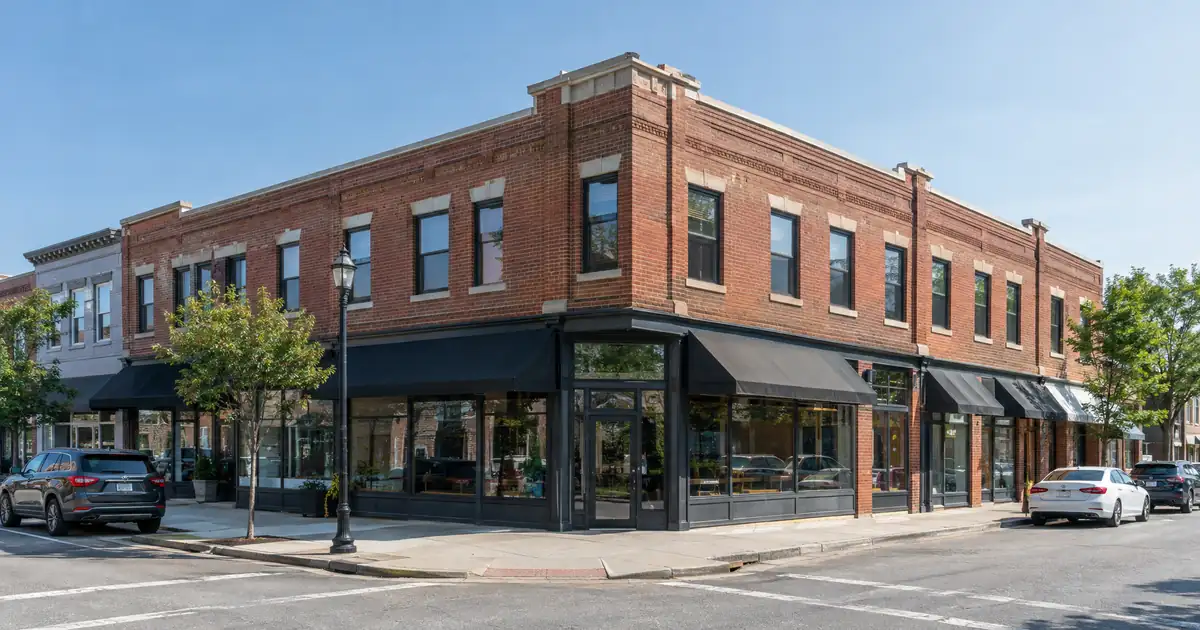
The Quick Read: A DSCR loan suits investors buying one-to-four-unit rentals who want a long, fully amortizing note qualified on rent rather than personal income. A small-balance commercial loan suits larger or mixed-use buildings, where lenders review operating income and the whole borrower, and where a shorter term with a balloon is common.
- DSCR loans qualify primarily on property-level rental income covering the payment, subject to lender guidelines.
- The standard DSCR note is a 30-year fixed with no balloon; extended terms, interest-only periods and ARMs exist through select lenders.
- Most DSCR files carry a personal guaranty. Recourse is a contract term, not a product label.
- Small commercial paper often runs a shorter term on a longer amortization, so the balance comes due at maturity.
- Unit count and property use usually decide the route, not price.
This page compares the two on the questions investors argue about most: who is liable after a default, and what happens when the term ends.
DSCR Calculator
Run the numbers in your market
Rate source: Freddie Mac 30-yr average via FRED® — Federal Reserve Bank of St. Louis · effective Oct 15, 2026
Prefilled with starting assumptions — enter your own rent or nightly figures, taxes, insurance, and HOA for a more accurate picture.
Program parameters update from Lendmire’s centralized guideline source. Taxes and insurance are editable estimates.
As of Oct 15, 2026 · General Freddie Mac market benchmark, not a Lendmire loan offer. Rent, nightly rate, occupancy, taxes, and insurance are editable estimates. Short-term rental figures are estimates only and vary significantly by season, property type, management approach, and local short-term-rental rules — confirm local regulations before relying on them. Qualifying income for short-term rentals varies by program — some use appraisal market rent, others use documented STR history or projections — and is confirmed in underwriting. Not a Loan Estimate, approval, or commitment to lend. Program availability and eligibility are subject to lender guidelines, credit approval, property review, and underwriting.
Side-by-Side
The DSCR column reflects the guidelines of select lenders in Lendmire’s wholesale network. The commercial column shows published industry norms, which vary by lender and loan size.
| Factor | DSCR Loan | Small-Balance Commercial |
|---|---|---|
| Review basis | Rent vs. PITIA | NOI plus sponsor strength |
| Documentation | Lease or rent schedule, credit, assets | Operating statements, personal and business financials |
| Property types | SFR, 2-4 units, condos, townhomes | Mixed-use, retail, 5+ unit multifamily |
| Entity vesting | Usually an LLC, owner guaranty | Common, often an LLC or SPE |
| Term structure | 30-year fixed spine; 40-year, IO, ARM via select lenders | Often shorter term, longer amortization, balloon |
| Recourse norm | Personal guaranty typical | Common on small loans; varies by size |
| Ongoing tests | Generally none after closing | Covenants may apply |
| Reserves | Commonly about 6 months PITIA | Lender-specific; liquidity tests common |
Timeline differences exist, but they depend on the file and the lender, so the table leaves them out.
Two Different Meanings of “DSCR”
A 1.25 on a bank term sheet and a 1.00 on a DSCR sheet do not describe the same cushion. Residential-style DSCR divides gross monthly rent by PITIA: principal, interest, taxes, insurance and any HOA dues. Commercial DSCR divides net operating income by annual debt service, and NOI is rent after repairs, utilities, management and vacancy allowances. The commercial test starts from a smaller number, which is why its required ratio runs higher.
On the DSCR side, 1.00 is where many select programs start, and stronger ratios open better leverage. A separate select-lender path takes coverage below 1.00 with leverage and terms adjusted. Clearing either test is not the same as positive cash flow. Repairs, vacancy, management and capex sit outside the DSCR calculation.
Recourse: A Contract Term, Not a Product Label
DSCR describes how a loan is qualified. Recourse describes who pays after a default. The two are independent, and the note, the guaranty and the loan agreement set the answer.
Investor loans on rentals are generally treated as business-purpose credit. The Federal Reserve’s Regulation Z guide describes credit to acquire or improve non-owner-occupied rental property that way. The practical result: consumer rules do not define your exposure. The loan documents do.
On a typical DSCR file, an LLC is the borrower and the owner signs a separate guaranty. After a foreclosure shortfall, the lender can pursue the guarantor for the deficiency. Putting the property in an LLC does not remove that exposure when a guaranty is signed. The guaranty generally stays in force until you sell, pay off or refinance into a loan without one.
Non-recourse DSCR is the exception. It shows up occasionally on larger or commercial-scale deals, usually with more equity in the file. Even then, “non-recourse” does not mean zero personal exposure. It limits recovery to the collateral until a carve-out converts it. Commercial advisors such as CAP Partners split carve-outs into two groups. Loss carve-outs cover fraud, misapplied rents or insurance proceeds, waste, unpaid taxes and environmental liabilities. Full-recourse triggers include voluntary bankruptcy, unapproved transfers and prohibited new debt.
Commercial small-balance paper can be non-recourse and entity-based. The Freddie Mac small-balance term sheet describes non-recourse financing with standard carve-outs for 5+ unit multifamily, and it allows LLC and single-asset borrowers. Treat that as a contrast, not a DSCR fact.
On smaller commercial loans, personal recourse is common. Non-recourse tends to appear on larger, stabilized assets, and the size threshold varies by lender. Lendmire’s piece DSCR vs. Small-Balance Commercial Loan for an LLC Portfolio covers the portfolio angle in more detail.
Term: Amortization vs. Maturity
The 30-year DSCR note amortizes fully. No balloon, no maturity event, no forced refinance. Select lenders in the network also offer 40-year terms and interest-only periods, and ARM structures exist for investors who want them. Above $2,500,000, the network generally holds to 30-year fixed structures.
Small-balance commercial loans commonly pair a shorter term with a longer amortization. The schedule looks like 25 or 30 years, but the remaining balance comes due at maturity. The investor then refinances, sells or pays off. That makes the exit a planning item from day one.
Recourse and Term Together
Here is where the two features compound. A balloon plus a personal guaranty means a failed refinance lands on the guarantor. If the property’s income dipped, the market tightened or the borrower’s credit slipped, the refinance gets harder at exactly the moment the loan comes due. Run the exit plan before you sign: what coverage the property needs at maturity, what happens if it falls short, and whether the guaranty can absorb a shortfall.
A fully amortizing DSCR note can reduce maturity risk but typically keeps the guaranty. A balloon commercial loan with non-recourse terms can remove much of the guaranty risk but brings the maturity event and the carve-outs. Neither structure is without risk. They trade one exposure for another.
When a DSCR Loan Is the Better Fit
- The building is 1-4 units. SFRs, duplexes, triplexes, fourplexes, condos and townhomes fit the core DSCR product. A duplex stays in residential-style investor financing even when expensive.
- You want a long, predictable note. Buy-and-hold investors who do not want refinance-market risk at a maturity date favor the 30-year amortizing structure.
- Personal financials are messy. DSCR qualifies primarily on property-level rental income covering the payment, subject to lender guidelines, with credit, assets and a down payment still reviewed.
- You are scaling. DSCR files generally don’t run through a personal debt-to-income test, which matters when you hold several rentals.
Typical purchase leverage lands at 75%-80% LTV on investment properties, with a select high-leverage tier reaching 85% LTV at roughly a 700+ score. Cash-out refinances top out around 75% LTV, with about 6 months of seasoning common. Credit floors start at 620 in parts of the network, with most programs wanting around 660. Reserves commonly run about 6 months of PITIA and step up to about 9 months above $1,500,000. These are ranges, subject to lender guidelines. The complete DSCR loans guide walks through them.
Not every property qualifies. Manufactured homes, log homes and barndominiums are not offered in the network’s DSCR programs.
When a Small-Balance Commercial Loan Is the Better Fit
- The building is outside the 1-4 unit box. Mixed-use, retail and 5+ unit buildings usually route to commercial. Some DSCR portfolio structures pool 2-20 properties, while rental portfolio term loans start at five or more.
- The asset is stabilized and larger. Non-recourse structures with carve-outs become more realistic as loan size and stabilization rise.
- You can plan a balloon. Investors with a defined hold period, or a plan to sell or refinance at maturity, can live with a shorter term.
- You can show full financials. Commercial reviewers want operating statements and a whole-borrower picture. Strong sponsors with clean books may find that a fair trade.
Expect covenants on some commercial loans, such as minimum coverage through the term. DSCR notes generally have no ongoing tests after closing.
Borderline Cases
Five to ten units and mixed-use buildings sit on the line. Unit count and use decide the route, not price. A lender classifies the building by how it is used and how many units it holds, so confirm classification early. A mixed-use building with a ground-floor retail space will usually go commercial even at small scale.
Owner-occupancy changes the picture too. Per a compliance trade summary, owner-occupied rentals treat acquisition credit as business-purpose only above 2 units, while non-owner-occupied rentals qualify even at one unit. Misclassifying a consumer-purpose loan as business-purpose carries real risk, so purpose drives coverage.
Which One Fits: A Short Decision List
1. What is the building? One to four units points to DSCR. Larger or mixed-use points to commercial.
2. How long will you hold? Long holds favor the amortizing note. Defined holds tolerate a balloon.
3. Can you absorb a guaranty? Most DSCR files carry one, and small commercial loans often do too.
4. What happens at maturity? If you cannot answer, avoid the balloon.
5. How much documentation will you provide? Light personal paperwork favors DSCR.
Balanced Verdict
Neither loan is better in the abstract. DSCR wins on predictability and paperwork for small residential rentals. Commercial wins on property-type reach and, at larger sizes, on the chance of non-recourse structure. The liability question and the term question have to be answered together, because a balloon with a guaranty is a different risk than either alone.
If you are buying or refinancing a rental property and want to see how the numbers work, Lendmire can help you compare DSCR loan options based on the property income, credit profile, leverage, and investor goals.
Key Terms Defined
Recourse: The lender can pursue the borrower’s other assets after a default if collateral falls short.
Non-recourse: Recovery is limited to the property unless a carve-out is triggered.
Carve-out: A bad act, such as fraud or an unapproved transfer, that can convert a non-recourse loan to recourse.
Balloon: The remaining balance due when a shorter term ends.
Amortization: The schedule over which the loan balance is paid down.
PITIA: Principal, interest, taxes, insurance and any association dues.
NOI: Net operating income, meaning rent minus operating expenses.
Frequently Asked Questions
Is a DSCR loan recourse or non-recourse?
Most DSCR loans carry a personal guaranty, so they are recourse in practice. DSCR describes how the loan is qualified, not who is liable. Non-recourse appears occasionally on larger or commercial-scale deals, usually with more equity.
Can a small-balance commercial loan be non-recourse?
Yes, but it usually comes with carve-outs, and smaller loans lean toward personal recourse. Non-recourse is more common on stabilized, larger assets. Terms vary by lender and loan size.
Does an LLC protect me from personal liability?
Not when you sign a guaranty. The LLC holds title, but the guarantor can still be pursued for a deficiency after a foreclosure shortfall.
What is a balloon, and does a DSCR loan have one?
A balloon is the balance due at the end of a shorter term. The standard 30-year DSCR note fully amortizes, so it has none.
Does a strong coverage ratio mean the property cash flows?
No. DSCR compares rent to PITIA only. Repairs, vacancy, management, utilities and capex sit outside the calculation.
About Lendmire
Lendmire — NMLS# 2371349 — is a mortgage brokerage specializing in DSCR investor loans, helping arrange financing across 41 markets, including Washington, D.C., through wholesale and investor-lending channels. The model centers on property-level rental income reviewed by the lender rather than W-2 documentation, subject to lender guidelines, suiting entity-owned and multi-property investors. Lendmire holds Scotsman Guide Top Mortgage Workplace recognition for 2025 and 2026.
Get Started
Ready to find the right loan for you?
In about 30 seconds you can review financing options available for your investment property. No commitment required.
Informational only. Not a Loan Estimate, approval, or commitment to lend. Program availability and eligibility are subject to lender guidelines, credit approval, property review, and underwriting.
References
1. Federal Reserve – Regulation Z guide
2. CAP Partners – Recourse vs. non-recourse commercial loans
3. Freddie Mac – SBL Term Sheet
4. Compliance Alliance – Reg Z and investment properties
This article is part of Lendmire’s DSCR loan program — full qualification details, guidelines, and scenarios live on the program page.
Related reading: DSCR vs Small-Balance Commercial Loan for an LLC Portfolio · How to Use a DSCR Loan on Your Own Rental as an Agent · How to Protect a Closed DSCR Loan When the Lender Is Failing
Brandon Miller
Founder & CEO, Mortgage Loan Originator, Lendmire LLC
- Mortgage Loan Originator · NMLS# 1129696 · Verify on NMLS Consumer Access
- North Carolina Real Estate Broker · License# 343312 · Verify on NCREC
- North Carolina Insurance Producer · License# 19053198 · Property, Casualty, Life, Health · Verify on NAIC SBS
- Lendmire LLC · Firm NMLS# 2371349 · Verify firm licensure
Important disclosures. Lendmire (NMLS# 2371349) is a licensed mortgage brokerage. Lendmire is not a direct lender, depository institution, or financial advisor. All loan inquiries are subject to lender underwriting; this article does not constitute a commitment to lend. Rates, terms, and program guidelines are subject to change without notice and vary by borrower profile, property type, and state. Information in this article is general in nature and is not financial, legal, or tax advice. Equal Housing Opportunity. NMLS Consumer Access: nmlsconsumeraccess.org.