
The Quick Read: Five units is the line, not four, and not eight. Fannie Mae’s residential eligibility stops at four units, Freddie Mac’s multifamily definition starts at five, and HUD’s Section 223(f) program uses the same five-unit floor. Cross that line and the appraisal form changes, the documentation changes, the consumer-protection framework changes, and the debt-service coverage ratio stops being a back-of-envelope number and becomes the entire underwriting exercise. DSCR loans are how most investors buy 5-8 unit buildings without waiting on agency or HUD timelines built for institutional deal sizes.
DSCR Calculator
Run the numbers in your market
Rate source: Freddie Mac 30-yr average via FRED® — Federal Reserve Bank of St. Louis · effective Jul 30, 2026
Prefilled with local estimates — enter your own rent or nightly figures, taxes, insurance, and HOA for a more accurate picture.
Program parameters update from Lendmire’s centralized guideline source. Taxes and insurance are editable estimates.
As of Jul 30, 2026 · General Freddie Mac market benchmark, not a Lendmire loan offer. Rent, nightly rate, occupancy, taxes, and insurance are editable estimates. Short-term rental figures are estimates only and vary significantly by season, property type, management approach, and local short-term-rental rules — confirm local regulations before relying on them. Qualifying income for short-term rentals varies by program — some use appraisal market rent, others use documented STR history or projections — and is confirmed in underwriting. Not a Loan Estimate, approval, or commitment to lend. Program availability and eligibility are subject to lender guidelines, credit approval, property review, and underwriting.
Why Does the Line Fall at Five Units, Not Four or Eight?
Because that’s where every major federal framework draws it — independently, and consistently. Fannie Mae’s Selling Guide states its residential purchase eligibility runs from one to four units. Freddie Mac’s Multifamily Seller/Servicer Guide defines its multifamily product as a mortgage on a structure “containing, in total, five or more units designed principally for residential use.” HUD’s program description for Section 223(f) requires that “a project must contain at least five units,” and its Section 207 language uses the identical threshold.
That’s three separate institutions — one government-sponsored enterprise buying loans on the residential side, another running an entirely different multifamily business line, and a federal insurance program — all landing on the same number. It isn’t a coincidence and it isn’t arbitrary. It’s a load-bearing definition that determines which rulebook, which appraisal form, and which consumer protections apply to a given transaction.
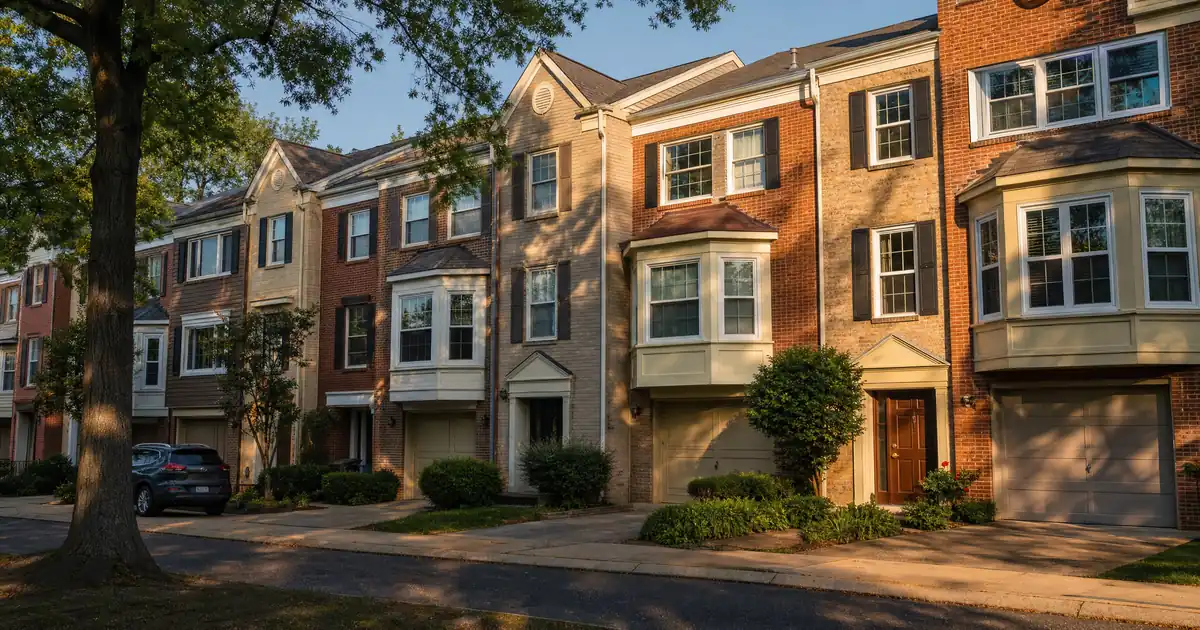
A 5-unit building can look identical to a 4-unit building next door — same block, same era, same construction. Doesn’t matter. Once the fifth unit gets added, the property changes categories entirely.
What Actually Changes Once a Property Crosses Into 5+ Units?
Everything downstream of the unit count shifts: the appraisal methodology, the income documentation, the regulatory protections, and the debt-service math itself. This isn’t a paperwork inconvenience — it’s a different underwriting universe.
The appraisal form and appraiser credential change first. For 2-4 unit residential income property, Fannie Mae’s standard tool is Form 1025, the Small Residential Income Property Appraisal Report — a standardized form built for quick turnaround. At five units, that form disappears. Fannie Mae’s Multifamily Guide instead requires a commercial-style appraisal under USPAP, prepared by a Certified General Appraiser who actively works multifamily assignments in that market. If the property has any commercial space mixed in, the appraiser has to separately analyze at least three comparable commercial rentals and, in some cases, produce separate values for the residential and commercial components. That’s a narrative report, not a form-fill — more time, more cost, more moving parts.
Income analysis shifts from Schedule E line-items to full operating statements. On a 1-4 unit purchase, a lender working off Schedule E adds back depreciation, interest, HOA dues, taxes, or insurance expenses to reconstruct cash flow from a borrower’s tax return. On the multifamily side, the ask is heavier: trailing operating statements covering the prior calendar or fiscal year (two years if available) plus year-to-date income and expense. The property’s own performance record becomes the underwriting document — not the borrower’s 1040.
DSCR itself stops being simple. On a duplex or fourplex DSCR loan, the ratio is usually rent divided by the full monthly obligation — clean and quick to calculate. In Fannie Mae’s Multifamily Guide framework, “Underwritten DSCR” is a formally defined output: the ratio of Underwritten Net Cash Flow to annual debt service, calculated off a level debt-service payment regardless of amortization structure. Guide language specifically closes a loophole around interest-only periods — lenders must use the same level debt-service payment whether or not there’s an I/O window, so a borrower can’t artificially inflate coverage by structuring around amortization. Non-QM DSCR lenders working 5-8 unit deals in the private market mirror this logic even without agency execution: the property’s trailing net operating performance, adjusted for vacancy and expenses, is what gets tested against the debt — not a simplified gross rent figure.
Consumer protections don’t travel with the loan. The Ability-to-Repay rule under Regulation Z requires lenders to make a reasonable, good-faith determination of a borrower’s ability to repay dwelling-secured consumer credit. But the Qualified Mortgage safe harbor built on top of that rule is scoped specifically to “a residential structure containing one to four units.” A 5-8 unit purchase is, by definition, outside that safe harbor. That’s one structural reason 5+ unit lending has historically lived with commercial and portfolio lenders rather than retail mortgage channels — the entire compliance architecture retail lending is built around doesn’t extend to the collateral once it crosses five units.
Reserves shift from a liquidity test to a property-based escrow. On a 1-4 unit loan, reserves are typically measured in months of the borrower’s own PITIA sitting in the bank. On the multifamily side, Fannie Mae ties reserve funding to the property’s underwriting value — deferred repairs above 4% of underwriting value trigger reserve escrows, and acquisition transactions carry their own funding threshold near 6%. It’s a hard-dollar, property-specific number rather than a personal balance-sheet check.
Where Does This Leave a 5-8 Unit Investor Financing-Wise?
Right in the gap between agency-scale programs and consumer mortgage products — which is exactly the space DSCR lending occupies. Agency small-balance multifamily programs exist, but they’re engineered for volume and institutional pacing, not a single small acquisition.
There’s no formally recognized “5-8 unit” tier in federal housing finance — the CBO’s review of GSE housing goals treats 5-50 unit properties as one broad multifamily band, and Fannie Mae’s own Small Mortgage Loan program (under its Multifamily Guide) is built for delegated, streamlined underwriting across a wider size range than just eight units. A 5-8 unit building sits at the very bottom of that spectrum. HUD’s Section 223(f) program technically covers it too, but only if the building has already been standing or substantially rehabbed for at least three years — new construction or a recent conversion is categorically ineligible, regardless of how the numbers look on day one.
That combination — agency programs built for scale, HUD programs gated by seasoning requirements — is exactly why non-QM/DSCR lending has become the default execution path for a small multifamily acquisition. It’s private capital filling a gap that public and quasi-public programs weren’t built to serve efficiently at this size.
Investors who’ve been buying duplexes and fourplexes on standard investor conventional or DSCR terms often assume the fifth unit is a minor step up. It isn’t. It’s a full change of financing lane — different appraisal, different documentation, different underwriting logic — and the sooner that’s priced into the acquisition timeline, the fewer surprises show up mid-contract. Anyone weighing a 5-8 unit deal against a straight commercial mortgage or a portfolio loan structure should look closely at how DSCR compares to a portfolio loan and how it stacks up against a traditional commercial mortgage before locking into either path.
Where Do Investors Get This Wrong?
The most common mistake is assuming size or “feel” keeps a building residential. It doesn’t — the unit count alone reclassifies the collateral, full stop. A 5-unit walk-up is treated identically, from a regulatory-definition standpoint, to a 200-unit garden complex; both meet Freddie Mac’s multifamily definition and HUD’s 223(f) five-unit floor.
A second misread: assuming HUD financing is available the moment a 5-8 unit deal looks attractive. It isn’t, unless the building clears that three-year seasoning requirement — new construction and recent conversions are excluded outright, no matter how strong the unit economics.
A third misread involves HMDA reporting edge cases that trip up buyers of condo-mapped or fractured-title small multifamily. Federal guidance clarifies that a loan secured by five or more separate dwellings that are not multifamily dwellings, scattered across different locations, isn’t treated as multifamily-secured for reporting purposes — and a loan secured by units within a larger building, rather than the entire structure, isn’t either. Unit count and regulatory dwelling type can diverge, and that divergence matters most on exactly the kind of fractured or condo-style 5-8 unit properties investors are drawn to for flexibility.
A fourth, more subtle point applies to mixed-use buildings: HUD’s MAP Guide caps commercial area and commercial income at a market source respectively on 223(f) deals, and Fannie Mae’s small-loan multifamily eligibility criteria apply a similar area-based cap. A 5-8 unit building with a ground-floor retail bay that pushes past that threshold changes the financing calculus again, on top of the unit-count line already crossed.
DSCR files on 5-8 unit deals tend to come in tighter on the income side than fourplex files do — lenders in this space typically want a full trailing rent roll and, where available, prior operating expenses rather than a simple lease-and-rent-comp package, because the property is functioning more like a small commercial asset than a scaled-up rental home. Getting that documentation organized before submission, rather than assembling it during underwriting, tends to be the difference between a smooth file and a stalled one.
How Does This Actually Play Out for the Investor?
Run the comparison side by side, and the practical differences become clear fast:
| Factor | 1-4 Unit (Residential) | 5-8 Unit (Multifamily) |
|---|---|---|
| GSE eligibility | Fannie Mae residential, up to 4 units | Not Fannie Mae residential; Freddie Mac multifamily starts here |
| Appraisal form | Form 1025 (standardized) | Commercial narrative, USPAP, certified general appraiser |
| Income docs | Schedule E with add-backs | Full trailing operating statements |
| QM safe harbor | Applies (1-4 unit structures) | Does not apply |
| Reserve structure | Borrower liquidity (months of PITIA) | Property-based, tied to underwriting value |
| HUD 223(f) eligible | No | Yes, but only if 3+ years seasoned |
For an investor scaling from fourplexes into small multifamily, the DSCR loan is generally the path that fits the acquisition timeline agency and HUD programs weren’t built for. Qualification runs primarily off the property’s rental income rather than personal income documentation, which lines up naturally with how the multifamily-side underwriting already treats DSCR as the central metric — though eligibility, pricing tier, and reserve requirements vary by lender, credit profile, and program guidelines. On most files in Lendmire’s wholesale network, purchase leverage typically runs in the 75%-80% loan-to-value range, DSCR floors on standard programs sit around 1.00 with stronger terms available at higher coverage, credit tiers are generally evaluated at 620, 660, 680, and 700, and reserve requirements typically run near six months of PITIA (closer to nine months on larger loan amounts). None of these figures are guaranteed terms — they reflect typical ranges from select lenders in the network and are always subject to underwriting, property review, and program eligibility.
DSCR vs. conventional financing
Two common ways to finance an investment property in this market. They qualify you differently — here’s how investors weigh them.
Why investors choose it
- Qualifies on the property’s rental income — no personal tax returns, W-2s, or pay stubs needed to document income.
- No personal debt-to-income ceiling to clear, so existing mortgages and obligations don’t cap your borrowing the same way.
- Can be closed in an LLC, keeping the property inside a business entity.
- Built for scaling — not held to the limit on number of financed properties that conventional financing applies.
- Underwriting centers on the deal: generally qualifies when the rent covers the payment, a 1.00x coverage ratio being a common baseline (confirmed in underwriting).
- Designed specifically for investment property, including long-term and, where the program allows, short-term rentals.
Where it’s strong
- Often the lowest ongoing financing cost for a buyer who fully qualifies on personal income — a fit for a first property or a cost-first purchase.
Trade-offs for investors
- Requires full personal income documentation and must fit within a debt-to-income limit — salary, existing debts, and other mortgages all count.
- Typically held in your personal name rather than a business entity.
- Caps how many financed properties you can carry, which can become a ceiling as a portfolio grows.
- Evaluates you as a borrower as much as the property, which usually means more paperwork.
How investors usually choose: a first or single property often optimizes for the lowest financing cost; portfolio builders often optimize for leverage, vesting in an LLC, and scaling past conventional caps. The right answer depends on your goals, the property, and current guidelines — both paths run through select lenders in Lendmire’s wholesale network, with eligibility and terms confirmed in underwriting.
Investors weighing whether a small apartment building fits DSCR criteria at all should start with the baseline mechanics covered in DSCR loan requirements for investment properties, and anyone buying in a denser, more urban 5-8 unit environment — where mixed-use ground floors and fractured title are more common — may find it useful to look at how DSCR financing applies to urban rental properties specifically.
Frequently Asked Questions
Does a 5-unit building automatically disqualify me from a residential mortgage?
Yes, on the agency conventional side. Fannie Mae’s residential eligibility runs from one to four units, so a five-unit acquisition falls outside that product entirely regardless of the borrower’s credit profile or down payment. DSCR and other non-QM programs are typically the practical substitute, since they’re built around commercial-style property review rather than the residential consumer-mortgage framework.
Can I use a DSCR loan on a 5-8 unit property, or only on 1-4 units?
DSCR lending covers both categories, but the underwriting treatment differs materially once a property crosses five units. On 5-8 unit deals, lenders in Lendmire’s wholesale network generally expect fuller income documentation — trailing rent rolls and, where available, operating expense history — rather than the simplified lease-and-comp package common on smaller residential DSCR files.
Why does the appraisal cost more and take longer on a 5-8 unit deal?
Because the appraisal switches from a standardized residential form to a commercial narrative report. Fannie Mae’s Form 1025 covers 2-4 unit properties, but at five units the assignment requires a certified general appraiser working under USPAP, often with income-capitalization analysis and, if commercial space is present, separate rental comps and valuations for the residential and commercial portions.
Is HUD or agency financing ever a better fit than DSCR for a small 5-8 unit purchase?
It can be, but only under specific conditions. HUD’s Section 223(f) program requires the property to have been built or substantially rehabbed for at least three years, which rules out new construction or recent conversions outright. Agency small-balance multifamily programs exist too, but they’re generally sized and paced for larger or more institutional transactions, which is part of why DSCR execution fills the gap for smaller acquisitions.
Does the debt-service coverage ratio get calculated differently on a 5-8 unit deal than on a fourplex?
Generally, yes. On the agency multifamily side, DSCR is a formally defined output of a Net Cash Flow calculation tied to a level debt-service payment, not a simple rent-over-payment shortcut — and that same discipline tends to carry into private DSCR underwriting on small multifamily. A 1.00 DSCR floor exists on select standard programs, but it’s a program-specific benchmark, not a universal guarantee of qualification, and actual terms depend on lender review, credit tier, and reserves.
About Lendmire
Lendmire (NMLS# 2371349) is a mortgage broker, not a direct lender — it arranges DSCR financing on 5-8 unit and other investment properties through select lenders in its wholesale network, spanning 41 markets including Washington, D.C. Manufactured homes, log homes, and barndominiums fall outside these DSCR programs regardless of unit count or income profile. Scotsman Guide named Lendmire a Top Mortgage Workplace in both 2025 and 2026.
Nothing here is a commitment to lend, and no loan outcome is guaranteed. Every scenario described is general information only, subject to lender approval and to the specific borrower’s, property’s, and program’s underwriting guidelines — not financial, legal, or tax advice. Investors evaluating a 5-8 unit acquisition should confirm current program parameters directly with Lendmire or their lender of choice before making offer or contract decisions.
Get Started
Ready to find the right loan for you?
In about 30 seconds you can review financing options available for your home or investment property. No commitment required.
Informational only. Not a Loan Estimate, approval, or commitment to lend. Program availability and eligibility are subject to lender guidelines, credit approval, property review, and underwriting.
References
1. Fannie Mae Selling Guide – General Property Eligibility
2. Freddie Mac Multifamily Seller/Servicer Guide
3. Fannie Mae Form 1025 (Small Residential Income Property Appraisal Report)
4. Fannie Mae Multifamily – General Appraisal Requirements
5. Fannie Mae Selling Guide – Rental Income
6. eCFR – 12 CFR Part 1003 (Regulation C)
7. CBO – Fannie Mae and Freddie Mac’s Housing Goals
This article is part of Lendmire’s DSCR loan program — full qualification details, guidelines, and scenarios live on the program page.
Related reading: How To Finance A Luxury Fourplex On A Standard DSCR Rental Loan · Apartment Investment Property Refinance Lender · DSCR Loan vs Commercial Mortgage for Investors
Brandon Miller
Founder & CEO, Mortgage Loan Originator, Lendmire LLC
- Mortgage Loan Originator · NMLS# 1129696 · Verify on NMLS Consumer Access
- North Carolina Real Estate Broker · License# 343312 · Verify on NCREC
- North Carolina Insurance Producer · License# 19053198 · Property, Casualty, Life, Health · Verify on NAIC SBS
- Lendmire LLC · Firm NMLS# 2371349 · Verify firm licensure
Disclosure information. Lendmire is a state-licensed mortgage brokerage under NMLS# 2371349. Lendmire is not a depository institution, direct lender, or financial advisor — all loans referenced are placed through wholesale lender partners and are subject to each lender's underwriting standards. This article is provided for general informational purposes and is not a commitment to lend, nor does it constitute financial, legal, or tax advice. Loan programs, terms, rates, and qualification standards change without notice and depend on borrower profile, property type, and the state in which the subject property is located. Equal Housing Opportunity provider. NMLS Consumer Access: nmlsconsumeraccess.org.