
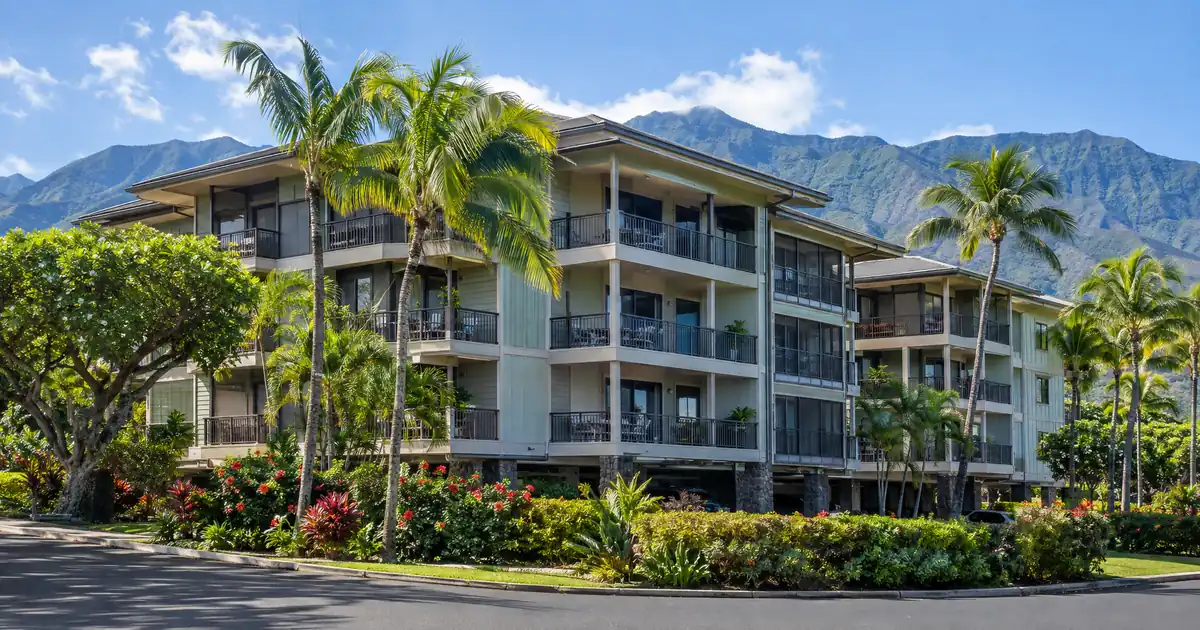
The Quick Read: A DSCR loan on Maui qualifies primarily on property-level rental income covering the payment, subject to lender guidelines. The arithmetic is simple: monthly rent used for lender review divided by PITIA. On Maui, the harder question comes first. Is the rental income lawful and durable under county zoning, and do the property’s tenure, HOA, and insurance support a loan? A condo’s zoning district can matter more than its coverage number.
Key Takeaways
- Most purchase files across the wholesale network land at 75%-80% LTV. Select high-leverage programs reach 85% with roughly a 700+ score.
- Clearing 1.00 is not the same as positive cash flow. The ratio ignores repairs, vacancy, management, and capex.
- Bill 9 phases out short-term rental use in apartment-zoned districts. Hotel- and resort-zoned units are not covered.
- On Maui, legal rental status, tenure, and insurability come before the DSCR math.
- Every figure here varies by lender and program — guidelines, property type, leverage, and credit profile all apply.
What Is a DSCR Loan, and How Does It Work on Maui?
A DSCR loan is an investor loan that compares a property’s rent to its full monthly obligation. The formula is monthly rent used for lender review divided by PITIA: principal, interest, taxes, insurance, and association dues. The numerator is not net income. On interest-only structures, the denominator drops the principal piece.
DSCR Calculator
Run the numbers in your market
Rate source: Freddie Mac 30-yr average via FRED® — Federal Reserve Bank of St. Louis · effective Oct 1, 2026
Prefilled with starting assumptions — enter your own rent or nightly figures, taxes, insurance, and HOA for a more accurate picture.
Program parameters update from Lendmire’s centralized guideline source. Taxes and insurance are editable estimates.
As of Oct 1, 2026 · General Freddie Mac market benchmark, not a Lendmire loan offer. Rent, nightly rate, occupancy, taxes, and insurance are editable estimates. Short-term rental figures are estimates only and vary significantly by season, property type, management approach, and local short-term-rental rules — confirm local regulations before relying on them. Qualifying income for short-term rentals varies by program — some use appraisal market rent, others use documented STR history or projections — and is confirmed in underwriting. Not a Loan Estimate, approval, or commitment to lend. Program availability and eligibility are subject to lender guidelines, credit approval, property review, and underwriting.
DSCR loans are designed for non-owner-occupied investment properties. Because they are business-purpose investor loans, they are reviewed differently from a standard owner-occupied mortgage. The file qualifies primarily on property-level rental income covering the payment, subject to lender guidelines. The Lendmire complete DSCR loans guide covers the full mechanics.
Maui changes the picture because the denominator is heavy and the numerator is legally contingent. Prices are high, resort-condo HOA dues are high, and the income a condo earns may depend on a zoning rule with an end date.
Step by Step: How Underwriting Treats a Maui Rental
Across the wholesale network, a Maui file moves through the same sequence as any DSCR file. The Maui-specific questions sit inside each step.
1. Rent is established. For a long-term rental, the appraiser’s market-rent schedule drives the number. Form 1007 covers one-unit properties and Form 1025 covers 2-4 units. Most programs use the lower of the lease or market rent.
2. Short-term income is documented. Depending on the program, that may be an appraiser analysis, platform or property-manager statements, bank deposits, or market data. Programs commonly haircut short-term projections. Lenders reviewing the same Airbnb can land at quite different coverage numbers.
3. The denominator is built. Taxes, insurance, and HOA dues all feed PITIA. On Maui these are the volatile pieces.
4. Credit, leverage, and reserves are checked. A 620 floor exists in parts of the network, most programs want around 660, and 700+ unlocks the strongest leverage tiers. Reserves commonly run around 6 months of PITIA, stepping up to about 9 months above $1,500,000. Conservative rate-term files at modest leverage under $1,500,000 can see reserves waived. All of this varies by lender, leverage, and transaction type.
5. Property eligibility is confirmed. Manufactured homes, log homes, and barndominiums are not offered in the network’s DSCR programs.
Typical documents include entity paperwork, the appraisal with rent schedule, proof of insurance (with flood coverage if the property sits in a mapped zone), and HOA or condo documents. For leasehold properties, add the ground lease. On Maui, add zoning evidence and any county permit.
What Decides a Maui File, in Order
Four questions decide a Maui file, and the coverage ratio is the last one. Think of it as a ladder.
1. Legal rental status and how long it lasts. This covers zoning district, list status, and permit.
2. Tenure. Fee simple or leasehold.
3. Insurability and HOA cost.
4. The DSCR arithmetic.
An investor who starts at step four often builds a model on income the property cannot legally keep earning. Start at step one.
Does Bill 9 Ban Maui Vacation Rentals?
No. Bill 9 phases out transient vacation rental use in apartment districts. It does not ban all vacation rentals on Maui. Per the Maui County Council’s Bill 9 overview, a 1989 ordinance required apartment districts to be occupied on a long-term basis of six months or more. Buildings with certain county approvals by April 20, 1989 kept short-term use as a lawful nonconforming use.
Per Courthouse News, the Council passed the bill 5-3. The deadlines are January 1, 2029 for West Maui and January 1, 2031 for South Maui, and roughly 6,000 to 7,000 units are targeted. Current bookings continue until then. Hotel- and resort-zoned rentals are unaffected.
Two points keep this from being a simple story. First, litigation has been filed, and a mid-2026 practitioner update reported no injunction. Second, a proposed hotel-district rezoning that could have exempted roughly 4,500 units was reported rejected by the Planning Commission, though the county was still working on new hotel zoning classes. Treat the outcome as unsettled. This article does not predict it.
Short-term rental rules can vary by city, county, HOA, and property type, so investors should confirm local rules before relying on projected rental income.
Where the General Rule Breaks: Maui Edge Cases
Apartment-zoned “Minatoya List” condos. Per UHERO, condo units already operating as vacation rentals in 1989 were generally allowed to keep renting short-term. Those buildings are called the Minatoya List. Many sit in Kihei, Wailea, Ma’alaea, and the Ka’anapali and Kapalua areas. Short-term income is lawful today but has a hard end date. Expect scrutiny: an underwriter may credit short-term income only through the sunset, or fall back to long-term rent. Resort-condo long-term rent can sit far below short-term revenue. A 30-year loan against an income stream that legally ends in 2029 or 2031 is a mismatch to size carefully.
Hotel- and resort-zoned condos. These are outside Bill 9, which makes the underwriting story cleaner. Per the Maui County approved STRH list, more than 16,000 units are legally eligible to operate as short-term rentals without a permit, generally in hotel-zoned districts. That is a description of the zoning distinction, not a recommendation. HOA rules can still restrict rentals regardless of zoning.
Condo-hotel and rental-pool units. These often need program-specific review. Raise them with a broker before writing an offer.
Lahaina and West Maui. West Maui carries the earliest deadline for apartment-zoned units. Lahaina is also still recovering from the 2023 wildfire. Thin sales activity means thin comps, which can complicate appraisal support. That is inference, not a reported lender rule.
Hana. The county’s list caps short-term rental home permits in the Hana region at 15. Hana is a permit-scarcity and comparable-sales story, not a Bill 9 story. Rural properties can also complicate the rent-schedule process. No reliable Hana-specific market statistics turned up in the research, so none are stated here.
Permits are personal. The county application says permits are held by the individual who holds legal title, and that an LLC or trust may qualify only in limited, family-owned cases. A practitioner source adds that permits do not transfer on sale, though that source is dated. Buying a home because it has a permit does not give you the permit. LLC titling is standard on DSCR files, so confirm with the county and counsel before assuming a fit. Where an LLC does hold title, that structure is subject to lender program eligibility.
Leasehold versus fee simple. Hawaii has both. Lenders generally want the remaining lease term to run comfortably past the loan term, and financing narrows as the lease shortens.
Flood. Standard homeowners policies exclude flood. Check the flood zone on every Maui file. Maui County also had a flood disaster declaration after a March Kona Low storm.
Why HOA and Insurance Move the Number
In a DSCR file, HOA dues sit inside PITIA. Resort-amenity complexes carry high dues, which raises the denominator before the lender reads a single rent line.
Condo master-policy costs are the second pressure. Hawaii’s SB1376 legislative findings say master-policy deductibles rose from $10,000-$25,000 per unit, per occurrence, to as much as $250,000. Those costs flow to owners through dues or special assessments, and they can change after closing.
In markets with this much cost volatility, coverage that pencils on one quote often fails on the next. Pulling the master-policy certificate and reserve study before you commit is the habit that prevents surprises. This is a pattern brokers see in insurance-stressed markets generally, not a Maui-specific statistic.
DSCR vs. conventional financing
There are two common ways to finance an investment property in this market, and they qualify you differently — here’s how investors weigh them.
Why investors choose it
- Qualifies on the property’s rental income — no personal tax returns, W-2s, or pay stubs needed to document income.
- No personal debt-to-income ceiling to clear, so existing mortgages and obligations don’t cap your borrowing the same way.
- Can be closed in an LLC, keeping the property inside a business entity.
- Built for scaling — not held to the limit on number of financed properties that conventional financing applies.
- Underwriting centers on the deal: generally qualifies when the rent covers the payment, a 1.00x coverage ratio being a common baseline (confirmed in underwriting).
- Designed specifically for investment property, including long-term and, where the program allows, short-term rentals.
Where it’s strong
- Often the lowest ongoing financing cost for a buyer who fully qualifies on personal income — a fit for a first property or a cost-first purchase.
Trade-offs for investors
- Requires full personal income documentation and must fit within a debt-to-income limit — salary, existing debts, and other mortgages all count.
- Typically held in your personal name rather than a business entity.
- Caps how many financed properties you can carry, which can become a ceiling as a portfolio grows.
- Evaluates you as a borrower as much as the property, which usually means more paperwork.
How investors usually choose: a first or single property often optimizes for the lowest financing cost; portfolio builders often optimize for leverage, vesting in an LLC, and scaling past conventional caps. The right answer depends on your goals, the property, and current guidelines — both paths run through select lenders in Lendmire’s wholesale network, with eligibility and terms confirmed in underwriting.
Price Context, Briefly
Per Realtors Association of Maui data reported by Maui Real Estate Advisors, the island-wide median home price was about $1,228,000 year to date through July. High prices push the payment up, so reaching 1.00 on a million-dollar condo takes very high rent. Brokerages report a softer market, which can give buyers negotiating room.
What Leverage and Coverage Look Like in Practice
| Scenario | Typical network range |
|---|---|
| Standard rental purchase | 75%-80% LTV |
| High-leverage purchase | Up to 85% LTV, roughly 700+ score |
| Cash-out refinance, standard rental | Up to 75% LTV, about 6 months seasoning |
| Short-term rental purchase | Up to 75% LTV, 640+ score |
| Short-term rental cash-out | Up to 70% LTV |
| Loan size | Roughly up to $3,000,000 on standard programs (smaller balances available through select lenders) |
These are typical ranges from select lenders in the network, subject to lender guidelines. Short-term rental files typically also want about 12 months of hosting history and a 1.00 coverage floor.
Coverage below 1.00 is available through select lenders in the network, with leverage and terms adjusted. A larger down payment lowers the payment and can lift coverage, but it does not erase credit floors, reserve rules, or property eligibility. The strongest files clear both tests: enough equity and enough rental coverage.
Term structures start from the 30-year fixed. Extended terms and interest-only periods are available through select lenders, and ARM structures exist. Above $2,500,000, the network generally holds to 30-year fixed.
Picture a Kihei condo in an apartment-zoned building. Say short-term revenue supports coverage comfortably above 1.00, but the long-term rent fallback lands well under it. The honest read is that the file leans on income with a legal end date. A lender may credit only the long-term case, or lower leverage. That investor either needs a reserve plan for the sunset or should look at a hotel-zoned alternative. The flip point is simple: if the fallback case clears 1.00 on its own, the sunset is an upside question. If it doesn’t, it is a solvency question.
Does 1.00 Mean Positive Cash Flow?
No. The ratio compares rent to PITIA only. Repairs, vacancy, management, utilities, and capex sit outside it. On a Maui property with seasonal swings and heavy management costs, a file at 1.05 can still lose money. Model the real cash flow separately.
Pre-Offer Checklist for Maui Investors
1. Confirm zoning and Minatoya status with the county. 2. Read the HOA rental rules. 3. Get the master-policy certificate and reserve study. 4. Check the flood zone. 5. Confirm tenure and remaining lease term. 6. Model long-term rent as the fallback case. 7. Model the Bill 9 sunset.
Key Terms Defined
DSCR: Monthly rent used for lender review divided by the full monthly housing obligation (PITIA).
PITIA: Principal, interest, taxes, insurance, and association dues.
Minatoya List: The set of condo buildings already operating as vacation rentals in 1989 that were generally allowed to keep doing so.
Leasehold: Ownership of a building with a lease on the land beneath it, as opposed to fee simple.
Rent schedule: The appraiser’s estimate of market rent, documented on Form 1007 or 1025.
Who This Fits, and Who It Doesn’t
DSCR suits an entity-held investor who wants the property’s income to carry the file. A W-2 borrower with one rental and strong personal income may price conventional financing lower. Maui adds a second filter. If your thesis depends on short-term income in an apartment-zoned building, the sunset date is part of the loan’s income horizon. If your thesis works on long-term rent alone, the zoning risk shrinks.
If you are buying or refinancing a rental property and want to see how the numbers work, Lendmire can help you compare DSCR loan options based on the property income, credit profile, leverage, and investor goals, through select lenders in its wholesale network across 41 markets, including Washington, D.C. Investors can also read about renters becoming real estate investors if they are earlier in the process.
This article is general information, not legal or tax advice. Maui zoning, permits, and tax treatment depend on your specific situation, so consult a qualified attorney or CPA. Tax treatment can depend on how the funds are used and how the property is held; investors should keep clear records and speak with a qualified tax professional before relying on any deduction.
Frequently Asked Questions
Can I use projected short-term income on a Maui condo?
It depends on the program and the property’s legal status. Short-term income is typically documented through appraiser analysis, platform history, or market data, and often haircut. In an apartment-zoned building, expect questions about the 2029 or 2031 end date.
Does a Maui short-term rental permit transfer when I buy the home?
Generally no. The county application says permits are held by the titleholder, and practitioners report they do not transfer on sale. Confirm with the county and counsel, particularly if you plan to hold title in an LLC.
Can a DSCR loan finance a leasehold condo on Maui?
It can be reviewed, but the remaining lease term matters. Lenders typically want it to run well past the loan term, and requirements vary by lender and property. Get the ground lease in front of your broker early.
What reserves should a Maui investor expect?
Commonly around 6 months of PITIA, stepping up to about 9 months above $1,500,000. Reserves vary by lender, leverage, loan size, and transaction type.
Are sub-1.00 deals possible on Maui?
Sub-1.00 coverage is available through select lenders in the network, with leverage and terms adjusted. For a resort condo with high dues, that structure may be worth reviewing, but weak coverage can also signal the wrong submarket.
About Lendmire
Lendmire — NMLS# 2371349 — is a mortgage brokerage specializing in DSCR investor loans, helping arrange financing across 41 markets, including Washington, D.C., through wholesale and investor-lending channels. The model centers on property-level rental income reviewed by the lender rather than W-2 documentation, subject to lender guidelines, suiting entity-owned and multi-property investors. Lendmire holds Scotsman Guide Top Mortgage Workplace recognition for 2025 and 2026.
Scotsman Guide’s Top Mortgage Workplace lists for 2025 and 2026 document Lendmire’s recognition.
Get Started
Ready to find the right loan for you?
In about 30 seconds you can review financing options available for your investment property. No commitment required.
Informational only. Not a Loan Estimate, approval, or commitment to lend. Program availability and eligibility are subject to lender guidelines, credit approval, property review, and underwriting.
References
1. Maui County Council – Bill 9 overview
3. UHERO (University of Hawai’i Economic Research Organization)
4. Maui County – Approved Short-Term Rental Homes List
This article is part of Lendmire’s DSCR loan program — full qualification details, guidelines, and scenarios live on the program page.
Related reading: Luxury Rental DSCR Loans In New Jersey · Jersey Shore Vacation Rental Loans: DSCR Financing In Ocean City, Cape May And Long Beach Island · DSCR Cash-out Refinance In New Jersey: Pulling Equity From A Rental
Brandon Miller
Founder & CEO, Mortgage Loan Originator, Lendmire LLC
- Mortgage Loan Originator · NMLS# 1129696 · Verify on NMLS Consumer Access
- North Carolina Real Estate Broker · License# 343312 · Verify on NCREC
- North Carolina Insurance Producer · License# 19053198 · Property, Casualty, Life, Health · Verify on NAIC SBS
- Lendmire LLC · Firm NMLS# 2371349 · Verify firm licensure
Compliance and disclosures. Lendmire (NMLS# 2371349) is a licensed mortgage broker and is not a direct lender, depository institution, financial advisor, or tax professional. Content in this article is general market analysis and educational information — not financial, legal, or tax advice for any specific situation. Lendmire does not guarantee loan approval; every transaction is subject to underwriting by the funding lender. Mortgage pricing and loan program guidelines are subject to change at any time without notice and vary by borrower characteristics, property type, and state regulations. Lendmire complies with Equal Housing Opportunity. Licensure verification: NMLS Consumer Access.