
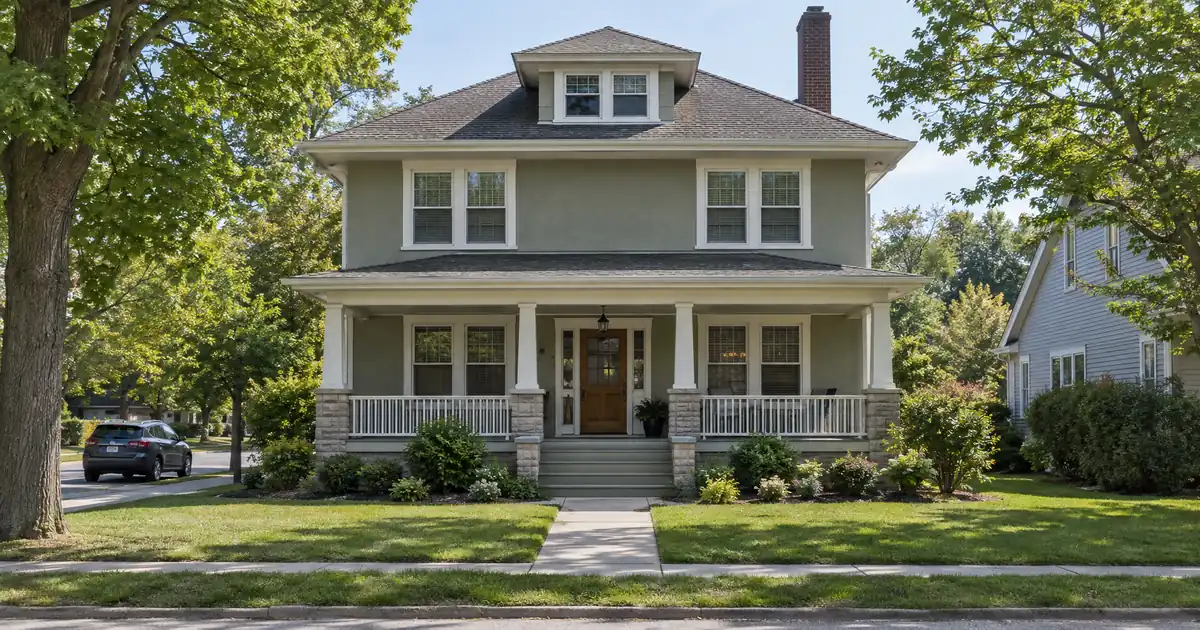
The Quick Read: A DSCR loan is reviewed for an Oahu rental primarily on property-level rental income covering the payment, subject to lender guidelines. It does not lean on your traditional personal-income documentation. On the island, the harder question is often which rental income is legally usable at that address, and what kind of building you are buying.
Key Takeaways
- The DSCR test compares rent to the full monthly housing obligation: principal, interest, taxes, insurance, and association dues.
- Oahu condo dues are heavy, so the payment side of the ratio often decides the file.
- Most purchase files land at 75%-80% LTV, and most programs want a credit score near 660 or better.
- Long-term leases, such as military rentals, are simpler to underwrite than nightly rentals.
- Condotels, leasehold units, and non-warrantable condos shrink the pool of willing lenders.
How Do DSCR Loans Work on Oahu?
A DSCR loan is a business-purpose investor loan. The lender divides qualifying monthly rent by PITIA, the monthly total of principal, interest, taxes, insurance, and association dues. A result of 1.00 means rent equals the payment. Above 1.00, rent covers it with room to spare.
DSCR Calculator
Run the numbers in your market
Rate source: Freddie Mac 30-yr average via FRED® — Federal Reserve Bank of St. Louis · effective Sep 24, 2026
Prefilled with starting assumptions — enter your own rent or nightly figures, taxes, insurance, and HOA for a more accurate picture.
Program parameters update from Lendmire’s centralized guideline source. Taxes and insurance are editable estimates.
As of Sep 24, 2026 · General Freddie Mac market benchmark, not a Lendmire loan offer. Rent, nightly rate, occupancy, taxes, and insurance are editable estimates. Short-term rental figures are estimates only and vary significantly by season, property type, management approach, and local short-term-rental rules — confirm local regulations before relying on them. Qualifying income for short-term rentals varies by program — some use appraisal market rent, others use documented STR history or projections — and is confirmed in underwriting. Not a Loan Estimate, approval, or commitment to lend. Program availability and eligibility are subject to lender guidelines, credit approval, property review, and underwriting.
Here is where beginners slip. Clearing 1.00 is not the same as positive cash flow. The ratio ignores repairs, vacancy, management, utilities, and big-ticket replacements. A property can pass the test and still lose money. Not ideal, but common.
Across the wholesale network Lendmire places files with, 1.00 is where select programs start. It is a floor for those programs, not a universal standard. Stronger ratios open better pricing and more leverage. Coverage below 1.00 is available through select lenders in the network, with leverage and terms adjusted.
Lendmire is a mortgage broker. It arranges these loans through select lenders in a wholesale network covering 41 markets, including Washington, D.C. The lenders review, underwrite, and approve. For the full mechanics, see the complete DSCR loans guide.
Key Terms Defined
DSCR (debt service coverage ratio): The property’s rent used for lender review divided by its monthly housing payment.
PITIA: Principal, interest, property taxes, insurance, and association dues, added together.
Form 1007 / Form 1025: Appraisal forms that estimate market rent for a single-family home (1007) or a two-to-four-unit property (1025). DSCR programs borrow them as tools. They do not make the loan an agency product.
Condotel: A condo unit in a building run like a hotel, often with a rental-pool or management agreement.
Leasehold: You own the building but rent the land under it. Fee simple means you own both.
Non-warrantable condo: A condo project that fails standard project rules, for example through heavy investor ownership or litigation.
What Does Underwriting Actually Check, Step by Step?
Underwriters run five checks, in a set order. Each one can change the final ratio, so each deserves your attention before you write an offer.
1. Income path. For a long-term rental, rent used for lender review comes from the lease or the appraiser’s market rent. Many programs use the lower of the two. For a nightly rental, income comes from 12 months of platform or bank history, or from a market projection on a purchase.
2. The payment side. PITIA includes association dues. On Oahu, condo dues can be steep, and leasehold ground rent is often collected through them.
3. Collateral review. Condo projects need an association questionnaire and project approval. Condotels need their rental-pool or management agreement reviewed. Leasehold units need the ground lease and any amendments.
4. Borrower layer. Credit score, reserves, and how you hold title, such as an LLC, subject to lender program eligibility.
5. Legal-use proof. For nightly rentals, lenders increasingly want evidence the unit may legally operate that way.
Step three trips up more Oahu files than any other. A great ratio will not save a building the lender will not touch.
What Leverage and Credit Do Programs Typically Want?
Typical ranges depend on the rental type. These are guideline ranges from select wholesale-network programs, not commitments to lend.
| Factor | Long-term rental | Short-term rental |
|---|---|---|
| Purchase LTV | 75%-80% typical | Up to 75% |
| Cash-out LTV | Up to 75% | Around 70% |
| Credit score | 620 floor; ~660 typical | 640+ typical |
| Coverage floor | 1.00 on select programs | 1.00 on purchases |
| Income history | Lease or market rent | About 12 months hosting |
A 70% cash-out ceiling applies to short-term-rental collateral, while 75% applies to standard rentals. Scores of 700 and up unlock the strongest leverage tiers. Terms vary by lender guidelines, property type, leverage, credit profile, and full file review.
Reserves vary by lender, leverage, and loan size. About six months of PITIA is common. Conservative rate-term files at modest leverage under $1,500,000 can see reserves waived. Above that size, expect about nine months. Oahu prices push many files over that line.
Standard loan sizes run up to $3,000,000. Above $2,500,000, the network generally holds to 30-year fixed structures.
A bigger down payment lowers the payment and lifts the ratio. It never erases leverage caps, credit floors, reserve rules, or property eligibility. The strongest files clear both tests: enough equity and enough rental coverage.
Which Structures Help When Oahu Math Runs Tight?
Oahu prices run high against rents, so the ratio is usually tight. Several levers exist. The spine is the 30-year fixed. Select lenders in the network also offer interest-only periods and 40-year terms, and adjustable structures exist for investors who want them. Interest-only lowers the payment, which raises the ratio. It trades that for slower principal paydown.
Other levers: more cash down, a lower-priced unit, or lower association dues. If the ratio still lands under 1.00, select lenders in the network will look at it with adjusted leverage and terms. Expect to put more into the deal.
Where the General Rule Breaks on Oahu
Oahu carries several edge cases that standard DSCR explainers skip.
Nightly rental legality. Short-term rental rules can vary by city, county, HOA, and property type, so investors should confirm local rules before relying on projected rental income. On Oahu, that confirmation is the whole game. Zoning decides where nightly stays are generally allowed, and a law-firm summary of the city ordinance maps those zones. The city’s Department of Planning and Permitting runs registration, so that office is where you verify status. Practitioner guides describe ongoing legal challenges and conflicting minimum-stay readings. Treat past nightly income at a non-resort address as unproven until you confirm it survives your purchase.
Condotels and non-warrantable condos. Waikiki, Ko Olina, and Turtle Bay have condotel buildings. Agency-style programs generally avoid them, which is why this lane runs through non-QM lenders. Fewer lenders will look at them, and you should expect to be told no by several before a program fits.
Leasehold. Leasehold is common in older Waikiki buildings. Fee simple dominates Ewa Beach, Kapolei, Mililani, and central and west Oahu. Lenders examine the remaining lease term, the rent-reset terms, and lender-rights protections. Minimum remaining-term thresholds vary by program. A short remaining term can end a file.
Low appraised rent. Luxury or unusual properties with few rental comps can appraise low. Form 1007 is built around a 12-month lease model, not nightly income. Do not convert nightly rates into a monthly rent and hope.
DSCR vs. conventional financing
Two common ways to finance an investment property in this market. They qualify you differently — here’s how investors weigh them.
Why investors choose it
- Qualifies on the property’s rental income — no personal tax returns, W-2s, or pay stubs needed to document income.
- No personal debt-to-income ceiling to clear, so existing mortgages and obligations don’t cap your borrowing the same way.
- Can be closed in an LLC, keeping the property inside a business entity.
- Built for scaling — not held to the limit on number of financed properties that conventional financing applies.
- Underwriting centers on the deal: generally qualifies when the rent covers the payment, a 1.00x coverage ratio being a common baseline (confirmed in underwriting).
- Designed specifically for investment property, including long-term and, where the program allows, short-term rentals.
Where it’s strong
- Often the lowest ongoing financing cost for a buyer who fully qualifies on personal income — a fit for a first property or a cost-first purchase.
Trade-offs for investors
- Requires full personal income documentation and must fit within a debt-to-income limit — salary, existing debts, and other mortgages all count.
- Typically held in your personal name rather than a business entity.
- Caps how many financed properties you can carry, which can become a ceiling as a portfolio grows.
- Evaluates you as a borrower as much as the property, which usually means more paperwork.
How investors usually choose: a first or single property often optimizes for the lowest financing cost; portfolio builders often optimize for leverage, vesting in an LLC, and scaling past conventional caps. The right answer depends on your goals, the property, and current guidelines — both paths run through select lenders in Lendmire’s wholesale network, with eligibility and terms confirmed in underwriting.
Condo carrying costs. Association dues, insurance pressure, reserves, and special assessments all raise the payment side. Coverage that looks fine on today’s dues can shrink after an assessment.
Ineligible property types. Manufactured homes, log homes, and barndominiums fall outside these DSCR programs.
How Do the Five Oahu Markets Compare?
One market report puts the single-family median near $1,240,000 and the condo median near $510,000. Houses and condos are behaving like two separate markets.
| Area | Typical strategy | Main DSCR issue |
|---|---|---|
| Waikiki | Condo, condotel, or nightly | Building type, leasehold, dues |
| Ko Olina | Resort condotel | Condotel collateral review |
| North Shore | Seasonal or mid-term | Mostly residential zoning |
| Kailua | Long-term house | High price against rent |
| Pearl Harbor area | Military long-term lease | Simple lease-based income |
Waikiki and Ko Olina. These are the resort corridors. Nightly operation may be possible in resort-zoned condotels, but you are then in the harder condo and condotel lane. Thorough building documents matter more than the ratio here.
North Shore and Kailua. Both are mostly residentially zoned. Nightly income depends on a status you must verify, so many investors run mid-term or long-term leases instead. Local reporting describes very tight rental vacancy in both areas. That supports lease-based underwriting.
Pearl Harbor and military rentals. Military rentals are long-term leases, so the lease or Form 1007 route applies and nightly-rental rules are not the issue. Oahu installations share the Honolulu County housing allowance, which gives tenants a defined housing budget. A property-manager guide maps base demand to neighborhoods: Joint Base Pearl Harbor-Hickam toward Ewa Beach, Kapolei, Salt Lake, and Aiea; Schofield toward Mililani, Wahiawa, and Waipahu; and Marine Corps Base Hawaii toward Kailua and Kaneohe. Rotation creates a seasonal turnover cycle, so plan for vacancy between tenants.
What Does the Decision Look Like in Practice?
Run the numbers on two modeled cases. These are assumptions, not market data.
Case one. Picture a fee-simple Kailua house under a long-term lease. The buyer puts 25% down, and rent covers the payment at roughly 1.1x. The file is straightforward: lease, appraisal rent, credit, and reserves. Coverage clears the 1.00 floor with a small cushion. Whether it produces real cash flow after repairs and vacancy is a separate question. Exact terms depend on the lender’s guidelines, property type, leverage, and a full review of the borrower’s file.
Case two. Say you want a Waikiki condotel at 75% LTV on nightly income. Coverage might look strong on a projection. But the lender pool is narrow, the building needs approval, and reserves run heavier. The ratio is the easy part. Honestly, this one is a toss-up between the yield you want and the collateral friction you will absorb. Every figure here varies by lender and program — guidelines, property type, leverage, and credit profile all apply.
If a property will not fit any program, some investors look at alternatives such as private money. Those typically cost more and run shorter.
Common mistakes:
- Treating a seller’s nightly history as transferable income.
- Ignoring dues until the ratio comes back short.
- Assuming every condo finances the same way.
- Confusing a passing ratio with profit.
What Should You Do Next?
Start with the building and the legal-use question, then run the ratio. Gather the lease or hosting history, the dues, the insurance quote, and the association documents. Then compare programs.
If you are buying or refinancing a rental property and want to see how the numbers work, Lendmire can help you compare DSCR loan options based on the property income, credit profile, leverage, and investor goals. You can reach the team at 828-256-2183 or request a quote.
This article is general information, not legal or tax advice. Tax treatment can depend on how the funds are used and how the property is held; investors should keep clear records and speak with a qualified tax professional before relying on any deduction. Consult a qualified attorney or CPA about your own situation.
Frequently Asked Questions
Can I use nightly rental income to qualify on Oahu?
It depends on the program. Programs that allow it typically want about 12 months of hosting history, or a market projection on a purchase, plus proof the unit can legally operate that way. Some programs use only long-term rent and ignore nightly upside. Lenders may also discount projected income.
Do military rentals qualify more easily?
They are simpler because they run on a long-term lease or appraiser market rent. Nightly-rental rules do not apply. The ratio still has to clear the program’s coverage floor, and the property still has to meet eligibility rules.
Can I buy a leasehold condo with a DSCR loan?
Some lenders will consider it. They review the remaining lease term, rent-reset terms, and lender protections. Thresholds vary by program, and fewer lenders take these files, so expect to compare options.
What if coverage lands below 1.00?
Select lenders in the network offer sub-1.00 programs, with leverage and terms adjusted. That usually means more cash down and stronger reserves. Interest-only structures can also help.
Can I hold the property in an LLC?
Often yes, subject to lender program eligibility. Entity documents are added to the file, and personal credit is still reviewed.
About Lendmire
Lendmire is a non-QM mortgage brokerage (NMLS# 2371349) arranging DSCR investor loans in 41 markets, including Washington, D.C., through wholesale and investor-lending channels. DSCR loans are evaluated by the lender on rental income rather than personal income, subject to lender guidelines — a fit for LLC-owned portfolios, self-employed investors, and operators scaling beyond conventional loan caps. Recognized as a Scotsman Guide Top Mortgage Workplace in 2025 and 2026.
Scotsman Guide’s Top Mortgage Workplace lists for 2025 and 2026 document Lendmire’s recognition.
Get Started
Ready to find the right loan for you?
In about 30 seconds you can review financing options available for your investment property. No commitment required.
Informational only. Not a Loan Estimate, approval, or commitment to lend. Program availability and eligibility are subject to lender guidelines, credit approval, property review, and underwriting.
References
1. Imanaka Asato – Honolulu’s Short-Term Rental Ordinance
2. Honolulu Department of Planning and Permitting – Permitting
3. StaySTRA – Hawaii Short-Term Rental Laws
4. Nick Kawakami – Oahu Real Estate Update
5. Agency Rentals – The Military Landlord’s Handbook
This article is part of Lendmire’s DSCR loan program — full qualification details, guidelines, and scenarios live on the program page.
Related reading: Investment Property Loans in Honolulu, HI: The 2026 DSCR Financing Guide to Waikiki-Kaka’ako · DSCR Loans Hawaii: Investor Financing for Maui, Oahu, Big Island, Kauai, and Real Estate Investors · DSCR Cash Out Refinance Hawaii
Brandon Miller
Founder & CEO, Mortgage Loan Originator, Lendmire LLC
- Mortgage Loan Originator · NMLS# 1129696 · Verify on NMLS Consumer Access
- North Carolina Real Estate Broker · License# 343312 · Verify on NCREC
- North Carolina Insurance Producer · License# 19053198 · Property, Casualty, Life, Health · Verify on NAIC SBS
- Lendmire LLC · Firm NMLS# 2371349 · Verify firm licensure
Compliance and disclosures. Lendmire (NMLS# 2371349) is a licensed mortgage broker and is not a direct lender, depository institution, financial advisor, or tax professional. Content in this article is general market analysis and educational information — not financial, legal, or tax advice for any specific situation. Lendmire does not guarantee loan approval; every transaction is subject to underwriting by the funding lender. Mortgage pricing and loan program guidelines are subject to change at any time without notice and vary by borrower characteristics, property type, and state regulations. Lendmire complies with Equal Housing Opportunity. Licensure verification: NMLS Consumer Access.