
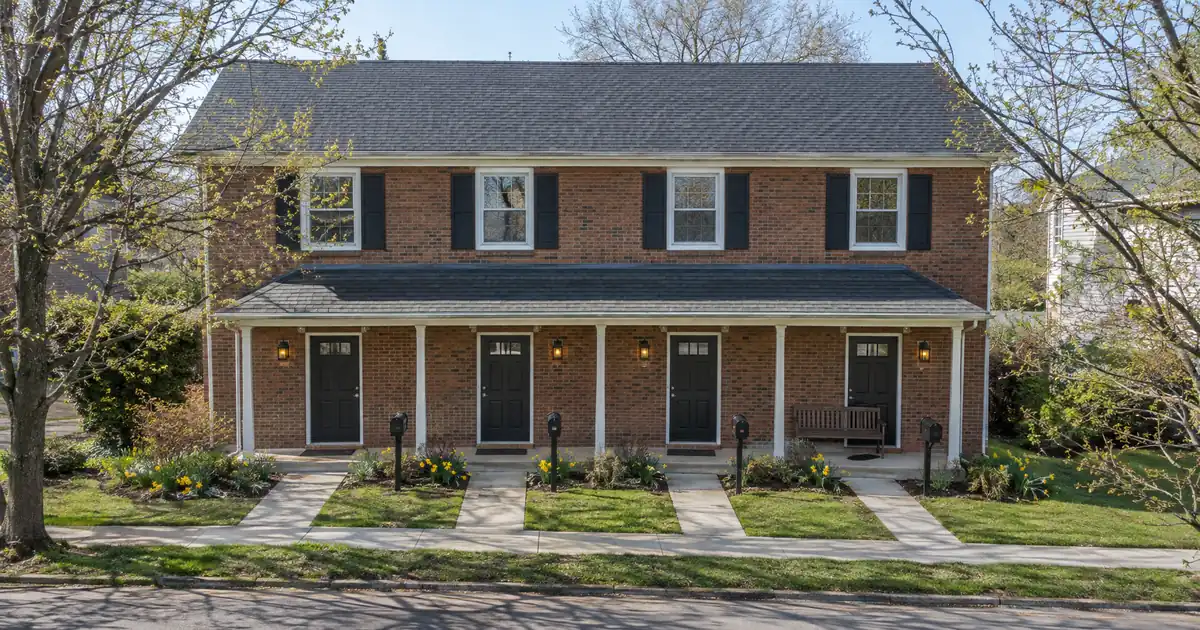
The Quick Read: It depends on the program, the tenant’s status at closing, and whether the pool’s total rent still covers the total payment without the contested unit. A pending eviction is not a universal bar to closing. It is mainly a rent-counting and paperwork problem, and it becomes a collateral problem only if the unit is damaged or can’t be re-leased.
- A unit that is vacant and rent-ready is usually counted at the appraiser’s market rent.
- A tenant who is not paying has no payment history, so the unit may be counted at market rent only if the lender treats it as vacant, or it may be excluded.
- Pooled coverage tests total rent against total payment, so one weak door in a four-door building gets diluted twice.
- If the fourplex holds up the file, the usual fix is to close the rest of the pool and carve the fourplex out.
Why Is an Eviction a Rent Question Before It Is a Legal One?
A DSCR lender wants to know which rent figure to use for each unit. The eviction matters because it changes that answer. DSCR stands for debt service coverage ratio. The loan is reviewed primarily on property-level rental income covering the payment, subject to lender guidelines, so the tenant’s behavior matters only through the rent it produces.
DSCR Calculator
Run the numbers in your market
Rate source: Freddie Mac 30-yr average via FRED® — Federal Reserve Bank of St. Louis · effective Oct 15, 2026
Prefilled with starting assumptions — enter your own rent or nightly figures, taxes, insurance, and HOA for a more accurate picture.
Program parameters update from Lendmire’s centralized guideline source. Taxes and insurance are editable estimates.
As of Oct 15, 2026 · General Freddie Mac market benchmark, not a Lendmire loan offer. Rent, nightly rate, occupancy, taxes, and insurance are editable estimates. Short-term rental figures are estimates only and vary significantly by season, property type, management approach, and local short-term-rental rules — confirm local regulations before relying on them. Qualifying income for short-term rentals varies by program — some use appraisal market rent, others use documented STR history or projections — and is confirmed in underwriting. Not a Loan Estimate, approval, or commitment to lend. Program availability and eligibility are subject to lender guidelines, credit approval, property review, and underwriting.
Here is how the lender usually reads a unit in dispute:
- Tenant out and the unit is turnable. The unit is vacant, and many programs count it at market rent.
- Tenant in place, paying month to month. The payments are documented, so the unit is usually workable.
- Tenant in place, not paying. There is no payment history to document, and the unit is the hard case.
Most programs in the wholesale network treat a purchase more leniently than a refinance. A vacant, turnkey property is often acceptable on a purchase. A refinance generally wants the building leased or showing recent rental history. Some programs tolerate one or two rent-ready vacant units in a multifamily building. A unit mid-eviction is not rent-ready, which is why it lands in the awkward middle.
No federal rule sorts an eviction into one bucket. Treatment is program-specific, so confirm it before you sign a contract or any commitment you can’t walk away from.
What Does “a Pool With One Fourplex” Actually Mean?
The phrase has two readings, and they behave differently.
Reading one: several properties, one of them a fourplex. A pool, also called a blanket loan, is one loan secured by several properties. The lender adds up all the rent and divides by all the payments. A fourplex with one contested unit becomes one slice of a bigger number. That dilution is your strongest argument for including it.
Reading two: a pool that holds only the fourplex. Here the “pool” is one building with four doors. Many programs would treat this as an ordinary single-property loan on a 2–4 unit building. Whether a lender calls it a pool at all, and whether a minimum property count applies, depends on the program. Ask before you plan around pooling benefits.
The building is the collateral. The doors are the income. The lender counts four rents against one payment. That is different from four separate loans.
For the full picture of how these loans work, see Lendmire’s complete DSCR loans guide.
How Do the Four Rents Get Tested?
Each unit needs a lease or a market-rent opinion. The lender then sums the rents and divides by the full monthly obligation: principal, interest, taxes, insurance, and any association dues. That obligation is called PITIA.
Appraisers handle this on a specific form. Fannie Mae’s Selling Guide names Form 1025, the Small Residential Income Property Appraisal Report, for two- to four-unit properties. DSCR loans are not agency products, so the reference here is only to the form itself. The sample Form 1025 shows a rent schedule where the appraiser reconciles market rent for each unit. That market figure can stand in for a lease on any unit that has none.
Form 1025 also appears in FHA rent documentation for 2–4 units. It is a contrast only, and nothing in it governs a DSCR file.
Many programs count the lower of the lease rent or the market rent. Two consequences follow:
- An above-market lease does not raise your ratio.
- An expired or month-to-month lease often falls back to market rent.
On coverage levels, 1.00 is where many select programs start. A separate select-lender path takes coverage below 1.00, with leverage and terms adjusted. Stronger ratios generally open better pricing and leverage.
How Does a Lender Treat the Evicting Unit?
Treat the table below as a framework, not a rulebook.
| Stage | What the file shows | Rent likely counted | Likely lender ask |
|---|---|---|---|
| Notice served | Tenant behind, no court case | Lease, or market if lower | Ledger, notice copy |
| Case filed | Open court docket | Often market, or excluded | Docket, timeline estimate |
| Judgment entered | Right to possession | Excluded until possession | Judgment, turnover plan |
| Possession regained | Unit empty | Market, if rent-ready | Condition proof, re-lease plan |
| Re-leased | New lease signed | Lower of lease or market | New lease, first payment |
Three points make the table useful.
The stage matters because it tells the lender how soon the unit produces rent. A filed case with no hearing date reads as open-ended. A judgment with a turnover plan reads as closer to done.
Condition is the second test. Damage from a departing tenant can make a unit not rent-ready. If the unit can’t be turned without real work, expect a repair condition or a request to cure it first.
The third test is documentation. Missing or inconsistent paperwork is where evictions hurt files, more than the eviction itself.
Across the wholesale network, DSCR files with a disputed unit tend to go sideways on communication, not coverage. The borrower says the unit will be vacant soon, the paperwork shows a pending case, and the lender can’t reconcile the two. A one-page timeline from the borrower, backed by the docket, resolves most of that confusion before underwriting asks.
What Does the Math Look Like in Ratios?
These numbers are modeled assumptions, not market data. Assume the four units carry equal rents and the fourplex, on its own, covers its payment at about 1.25x.
- All four rents counted. Standalone coverage is about 1.25x.
- Contested unit at zero. Three units of four produce rent, so coverage drops to about 0.94x.
- Contested unit at market rent. If the lender accepts market rent for the vacant, rent-ready unit, coverage returns to about 1.25x.
Now put that fourplex in a pool. Assume it carries about a third of the pool’s total debt, and the other properties average about 1.20x coverage.
- Pool with all four doors counted. Blended coverage is about 1.22x.
- Pool with the contested unit at zero. Blended coverage is about 1.11x.
The standalone fourplex falls below 1.00 in the zero-rent view, so it would need a select-lender path with leverage and terms adjusted. The same building inside the pool stays above 1.00. That is the pooling benefit in numbers, and it is why investors ask the question.
The dilution has limits. Each property still gets its own appraisal, rent schedule, and title review. Pooled math does not waive property-level eligibility or condition requirements. For more on how weaker rentals interact with stronger ones, see Lendmire’s piece Can Interest-Only Offset One or Two Weak Rentals in a DSCR Pool?.
Clearing 1.00 is also not the same as positive cash flow. DSCR compares rent to PITIA only. Repairs, vacancy, management, utilities, and capital costs sit outside it. An eviction adds legal fees, lost rent, and turnover cost on top. Model those separately. Tax treatment varies; consult a qualified professional.
Why Can a Pool Help or Hurt Here?
In a pool, every property secures the whole debt. That cuts both ways.
It can help. A strong property can carry a weak one when the total clears the lender’s minimum. A fourplex with one problem door is spread across four units, then blended again across the pool.
It can hurt. A pool generally closes or refinances all its properties together. A problem on one asset can hold up the rest, even when the ratio passes. Title or possession issues on the fourplex can stall everything else in the package.
Cross-collateralization is the plain-English reason. The lender takes security in every property for the one loan. It will not release one without a rule for doing so. A tiny pool therefore has little room to absorb a problem. A pool of two or three properties leaves little slack if the fourplex is the largest piece. For a related look at how a lender reads a group of properties, see Lendmire’s explanation of how a DSCR lender underwrites a pool in one subdivision.
What Are Your Options if the Unit Won’t Clear in Time?
You have four main routes. Each trades certainty against delay.
| Option | How it works | Main tradeoff |
|---|---|---|
| Close without the fourplex | Pool the other properties only | Fourplex needs its own financing later |
| Wait for possession | Finish the eviction, then close | Pool timing depends on the court |
| Cure the tenant issue | Payment plan or keys-for-cash deal | Costs money, but may end the dispute |
| Single-property DSCR loan | Finance the fourplex alone later | Loses pooling dilution |
A few notes on each:
- Carving the fourplex out is the practical fix when the rest of the pool is clean. It protects the closing for everything else.
- Waiting works best when the case is near its end. Open-ended cases make waiting costly.
- Curing the dispute can be cheaper than litigating. Evictions often cost thousands across attorney fees, court costs, and repairs, and a negotiated move-out avoids part of that.
- A single-property DSCR loan finances the fourplex on its own once the unit is resolved and leased. You give up the pooling dilution, so the building’s own coverage has to carry the file.
If the unit is still occupied by a non-paying tenant, tell your broker before you choose a path. The earlier the lender sees the full picture, the more choices you have.
DSCR vs. conventional financing
There are two common ways to finance an investment property, and they qualify you differently — here’s how investors weigh them.
Why investors choose it
- Qualifies on the property’s rental income — no personal tax returns, W-2s, or pay stubs needed to document income.
- No personal debt-to-income ceiling to clear, so existing mortgages and obligations don’t cap your borrowing the same way.
- Can be closed in an LLC, keeping the property inside a business entity.
- Built for scaling — not held to the limit on number of financed properties that conventional financing applies.
- Underwriting centers on the deal: generally qualifies when the rent covers the payment, a 1.00x coverage ratio being a common baseline (confirmed in underwriting).
- Designed specifically for investment property, including long-term and, where the program allows, short-term rentals.
Where it’s strong
- Often the lowest ongoing financing cost for a buyer who fully qualifies on personal income — a fit for a first property or a cost-first purchase.
Trade-offs for investors
- Requires full personal income documentation and must fit within a debt-to-income limit — salary, existing debts, and other mortgages all count.
- Typically held in your personal name rather than a business entity.
- Caps how many financed properties you can carry, which can become a ceiling as a portfolio grows.
- Evaluates you as a borrower as much as the property, which usually means more paperwork.
How investors usually choose: a first or single property often optimizes for the lowest financing cost; portfolio builders often optimize for leverage, vesting in an LLC, and scaling past conventional caps. The right answer depends on your goals, the property, and current guidelines — both paths run through select lenders in Lendmire’s wholesale network, with eligibility and terms confirmed in underwriting.
What Documents Should You Assemble?
A file with a contested unit usually carries a few extra items beyond the standard rent roll. Based on how these files tend to be reviewed, expect to supply:
- A rent roll with a status column showing occupied, vacant, or in dispute for each unit.
- Current leases and the payment ledger for the contested unit.
- The notice served and any court filing or docket.
- A short written explanation of why the unit is in dispute.
- An expected turnover date and a rent-ready plan.
- The appraisal’s rent schedule, which the appraiser prepares.
The borrower also signs a business-purpose and occupancy affidavit. DSCR loans are designed for non-owner-occupied investment properties. If you plan to move into a unit, it is no longer a DSCR file.
State law governs eviction procedure and timing. No federal body runs private landlord evictions. Work with a landlord-tenant attorney in your state for the legal side, and keep the lender informed of any change in status.
What Mistakes Stall These Files?
Four mistakes come up again and again.
Hiding the eviction. Lenders find it in the rent roll or the title. An undisclosed dispute damages trust and can sink the file. Disclose it early.
Assuming a vacant unit counts as zero. Many programs use market rent when the appraiser supports it. Some programs count it at zero. Check the specific program.
Assuming a strong lease helps. The lower-of rule means an above-market lease does not lift your coverage.
Ignoring leverage and reserves. A strong ratio does not erase the other rules. Most programs in the network want purchase leverage in the 75%–80% LTV range on an investment property, and cash-out refinances top out around 75% LTV. Credit expectations vary by program: a 620 floor exists in parts of the network, most programs want around 660, and 700 or higher opens the strongest leverage tiers. Reserves commonly run about 6 months of PITIA, and loans above $1,500,000 typically step up to about 9 months. These are typical ranges, not promises, and every file is underwritten individually.
The strongest files clear both tests: enough equity and enough rental coverage.
Key Terms Defined
DSCR (debt service coverage ratio): The property’s rent divided by its full monthly obligation. A ratio of 1.00 means rent equals the payment.
PITIA: Principal, interest, taxes, insurance, and any association dues. It is the full monthly obligation the rent is measured against.
Pool (blanket loan): One loan secured by several properties, tested on their combined rent and combined payments.
Cross-collateralization: Every property in the pool secures the whole debt, so one property’s problem can affect the rest.
Rent roll: A unit-by-unit list of tenants, lease terms, rents, and status.
Market rent: The rent an appraiser says the unit would likely command, supported by comparable rentals.
Rent-ready: A unit in condition to be leased without major work.
Month-to-month tenancy: A lease with no fixed end date. Lenders often fall back to market rent for it.
Frequently Asked Questions
Does a filed eviction automatically block a DSCR closing?
No. A pending eviction is not an automatic bar to closing. Treatment depends on the program and the unit’s status. The lender looks at which rent figure applies and whether the building’s condition is sound.
Will a vacant unit count as zero rent?
Often it does not. Many programs count a vacant, rent-ready unit at the appraiser’s market rent. Some programs count it at zero unless the appraiser supports market rent. A unit with a non-paying tenant is a harder case, so ask for the program’s treatment before you assume.
Can I live in one of the fourplex units?
Not on a DSCR loan. These are business-purpose loans for non-owner-occupied investment properties. If you plan to occupy a unit, you would need a different type of financing.
What happens to coverage if one of four units goes dark?
The ratio falls by roughly a quarter of the rent. A building that covers its payment at about 1.25x drops to about 0.94x, which is below the 1.00 level where many select programs start. The impact is smaller in a four-door building than in a duplex.
Should I start the eviction before I try to close?
Usually it helps to have the process moving and documented before a lender reviews the file. That gives the lender a timeline to evaluate. Eviction timing varies widely by state and by court, so a landlord-tenant attorney in your state is the right source for the legal side.
What Next?
If you are buying or refinancing a rental property and want to see how the numbers work, Lendmire can help you compare DSCR loan options based on the property income, credit profile, leverage, and investor goals. As a broker, it arranges financing through select lenders in its wholesale network across 41 markets, including Washington, D.C.
One reliable rule across multifamily files is that the unit that looks like a small problem on paper is usually the one that decides the closing, so settle its status before you commit the whole pool to it.
About Lendmire
As a non-QM mortgage broker (NMLS# 2371349), Lendmire facilitates DSCR investor loans across 41 markets, including Washington, D.C. DSCR eligibility is generally reviewed around property-level rental income instead of personal income documentation, subject to lender guidelines, serving LLC-structured portfolios and self-employed borrowers who don’t fit conventional boxes. A two-time Scotsman Guide Top Mortgage Workplace (2025, 2026).
Get Started
Ready to find the right loan for you?
In about 30 seconds you can review financing options available for your investment property. No commitment required.
Informational only. Not a Loan Estimate, approval, or commitment to lend. Program availability and eligibility are subject to lender guidelines, credit approval, property review, and underwriting.
References
2. Fannie Mae Form 1025 sample
This article is part of Lendmire’s DSCR loan program — full qualification details, guidelines, and scenarios live on the program page.
Related reading: Should You Close a DSCR Refinance After a Low Appraisal or Wait? · Can a Condo Be Refinanced on DSCR Before Any Rent Is Collected? · Should a W-2 Investor Scaling Rentals Use Seller Carry With DSCR?
Brandon Miller
Founder & CEO, Mortgage Loan Originator, Lendmire LLC
- Mortgage Loan Originator · NMLS# 1129696 · Verify on NMLS Consumer Access
- North Carolina Real Estate Broker · License# 343312 · Verify on NCREC
- North Carolina Insurance Producer · License# 19053198 · Property, Casualty, Life, Health · Verify on NAIC SBS
- Lendmire LLC · Firm NMLS# 2371349 · Verify firm licensure
Disclosure information. Lendmire is a state-licensed mortgage brokerage under NMLS# 2371349. Lendmire is not a depository institution, direct lender, or financial advisor — all loans referenced are placed through wholesale lender partners and are subject to each lender's underwriting standards. This article is provided for general informational purposes and is not a commitment to lend, nor does it constitute financial, legal, or tax advice. Loan programs, terms, rates, and qualification standards change without notice and depend on borrower profile, property type, and the state in which the subject property is located. Equal Housing Opportunity provider. NMLS Consumer Access: nmlsconsumeraccess.org.