
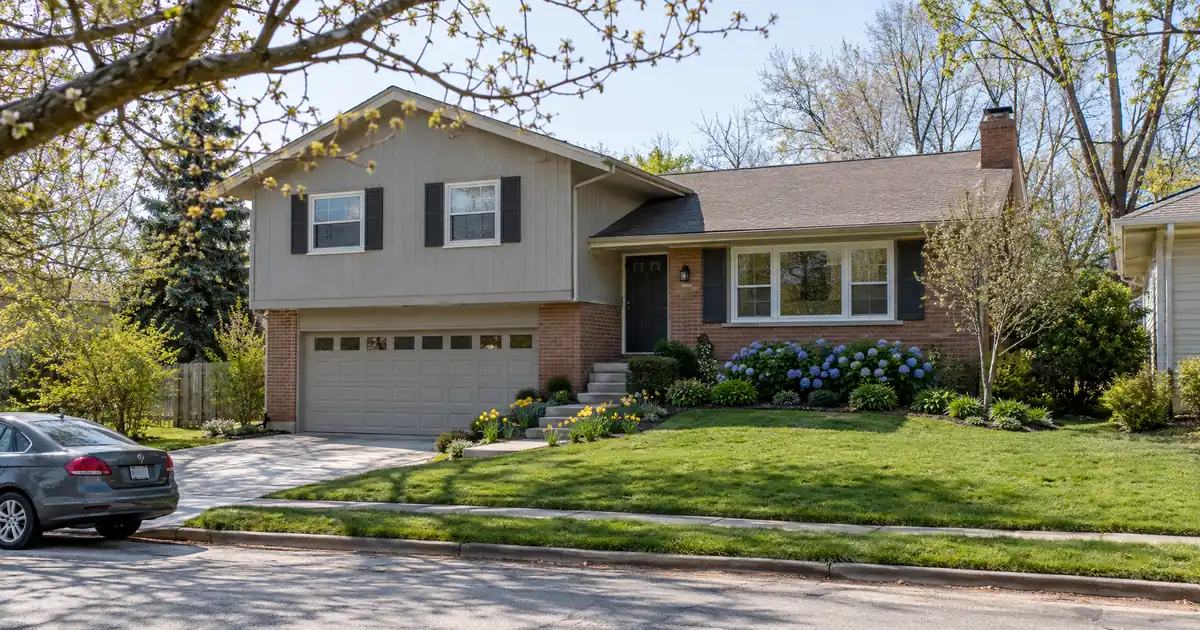
The Quick Read: Plan two separate layers of cash: the months of payment reserves a lender verifies after closing, and a larger repair fund you hold on your own, because older houses wear out roofs, HVAC and plumbing on schedules the DSCR formula never sees.
- The lender’s reserve is a payment-continuity cushion, usually counted in months of PITIA (principal, interest, taxes, insurance and association dues). It is not a repair budget.
- On most files across the wholesale network, reserves run about 6 months of PITIA, stepping up to about 9 months above $1,500,000, subject to lender guidelines.
- An older house needs a second, unverified bucket sized component by component, not by one flat percentage.
- Clearing 1.00 coverage does not mean the property cash flows once repairs, vacancy and capex are counted.
- On a portfolio loan, coverage is tested on the pool, but your cash still has to cover every layer at once.
Why Older Houses Change the Reserve Question
Age does not change the lender’s reserve formula, but it changes how much cash you actually need. Reserve months depend mostly on the program, loan size, leverage and borrower profile. Year built matters through condition, insurance and the repair bills that follow.
Rental stock in this country is old. Harvard’s Joint Center for Housing Studies put the median age of rental units at 44 years, up from 34 two decades earlier. NLIHC’s summary of the center’s newer rental housing report puts the median at 45 years, the oldest on record. An investor buying a typical rental is therefore buying a house whose major systems are mid-life or later.
Two things happen when systems age. Insurance can get more expensive or harder to place, which raises the monthly obligation inside the loan. Replacement bills also arrive in lumps that rent alone cannot absorb. The first problem shows up in your DSCR. The second never shows up there at all.
That is why this topic needs two answers. One is about what the lender checks. The other is about what you owe yourself.
Key Terms Defined
DSCR (debt service coverage ratio): The property’s monthly rent divided by its monthly PITIA. A result of 1.00 means rent equals the payment.
PITIA: Principal, interest, taxes, insurance and association dues on the property. Lenders measure reserves in months of this number.
Reserves (lender layer): Liquid cash left after closing that a lender verifies, so you could keep paying if rent stopped.
Capex (capital expenditures): Big replacements such as a roof, HVAC unit, water heater or sewer line, as opposed to routine repairs.
Seasoned funds: Money that has sat in your account long enough to be documented as yours rather than borrowed or just deposited.
Pooled coverage: On a portfolio loan, the combined rent of all properties divided by their combined debt service.
| Layer | Who sets it | Measured how | Lender verifies? |
|---|---|---|---|
| Lender reserves | Program guidelines | Months of PITIA | Yes |
| Operating reserve | You | Vacancy and repair buffer | No |
| Capex reserve | You | Per-component life left | No |
The Lender Layer: What Verified Reserves Actually Do
The lender layer exists to keep the loan paid if the property stops producing rent. Across the wholesale network, reserves commonly land around 6 months of PITIA on the subject property. Loans above roughly $1,500,000 typically step up to about 9 months. Conservative rate-and-term files at modest leverage under that size can see reserves waived. Reserves vary by lender, leverage, loan size and transaction type, so treat those figures as ranges rather than promises.
The math is simple multiplication: required months times the property’s PITIA gives the dollars that must remain after closing. Those dollars must be left over after your down payment, closing costs and prepaid items. A borrower who puts down 25% on a purchase and arrives at the table with strong credit can still stall if the leftover cash falls short of the months required. Exact terms depend on the lender’s guidelines, property type, leverage, and a full review of the borrower’s file.
Insurance is where age touches the lender layer directly. Because insurance sits inside PITIA, a house that costs more to insure raises the reserve requirement and pulls the DSCR down at the same time. Insurance.com reports that some carriers decline to renew roofs past about 20 years without an inspection, or pay out only depreciated value on a claim. Carrier rules differ, so a fresh insurance quote belongs in the file before you commit to a purchase. Every figure here varies by lender and program — guidelines, property type, leverage, and credit profile all apply.
Most programs Lendmire’s team places files with do not stack extra reserve months on your other financed properties, though a few do. Ask before assuming either way. The lender’s reserve was never meant to fund a roof. It is a floor under the payment, and an older house needs a second bucket on top of it.
Property condition also matters to eligibility. Appraisers complete a rent schedule (Form 1007) or an operating income statement (Form 1025), and a house with serious deferred repairs can draw conditions. Older and worn is a different category from needing major repair, and underwriters treat them differently. Manufactured homes, log homes and barndominiums are not offered through the network’s DSCR programs at all, regardless of age or condition.
The Owner Layer: Building a Repair and Capex Cushion
The owner layer is cash you hold beyond what any lender asks, and it should be built from the house itself, not from a flat percentage. A list of components, each with its own remaining life, tells you more than a rule of thumb. The reasoning is straightforward: the same replacement costs far more per year of use when little life remains.
A BiggerPockets contributor works through a roof example. Spread the cost over a 30-year life and the annual set-aside is small. Spread it over only 5 remaining years and the annual set-aside is about six times larger. It is a forum illustration, but the arithmetic holds for any component.
Percentage rules still have a place as a starting point. Stessa’s capex guide suggests about 10% of collected rent, raised to 15–20% for older properties. It also offers an alternative of 1–2% of property value per year. Both are reasonable first guesses, and neither replaces an inspection.
Here is how the main systems break down on an older house.
| System | Question to ask | Check at inspection | How to fund |
|---|---|---|---|
| Roof | How many years of life remain? | Age, granule loss, flashing | Immediate if near end of life |
| HVAC | Original or replaced? | Age plate, service history | Ongoing set-aside |
| Plumbing | Old supply or drain lines? | Material, scope camera | Immediate if failing |
| Electrical | Panel and wiring type? | Panel brand, grounding | Immediate if flagged |
| Water heater | Near typical lifespan? | Date stamp, rust | Ongoing set-aside |
Funding splits into two kinds. An item already at end of life at purchase is an immediate cost, and it belongs in your closing cash plan. An item with years left is an ongoing set-aside, spread across those years.
Condition beats vintage. A renovated 1950s house with new systems can need less cash than a 1990s house still running original equipment. Judge each house by the life left in its parts, not its build year.
A Worked Example: Passing the Ratio and Still Running Thin
Run the numbers on a single older rental with modeled inputs, not market data. Assume rent covers PITIA at 1.20x. That means PITIA consumes about 83% of the rent, leaving about 17%.
Now budget the items the DSCR formula ignores. Suppose you set aside 15% of rent for capex on an older house, using the lower end of the Stessa range for older homes. That leaves about 2% of rent before vacancy, repairs, management and utilities. A property that passed comfortably on paper is roughly break-even in practice.
At 1.00x the cushion is zero before any of those costs. The ratio can clear and the property can still lose money once a roof or HVAC unit comes due. DSCR compares rent to PITIA only, so it cannot be read as positive cash flow.
The lesson is not to avoid older houses. Higher coverage works as a hedge, and a thin ratio on an old house calls for a larger cash buffer. A house with a 1.35x ratio and a new roof can be a calmer holding than a 1.05x house with a roof at the end of its life.
How Portfolio Loans Change the Math
A portfolio loan changes how coverage is tested, but it does not change how repairs get paid. One structure the network offers is a 30-year portfolio DSCR loan covering 2 to 20 properties under one note. Loan sizes typically run from $300,000 to $5,000,000, with leverage up to 80% on a purchase or rate-and-term refinance. Coverage is measured on the pool, so stronger properties can offset weaker ones, and an interest-only period is available. Cash-out on a pooled loan never exceeds 75% of pooled value.
A second structure is the rental portfolio term loan, built for five or more properties or units. Loan sizes typically run from $500,000 to $50,000,000, with leverage up to 75% of value. Terms are fixed at 3, 5, 7 or 10 years with a balloon at maturity, and non-recourse options exist with carve-outs. On this structure, reserves are held for taxes, insurance and capital expenditures, so a portion of your cash is set aside for the very items older houses generate. All of this is subject to lender guidelines and underwriting.
A rental below 1.00 coverage can sit inside a pool, but pooled coverage, leverage and terms are what underwriting tests. The lender does not review that house in isolation. Every property still needs a lease or an appraiser-supported market rent.
Three planning habits matter at portfolio scale.
First, add up every requirement before you apply. The same dollars cannot satisfy several files at once, and cash used as a down payment on the next purchase is gone from the reserve column. Total the lender months, your operating buffer and your capex fund as separate lines. Lendmire’s piece Investment Property Cash-Out Refinance Reserves for a Rental Portfolio covers how those requirements stack when you refinance.
Second, stagger replacements. If five houses share a build decade, their roofs and HVAC units age together. Map each component to a replacement window and spread the work across years, so one calendar year does not carry every bill.
Third, decide between per-house and pooled cash. A single rental cannot absorb a roof failure from rent. With many units, cash flow from the others can help, which is why larger portfolios often hold a smaller allocation per door. The risk is concentration. Several houses of the same vintage in one submarket can fail together, so a pooled fund should be sized for that scenario, not the average one.
If you want the broader picture of how these programs fit together, the complete DSCR loans guide is the place to start.
What Counts as a Reserve, and Which Sources Are Weaker
Cash in a bank account is the cleanest reserve. Funds must generally be seasoned and documented, which means a large fresh deposit with no paper trail invites questions. Borrowed money does not count.
Retirement and brokerage accounts may be accepted, but lenders often discount them, so a dollar there can count for less than a dollar. Confirm the treatment with the lender before you rely on it. For your own capex bucket, liquidity matters too. An account that is hard or costly to tap is a poor home for money you may need after a failed water heater.
Keep the lender’s cash and your repair cash in separate accounts. One account that serves both is easy to drain on a repair and then find yourself short of the verified amount on the next application.
Stress Test, Replenishment and Annual Review
A useful stress test combines two events in the same year: a stretch of vacancy and one large component failure. If your combined buffers survive both without touching the verified reserve, the plan is sound. If they do not, the house is thinly funded for its age.
Replenishment needs a rule. Decide in advance that any draw on the capex fund gets repaid from rent over a set number of months, and that nothing is spent from the lender-verified amount. That keeps the two layers from blurring.
Review the plan once a year. Update remaining component lives, check insurance renewals for roof or system changes, and recalculate coverage if the monthly obligation moved. An annual pass also catches the item that quietly crossed from ongoing to immediate.
When an Older House Is the Wrong Fit
Some houses are too tired for a DSCR strategy. If a roof, foundation or major system needs replacement right away and you lack the cash to do it, the house is a rehab project, not a rental. Buying it with a thin ratio and thin reserves puts the whole file under strain.
Insurance is another warning sign. If you cannot place coverage at a reasonable cost, the monthly obligation climbs and the coverage ratio falls. A house with a thin ratio, an old roof and a hard-to-insure profile can fail on all three tests at once.
A larger down payment lowers the payment and can lift the ratio, but it does not remove leverage caps, credit floors, reserve rules or property eligibility. The strongest files clear both tests: enough equity and enough rental coverage. On a purchase, most files land at 75% to 80% LTV, with select programs reaching 85% at roughly a 700 score.
Frequently Asked Questions
Is the lender’s reserve enough for an older house?
Rarely. It is sized to keep the payment current, not to replace a roof or HVAC system. On an older house, treat the lender’s months of PITIA as a floor and add a separate repair fund.
Do repair funds count toward the lender’s reserve requirement?
Not as a separate pool. Lenders look at verified liquid assets after closing, and money you plan to spend on the house does not stay verified once it is spent. Keep the repair fund in addition to the required amount. Final terms depend on lender guidelines, property type, leverage, and the borrower’s complete credit picture.
Can one pot of cash cover several loans?
Not twice over. The same dollars cannot satisfy two files at once, and cash used for one purchase is gone from the next. Add up each file’s requirement and your own buffers before you apply.
Should I hold cash per house or pooled?
Many investors do both: a small allocation per house and a pooled minimum. Per-house money keeps each property accountable, while a pool covers the large failure. Size the pool for several same-vintage houses needing work in the same year.
What if the roof is near end of life at closing?
Treat the replacement as an immediate cost and plan the cash before you buy. Get an insurance quote early, since roof age can affect both the premium and the claim terms. A near-end-of-life roof on a thin ratio is a strong reason to negotiate or walk.
Next Step
If you are buying or refinancing a rental property and want to see how the numbers work, Lendmire can help you compare DSCR loan options based on the property income, credit profile, leverage and investor goals. As a mortgage broker, Lendmire arranges DSCR financing through select lenders in its wholesale network across 41 markets, including Washington, D.C., and every file is reviewed individually.
About Lendmire
As a DSCR and non-QM mortgage broker, Lendmire — NMLS# 2371349 — connects investors with wholesale lending channels across 41 markets, including Washington, D.C. The property’s rental income, not the borrower’s tax returns, is central to lender review, which works for self-employed operators and portfolios beyond four financed properties. Scotsman Guide named Lendmire a Top Mortgage Workplace in both 2025 and 2026.
Get Started
Ready to find the right loan for you?
In about 30 seconds you can review financing options available for your investment property. No commitment required.
Informational only. Not a Loan Estimate, approval, or commitment to lend. Program availability and eligibility are subject to lender guidelines, credit approval, property review, and underwriting.
References
1. Harvard Joint Center for Housing Studies, Six Takeaways from America’s Rental Housing
2. NLIHC summary of JCHS America’s Rental Housing 2026
3. Insurance.com, Have a 20-Year-Old Roof? You May Lose Your Homeowners Insurance
4. BiggerPockets, Maintenance and CapEx Allowances
5. Stessa, Capital Expenditures for Rental Property
This article is part of Lendmire’s DSCR loan program — full qualification details, guidelines, and scenarios live on the program page.
Related reading: How Much Capital a DSCR Portfolio Cash-Out Frees on Seasoned Rentals · How a DSCR Lender Calculates Coverage on a Whole Portfolio · How to Plan a DSCR Portfolio Refinance a Year Before the Balloon
Brandon Miller
Founder & CEO, Mortgage Loan Originator, Lendmire LLC
- Mortgage Loan Originator · NMLS# 1129696 · Verify on NMLS Consumer Access
- North Carolina Real Estate Broker · License# 343312 · Verify on NCREC
- North Carolina Insurance Producer · License# 19053198 · Property, Casualty, Life, Health · Verify on NAIC SBS
- Lendmire LLC · Firm NMLS# 2371349 · Verify firm licensure
Compliance and disclosures. Lendmire (NMLS# 2371349) is a licensed mortgage broker and is not a direct lender, depository institution, financial advisor, or tax professional. Content in this article is general market analysis and educational information — not financial, legal, or tax advice for any specific situation. Lendmire does not guarantee loan approval; every transaction is subject to underwriting by the funding lender. Mortgage pricing and loan program guidelines are subject to change at any time without notice and vary by borrower characteristics, property type, and state regulations. Lendmire complies with Equal Housing Opportunity. Licensure verification: NMLS Consumer Access.