
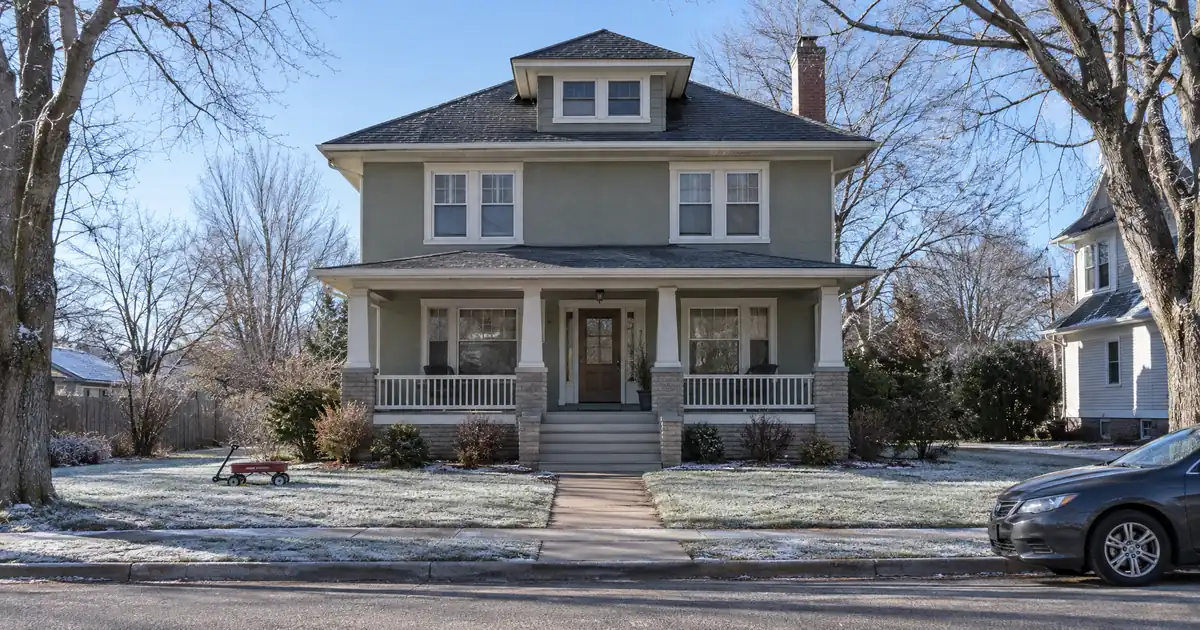
The Quick Read: The loan works as a permanent takeout, not a construction loan: a separate short-term loan pays for land and the build, and once the homes are complete and rentable, one pooled DSCR note retires that balance and qualifies primarily on the combined rental income covering the combined payment, subject to lender guidelines.
- Construction draws come from a different product. The DSCR loan does not pay the builder.
- A certificate of occupancy (CO) is the usual trigger to start permanent financing, but it does not release funds on its own.
- Coverage is measured on the pool, so stronger homes can offset weaker ones.
- The appraiser’s market-rent opinion is usually the only rent number on a home with no lease.
- Two loans mean two underwriting events, so the takeout needs a cushion.
Key Terms Defined
Takeout loan: the permanent loan that pays off the construction balance once the homes are finished.
Pooled coverage: total rent for all homes in the pool divided by total monthly debt service for the pool.
PITIA: principal, interest, taxes, insurance, and association dues, which make up the payment side of the coverage ratio.
Cross-collateralization: a setup where every property in the pool secures the same note.
Lease-up: the stretch between a home being finished and its first lease starting.
Form 1007 and Form 1025: appraisal forms for a single-family rent schedule and a 2-4 unit income statement. DSCR programs borrow them for rent evidence, but they are not DSCR rules.
Why Build-to-Rent Financing Is Getting Attention
NAHB’s first-quarter piece puts the four-quarter share of single-family starts just under 7%, against a historical average of 2.7%.
Builders who keep going are watching financing costs closely, which makes the exit loan the part of the plan that matters most.
How a DSCR Portfolio Loan Funds Build-to-Rent Homes, Step by Step
DSCR underwriting needs a property that already produces, or can be shown to produce, rent. A lot with a foundation has neither. That is why the sequence runs in two loans.
1. Land and construction capital comes first. A short-term construction or bridge loan buys the land and pays for the build. Funds are released in draws as work is completed, and interest typically accrues on the drawn balance. This loan is built to be temporary.
2. The homes are completed and the CO is issued. The local building department issues the CO. Permanent financing generally starts here, not during the build. A temporary CO can bridge a gap but may expire on a short clock, so a plan that leans on one carries its own risk.
3. The takeout file goes to the wholesale network. Lendmire arranges DSCR investor loans through a network of lenders, and each lender reviews the file independently. The CO does not release funding. The lender still verifies value, rent, condition, title, and entity documents.
4. The appraisal does two jobs. It sets the value that leverage is measured against and the market rent that drives coverage. Single-family homes usually get a Form 1007 rent schedule. A 2-4 unit property uses a Form 1025.
5. Coverage is calculated. Rent divided by PITIA gives the ratio. On a pool, both numbers are totals across all homes.
6. The new loan pays off construction. The takeout must cover the construction balance. If appraised value or rent comes in below the budget, the gap is the investor’s problem, and that is where these files usually fail.
Single-close construction-to-permanent loans exist, but across the wholesale network most build-to-rent files run as two closings. Investors who plan around a single close often end up needing a private construction lender anyway.
How Does Underwriting Treat Rent on a Home No One Has Leased?
On a new build with no lease, the appraiser’s market-rent opinion is typically the only rent number the lender uses. The investor’s own pro forma does not count. Signed leases, where they exist, can support the appraiser’s figure, and every property in a pool still needs either a lease or appraiser-supported market rent.
Thin comparable data in a new subdivision is the common trap. Few nearby comps can pull either value or rent below the budget. Restar’s market analysis notes that uneven local supply makes rent comps matter more, and appraisers feel that same pressure.
Short-term-rental plans add another wrinkle. The rent schedule reflects long-term rent, not nightly rates, so coverage built on a hosting projection can fall short. Short-term rental rules can vary by city, county, HOA, and property type, so investors should confirm local rules before relying on projected rental income. Some investors build first, lease long-term, and later refinance under a short-term-rental program that asks for hosting history.
How Pooled Coverage Works
Pooling means the lender adds up rent and adds up debt service across the whole set of homes. The pool’s floor of 1.00 is tested on those totals.
Run the numbers this way, using modeled assumptions rather than market data. Say two homes carry equal debt service. Home A rents at a level that covers its own payment about 1.40 times. Home B covers its own payment about 1.05 times. Because debt service is equal, the pool covers roughly 1.225 times. Home B would face a harder test alone, but inside the pool it rides on Home A’s strength.
A home that rents below 1.00 on its own can sit in the pool only when pooled coverage, leverage, and terms hold up under underwriting, subject to underwriting. The reverse is also true: one weak home can drag the whole ratio down.
Clearing 1.00 is not the same as positive cash flow. DSCR compares rent to PITIA only. Repairs, vacancy, management, utilities, and capital expenses sit outside the calculation, and a new build with a lease-up gap feels those costs first.
Two Ways to Structure the Pool
Across the wholesale network, portfolio DSCR investor loans for rentals come in two broad structures. The first suits a handful of homes. The second suits larger holdings.
| Feature | 30-year portfolio DSCR loan | Rental portfolio term loan |
|---|---|---|
| Size of pool | 2 to 20 properties | 5 or more properties or units |
| Loan size | $300,000 to $5,000,000 | $500,000 to $50,000,000 |
| Leverage | Up to 80% on purchase or no-cash-out refinance | Up to 75% of value |
| Term | 30 years | 3, 5, 7, or 10 years with a balloon |
| Payment options | Fixed or adjustable; interest-only period available | Fixed |
| Recourse | Typically a personal guarantee | Recourse or non-recourse options |
| Property types | SFR, 2-4 unit, condo, townhome | Adds small multifamily |
Both figures are program ceilings or floors, not quotes, and larger balances are handled on review. These portfolio figures apply only to a pooled loan. A DSCR loan on one rental runs on different numbers: most purchases land at 75% to 80% leverage, and cash-out tops out around 75%. Final terms depend on the lender’s guidelines, the property type, and the borrower’s complete credit picture.
The term loan has features the 30-year note does not. Yield-maintenance prepayment terms apply. Reserves are held for taxes, insurance, and capital expenditures. Properties in several markets can sit under one loan through cross-collateralization. Non-recourse versions exist, though they carry carve-outs for items like fraud and bankruptcy, so they are not a feature to take for granted.
The 30-year note usually suits a builder finishing a modest number of homes. The term loan fits larger operators who want a balloon structure and are comfortable with a refinance at maturity. For the lender-versus-broker side of this, Lendmire’s piece Portfolio Lender vs Broker: Who Funds Bank Statement Loans? explains how a broker places files with funding lenders.
What Lenders Check on the Pool
Underwriting reads the pool and the borrower separately:
- Credit: the floor on pools is 640, and some structures ask for 680 or 720.
- Entity: some structures require a special-purpose entity, typically an LLC, subject to lender program eligibility.
- Reserves: single-property files commonly want about 6 months of PITIA, and about 9 months above $1,500,000. The term loan holds reserves for taxes, insurance, and capital expenditures. Reserve requirements vary by lender, leverage, and loan size.
- Property type: owner-occupied homes, mobile homes, co-ops, mixed-use, and commercial property are ineligible in a pool. Manufactured homes, log homes, and barndominiums are not offered in these DSCR programs either.
- Cost basis on new or recent acquisitions: leverage is typically limited to 90% of total cost in the first six months of ownership and 100% from six to twelve months. A no-cash-out refinance carries no cost restriction.
Cash-out on a portfolio loan never runs above 75% of the pooled value, and never above the structure’s own ceiling. That matters to builders who finish at a low cost basis and hope to pull equity out. The cost rules and seasoning rule cap the amount, so it is smart to plan for a modest first takeout, then revisit leverage later.
Where the General Rule Breaks
Staggered completion dates. Homes rarely finish together. Pools generally want completed, rentable properties, so a builder either closes in batches by finish date, takes individual loans by address, or waits until enough homes are finished to form a pool. Whether a pool can be added to later depends on the lender’s loan documents.
Low appraisal. If value comes in below budget, leverage on the takeout shrinks and the builder covers the shortfall. A well-documented appraisal reconsideration with fresh in-neighborhood sales is a normal step on new subdivisions where comps are thin.
Thin pooled coverage. If the pool lands under the floor, the choices are a lower balance, a longer lease-up before applying, or paying down the construction loan with additional equity. An interest-only period on the 30-year note can help cover a lease-up stretch, subject to lender guidelines.
Duplexes. A 2-4 unit home uses Form 1025.
Condo-form homes inside a community. NAHB flags that some single-family starts are non-fee-simple condo-form homes, and only some become rentals. Fee-simple homes are usually the easier fit for a pool. A condo-form home needs a complete association questionnaire and a clean condo certification.
Policy swings. A Senate draft would have required institutionally financed new-construction rentals to be sold within seven years. NAHB estimated roughly 40,000 units a year at risk, and the House version dropped it, per NAHB’s first-quarter analysis. The lesson for a small builder is that exit and financing options can shift, so a plan that survives only one exit is fragile.
What the Decision Looks Like in Practice
Pooling is not always the better move. A pool ties every property to one note, so releasing one home for sale follows the loan documents and release terms. The release price runs above the property’s allocated balance, and the remaining pool must still cover its debt service.
| Factor | Pooled takeout | Individual takeouts |
|---|---|---|
| Coverage test | Totals across the pool | Each home on its own |
| Weak home | Offset by stronger homes | Tested alone |
| Selling one home | Governed by release terms | Pay off one loan |
| Paperwork | One note, one closing | Repeated per address |
| Cross-default risk | Present | Contained |
A builder who plans to hold every home long term usually leans pooled. A builder who expects to sell a home or two leans individual or batched. Neither choice is a guarantee of approval, and every file is underwritten individually.
Before applying, a clean takeout file has these items:
- Certificates of occupancy for every home in the pool
- Appraisals with rent schedules
- Signed leases where they exist
- Entity documents, including operating agreement and good-standing proof
- Insurance binders for each home
- Association or community fee documentation
- Reserves documentation
- Construction loan payoff figures and a draw history
Fresh insurance binders matter more than most investors expect, because a stale quote can change the payment side of the ratio. Tax treatment varies; consult a qualified professional.
Broader program background sits in Lendmire’s complete DSCR loans guide.
Frequently Asked Questions
Can a DSCR loan pay for the construction itself?
Not directly. DSCR underwriting needs rent to test, and a home under construction has none. A short-term construction or bridge loan covers land and the build, and the DSCR loan takes it out after completion.
Does a certificate of occupancy mean the takeout loan will fund?
No. The CO is the usual trigger to begin permanent financing, but the lender still verifies appraised value, market rent, condition, title, and entity documents. A temporary CO can add risk if it expires before the takeout is ready.
How does the lender establish rent on a new build with no tenant?
The appraiser’s market-rent opinion, usually on Form 1007 for a single-family home or Form 1025 for a 2-4 unit property, is typically the number used. An investor’s own pro forma does not replace it. Signed leases can support the figure where they exist.
How many homes can go under one portfolio loan?
The 30-year portfolio DSCR structure typically covers 2 to 20 properties, and the rental portfolio term loan fits five or more properties or units. Both are subject to lender guidelines, and larger balances are handled on review.
Can a strong home carry a weaker one inside the pool?
Yes, in the sense that coverage is measured on pooled rent against pooled debt service. Underwriting still tests the pooled coverage, leverage, and terms, and the remaining portfolio must cover its debt service if one home leaves.
Next Step
If you are buying or refinancing a rental property and want to see how the numbers work, Lendmire can help you compare DSCR loan options based on the property income, credit profile, leverage, and investor goals. Lendmire is a mortgage broker arranging DSCR investor loans through select lenders in its wholesale network across 41 markets, including Washington, D.C. Call 828-256-2183 or request a quote.
Builders who treat the takeout as the first underwriting decision, not the last, tend to find the weak links while they can still adjust the plan.
About Lendmire
As a non-QM mortgage broker (NMLS# 2371349), Lendmire facilitates DSCR investor loans across 41 markets, including Washington, D.C. DSCR eligibility is generally reviewed around property-level rental income instead of personal income documentation, subject to lender guidelines, serving LLC-structured portfolios and self-employed borrowers who don’t fit conventional boxes. A two-time Scotsman Guide Top Mortgage Workplace (2025, 2026).
Get Started
Ready to find the right loan for you?
In about 30 seconds you can review financing options available for your investment property. No commitment required.
Informational only. Not a Loan Estimate, approval, or commitment to lend. Program availability and eligibility are subject to lender guidelines, credit approval, property review, and underwriting.
References
1. NAHB Eye on Housing: single-family built-to-rent slowed at start of the year
2. Restar: build-to-rent investing
3. NAHB Eye on Housing: second-quarter declines for single-family built-to-rent
This article is part of Lendmire’s DSCR loan program — full qualification details, guidelines, and scenarios live on the program page.
Related reading: How to Handle Vacancies Before a DSCR Portfolio Loan · Can You Sell One Rental Out of a Portfolio DSCR Loan? · How to Raise Pooled DSCR Coverage Before a Portfolio Loan
Brandon Miller
Founder & CEO, Mortgage Loan Originator, Lendmire LLC
- Mortgage Loan Originator · NMLS# 1129696 · Verify on NMLS Consumer Access
- North Carolina Real Estate Broker · License# 343312 · Verify on NCREC
- North Carolina Insurance Producer · License# 19053198 · Property, Casualty, Life, Health · Verify on NAIC SBS
- Lendmire LLC · Firm NMLS# 2371349 · Verify firm licensure
Important disclosures. Lendmire (NMLS# 2371349) is a licensed mortgage brokerage. Lendmire is not a direct lender, depository institution, or financial advisor. All loan inquiries are subject to lender underwriting; this article does not constitute a commitment to lend. Rates, terms, and program guidelines are subject to change without notice and vary by borrower profile, property type, and state. Information in this article is general in nature and is not financial, legal, or tax advice. Equal Housing Opportunity. NMLS Consumer Access: nmlsconsumeraccess.org.